The modern construction landscape, particularly within dense urban environments, demands machinery that is not only powerful and reliable but also agile and versatile. In this challenging context, the HWL40 Wheel Excavator has emerged as a key solution for project managers and contractors focused on efficiency and operational flexibility. This specialized machine, offered by Hengwang, is engineered to bridge the gap between heavy-duty performance and the need for high-speed road travel and minimal site footprint. Its unique design and robust feature set provide tangible benefits for a wide range of applications, from municipal utility work to complex infrastructure development. Understanding the deep engineering and application advantages of this excavator is crucial for any professional seeking to optimize their fleet and project outcomes.
Understanding the Core Engineering of the HWL40 Wheel Excavator
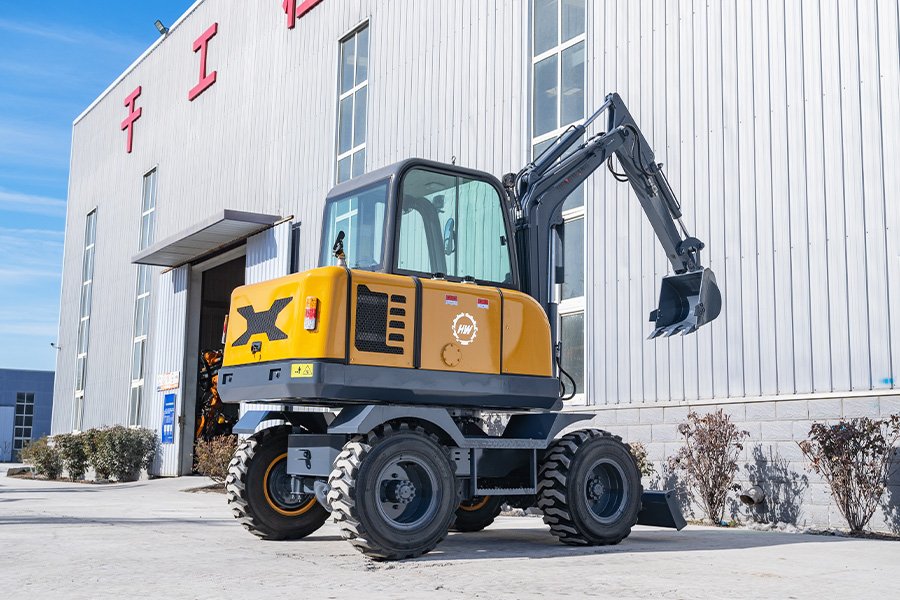
At the heart of the HWL40 Wheel Excavator lies a commitment to integrated performance and durability. Unlike its tracked counterparts, which excel in rough, undeveloped terrain, the wheeled configuration is specifically optimized for efficiency on paved surfaces and the rapid movement between geographically separated work zones. This mobility is a paramount advantage, drastically reducing the time and cost associated with transportation via low-loaders. Furthermore, the machine’s power plant is carefully selected to balance high output for demanding digging and lifting tasks with fuel efficiency—a critical factor for long-term operational cost management.
Significantly, the hydraulic system in the HWL40 Wheel Excavator is designed for precision and power. It typically features a sophisticated load-sensing system that proportionally allocates power only when and where it is needed. This technological integration not only conserves energy but also allows the operator to perform multiple functions simultaneously with smooth, predictable control. Consequently, digging, slewing, and material handling are executed with remarkable efficiency, leading to faster cycle times and increased overall productivity on the job site. The robust chassis and axle design are fundamental to supporting the demanding forces generated during heavy-duty excavation, ensuring stability and operator safety even when working over the side of the machine.
Mobility and Versatility: Redefining Urban Construction Logistics
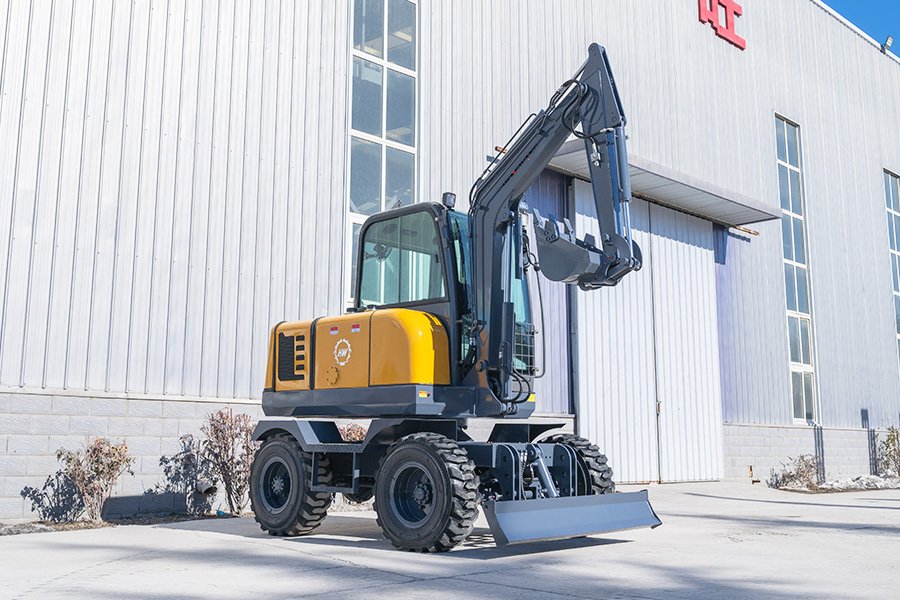
The defining characteristic of the HWL40 Wheel Excavator is its superior mobility, which fundamentally alters the logistics paradigm for urban construction and maintenance. The capability to travel at speeds up to 30 km/h or more under its own power allows for immediate deployment. For utility contractors, who frequently move between scattered sites for repairs or installations, this self-sufficiency eliminates the need for external transport and the associated permits, saving considerable time and expense. This rapid transit capability ensures that valuable project time is spent excavating and moving earth, rather than waiting for transport logistics to be arranged.
Beyond road travel, the HWL40 Wheel Excavator offers exceptional versatility through its ability to handle a vast array of attachments. Due to its advanced hydraulic power, the machine easily accommodates hydraulic breakers, augers, grapples, and specialized tilt rotators. For example, a project involving trenching, pipe laying, and then backfilling can be completed by a single machine with a quick coupler system, transitioning smoothly between a bucket, a hydraulic clamp, and a compactor plate. This multi-functionality makes the HWL40 Wheel Excavator an indispensable asset for municipalities dealing with road construction, sewer maintenance, and general public works, dramatically reducing the need for specialized, single-purpose machinery on site.
Enhanced Operational Efficiency and Comfort for the Operator

Hengwang understands that operator comfort and control directly impact productivity and safety. Therefore, the design of the HWL40 Wheel Excavator places a strong emphasis on the ergonomic and functional aspects of the operator’s cab. Modern cabs are typically spacious, featuring intuitive control layouts and excellent all-around visibility, which is essential for safe operation in confined, high-traffic urban settings. A well-designed control system, often featuring proportional joysticks, allows operators to achieve a higher degree of precision and finesse, particularly when working near existing infrastructure or utilities where accurate material placement is critical.
Furthermore, operational efficiency is enhanced by intelligent machine features. Integrated diagnostics and monitoring systems allow project managers to track performance data, fuel consumption, and maintenance requirements in real-time. This predictive maintenance capability minimizes unexpected downtime, ensuring that the HWL40 Wheel Excavator remains on the job and operational for longer periods. The overall robust construction and use of high-quality components throughout the machine translate directly into extended service intervals and lower lifecycle costs, providing a superior return on investment for the owner. It is this combination of power, precision, and longevity that solidifies the machine’s value proposition in the competitive construction machinery market.
Safety and Environmental Considerations
In today’s regulatory environment, the safety and environmental profile of construction equipment are non-negotiable. The HWL40 Wheel Excavator is engineered with multiple safety features critical for working in public spaces. These typically include reinforced cabs (ROPS/FOPS compliant), advanced braking systems suitable for high-speed travel, and comprehensive lighting packages. Additionally, many models are equipped with sophisticated camera systems and proximity sensors to assist operators in maneuvering safely around pedestrians and other vehicles, a common challenge in urban projects.
From an environmental standpoint, the modern diesel engines powering the HWL40 Wheel Excavator are designed to meet stringent international emissions standards. They incorporate technologies such as diesel particulate filters (DPF) and selective catalytic reduction (SCR) to significantly reduce harmful emissions. For projects in densely populated or environmentally sensitive areas, the comparatively lower ground disturbance caused by wheeled machines over hard surfaces is also a notable ecological advantage. The machine therefore represents a responsible choice for companies committed to adhering to green building and infrastructure development practices.
Conclusion: A Focused Investment in Future-Proof Excavation
The decision to invest in a piece of heavy equipment is a significant one, and for contractors managing diverse projects in both municipal and infrastructure sectors, the HWL40 Wheel Excavator presents a compelling case. Its standout features—high-speed mobility, exceptional attachment versatility, advanced hydraulic precision, and superior operator ergonomics—combine to deliver a machine that dramatically improves efficiency and lowers operating costs. This excavator is not merely a replacement for traditional machinery; it is an upgrade to a more agile, productive, and future-proof operational methodology. By embracing the power and flexibility of the HWL40 Wheel Excavator, construction professionals can confidently meet the escalating demands of modern engineering projects.
Frequently Asked Questions (FAQ)
Is the HWL40 Wheel Excavator suitable for off-road or muddy terrain?
While optimized for on-road travel and hard surfaces, the HWL40 Wheel Excavator often comes with features like excellent ground clearance and optional four-wheel drive systems that enable it to perform well in moderate off-road conditions, such as construction sites with packed earth or gravel. For extremely deep mud or steep, unstable slopes, a tracked excavator remains the traditional choice.
What are the main maintenance advantages of a wheeled over a tracked machine?
Wheeled excavators, like the HWL40 Wheel Excavator, generally have lower undercarriage maintenance costs. Track components (rollers, sprockets, track pads) are subject to high wear and are expensive to replace. Wheel systems are simpler to maintain, requiring primarily tire pressure checks and routine brake service, leading to reduced downtime and lower running costs over the machine’s lifespan.
Can the HWL40 Wheel Excavator be transported on standard trailers?
The self-propelled road capability often eliminates the need for transport altogether between nearby sites. For long-distance relocation, due to its compact size and manageable weight (relative to larger tracked machines), the HWL40 Wheel Excavator can typically be transported on standard or easily available low-bed trailers, simplifying logistics and reducing specialized transport costs.