In the dynamic world of modern construction, where project timelines are tightening and operating margins are under pressure, the choice of machinery is paramount. Civil engineers, site managers, and construction business owners are constantly seeking equipment that balances compact versatility with uncompromising power and reliability. This is the precise niche carved out by the HW-30 Crawler Excavator. It is not merely a piece of equipment; it is a meticulously engineered solution designed to address the complex demands of contemporary job sites, providing an unparalleled blend of performance, precision, and operational economics in the mid-size segment. This deep-dive analysis is dedicated to exploring how the HW-30 is redefining industry standards and offering tangible, long-term value to its operators across a spectrum of demanding applications.
The true significance of the HW-30 Crawler Excavator lies in its capacity to handle heavy-duty tasks typically assigned to larger machines while retaining the maneuverability characteristic of compact models. Consequently, its design philosophy centers on maximizing efficiency and minimizing the Total Cost of Ownership (TCO), an increasingly critical metric for any financially prudent construction operation. Throughout this professional review, the intrinsic features that elevate the HW-30 beyond its competitors will be examined, alongside a detailed exploration of its most impactful applications in both urban development and major infrastructure projects.
Core Engineering and Technological Superiority of the HW-30 Crawler Excavator
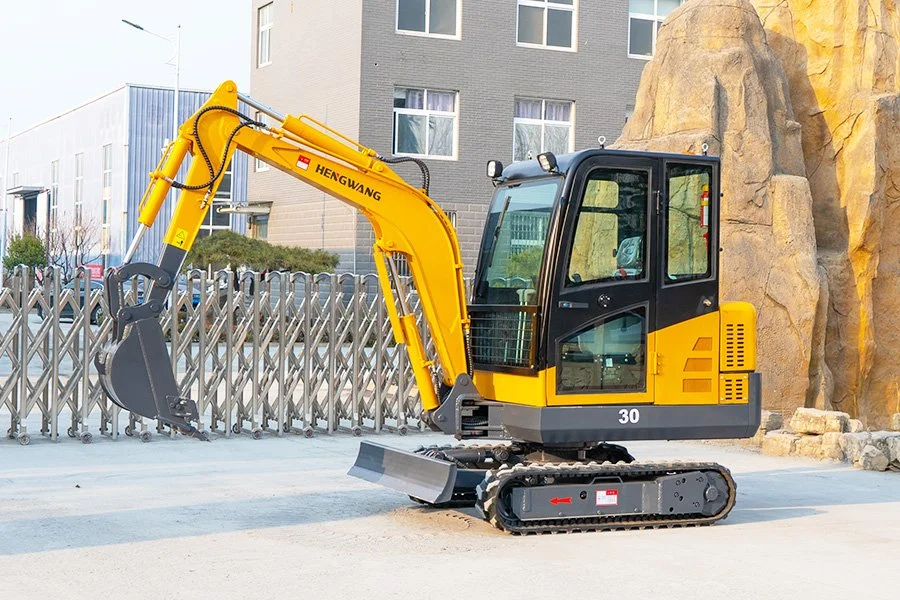
The performance of any excavator is ultimately dictated by its core mechanical and hydraulic architecture. The HW-30 Crawler Excavator has been purposefully designed with an emphasis on power-to-weight ratio and system integration, leading to significant advancements in on-site productivity.
The Precision of Advanced Hydraulic-Mechanical Integration
The operational responsiveness of the HW-30 is fundamentally attributed to its high-precision hydraulic system. Unlike older models where hydraulic flow might be sluggish or poorly coordinated, the HW-30 utilizes an advanced, load-sensing hydraulic pump that dynamically adjusts flow and pressure based on the immediate demands of the implement. This means that when the operator demands simultaneous boom, arm, and bucket movements, the power is distributed with remarkable efficiency and fluidity. This seamless hydraulic-mechanical integration ensures that cycle times are drastically reduced, translating directly into higher hourly productivity.
Furthermore, the machine’s robust engine, which has been carefully selected for its low-emission profile and high torque output, functions in perfect synergy with this hydraulic system. The engine’s power curve is optimized for common excavation tasks, guaranteeing maximum force when it is most needed, such as during deep trenching or breaking up dense materials. As a result of this meticulous engineering, the HW-30’s superior digging force and lifting capacity are consistently maintained, even under extreme operational duress.
Durability and Undercarriage Reliability
The operational environment for a crawler excavator is inherently challenging, often involving rough terrain, abrasive materials, and prolonged stress. Therefore, the chassis and undercarriage of the HW-30 Crawler Excavator have been engineered for exceptional resilience. Constructed from high-tensile steel, the frame is designed to withstand torsional stress and heavy impact loads over its service life. The reliability of the machine in adverse conditions is largely dependent on the robustness of its tracks, rollers, and final drives, which are protected by heavy-duty guarding to repel debris and minimize premature wear. This focus on foundational strength ensures that unexpected mechanical failures are drastically reduced, safeguarding the project schedule and profitability.
The track system itself provides outstanding stability and low ground pressure, making the HW-30 highly effective on soft or uneven surfaces. This is a critical factor for utility work and landscaping projects where minimal ground disturbance is often a requirement. The long-term advantage of this design is that downtime for maintenance or repairs is significantly curtailed, ensuring that capital investment is continually leveraged for maximum output.
Versatile Applications in Modern Construction and Infrastructure
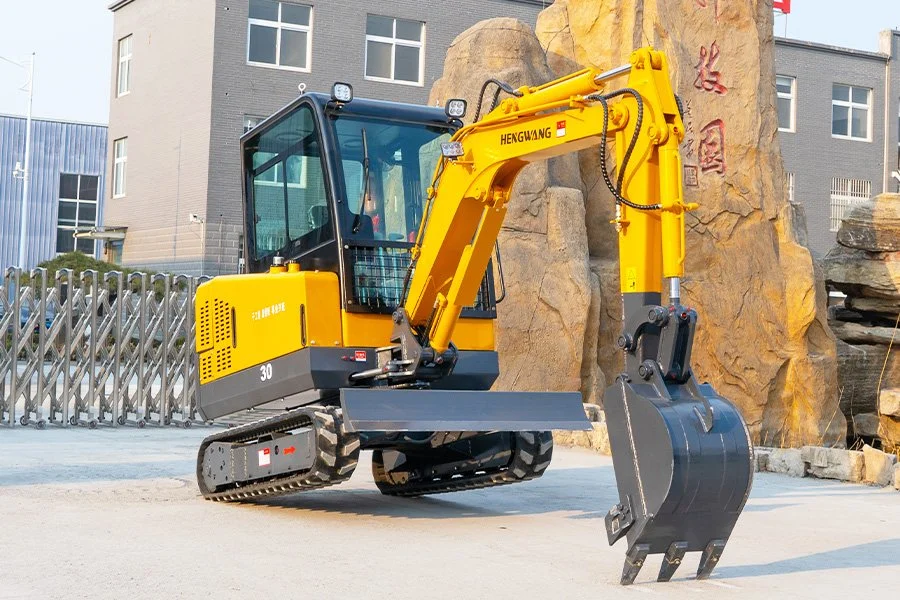
The true litmus test for any construction machine is its versatility across diverse working environments. The HW-30 Crawler Excavator excels not only in traditional excavation but also as a multi-functional tool across various specialized engineering fields. Its optimized size and power make it a linchpin for both constrained urban sites and expansive infrastructure projects.
Critical Role in Urban Development and Utility Projects
Urban construction is characterized by confined spaces, proximity to existing structures, and strict noise/emission regulations. The compact footprint of the HW-30, coupled with its excellent swing clearance, allows it to operate effectively in busy city centers, residential areas, and narrow alleyways where larger excavators cannot maneuver.
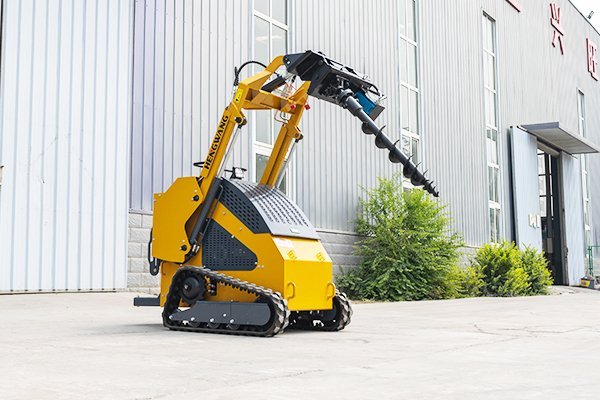
In utility work, the machine’s precision is invaluable. Trenching for water, gas, or fiber optic lines requires accurate depth control and minimal disturbance to surrounding ground. The HW-30 can be precisely controlled, which ensures that underground assets are not accidentally damaged. Furthermore, its ability to quickly switch between attachments—such as hydraulic hammers for breaking pavement, augers for drilling foundation holes, or specialized tiltrotators for complex grading—solidifies its position as the indispensable utility workhorse. The efficiency gains realized by reducing the need for manual labor or smaller, less powerful machines cannot be overstated, directly contributing to faster project completion times.
Supporting Major Infrastructure and Remote Sites
Major infrastructure projects, including highway construction, bridge abutment preparation, and large-scale pipeline laying, demand sustained high performance. While the HW-30 Crawler Excavator may not be the largest machine on these sites, it serves a crucial support role. It is often responsible for the fine grading around structures, the precise placement of culverts, and backfilling operations that require more dexterity than is possible with a massive machine.
Its rugged track system enables it to access remote or poorly prepared sites with ease, a necessity in infrastructure work that often occurs far from paved roads. The machine’s robust design ensures that it can tolerate the long hours and heavy loads associated with large projects, maintaining consistent productivity shift after shift. Through its reliable execution of critical, detail-oriented tasks, the HW-30 significantly accelerates the progress of larger-scale operations, proving that mid-size machinery is often the key to maximizing overall site efficiency.
Operational Economics, Operator Experience, and the Value Proposition
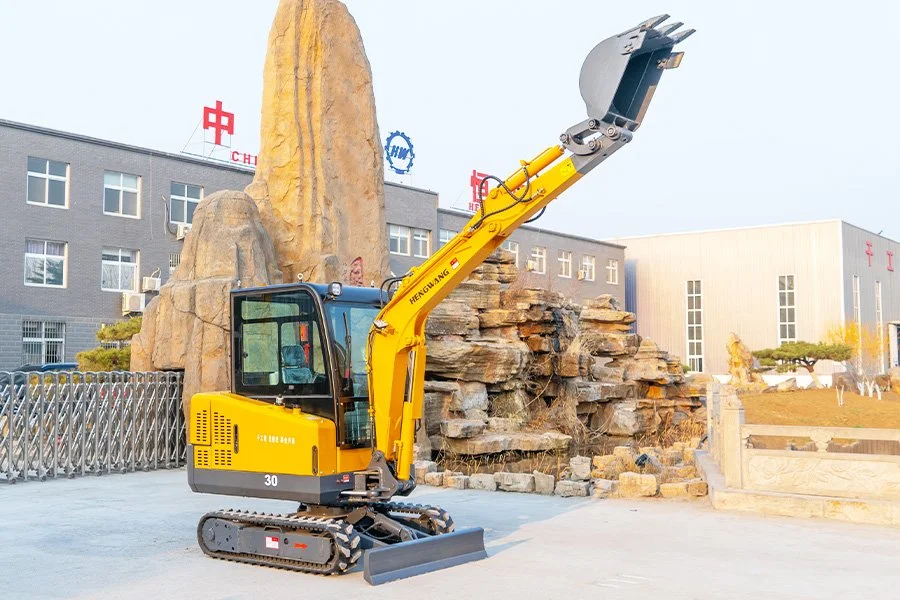
The decision to invest in heavy machinery is fundamentally a financial one, where the focus shifts from the initial purchase price to the long-term cost of ownership and return on investment (ROI). The HW-30’s design philosophy incorporates numerous features aimed at optimizing the financial and human aspects of operation.
Maximizing Fuel Efficiency and Minimizing Total Cost of Ownership (TCO)
Operational expenditure is dominated by fuel consumption and maintenance costs. The efficient engine and advanced hydraulic control system of the HW-30 Crawler Excavator work in tandem to deliver industry-leading fuel efficiency. By dynamically managing pump flow, the engine is prevented from unnecessary overloading, thereby conserving fuel without sacrificing power. This sophisticated control system ensures that the machine is only consuming the energy required for the task at hand.
Maintenance procedures have been streamlined to minimize downtime. Routine service points are grouped together and easily accessible from ground level, which reduces the time required for daily checks and scheduled maintenance. This practical design consideration directly lowers labor costs and increases the machine’s availability for work. When considering the exceptional durability of the components and the reduced fuel burn, the overall TCO for the HW-30 is notably lower than many competing models in its class, solidifying its attractiveness as a capital investment.
Enhancing Operator Comfort and Safety Standards
Human performance is inextricably linked to machine productivity. A comfortable and safe operator is an efficient operator. The cabin of the HW-30 has been designed with ergonomics at the forefront, providing a spacious, low-vibration, and climate-controlled environment. Superior visibility is ensured through expansive glass areas and strategically placed mirrors and cameras, offering the operator a comprehensive view of the working area.
Furthermore, the machine is equipped with intuitive, low-effort joystick controls that minimize operator fatigue during long shifts. Safety standards are not neglected; the cabin structure meets stringent international ROPS (Roll-Over Protective Structure) and FOPS (Falling Object Protective Structure) requirements. This unwavering commitment to safety and operator well-being not only protects personnel but also fosters a positive, responsible work culture—a core value in the engineering machinery industry. The integration of advanced diagnostics further empowers operators and technicians, allowing issues to be identified and addressed proactively before they lead to major failures. The HW-30 Crawler Excavator stands as a testament to the belief that high performance and high safety can coexist.
The Verdict: Why the HW-30 is the Smart Investment for the Future
The assessment of the HW-30 Crawler Excavator consistently reveals a machine that transcends the typical limitations of the mid-size segment. It is a powerful, versatile, and economically efficient tool built to meet the evolving complexities of global construction and civil engineering. Its engineering excellence—evidenced by the precise hydraulic control, the heavy-duty undercarriage, and the optimized operator environment—positions it as an indispensable asset for any company seeking sustainable growth and reliable performance. Investing in the HW-30 is an investment in enhanced productivity, reduced operational costs, and the capability to undertake a broader scope of projects with confidence. It truly embodies the ideal balance of power and precision required for the modern job site.
Frequently Asked Questions (FAQ) about the HW-30 Crawler Excavator
What is the primary difference between the HW-30 and a larger, full-size excavator?
The primary difference lies in versatility and operational flexibility. While larger excavators offer higher absolute digging force and capacity, the HW-30 Crawler Excavator provides exceptional maneuverability, reduced ground pressure, and significantly lower transport costs. It is specifically designed to maximize productivity in space-constrained sites, utility work, and detailed grading, where a full-size machine would be impractical or inefficient.
Does the HW-30 support various attachments, and how quick is the changeover?
Yes, the HW-30 is engineered with auxiliary hydraulic lines and a robust quick-hitch system, supporting a wide array of attachments including hydraulic hammers, rock breakers, shears, augers, and tiltrotators. The changeover process has been streamlined for speed and simplicity, often allowing a skilled operator to swap implements in minutes, thereby minimizing operational downtime and maximizing the machine’s utility across different tasks.
What maintenance considerations should be prioritized for the HW-30 to ensure longevity?
For the longevity of the HW-30, operators should prioritize regular inspection of the undercarriage components, consistent adherence to hydraulic fluid and engine oil change schedules, and daily checks of all linkage grease points. Since the HW-30 operates under demanding conditions, keeping service access areas clean and promptly addressing any early signs of wear on the track system are critical to maintaining peak performance and minimizing TCO.