In the competitive and demanding sector of civil and heavy engineering, the choice of earthmoving equipment directly determines project efficiency, operating costs, and overall success. When large-scale land clearing, material spreading, or infrastructure groundwork is required, a reliable and powerful bulldozer is indispensable. For procurement managers and project engineers, the HW16DS Bullzoder represents a specific class of high-performance machinery designed to meet these rigorous demands. Selecting the right model, however, involves a deep understanding of its technical capabilities, operational advantages, and how these features align with the unique challenges of the job site. This article provides a comprehensive guide to evaluating the HW16DS Bullzoder, ensuring users make an informed decision that maximizes productivity and long-term value in their engineering projects.
Understanding the Core Power and Performance of the HW16DS Bullzoder
The foundation of the HW16DS Bullzoder’s effectiveness lies in its engineered balance of engine power, operational weight, and transmission efficiency. Typically positioned in the medium-to-heavy class, the machine is designed to deliver sustained, high-torque performance necessary for tasks like pushing compacted soil, clearing heavy debris, or ripping hard ground. The engine is the heart of this machine, often utilizing a robust, high-efficiency diesel unit that adheres to modern emission standards while providing the necessary horsepower for demanding pushing and ripping tasks.
The transmission system is equally crucial. Modern bulldozers like the HW16DS Bullzoder frequently employ a hydro-mechanical or hydrostatic drive system, which offers superior advantages over traditional mechanical transmissions. A hydrostatic drive provides smooth, continuous speed and torque control to the tracks, allowing the operator to maximize power application precisely where it is needed—a critical feature when maintaining consistent blade load during long pushes. This system significantly enhances maneuverability, reduces component wear, and translates to higher operational efficiency, particularly when working on varied terrain or executing tight turns on a restricted construction site.
Evaluating Undercarriage and Blade Configuration
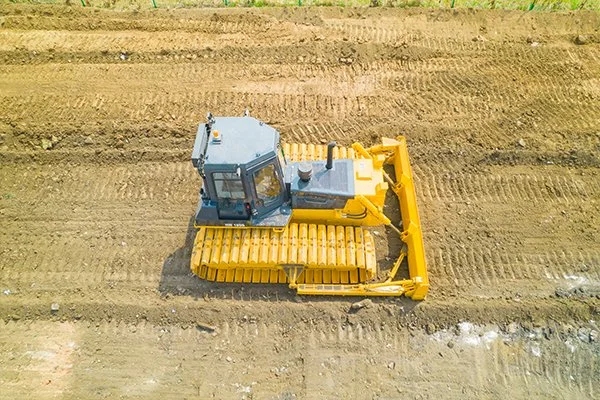
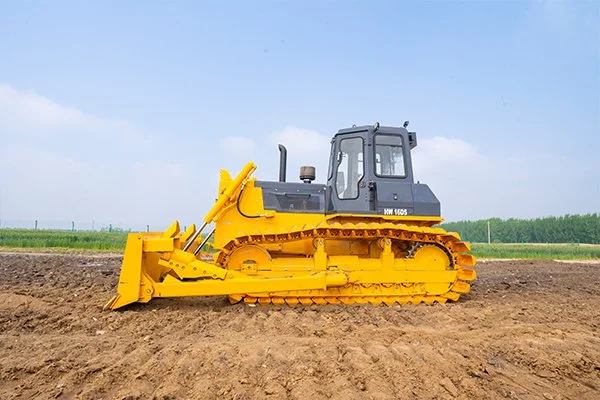
A bulldozer is only as good as its traction and its ability to interact with the ground, making the undercarriage and blade selection paramount. When choosing the HW16DS Bullzoder, users must carefully consider the type of track shoe and blade configuration that best suits their primary applications.
The undercarriage is designed for maximum durability and stability. For soft, muddy, or sandy conditions, wider track shoes (swamp shoes) are necessary to distribute the machine’s weight over a larger area, reducing ground pressure and preventing the machine from sinking. Conversely, narrower shoes are better suited for rocky terrain where greater ground penetration and traction are required. Longevity is built into the undercarriage through sealed and lubricated tracks, minimizing wear and extending the service life of these high-stress components.
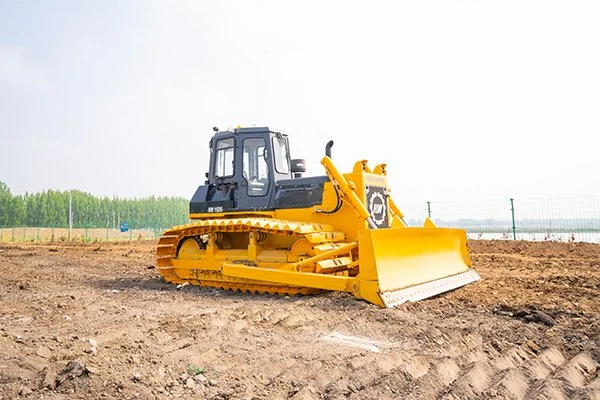
In terms of the blade, the versatility of the HW16DS Bullzoder allows for several options. A straight blade (S-blade) is highly effective for heavy, uniform material and fine grading. A universal blade (U-blade), with its larger capacity and side wings, is ideal for long-distance carrying and pushing massive volumes of light material. Furthermore, the inclusion of an optional ripper attachment at the rear significantly expands the machine’s utility, allowing it to fracture rock and dense material before the dozing process begins, transforming difficult ground into manageable soil.
Operational Ergonomics and Smart Technology Integration
Modern engineering equipment must do more than just push dirt; it must provide an optimized operating environment and integrate smart technologies. The HW16DS Bullzoder incorporates advanced features designed to maximize operator comfort, reduce fatigue, and improve site safety and data management.
The operator cab is built for all-day productivity, featuring ergonomic controls, excellent all-around visibility, and a climate-controlled environment. Low-effort joysticks and responsive controls allow operators to maintain high levels of precision without excessive physical strain. From a technological standpoint, the HW16DS Bullzoder can be integrated with GPS-based grade control systems. These systems provide real-time blade positioning feedback, enabling operators to achieve precise grading tolerances faster and with less rework. This integration of technology translates directly into substantial savings on fuel, time, and material costs, making the machine a powerful tool for modern, data-driven construction management.
The Financial and Logistical Calculus of Selection
Finally, the decision to invest in the HW16DS Bullzoder requires a careful assessment of its long-term financial and logistical viability. While the initial purchase price is a factor, the total cost of ownership (TCO) is a more accurate measure. TCO includes fuel efficiency, predicted maintenance costs, component lifespan, and resale value.
Due to the robust and standardized components used in the HW16DS Bullzoder, parts accessibility and local technical support are often excellent, ensuring that maintenance is prompt and downtime is minimized. When evaluating potential suppliers, users should seek out partners who can provide comprehensive training on the hydrostatic system and offer readily available service manuals and genuine replacement parts. Ultimately, choosing the HW16DS Bullzoder is an investment in a durable, technologically capable asset that provides a competitive edge by delivering consistent performance and reliability across the most demanding engineering projects.
Frequently Asked Questions (FAQ)
Q1: What does the “DS” designation in the HW16DS Bullzoder model name typically refer to?
A: While specific manufacturer nomenclature varies, the “DS” often indicates a combination of drive system and configuration, such as “Hydrostatic Drive” (D) coupled with “Semi-U” or “Standard” blade configuration (S). Users should always verify the specific manufacturer’s glossary, but this designation suggests a model built for high-efficiency operation using modern transmission technology.
Q2: How does the hydrostatic transmission in the HW16DS Bullzoder benefit precise grading work compared to a torque converter?
A: The hydrostatic transmission offers infinitely variable speed control, delivering continuous, smooth torque to the tracks regardless of speed. This allows the operator to precisely control pushing force and travel speed, which is crucial for fine grading where uniform material distribution and exact blade position are required. Torque converters, while powerful, often require shifting and can lead to less precise control at very low speeds.
Q3: What are the primary considerations for maximizing the lifespan of the HW16DS Bullzoder undercarriage?
A: Maximizing undercarriage life involves several practices:
Regular Cleaning: Removing packed mud and debris that can accelerate wear.
Proper Track Tensioning: Ensuring tracks are adjusted according to ground conditions (too tight increases wear).
Minimize High-Speed Reverse Travel: Running in reverse accelerates pin and bushing wear.
Regular Inspection: Monitoring sprockets, idlers, and rollers for signs of wear.