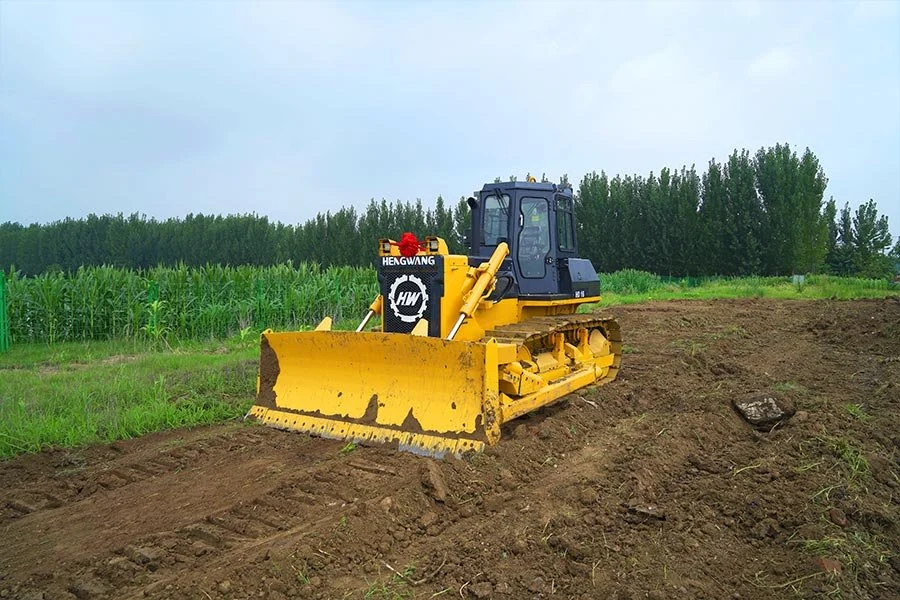
The procurement of heavy machinery is a pivotal decision for any construction or civil engineering enterprise, directly impacting project timelines, operational costs, and overall productivity. Within this demanding sector, the HW16D Bulldozer has emerged as a compelling solution for earthmoving, land clearing, and material handling tasks. This machine is specifically engineered to navigate and dominate harsh working environments, offering a potent combination of power, stability, and control that is crucial for modern construction projects. For professional users—site managers, equipment operators, and project planners—understanding the intrinsic capabilities and design philosophy of the HW16D Bulldozer is essential to accurately assess its potential to optimize heavy construction workflows. This comprehensive article explores the technical specifications, performance advantages, and practical applications of this machine, providing valuable insights into its role as a reliable cornerstone of demanding earthmoving operations.
Understanding the Engineering of the HW16D Bulldozer
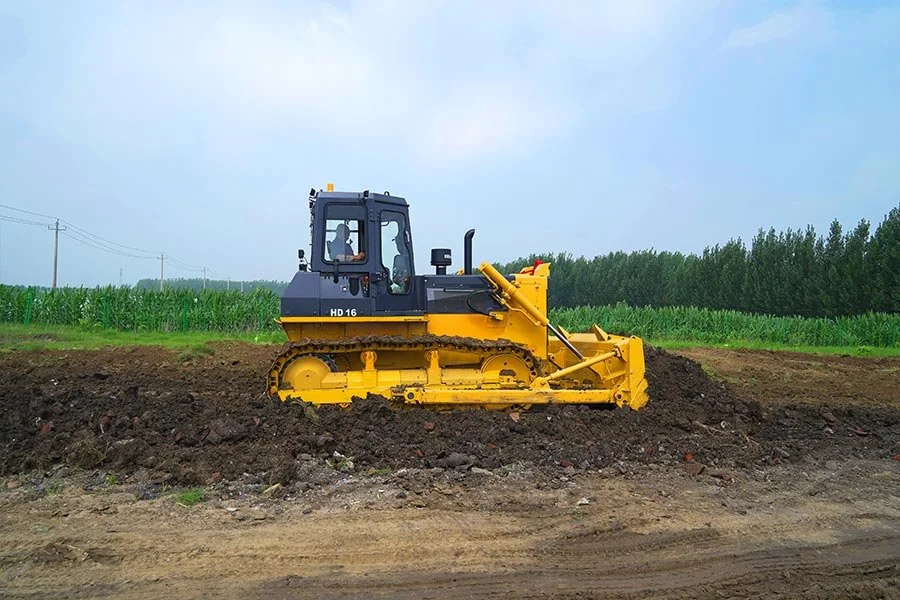
The HW16D Bulldozer is positioned within the medium-to-heavy class of track-type tractors, designed for versatility across various applications, from road building and mining support to large-scale site preparation. Its core strength lies in its meticulously balanced power train and robust structural frame, which are specifically built to withstand the continuous stresses of pushing and ripping dense materials.
Power Train and Performance Capabilities
At the heart of the HW16D Bulldozer is a reliable, high-torque engine, typically a proven diesel unit, which delivers substantial power efficiently. This power is transmitted through a specialized hydraulic torque converter and a power shift transmission. The combination ensures smooth, rapid gear changes under load, a feature that significantly improves cycle times when grading or performing long-distance pushes. Furthermore, the hydrostatic steering system allows for continuous power to both tracks during turns, maintaining momentum and enhancing maneuverability on challenging slopes or confined sites. This precise power delivery system is fundamental to achieving high productivity rates and reducing operational fatigue for the driver.
Structural Integrity and Blade Versatility
The structural design of the HW16D Bulldozer emphasizes durability and serviceability. A rigid main frame absorbs impact loads and torsional stresses, protecting the internal components. Attached to this sturdy chassis is a high-capacity blade, typically configured as a straight tilt, angle, or semi-U blade, depending on the required application.
Blade Configurations for Specific Tasks
- Straight-Tilt Blade (S-Blade): Ideal for fine grading and handling dense, rocky material with precision. It is highly effective for maintaining level surfaces.
- Semi-U Blade (SU-Blade): The most common configuration, offering a balance between the pushing capacity of a U-blade (due to its side wings) and the maneuverability of an S-blade. This is excellent for long-distance dozing and general earthmoving.
- Angle Blade (A-Blade): This blade can be angled to the side, making it highly suitable for side-casting and pioneering roads on slopes, efficiently moving material away from the travel path.
The robust hydraulic cylinders governing the blade’s movement provide precise control over tilt and pitch, allowing operators to achieve exact grades and maximize material displacement, which is a key performance indicator on any earthmoving project.
Operational Advantages in Engineering and Construction
The real value of the HW16D Bulldozer is realized through its direct impact on site efficiency and cost management within large-scale engineering projects. The machine’s design integrates several features aimed at maximizing uptime and lowering the total cost of ownership.
Fuel Efficiency and Environmental Compliance
In an era where fuel costs are critical and environmental regulations are tightening, the engine technology employed in the HW16D Bulldozer offers a distinct competitive advantage. Modern variants are often equipped with electronically controlled fuel injection systems, which optimize combustion to minimize fuel consumption while meeting stringent emissions standards. This efficiency not only reduces the carbon footprint of the operation but also leads to substantial savings over the lifespan of the machine. Operators frequently report that the finely tuned power-to-weight ratio allows them to perform heavy work with reduced engine strain, thereby improving overall efficiency.
Operator Comfort and Safety Features
Productivity is inextricably linked to the operator’s environment. Recognizing this, the HW16D Bulldozer is designed with an emphasis on ergonomic control and safety. The cab is typically isolated from the chassis to minimize vibration, and it features superior sound suppression, creating a quieter and less fatiguing workplace. High-visibility glass and strategically placed mirrors ensure excellent sightlines to the blade and surrounding worksite, a critical safety feature. Furthermore, the integration of advanced diagnostic systems allows operators and maintenance teams to monitor key performance metrics in real-time, facilitating immediate response to any minor issue and preventing escalation into costly failures.
Integrating the HW16D Bulldozer into Complex Workflows
For project managers, the adaptability of the HW16D Bulldozer is its most powerful asset. Its ability to perform multiple roles makes it a highly flexible and valuable piece of equipment in dynamic construction environments.
Applications in Site Preparation and Infrastructure
The machine excels in foundational tasks like stripping topsoil, spreading fill, and preparing subgrades for road construction or large building pads. When equipped with a multi-shank ripper attached to the rear, the HW16D Bulldozer becomes an effective tool for breaking up densely compacted soil, shale, or soft rock, paving the way for easier excavation and grading. This ripping capability dramatically reduces the need for blasting in many applications, simplifying logistics and enhancing site safety. The consistent power and reliable traction ensure that even on steep inclines or soft ground, the machine maintains a high level of operational control.
Maximizing Uptime Through Serviceability
A key consideration for heavy equipment users is maintenance and service access. The design of the HW16D Bulldozer prioritizes serviceability. Key maintenance points, such as filter banks, fluid checkpoints, and grease points, are strategically located and easily accessible from ground level. This ease of access significantly reduces the time required for routine preventative maintenance checks, directly contributing to higher equipment availability and lower maintenance labor costs. When maintenance is simplified, it is more likely to be performed correctly and on time, which is fundamental to achieving the machine’s maximum expected lifespan.
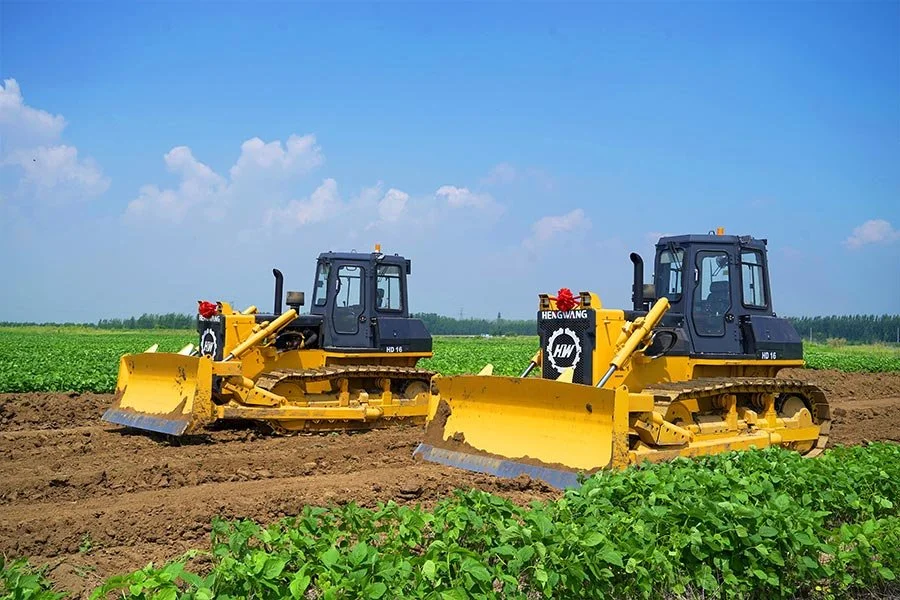
In conclusion, the HW16D Bulldozer is engineered not just as a powerful mover of earth but as a strategic asset for modern construction. Its balanced design, combining efficient power delivery, robust structure, and operator-centric features, provides a compelling case for its inclusion in any fleet focused on maximizing productivity and reliability. By understanding and leveraging its specific advantages in power, control, and serviceability, engineering firms can ensure that their earthmoving operations are not just completed, but are optimized for speed, precision, and cost-effectiveness.
Frequently Asked Questions (FAQ)
Q1: What type of terrain is the HW16D Bulldozer best suited for?
A: The HW16D Bulldozer is highly versatile due to its robust track system and power-shift transmission. It excels in heavy earthmoving, land clearing, and site preparation on mixed terrains, including packed dirt, sandy soil, and rocky areas, particularly when equipped with a ripper attachment to break up hard material.
Q2: How does the power-shift transmission on the HW16D benefit productivity?
A: The power-shift transmission allows the operator to change gears quickly and smoothly under full engine load without pausing the machine’s momentum. This is crucial for applications like continuous dozing and grading, where maintaining speed and pushing force directly translates into faster cycle times and greater material moved per hour.
Q: What are the primary maintenance considerations for the HW16D Bulldozer?
A: As with all track-type machinery, key maintenance areas include the undercarriage (tracks, rollers, idlers) for wear management and the hydraulic system (hoses, filters, fluid cleanliness) for preventing component damage. However, the design of the HW16D Bulldozer generally features ground-level access to routine service points, simplifying daily checks and preventative maintenance schedules.