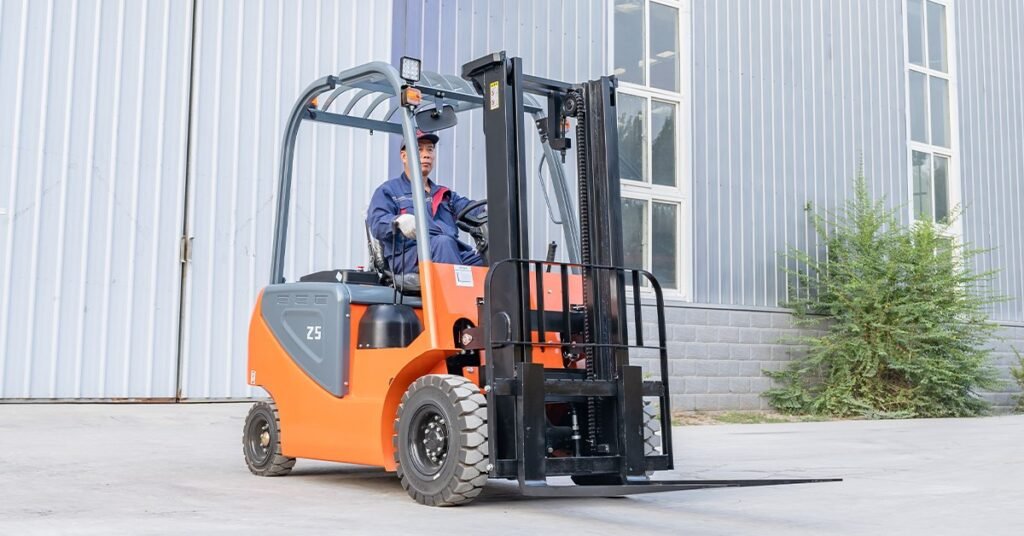
Efficient material handling often relies on fitting powerful equipment into tight spaces. I have observed that many warehouse managers struggle to balance load capacity with maneuverability in narrow aisles. Small electric forklifts provide a critical solution for these constrained environments. These machines offer zero emissions, lower noise levels, and precise handling capabilities.
However, selecting the right unit requires understanding specific technical metrics and manufacturing standards. You must evaluate how different models perform under load and whether international suppliers meet safety regulations. This guide investigates the essential criteria for choosing compact material handling equipment for your business.
Navigating Tight Spaces with Compact Electric Models
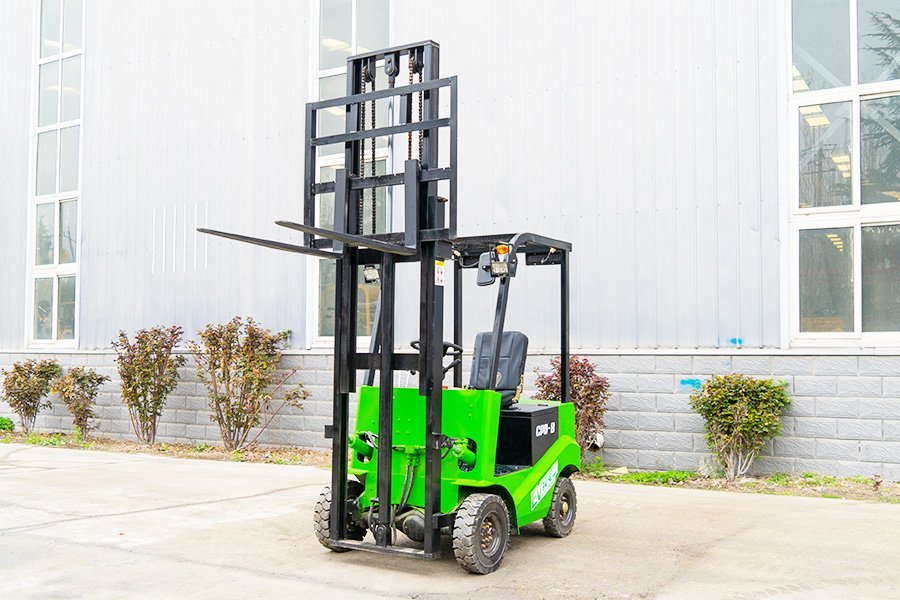
Space utilization is often the most expensive overhead for logistics companies. Small electric forklifts generally fall under Class I (Electric Motor Rider Trucks) or Class III (Electric Motor Hand or Hand/Rider Trucks) based on the Industrial Truck Association (ITA) classification. I recommend focusing on these compact units because they reduce the required aisle width significantly compared to internal combustion models.
A smaller chassis does not necessarily mean a loss of stability if the engineering is sound. The layout of the battery acts as a counterweight, lowering the center of gravity. This design allows operators to maneuver in spaces often less than 10 feet wide (approximately 3 meters).
Choosing a compact model also impacts your facility’s ventilation requirements. Since these units produce zero tailpipe emissions, you do not need expensive air exchange systems required for propane or diesel trucks. This makes them the standard choice for food processing, pharmaceuticals, and retail storage where contamination risks must be minimized.
How Much Can an Electric Forklift Hold?
One of the most common questions I encounter during procurement is: how much can an electric forklift hold? The answer is not a single number but a calculation based on the load center and the laws of physics.
According to the Occupational Safety and Health Administration (OSHA), a forklift’s capacity is rated at a specific load center, typically 24 inches (600 mm) from the face of the forks. A standard small electric forklift might be rated for 1,500 to 3,000 lbs (approximately 0.7 to 1.4 tons).
However, you must understand that the “net capacity” decreases as the load center shifts. If you lift an irregularly shaped object where the center of gravity is 30 inches out, the safe lifting weight drops significantly due to the leverage effect.
Key Capacity Factors:
- Rated Capacity: The maximum weight the lift can handle at the standard load center.
- Lift Height: Capacity often decreases as the forks are raised to maximum height, a concept known as “de-rating.”
- Attachments: Adding a side shifter or clamp reduces the total payload because the attachment adds weight and shifts the load center forward.
Always verify the manufacturer’s data plate. It is the only authoritative source for that specific machine’s limits and must remain legible at all times.
Evaluating Electric Forklift Manufacturers in China
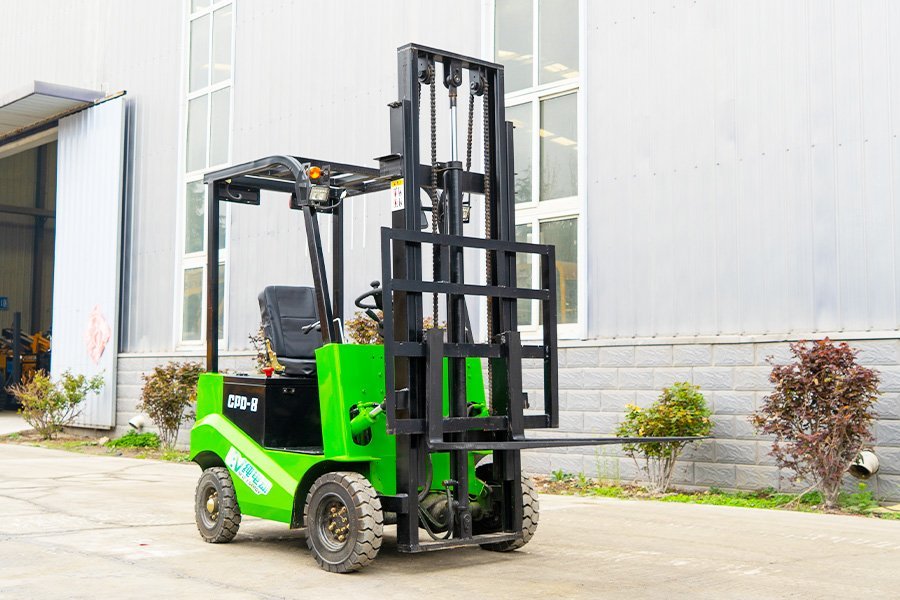
Global supply chains have shifted, making electric forklift manufacturers China a primary source for cost-effective material handling solutions. I have analyzed market trends showing that Chinese engineering has moved from basic assembly to sophisticated production adhering to ISO standards.
When sourcing a 1.5 ton electric forklift in china or smaller variants, you should look for compliance with ISO 3691. This International Organization for Standardization benchmark covers safety requirements and verification for industrial trucks, ensuring that imported machinery meets global safety expectations. A reputable manufacturer will always provide documentation proving their machines meet these stability and braking standards.
You should also investigate the component sourcing used by the manufacturer. The reliability of the battery management system (BMS) and the hydraulic pumps determines the unit’s longevity. Top-tier manufacturers in China now often integrate global component standards to ensure easier maintenance for international B2B buyers.
Understanding Safety and Stability Standards
Safety is non-negotiable when operating heavy machinery in confined spaces. The core concept you must understand regarding small electric forklifts is the “Stability Triangle.”
As defined by OSHA and engineering standards, the vehicle has a three-point suspension system (the two front wheels and the center of the rear axle). The center of gravity must remain within this triangle to prevent tipping. Compact forklifts have a smaller stability triangle, making them more sensitive to speed and uneven surfaces.
Operators must be trained to understand that unlike internal combustion trucks, electric models often have instant torque. This means acceleration is immediate, which can destabilize a load if the operator is inexperienced. Always ensure your chosen equipment includes safety features like automatic speed reduction when turning and operator presence sensing systems (OPSS) that disable hydraulics if the driver leaves the seat.
Assessing Your Specific Operational Metrics
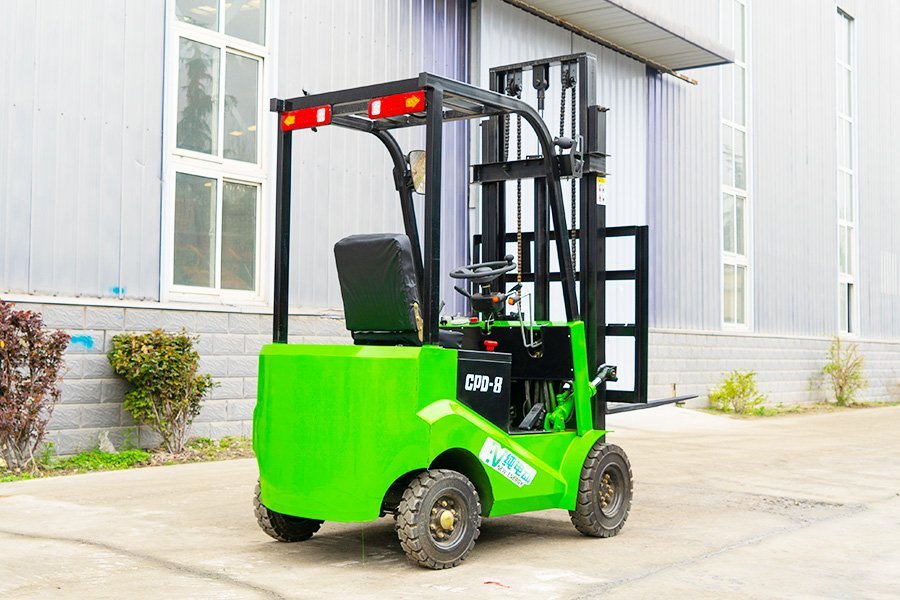
Determining whether a specific model fits your fleet involves more than just price comparison. You need to align the equipment’s physical footprint with your facility’s bottlenecks.
I advise clients to measure their narrowest choke points before browsing catalogs. If your operation involves moving pallets through standard doorways or inside freight elevators, a massive 3-ton unit will be useless.
Consider the turning radius carefully. A 3-wheel configuration typically offers a tighter turn than a 4-wheel model, which is crucial for dead-end aisles. Furthermore, consider the duty cycle. Lithium-ion options allow for opportunity charging during breaks, whereas lead-acid requires long downtime and dedicated charging rooms.
For facilities requiring extreme compactness without sacrificing basic lifting power, specific ultra-compact models are available. For example, if your application involves light-duty stacking in retail backrooms or tight manufacturing cells, you might examine the Hengwang HW0.8T Electric Forklift. This unit represents the class of machinery designed specifically for high maneuverability in restricted zones.
Conclusion
Selecting the right equipment requires balancing physical size with performance data. By understanding how much can an electric forklift hold based on load centers and verifying supplier standards, you can secure reliable machinery. Whether you need a standard 1.5 ton electric forklift in china or a smaller 0.8-ton unit, prioritize safety and verifiable specifications.
FAQ
Q1: What is the typical battery life of small electric forklifts?
Most modern lithium-ion batteries last for a full 8-hour shift and can withstand 2,000 to 3,000 charge cycles before significant degradation.
Q2: Is it difficult to import a 1.5 ton electric forklift in China?
No, most major manufacturers handle international shipping logistics, but you must verify that the equipment meets your local safety standards (such as CE or UL).
Q3: Can small electric forklifts be used outdoors?
Typically, small electric forklifts are designed for indoor use on smooth surfaces; using them outdoors requires specific weatherproofing and pneumatic tires which are less common on compact models.
Q4: How do I read the data plate on a forklift?
The data plate lists the model number, vehicle weight, and the rated load capacity at a specific load center and lift height, as mandated by safety regulations.
Reference Sources
Occupational Safety and Health Administration (OSHA) – Powered Industrial Trucks (Forklift) eTool
https://www.osha.gov
International Organization for Standardization (ISO) – ISO 3691: Safety of industrial trucks
https://www.iso.org
Industrial Truck Association (ITA) – About Industrial Trucks (Classifications)
https://www.indtrk.org