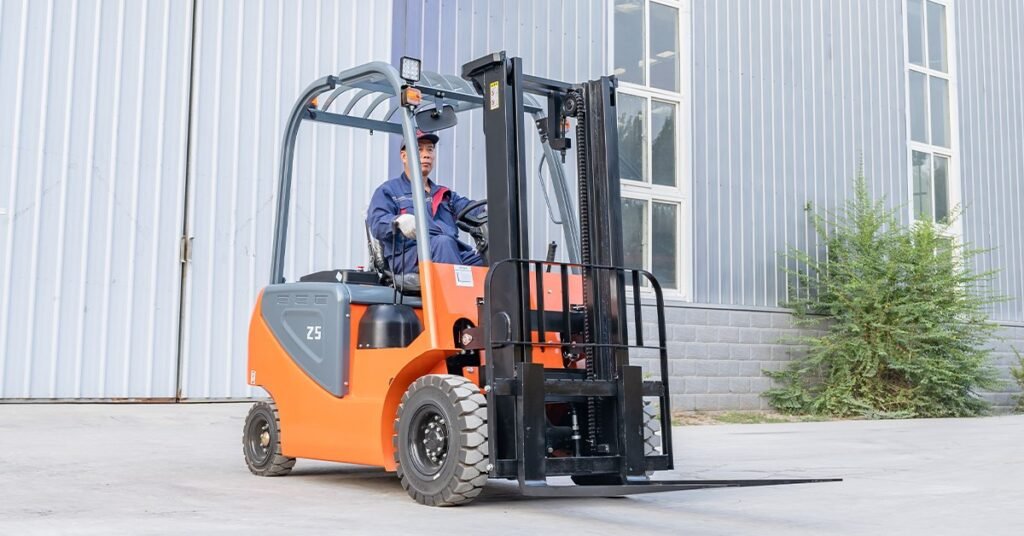
Rough, uneven ground demands more than a standard warehouse machine. If your construction site features mud, hills, or loose gravel, a standard lift truck will fail. You specifically need an All Terrain Forklift designed to maintain stability under unpredictable conditions.
For B2B buyers, selecting the right equipment is a balance of safety, performance, and cost. I will guide you through the technical criteria required to evaluate these machines effectively. We will focus on stability standards, traction systems, and sourcing strategies.
Understanding Class VII All Terrain Forklift Capabilities
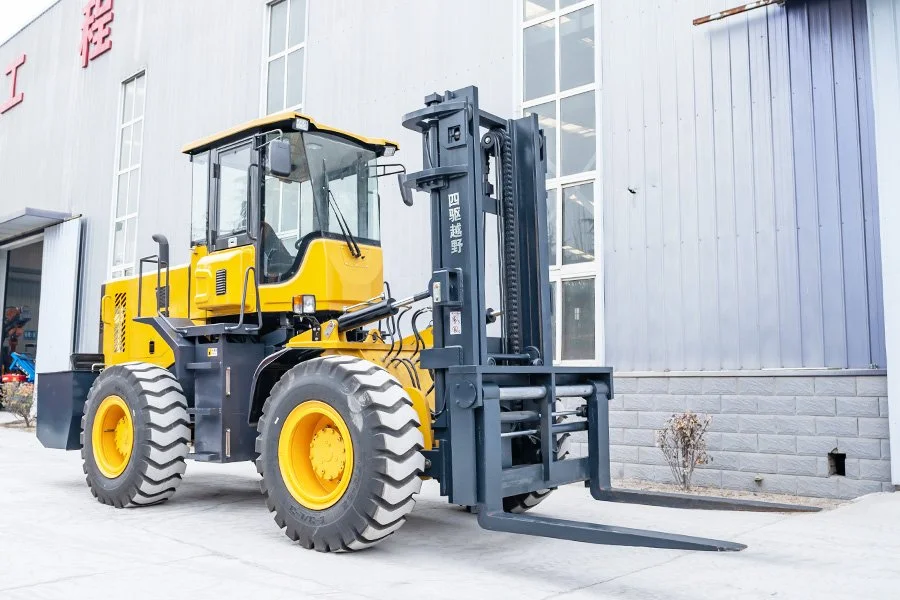
The Industrial Truck Association (ITA) and OSHA categorize these machines as Class VII trucks. Unlike cushion-tire warehouse lifts, an all terrain forklift is engineered for the outdoors. I always emphasize that their defining feature is not just power, but flotation and grip.
These units utilize large, pneumatic tires with aggressive treads. This design allows the machine to “float” over soft soil rather than sinking. High ground clearance is equally critical for passing over debris and rocks.
When you look for an all terrain forklift for sale, verify its classification first. A true rough terrain unit must meet specific design standards regarding center of gravity. Misidentifying the equipment class is a common error that leads to safety hazards.
Key Performance Metrics: Stability and Gradeability
Stability is the single most important factor when operating on uneven ground. According to ISO 22915 standards, forklifts must maintain equilibrium during stacking and traveling. On a construction site, the ground is rarely level, which shifts the load center dangerously.
You must evaluate the machine’s “gradeability”—its ability to climb slopes while loaded. A robust all terrain forklift should handle significant inclines without losing traction. I recommend looking for models with selectable 4-wheel drive (4WD) for maximum versatility.
Articulation is another feature that enhances stability on rough surfaces. An articulated chassis allows the front and rear of the machine to move independently. This keeps all four wheels on the ground, ensuring constant traction.
Sourcing an All Terrain Forklift Manufacturer in China
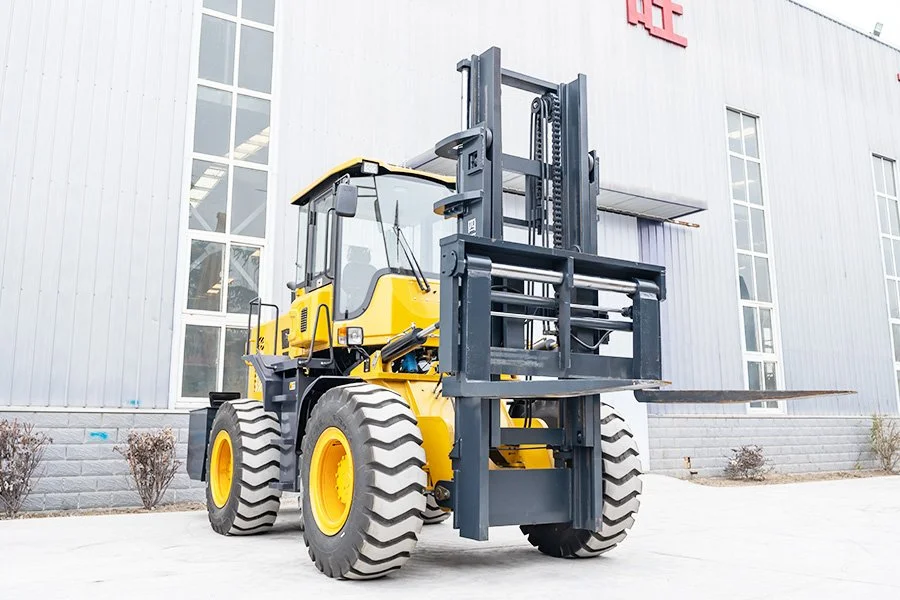
Global supply chains have shifted, making China a primary hub for heavy machinery. Finding a reputable all terrain forklift manufacturer in china offers significant cost advantages. However, you must prioritize quality assurance and component reliability over the lowest price.
I advise examining the engine specifications and hydraulic systems carefully. Reliable manufacturers use globally recognized engines or high-tier domestic options that are easy to service. The availability of spare parts is crucial for minimizing downtime in your operations.
Do not settle for a supplier who cannot provide detailed load charts. A professional manufacturer will be transparent about the machine’s residual capacity at different lifting heights. This data is essential for your safety planning and operational efficiency.
Evaluating Total Cost of Ownership
The purchase price of an all terrain forklift for sale is only the beginning. You must calculate the Total Cost of Ownership (TCO) to make a sound B2B investment. This includes fuel consumption, tire replacement frequency, and maintenance intervals.
Rugged terrain accelerates wear and tear on components. Therefore, a machine with accessible service points reduces labor costs during maintenance. I have found that simpler mechanical designs often outlast complex electronic systems in harsh environments.
Durability directly impacts resale value. A well-maintained unit from a trusted brand retains value better than a generic, low-quality alternative. Always factor the potential resale price into your initial budget analysis.
Assessing Heavy-Duty Articulated Models
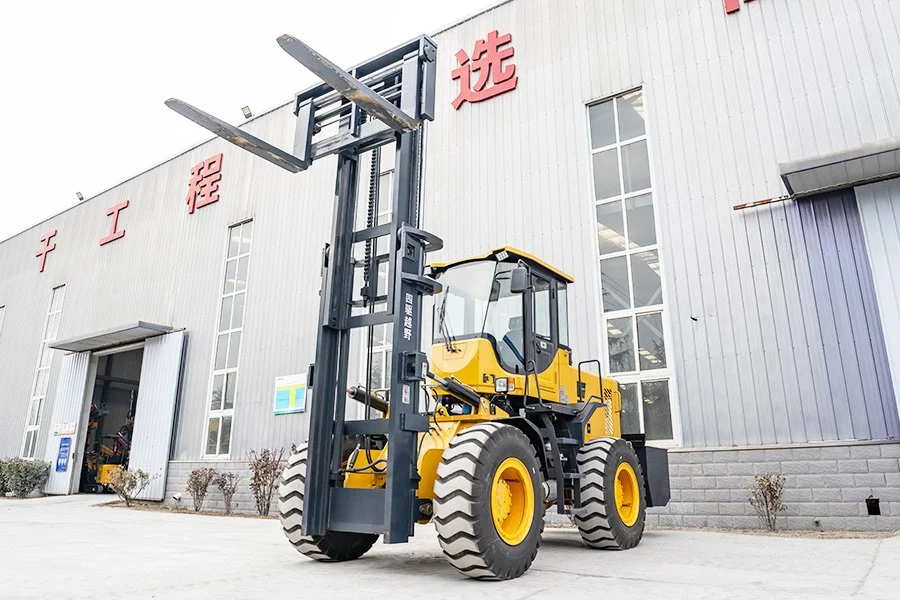
When your operations require extreme maneuverability, standard rigid-frame forklifts may not suffice. In these scenarios, judging the specific engineering of articulated models becomes necessary. You need a machine that combines a tight turning radius with high off-road capability.
I recommend evaluating the chassis design for robustness. A reinforced articulated joint ensures the machine can withstand the twisting forces of uneven loads. This is particularly important for sites with narrow access points and deep mud.
For example, models like the Hengwang HW-T100A All Terrain Forklift utilize this articulated design. By allowing the frame to pivot, it maintains better wheel contact and stability than rigid alternatives. When reviewing such equipment, check if the engine power aligns with your heaviest projected load.
Summary
Selecting the right All Terrain Forklift requires analyzing stability standards, gradeability, and manufacturer reputation. Prioritize Class VII safety compliance and robust engineering over surface aesthetics. A calculated choice ensures operational safety and long-term project efficiency.
FAQ
Q1: What distinguishes an all terrain forklift from a standard forklift?
An all terrain forklift features larger pneumatic tires, higher ground clearance, and enhanced suspension for stability on uneven surfaces.
Q2: Do I need a special license to operate these forklifts?
Yes, operators typically require OSHA-compliant certification specific to Class VII rough terrain trucks due to their unique handling characteristics.
Q3: Why should I consider an all terrain forklift manufacturer in china?
Chinese manufacturers often provide competitive pricing and robust designs, but you must verify their quality control and parts availability.
Q4: How does articulation help in rough terrain forklifts?
Articulation allows the vehicle frame to pivot, keeping all wheels in contact with the ground to improve traction on uneven terrain.
Q5: What is the typical lifespan of an all terrain forklift?
With proper maintenance, these machines can last 10,000 to 20,000 operating hours, depending on the severity of the working environment.
Reference Sources
Occupational Safety and Health Administration (OSHA)
Powered Industrial Trucks – Forklifts
https://www.osha.gov/
International Organization for Standardization (ISO)
ISO 22915-1:2016 Industrial trucks — Verification of stability
https://www.iso.org/
Industrial Truck Association (ITA)
Lift Truck Classes
https://www.indtrk.org/