In the relentlessly demanding world of heavy construction, civil engineering, and mining, the bulldozer stands as the essential piece of heavy equipment. It is the machine tasked with performing critical, power-intensive operations such as large-scale land clearing, bulk earthmoving, meticulous grading, and material ripping. Choosing the correct model is a high-stakes decision that directly influences project timelines, operational efficiency, fuel consumption, and the long-term profitability of a fleet. The HW17DE Bulldozer has emerged as a formidable contender in the medium-sized crawler category, expertly integrating robust power delivery with advanced drive technology and a design philosophy centered on the operator. It is simply insufficient to assess a machine solely on its engine horsepower; a comprehensive understanding of its core operational mechanics, particularly the sophisticated hydrostatic drive system, is absolutely essential for professional users seeking a competitive edge. This extended and professional article offers an in-depth, expert-level analysis of the technical specifications, strategic advantages, and key long-term considerations that must inform your decision when evaluating the HW17DE Bulldozer for high-demand engineering and infrastructure projects.
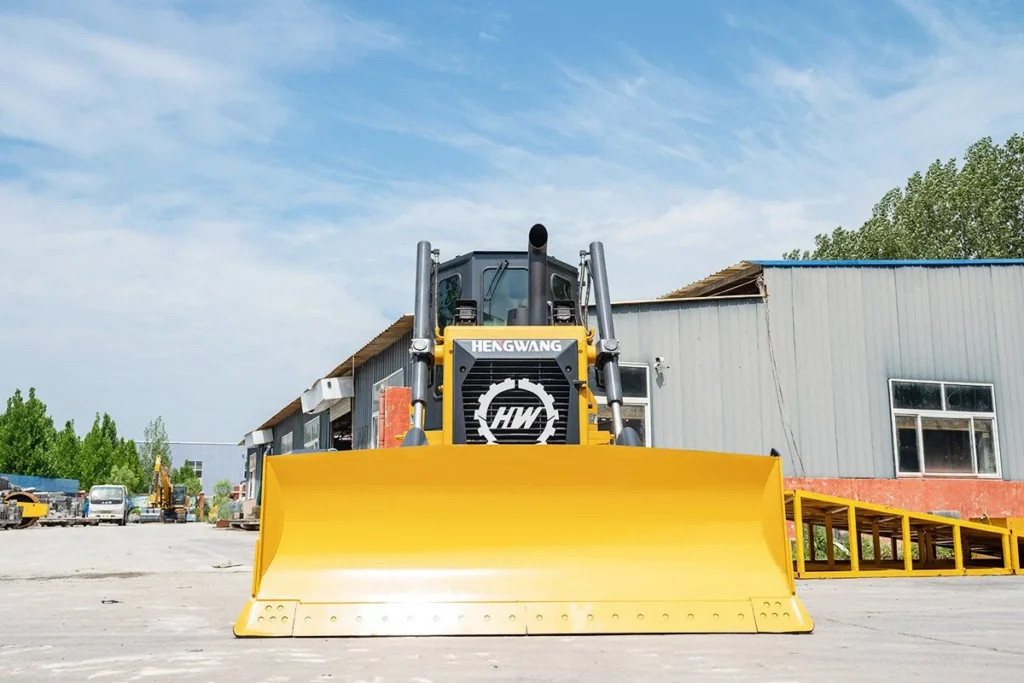
The Technological Leap: Advanced Hydrostatic Drive in the HW17DE Bulldozer
The defining technical attribute that separates the HW17DE Bulldozer from many conventional models is its sophisticated hydrostatic transmission system, a technology that fundamentally optimizes the machine’s efficiency, power management, and agility compared to older mechanical powertrains.
Precision Control Through Infinitely Variable Speed
Unlike legacy bulldozers that rely on a mechanical torque converter and a fixed-ratio gearbox, the HW17DE Bulldozer utilizes a closed-loop system comprising two independent hydrostatic pumps and motors, one dedicated to powering each track. This configuration provides the operator with infinitely variable speed control, allowing for seamless modulation of both speed and torque without the necessity of interrupting power flow to shift gears. The ability to maintain the engine at its most optimal and fuel-efficient rotational speed (RPM) while precisely adjusting the travel speed to match varying ground conditions and load resistances results in substantial fuel savings over thousands of operating hours. Furthermore, this hydrostatic arrangement virtually eliminates the mechanical shock and wear associated with clutch engagement and gear shifts, significantly extending the lifespan of the entire drivetrain. The inherent design allows the HW17DE Bulldozer to achieve full-load travel speed adjustments with pinpoint accuracy.
Dynamic Power Management and Superior Maneuverability
The advanced electronic control unit (ECU) of the hydrostatic system grants the HW17DE Bulldozer remarkable autonomy in managing pushing power. The system continuously monitors the hydraulic pressure and load resistance encountered by the blade. When the system detects high resistance or potential track slippage on one side (for instance, hitting a buried rock or transitioning into soft soil), the ECU instantaneously and automatically transfers surplus torque to the track that maintains better traction. This dynamic, real-time power distribution minimizes track slippage, guarantees constant, straight-line pushing integrity, and dramatically maximizes the usable tractive effort. A further critical advantage is the capacity for independent track counter-rotation. This feature allows the HW17DE Bulldozer to execute spot turns (turning within its own footprint), providing unparalleled agility and reduced cycle times in confined spaces, tight construction staging areas, or when working on sloped terrain requiring precise repositioning.
Application Versatility: The HW17DE Bulldozer Across Engineering Disciplines
The specialized design and hydrostatic control capabilities of the HW17DE Bulldozer ensure it is not limited to a single task but can be effectively deployed across a wide spectrum of demanding engineering applications.
Heavy-Duty Earthmoving and Material Handling
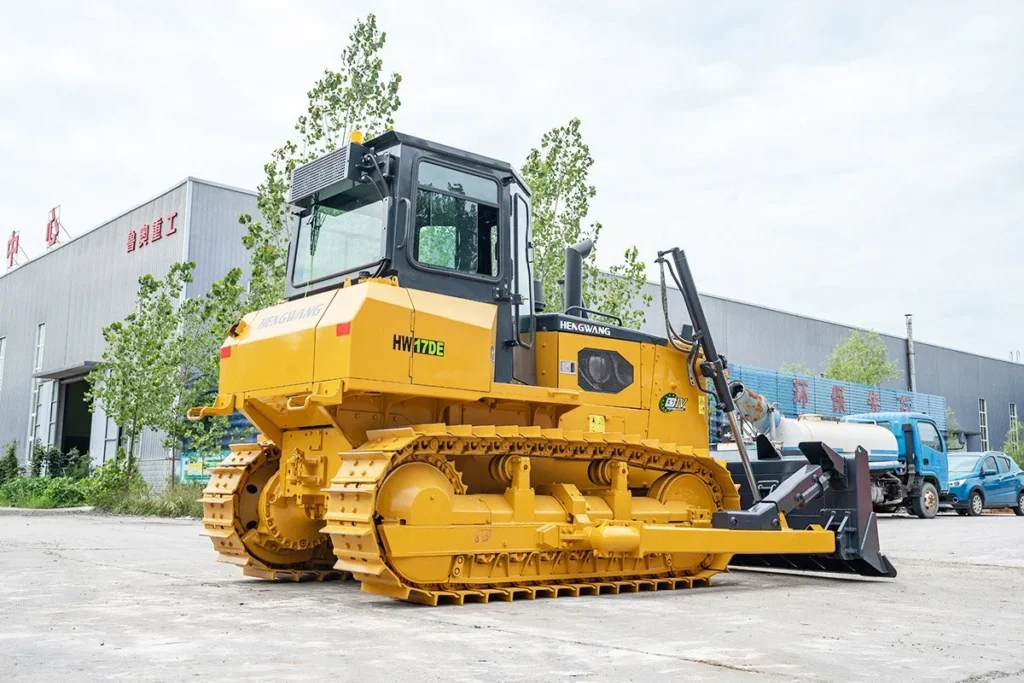
For high-volume bulk earthmoving projects—such as building large embankments, dam construction, or mine reclamation—the machine’s robust structure and high pushing force are paramount. The HW17DE Bulldozer is paired with a heavy-duty blade (often a straight blade or U-blade option) that features an optimal curvature designed for superior material rolling. This specialized blade profile ensures that the maximum amount of material is moved with the minimum amount of force, thereby enhancing productivity and minimizing unnecessary fuel expenditure. The stable and wide undercarriage provides a substantial contact area with the ground, maintaining a low ground pressure that enables the machine to operate effectively and efficiently on challenging, soft, or unconsolidated job sites.
Precision Grading and Integrated Site Technology
The fine-tuning control provided by the hydrostatic transmission is invaluable for final contouring and finish grading. Operators can modulate the travel speed with extreme finesse, sometimes down to minimal creep, while retaining the full hydraulic power required for micro-adjustments of the blade pitch and tilt. This precision makes the HW17DE Bulldozer highly compatible with the latest construction technologies, including 3D GPS/GNSS machine control systems. The machine’s electronic controls interface seamlessly with these digital guidance tools, allowing the bulldozer to autonomously follow complex digital terrain models. This integration dramatically speeds up the grading process for road sub-bases, airport runway preparations, and major commercial infrastructure pads, ensuring superior adherence to specified tolerances.
Ripping and Site Preparation in Tough Ground
In site preparation where dense, compacted soil, shale, or soft rock is encountered, the ripper attachment is essential. The HW17DE Bulldozer is designed to accommodate a multi-shank or single-shank parallelogram ripper, utilizing the machine’s substantial drawbar pull and weight for efficient penetration and fracturing of tough layers. The hydrostatic drive ensures that the engine’s power is consistently applied to overcome resistance without stalling, a common issue in mechanically driven machines when ripping through highly variable ground. The precise, consistent forward motion allows the ripper teeth to cleanly fracture the rock, preparing the ground for easier subsequent excavation and significantly reducing the need for costly blasting operations.
Strategic Acquisition: Total Cost of Ownership and Operator Focus
The decision to invest in the HW17DE Bulldozer must move beyond the sticker price, incorporating a detailed analysis of the Total Cost of Ownership (TCO), fleet integration, and the daily experience of the operator.
Maximizing Operator Safety and Ergonomics
For any equipment used on multi-shift projects, operator environment directly correlates with safety and productivity. The cab of the HW17DE Bulldozer prioritizes ergonomics, featuring advanced vibration dampening, pressurized air filtration, and excellent all-around visibility to the blade edges and the rear of the machine—a critical safety element during maneuvering. The low-vibration and low-noise characteristics, a natural benefit of the elimination of a mechanical gearbox, further reduce long-term operator fatigue. Intuitive, low-effort joystick controls replace complex levers and foot pedals, simplifying operation and shortening the learning curve for new personnel, thereby contributing to higher utilization rates.
Simplified Maintenance Access and System Diagnostics
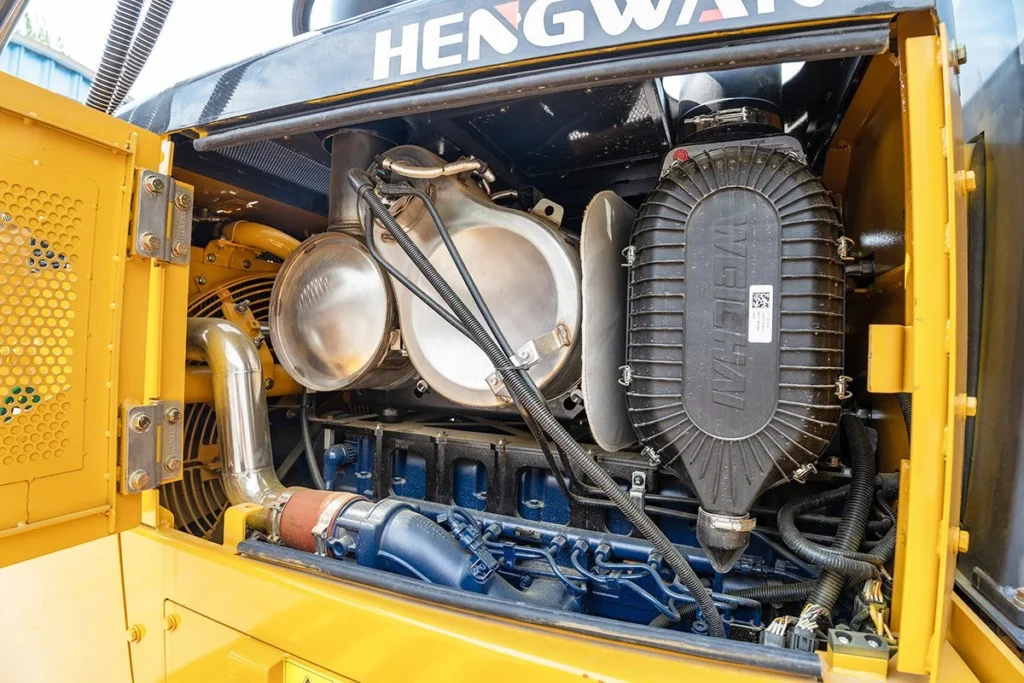
While the hydrostatic system is sophisticated, the design of the HW17DE Bulldozer emphasizes maintenance accessibility. Wide-opening service doors and centralized lubrication points minimize the time required for daily checks. The key to the system’s longevity lies in the maintenance of its hydraulic circuits, which demands regular, high-standard fluid filtration. The machine’s Electronic Control Unit (ECU) provides sophisticated, real-time diagnostic data on system pressures, temperatures, and component health. This telematics capability allows fleet managers to monitor machine performance remotely, schedule preventative maintenance based on actual usage data, and quickly diagnose issues, drastically minimizing unexpected and costly machine downtime.
Fuel Efficiency and Environmental Responsibility
The inherent design efficiency of the hydrostatic system allows the HW17DE Bulldozer engine to operate near its peak efficiency across a wider range of operating conditions. This optimized engine utilization results in quantifiable fuel savings compared to legacy machines that often run the engine harder than necessary. This improved fuel efficiency directly lowers operational expenditure and also aligns the machine with increasing global environmental compliance mandates by reducing carbon and particulate emissions. The engine powering the HW17DE Bulldozer is typically engineered to meet stringent regional and international emissions standards, providing a cleaner operating footprint essential for competing in environmentally conscious contracts.
Conclusion
The HW17DE Bulldozer represents the future of earthmoving technology in the medium-sized class, offering a powerful, sophisticated, and highly efficient solution that transcends the limitations of older mechanical systems. Its advanced hydrostatic drive delivers unparalleled control, superior fuel efficiency, and critical maneuverability, making it the ideal machine for both high-volume excavation and precision finish work. For construction and engineering professionals, choosing the HW17DE Bulldozer is a decision to invest strategically in enhanced productivity, reduced operational costs, and the capability to integrate seamlessly with the most modern digital site management and grading technologies. This strategic selection ensures not only the successful execution of current projects but also long-term competitiveness and efficiency in the demanding heavy machinery sector.
Frequently Asked Questions (FAQ)
Q1: How does the hydrostatic drive of the HW17DE Bulldozer protect the engine and drivetrain components?
A: The hydrostatic system protects the mechanical components by eliminating the need for a clutch, gearbox, and many universal joints. This removal of high-wear parts significantly reduces mechanical stress, while the system’s smooth power delivery prevents the torque shock associated with traditional gear shifting, thereby extending the life of the entire machine.
Q2: Is the HW17DE Bulldozer suitable for working on steep slopes or unstable terrain?
A: Yes. The low center of gravity inherent in its crawler design, combined with the independent power control of the hydrostatic tracks, makes the HW17DE Bulldozer highly capable on slopes. The operator can precisely adjust the power to each track to maintain stability and prevent sliding, which is a major safety and efficiency benefit on challenging terrain.
Q3: What kind of maintenance expertise is required for the hydrostatic system on the HW17DE Bulldozer?
A: While daily maintenance (greasing, fluid level checks) is simple, diagnostics and repair of the hydrostatic pumps and motors require specialized training. Maintenance personnel should be trained in hydraulic system diagnostics, high-pressure fluid cleanliness protocols, and electronic control unit (ECU) error code reading to ensure the long-term integrity of the system.