In the highly competitive and demanding field of heavy construction and earthmoving, selecting the correct machinery is not merely a purchasing decision; it is a critical strategy that dictates project efficiency, cost-effectiveness, and ultimate success. For professionals grappling with large-scale land development, infrastructure projects, or high-volume mining operations, a mid-to-large-class crawler tractor is often the central workhorse. The HW34D Bulldozer, with its robust 266kW (356 horsepower) engine and substantial operating weight of approximately 36,000 kg, is engineered specifically to dominate in these heavy-duty environments. This article serves as an essential guide, breaking down the key factors and specific features that must be evaluated to confirm that the HW34D Bulldozer is, indeed, the optimal machine to meet your demanding operational requirements.
Analyzing the Core Proposition: What Defines the HW34D Bulldozer?
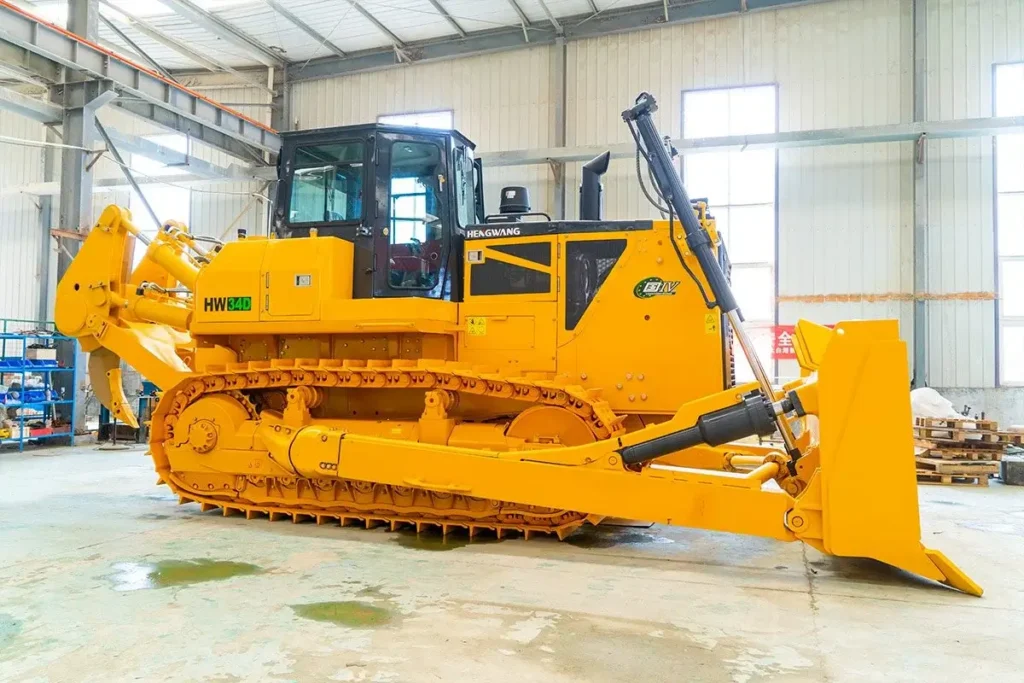
The HW34D Bulldozer is positioned as a powerful, large-scale crawler dozer, making it suitable for applications where sustained, high tractive effort and substantial pushing power are non-negotiable. Therefore, the first step in the selection process is understanding its fundamental technical profile, which elevates it above smaller, general-purpose machines.
The heart of its capability lies in its powertrain. The 266kW (2000rpm) engine provides a significant power-to-weight ratio, ensuring the machine maintains aggressive performance even when tackling massive slopes or pushing highly compacted materials. Furthermore, the bulldozer’s considerable dimensions and weight (approx. 9185mm in length and 4130mm in width) contribute to superior stability and deep penetration, which is vital for heavy ripping and consistent grading on expansive job sites.
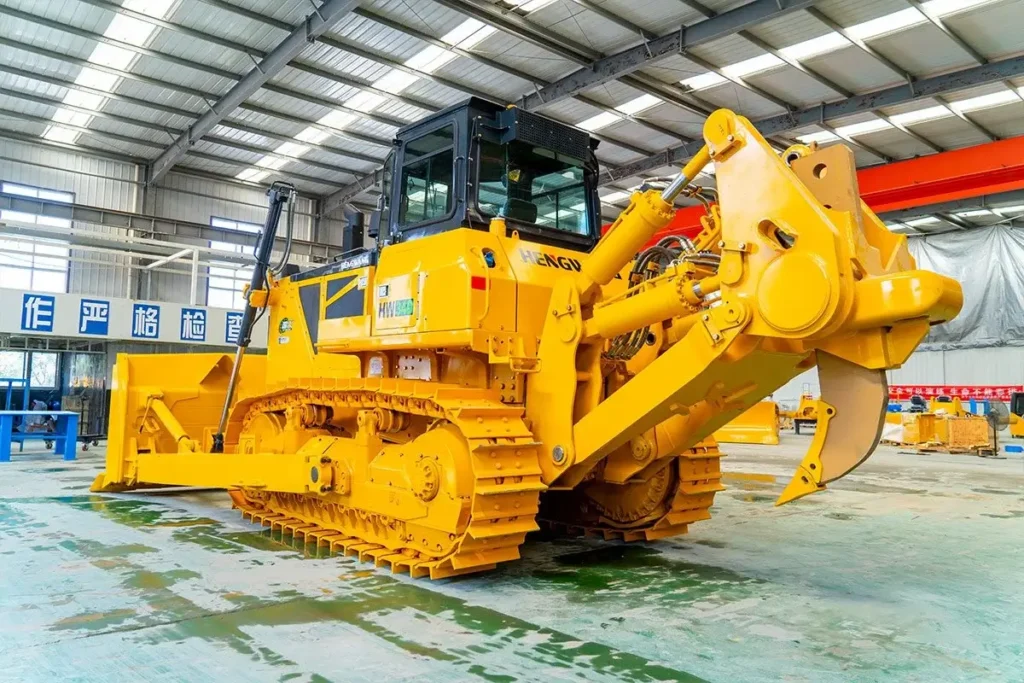
This specific class of machine is built on the premise of durability. The undercarriage, a critical component of any crawler dozer, must withstand constant friction, impact, and high wear. The HW34D Bulldozer is designed with a robust track system and heavy-duty rollers, which are essential for longevity and reducing operational downtime in abrasive terrains like quarries or mine sites. Consequently, when choosing a dozer, engineers must recognize that this machine is built for volume and viciousness—it is for breaking ground and moving mountains, not for residential landscaping.
Matching Power to Purpose: Defining Project Scope and Terrain
The suitability of the HW34D Bulldozer fundamentally depends on a rigorous assessment of the job site and the tasks to be executed. Its massive power and size are assets in some contexts, yet potential liabilities in others.
Terrain and Ground Conditions:
The crawler track system of the HW34D Bulldozer provides excellent traction and flotation, making it the ideal choice for soft, uneven, or challenging ground conditions. On a muddy mine floor, a soft landfill slope, or undeveloped forest land, the low ground pressure exerted by the tracks prevents the machine from becoming immobilized, ensuring continuous operation.
Conversely, if a project primarily involves fine grading on stable, level surfaces or tasks requiring high-speed transit between work zones, a smaller or wheeled dozer might offer greater maneuverability and lower hourly fuel consumption. Professionals must therefore determine if the job site demands the uncompromising traction and stability offered by the HW34D Bulldozer’s heavy-duty undercarriage.
Application and Material Volume:
The primary use-cases for this powerful dozer are massive earthmoving tasks:
- Land Clearing & Heavy Dozing: Clearing large tracts of dense vegetation or pushing massive quantities of overburden in a quarry.
- Deep Ripping: Using the rear-mounted ripper to break up hard rock, shale, or compacted soil to prepare the ground for excavation or deeper cuts.
- Large-Scale Stockpiling: Building and maintaining vast material stockpiles at ports, mines, or aggregate production sites.
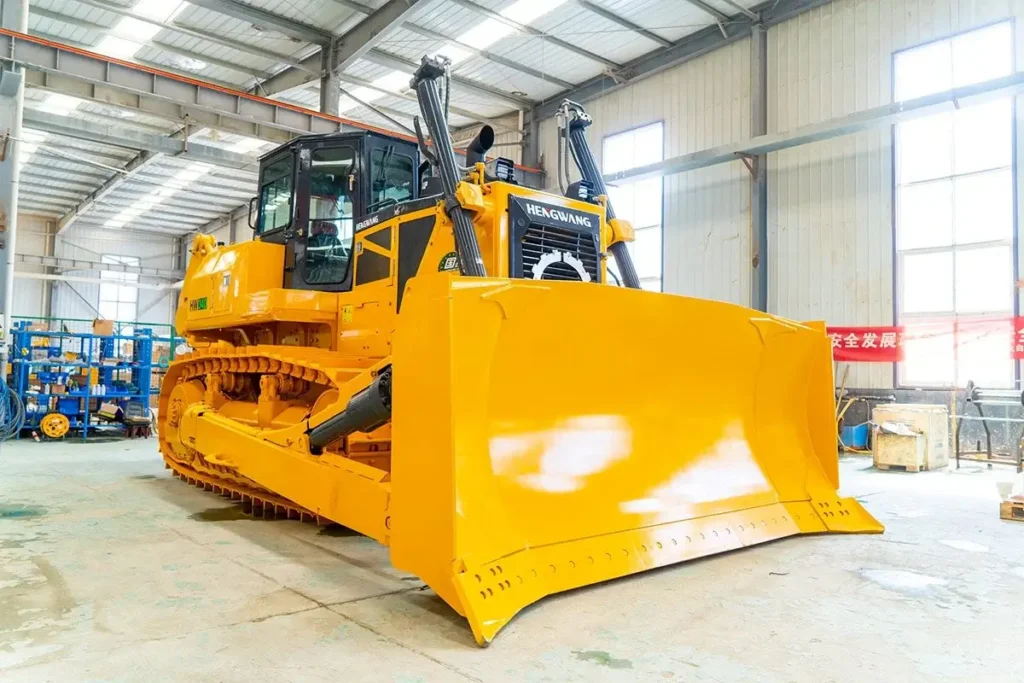
If a project requires the consistent movement of a high cubic meter volume of material over long push distances, the wide and tall blade configuration—often a Semi-U (SU) or U-blade—coupled with the sheer power of the HW34D Bulldozer, translates directly into superior productivity and lower cost per cubic meter moved. In essence, the HW34D Bulldozer is the solution for projects where the speed of moving more material outweighs the speed of quick movement.
Operator Control and Efficiency: Technology in the Cockpit
Modern construction machinery is defined by the integration of advanced technologies designed to enhance operator control, reduce fatigue, and maximize fuel efficiency. The HW34D Bulldozer incorporates crucial features that appeal directly to the experienced operator.
Firstly, the transmission system is vital. A sophisticated powershift or hydrostatic transmission is essential for translating the engine’s 266kW output into seamless, sustained tractive effort. This design ensures that the operator can shift gears smoothly under load without losing momentum, which is critical for maximizing material retention and push efficiency.
Secondly, the operator environment is paramount to long-term productivity. When evaluating the HW34D Bulldozer, potential users should look for features such as a comfortable, pressurized cab that minimizes noise and vibration. The inclusion of easy-to-use, ergonomic joystick controls allows for precise, fingertip manipulation of the blade and ripper, which is indispensable for maintaining grade and minimizing rework. Ultimately, a comfortable and focused operator is a highly efficient operator, and the features of the HW34D Bulldozer are designed to support this principle throughout long shifts.
Lifecycle Value: Maintenance and Fuel Economy
In the engineering machinery sector, the true cost of ownership extends far beyond the initial purchase price. For a large machine like the HW34D Bulldozer, fuel consumption, maintenance accessibility, and parts availability become paramount determinants of its lifecycle value.
The machine’s engine is designed not only for high power but also for optimized fuel burn efficiency under load. This is a critical factor, as fuel can account for a substantial portion of the operational budget. Therefore, comparing the working efficiency (cubic meters moved per liter of fuel) of the HW34D Bulldozer against its competitors is a crucial financial analysis.
Furthermore, a well-designed machine offers easy access to key service points—filters, fluid checks, and grease points. The reliability of the HW34D Bulldozer is inherently linked to its maintenance schedule; less time spent on routine service translates directly into more uptime. When making a choice, discerning buyers should specifically inquire about diagnostics capabilities and the availability of replacement parts, as these factors directly impact the speed of repair and overall machine utilization rate.
Conclusion: Making the Strategic Investment
The decision to acquire the HW34D Bulldozer should be seen as a strategic commitment to handling the most formidable earthmoving challenges with assurance and power. By thoroughly assessing project needs against its core attributes—its 266kW power output, its durable, high-traction crawler undercarriage, its capacity for heavy ripping, and its focus on operator efficiency—engineering professionals can confidently determine its fit within their fleet. When the job demands relentless, high-volume performance across harsh and difficult terrains, the HW34D Bulldozer is purposefully built to deliver the required power and reliability, establishing itself as an indispensable asset for significant project success.
Frequently Asked Questions (FAQ)
Q1: What are the primary applications where the HW34D Bulldozer excels over smaller dozers?
A: The HW34D Bulldozer excels in heavy-duty applications where its 266kW power and large mass are critical, such as overburden removal in mining, deep ripping of rock or heavily compacted soil, and large-scale road construction and site leveling where high-volume material moving over long distances is required.
Q2: What is the typical advantage of a crawler dozer like the HW34D over a wheeled dozer?
A: The main advantage is traction and stability. The crawler tracks distribute the machine’s weight over a much larger area, providing superior grip on soft, uneven, or steep terrain. This ensures that the HW34D Bulldozer can maintain maximum pushing force where a wheeled dozer might slip.
Q3: Does the HW34D support different types of blades?
A: Yes. Like most heavy-duty bulldozers, the HW34D Bulldozer is typically compatible with various blade attachments, including the Straight (S), Universal (U), and Semi-U (SU) blades. The choice of blade depends on the task: U-blades are for maximizing carrying capacity, while S-blades are best for fine grading and stripping.