The demands of modern construction, infrastructure development, and utility work necessitate equipment that offers both power and unparalleled versatility. In this highly competitive landscape, the HW25-30 Backhoe Loader has emerged as a significant contender, promising to consolidate the functions of multiple machines into one robust and efficient package. For professional contractors and project managers focused on maximizing on-site productivity and controlling operational costs, understanding the core capabilities and engineering philosophy behind this specific model is essential. This in-depth analysis will explore the design, defining features, and critical applications of the HW25-30 Backhoe Loader, demonstrating why it is rapidly becoming an indispensable asset in the construction equipment fleet.
Understanding the Core Design and Engineering of the HW25-30 Backhoe Loader

At its foundation, a backhoe loader is inherently designed for dual-purpose utility, effectively integrating a loader at the front and a backhoe at the rear. The HW25-30 Backhoe Loader takes this established concept and refines it through precise engineering tailored for the rigors of various operational environments. This machine’s designation, often reflecting its operational weight or loading capacity, signifies a commitment to the compact yet powerful equipment segment. Consequently, it is perfectly positioned to handle tasks that require both significant excavation force and substantial material handling capability.
The structural integrity of the main chassis is a primary focus, utilizing high-tensile steel to ensure durability and resistance to torsional stress encountered during heavy digging and loading cycles. Furthermore, the engine—the heart of the HW25-30 Backhoe Loader—is typically a high-efficiency, turbocharged diesel unit. This engine is selected not just for raw power but for its optimal torque curve at low RPMs, which is crucial for demanding digging and pushing applications while maintaining fuel efficiency. Therefore, the thoughtful integration of a robust frame and a responsive powertrain underpins the machine’s ability to transition seamlessly between loading and trenching operations. This dual functionality allows a single operator to execute a complete job scope, from initial earth moving to final grading, without the logistical complications of multiple specialized machines.
The hydraulic system is another critical engineering marvel, often featuring a load-sensing variable displacement pump. This advanced system only delivers power when the operator demands it, significantly reducing parasitic loss and heat generation. This sophisticated hydraulic management ensures precise control over the backhoe and loader attachments, which is vital for delicate utility installations or complex grading tasks. Ultimately, the design philosophy behind the HW25-30 Backhoe Loader centers on achieving a superior balance between power density, operator comfort, and long-term machine reliability.
Defining Operational Excellence: Key Features of the HW25-30 Backhoe Loader
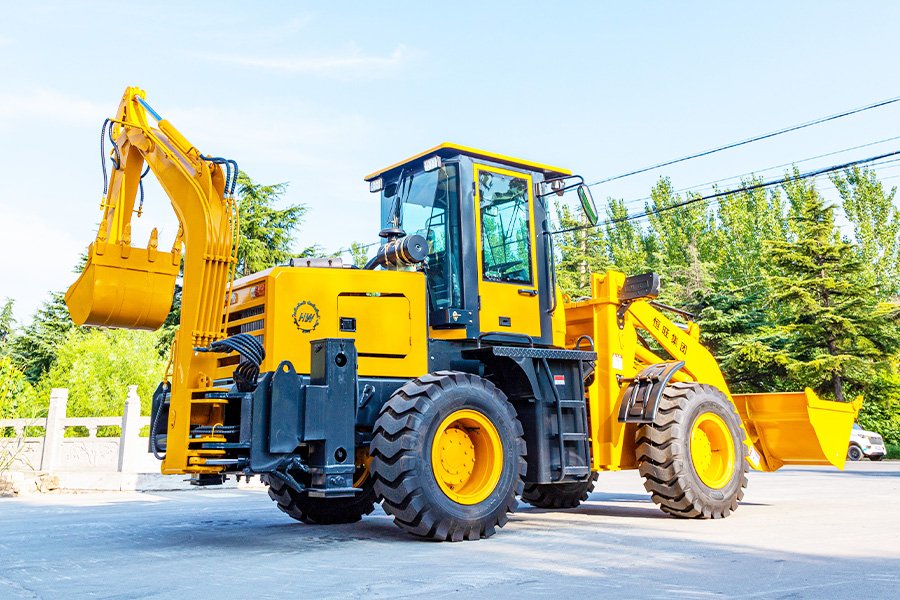
The true value proposition of the HW25-30 Backhoe Loader is manifested through its distinct operational features that directly translate into higher productivity and better return on investment (ROI) for users. Several attributes distinguish this model in the competitive mid-sized equipment sector, making it particularly attractive to contractors who value efficiency and adaptability.
Unmatched Versatility through Attachment Systems
Perhaps the most compelling feature is the machine’s exceptional attachment compatibility. The front loader typically features a Quick-Coupler system, allowing for rapid exchange between a standard bucket, a 4-in-1 multi-purpose bucket, pallet forks, and even specialized brooms or snow plows. Similarly, the rear backhoe boom often accommodates various bucket sizes, breakers, augers, and compactors. This ability to quickly reconfigure the HW25-30 Backhoe Loader makes it a true multi-tool on the construction site, eliminating the need to mobilize separate skid steers, small excavators, or forklifts for varied tasks. Consequently, this versatility drastically reduces non-productive time associated with equipment changeovers.
The Power and Precision of the Backhoe Component
The backhoe arm itself is engineered for maximum digging depth and reach, which is critical for utility trenching, pipe laying, and foundation work. Many models feature an extendable dipper stick—a key feature that provides additional digging depth without compromising the machine’s stability or requiring repositioning. Furthermore, the robust swing mechanism allows for a wide arc of movement, facilitating efficient spoil dumping. The precise hydraulic control ensures that the operator can excavate near existing infrastructure with minimal risk, a non-negotiable requirement in urban and brownfield development projects.
Focus on Operator Comfort and Ergonomics
Recognizing that operator fatigue directly impacts productivity, the cabin design of the HW25-30 Backhoe Loader is often meticulously optimized. Modern cabs typically offer enhanced visibility, low-effort controls (such as joystick steering or pilot controls), and climate control systems. A comfortable operator is a productive operator, and the thoughtful placement of gauges and intuitive control layouts minimizes the learning curve and maximizes the time spent working efficiently. Additionally, improved noise dampening and vibration isolation contribute to a healthier and safer working environment over long shifts.
Critical Applications in the Engineering and Construction Sector

The diverse capabilities of the HW25-30 Backhoe Loader enable it to play a vital role across a multitude of engineering and construction applications. Its balanced size and power make it the ideal workhorse for projects ranging from residential housing to large-scale infrastructure maintenance.
Utility and Infrastructure Development
Utility work—involving the installation, repair, and maintenance of underground pipelines, electrical conduits, and fiber optic cables—is perhaps the most traditional and fitting application for a backhoe loader. The HW25-30 Backhoe Loader excels here because it can quickly excavate the trench with its backhoe, use the loader to backfill the trench, and then utilize the 4-in-1 bucket for final grading and site cleanup. Its moderate footprint is particularly advantageous for working within road lanes or established easements where larger, dedicated excavators cannot maneuver efficiently. Therefore, its compact dimensions combined with its digging force make it indispensable for municipal contracts.
Site Preparation and Material Handling
On residential and commercial job sites, the machine is invaluable for initial site preparation. The loader end is capable of moving aggregates, topsoil, and demolition debris efficiently. It can load dump trucks, stockpile materials, and distribute fill across the site. Conversely, the backhoe can be used for stump removal, minor demolition, or breaking up concrete pads using a hydraulic breaker attachment. This seamless transition between digging and loading tasks drastically streamlines the site preparation phase, often accelerating the overall project timeline.
Agriculture, Landscaping, and Specialized Tasks
Beyond traditional construction, the HW25-30 Backhoe Loader also finds significant utility in specialized sectors. Agricultural operations use it for drainage work and material handling on large farms. Landscapers rely on its precision for trenching irrigation lines and moving large boulders or trees. The machine’s rugged design and all-terrain capabilities ensure that it maintains operational efficiency even on challenging, unpaved surfaces or during inclement weather. Consequently, its adaptability extends its service life far beyond the initial construction phase of a project.
Optimizing Value and Ensuring Long-Term Investment
The decision to invest in a piece of heavy equipment like the HW25-30 Backhoe Loader must be viewed through the lens of long-term operational efficiency and asset value. Contractors should consider the total cost of ownership (TCO), which encompasses not just the purchase price but also fuel efficiency, maintenance requirements, and resale value.
The machine’s reputation for reliability is often enhanced by readily available spare parts and manageable maintenance schedules. Furthermore, the emphasis on standardized components and straightforward service points minimizes downtime, which is the most significant financial drain in the construction industry. A machine that is easy to service and consistently reliable will maintain a higher residual value, protecting the initial investment. Ultimately, the HW25-30 Backhoe Loader represents a prudent investment for any operation seeking to balance power, versatility, and cost-effectiveness in its heavy equipment fleet. Its continued evolution and commitment to integrating user-friendly technology ensure it will remain a cornerstone of modern construction methodology for years to come.
FAQ
Q1: What is the typical operational weight of the HW25-30 Backhoe Loader?
A: While specific numbers can vary by manufacturer and configuration, the HW25-30 Backhoe Loader generally falls into the compact to medium-sized backhoe category, often with an operational weight in the range of 6,000 to 8,000 kilograms (13,000 to 17,600 pounds). This weight class ensures a powerful digging force while maintaining sufficient maneuverability.
Q2: Can the HW25-30 Backhoe Loader be used effectively in tight urban spaces?
A: Yes, the machine’s balanced design and maneuverability are primary advantages in urban environments. Its ability to perform both loading and excavating tasks without requiring a large turning radius makes it highly efficient for street work, utility repairs, and confined construction sites where larger dedicated machines would be impractical.
Q3: What types of hydraulic attachments are most common for the backhoe end?
A: The most common attachments include various width digging buckets (for trenching), heavy-duty rock buckets (for challenging material), hydraulic breakers (for concrete and asphalt demolition), and sometimes augers (for post-hole digging). The machine’s auxiliary hydraulics are designed to power these high-demand tools effectively.