In the specialized field of geotechnical and civil engineering, the requirement for precise, powerful, and mobile drilling equipment is constant. Projects involving small-scale mining, quarrying, road construction, irrigation, and slope stabilization rely heavily on the ability to drill blast holes or anchoring holes efficiently in varied rock formations. Among the tools engineered for this demanding environment, the HW-70 YQ Portable type DTH drilling rig stands out as a highly specialized piece of machinery. Utilizing Down-The-Hole (DTH) technology, this rig is specifically designed to bridge the gap between heavy, complex crawler-mounted systems and less powerful handheld drills. For engineering professionals and equipment users, understanding the specific capabilities and strategic advantages of this portable unit is essential for optimizing site operations, minimizing logistical costs, and ensuring the timely completion of crucial foundational work.
The Technology Behind the HW-70 YQ Portable Type DTH Drilling Rig
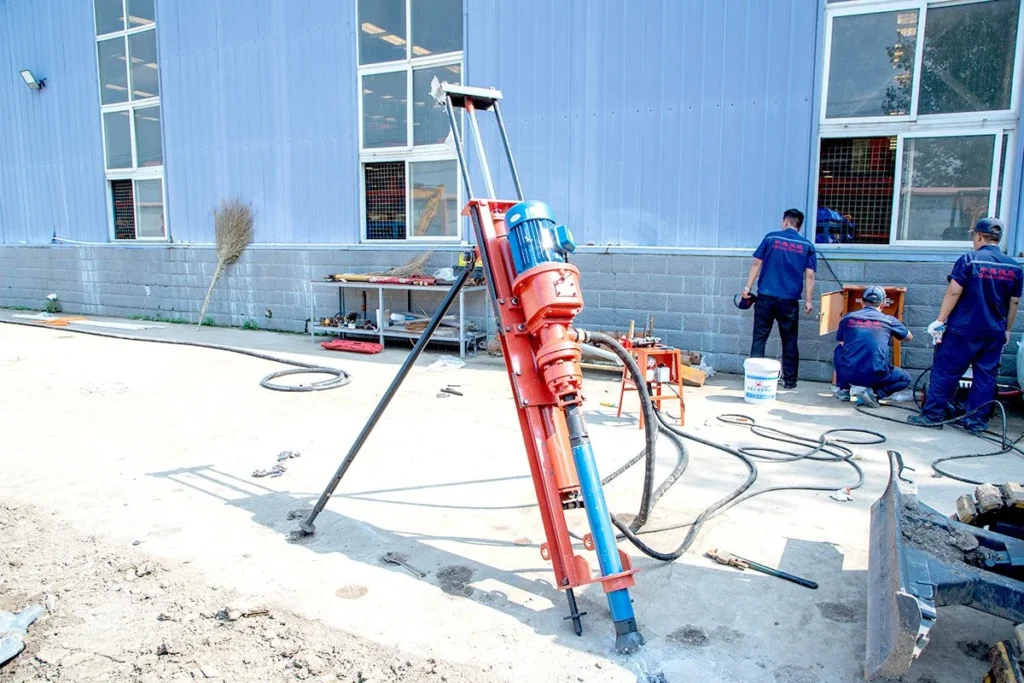
The HW-70 YQ Portable type DTH drilling rig is fundamentally an impact-rotary drill rig, deriving its name from the DTH hammer, or impactor, that operates directly down inside the borehole. Unlike conventional rock drills where the percussion mechanism is located at the top of the drill string, the DTH system delivers impact energy directly to the drill bit at the bottom of the hole.
Core Operating Principle of DTH
The mechanism operates through a continuous supply of high-pressure compressed air, which is channeled down the drill rod to the DTH impactor. Inside the impactor, a sophisticated gas distribution device (often a valve) cycles a piston or hammer body. This piston rapidly reciprocates, delivering powerful, repetitive blows directly to the shank of the drill bit. Simultaneously, the drill rod slowly rotates, ensuring that the bit strikes fresh rock with each impact. The combined action of high-frequency percussion and slow rotation creates a highly effective method for breaking hard rock formations, offering significant penetration rates even in challenging geological conditions. Furthermore, the compressed air used to power the hammer is also employed to clear the cuttings from the bottom of the hole, ensuring a clean drilling face and preventing re-grinding of material.
Key Technical Specifications and Performance Metrics
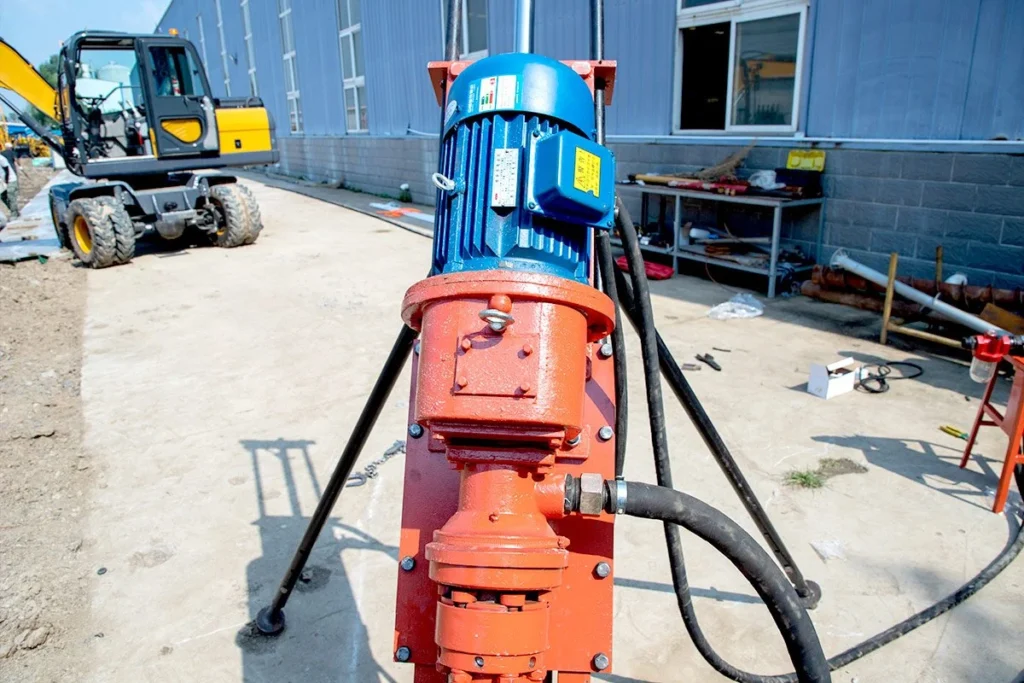
The HW-70 YQ Portable type DTH drilling rig is defined by its compact power and focus on accessibility. It is typically powered by an electric motor delivering approximately three kilowatts, operating with a working pressure around zero point eight megapascals and consuming about three point five cubic meters of air per minute. These modest requirements make it compatible with common industrial power sources and portable air compressors. Its design is optimized for drilling diameters generally ranging from fifty millimeters to eighty millimeters and achieves drilling depths between fifteen meters and twenty meters. Crucially, the rig boasts an exceptionally low machine weight, often below one hundred kilograms, underscoring its defining feature: true portability. This combination of a powerful DTH system and a lightweight frame provides a unique solution for projects with restricted access.
Portability Meets Performance: Distinctive Advantages
The value proposition of the HW-70 YQ Portable type DTH drilling rig is rooted in its highly specialized blend of mobility and drilling efficiency, a combination that addresses logistical and operational pain points common in construction and engineering.
Exceptional Mobility for Challenging Terrain
The most compelling feature of the HW-70 YQ Portable type DTH drilling rig is its superior mobility and small footprint. Due to its minimal size and low weight, the rig can be easily disassembled into manageable components and transported to sites that are inaccessible to larger, crawler-mounted drilling equipment. This includes steep slopes for anchoring work, confined spaces inside existing structures, rugged or uneven construction areas, and remote locations with poor road infrastructure. The drill’s adaptability means that project timelines are less constrained by site conditions, allowing operations to commence quickly upon arrival. This convenience directly translates into reduced mobilization costs and time savings compared to relying on heavier machinery which requires significant logistical planning and preparation.
Maximized Efficiency in Hard Rock
Despite its small stature, the HW-70 YQ Portable type DTH drilling rig benefits from the core advantages of DTH technology: superior energy transfer. Since the impactor is located directly at the bottom of the hole, energy loss through the drill rods is minimized. This is a critical factor, as energy loss in conventional rotary drilling tends to increase significantly with depth. Consequently, the rig maintains a high and consistent rate of penetration even when drilling in hard, abrasive rock formations (with a rock ruggedness coefficient $f$ up to $20$). The resulting straight, precise boreholes are essential for high-quality blasting or for the reliable installation of anchors and grout curtains required for slope support and stabilization projects.
Operational Simplicity and Reduced Training Needs
The design of the HW-70 YQ Portable type DTH drilling rig emphasizes simple, pneumatic-based operation. The control system is generally straightforward, relying on pneumatic valves and a basic control console rather than complex hydraulic systems. This inherent simplicity reduces the complexity of maintenance, lowers the probability of sophisticated mechanical failure, and allows the equipment to be operated effectively by personnel with minimal specialized training compared to operating fully automated, large-scale drill rigs. This accessibility broadens the potential user base and significantly reduces the dependency on highly specialized and expensive drill operators, thereby cutting down overall project labor costs.
Essential Applications in Modern Engineering
The HW-70 YQ Portable type DTH drilling rig has found its niche across several vital engineering applications where small diameter, medium-depth holes are required with high precision in difficult locations.
Slope Stabilization and Foundation Support
One of the most critical applications is in civil and geotechnical engineering for slope stabilization. When constructing roads, bridges, or buildings on uneven or weak terrain, anchor holes must be drilled to install rock bolts or soil nails that prevent landslides and erosion. The rig’s portability allows it to be efficiently set up on steep embankments or along rocky cuts where stability is compromised. Similarly, it is used for pre-grouting work and micro-piling for foundations in restricted access areas, providing the necessary strength for infrastructure development in challenging urban or mountainous environments. The machine’s power ensures the anchor holes are drilled to the required depth and straightness for maximum structural integrity.
Small-Scale Mining and Quarrying
For small to medium-sized mining operations or quarrying activities, the rig is indispensable for drilling blast holes. The efficient DTH process quickly creates the necessary pattern of holes for controlled blasting. Unlike large production drills, the HW-70 YQ Portable type DTH drilling rig offers the flexibility to adapt to smaller benches and quickly move between drilling locations in a dynamic quarry environment. Its low noise output compared to larger hammer-at-the-surface percussion drills is also an environmental benefit increasingly valued by operators working near populated areas.
Water Well and Irrigation Projects
In remote or rural areas, the HW-70 YQ Portable type DTH drilling rig is frequently used for drilling shallow to medium-depth water wells for domestic use or small-scale irrigation. The DTH method is highly effective in penetrating hard subterranean rock layers often encountered during well drilling, ensuring that the water-bearing aquifers are reached rapidly. Its low capital cost and ease of transport make it an ideal, cost-effective solution for local contractors providing essential water access, thus contributing positively to community and agricultural development.
A Prudent Investment for Targeted Drilling Needs
The decision to invest in a piece of construction equipment requires a careful weighing of cost, capability, and application fit. The HW-70 YQ Portable type DTH drilling rig is not intended to replace heavy-duty production rigs, but rather to complement them by tackling the intricate, challenging, and remote jobs that large machines cannot efficiently handle. Its high energy efficiency, low operating cost, remarkable portability, and robust DTH performance make it a strategic asset. For engineering firms and contractors prioritizing project flexibility, high precision in hard-rock drilling, and rapid deployment in difficult access sites, the HW-70 YQ Portable type DTH drilling rig represents a smart, focused investment that maximizes project profitability and operational uptime.
Frequently Asked Questions (FAQ)
Q1: What is the main advantage of DTH technology in the HW-70 YQ Portable type DTH drilling rig?
A: The main advantage is the high energy transfer efficiency. Since the hammer (impactor) is located directly behind the drill bit at the bottom of the hole, energy loss that would normally occur through long drill rods is significantly minimized. This allows the rig to achieve fast penetration rates and straight holes even in very hard rock formations.
Q2: What kind of compressor is typically needed to run the HW-70 YQ Portable type DTH drilling rig?
A: Given its air consumption requirement of approximately three point five cubic meters per minute at a working pressure of zero point eight megapascals, the rig typically requires a small to medium-sized portable air compressor. This makes it highly flexible as it does not rely on a large, dedicated, or site-bound air source, further enhancing its portability and ease of setup.
Q3: Can the HW-70 YQ Portable type DTH drilling rig be used for angled drilling (inclined holes)?
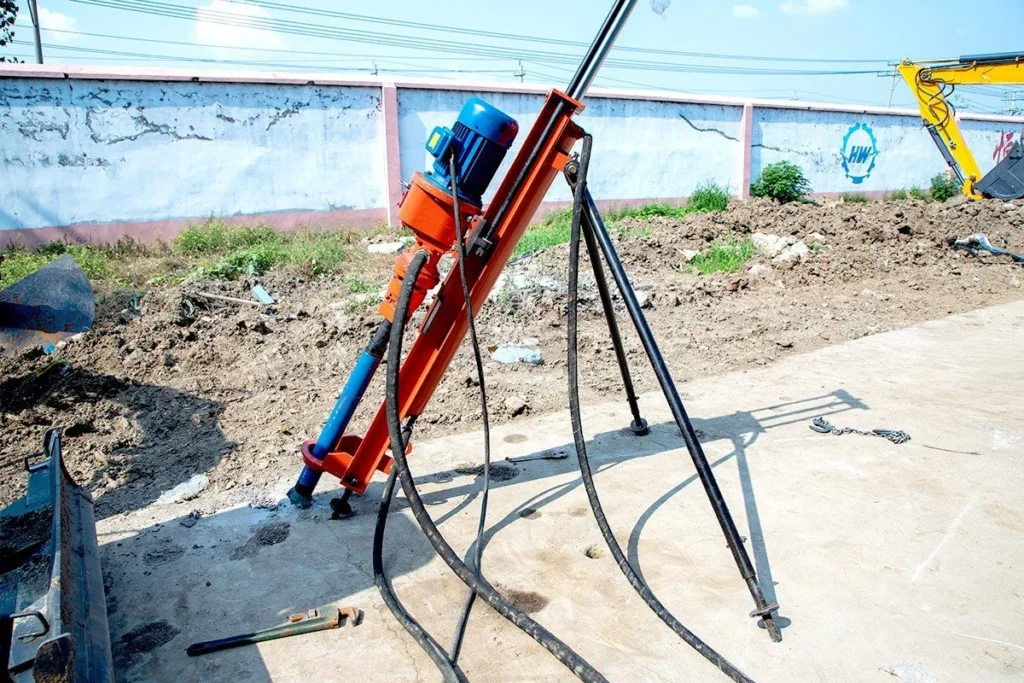
A: Yes, most portable DTH rigs are designed with a feed mechanism that can be positioned at various angles relative to the ground. This versatility is essential for applications such as slope support and anchoring, where holes must often be drilled at specific inclinations to achieve the necessary load-bearing capacity and stability for the engineering structure.