The modern engineering landscape, particularly within rapidly expanding urban centers and complex municipal infrastructure projects, demands machinery that is not only powerful and reliable but also agile and adaptable. In this demanding environment, the traditional dominance of crawler excavators is increasingly being challenged by the flexibility of their wheeled counterparts. This article dives deep into the capabilities of the HWL110 Wheel Excavator, analyzing its core design philosophy, highlighting its defining features, and ultimately answering the question of whether it represents the optimal investment for project managers and heavy equipment users focused on efficiency and mobility.
The HWL110 Wheel Excavator is strategically positioned as a high-performance, medium-sized machine specifically engineered to bridge the gap between heavy-duty digging power and essential on-road mobility. From the outset, its design was centered on enhancing operational flow in confined spaces and environments requiring frequent site-to-site relocation, a common reality in modern urban construction. By focusing on a robust yet streamlined structure, the manufacturer Hengwang has successfully created an excavator that can tackle a diverse range of applications, establishing itself as a vital piece of equipment in any dynamic construction or utility fleet.
Understanding the Core Engineering: The HWL110 Wheel Excavator’s Foundation
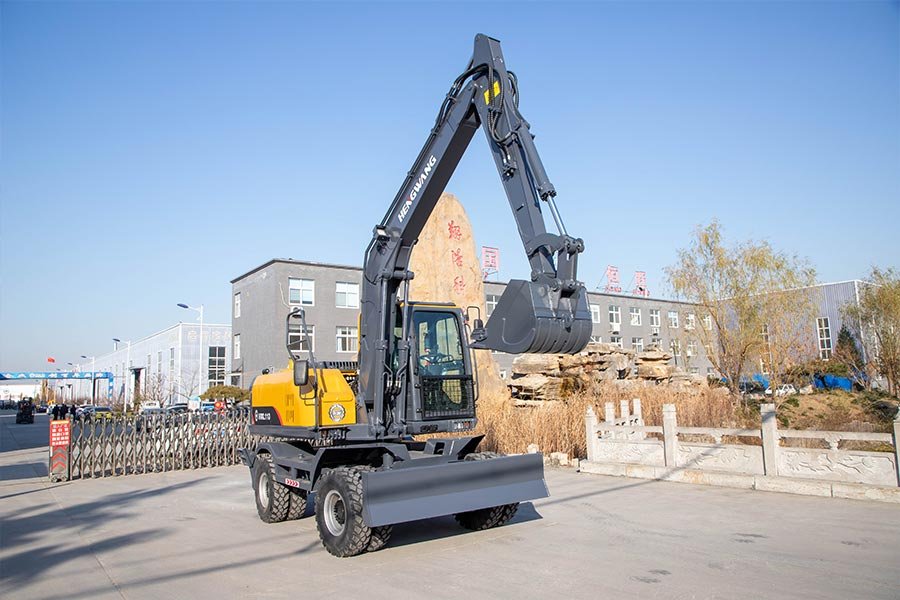
The true value of any piece of construction equipment lies in its fundamental engineering, and the HWL110 Wheel Excavator is no exception. Its efficacy begins with its advanced hydraulic system. Unlike older designs, the HWL110 utilizes a highly responsive, load-sensing hydraulic system that intelligently distributes power according to the operator’s input and the task’s requirement. This sophisticated mechanism ensures that power is used only when and where it is needed, resulting in a significant reduction in fuel consumption without compromising digging force or cycle times. Furthermore, the precise control offered by this system allows operators to execute delicate tasks, such as pipe laying or precision grading, with remarkable accuracy—a critical advantage in infrastructure projects where damage mitigation is paramount.
Complementing this hydraulic prowess is a robust, purpose-built chassis designed for the rigors of both off-road construction sites and paved municipal roads. The wheeled undercarriage, equipped with heavy-duty axles and a reliable braking system, gives the HWL110 Wheel Excavator a distinct edge in mobility. This feature dramatically cuts down on the logistical overhead associated with transporting tracked machinery. Instead of requiring a low-boy trailer and the associated permits, the HWL110 can often be driven directly to the next job site, minimizing downtime and maximizing the machine’s operational hours. For companies managing multiple small to medium-sized projects across a city, this mobility translates directly into higher productivity and lower operational costs.
Unmatched Versatility: Defining Features That Drive Efficiency
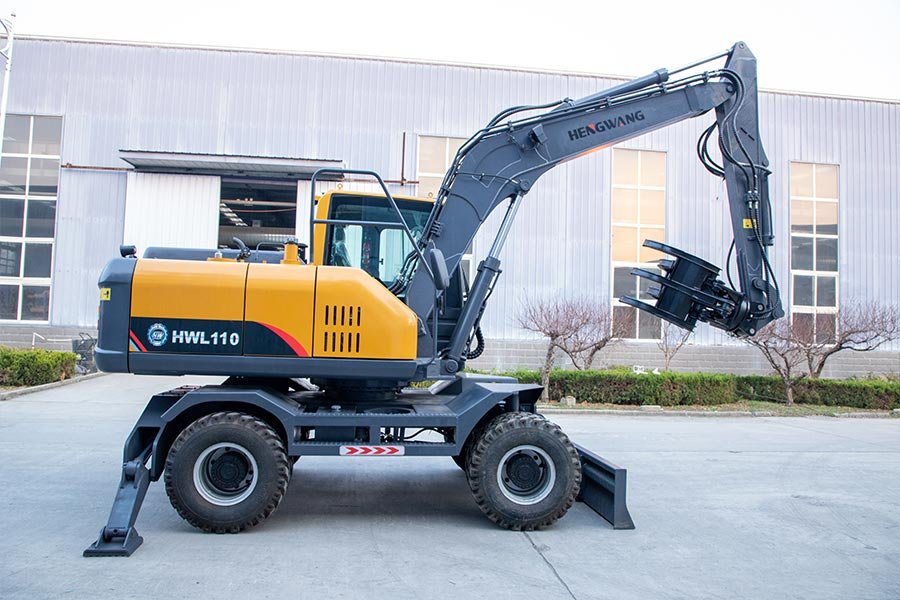
While raw power is important, the true defining feature of the HWL110 Wheel Excavator is its unmatched versatility, which is achieved through a combination of clever design choices.
The Advantage of Enhanced Operator Comfort and Control
Recognizing that operator fatigue directly impacts productivity and safety, Hengwang paid close attention to the cabin environment. The spacious, fully enclosed, and sound-suppressed cabin is designed to be a comfortable workspace. It features an ergonomic layout with easily accessible controls and a high-definition, multi-functional display that provides real-time machine diagnostics. Crucially, the superior visibility from the cab, often enhanced by rearview cameras, allows the operator to maintain complete awareness of the surrounding urban work environment, significantly reducing the risk of accidents in tight spots. The ability to work comfortably and safely for extended shifts is a tangible asset in maintaining project timelines.
Optimized Stability and the Adaptability of Attachments
A wheel excavator’s stability, particularly when lifting or digging over the side, is fundamental to its safety and performance. The HWL110 Wheel Excavator is typically equipped with hydraulically controlled outriggers or a dozer blade, which are deployed to create a solid, stable working platform. This stability allows the machine to leverage its full lifting capacity, enabling it to handle heavy materials like concrete barriers or large utility pipes with confidence.
Furthermore, the machine is designed with a standard quick-coupler system, which facilitates the rapid exchange of a wide array of specialized attachments. From hydraulic breakers for demolition and vibrating plate compactors for road prep, to various sizes of buckets for trenching and grading, the HWL110 transforms rapidly to meet the specific requirements of each stage of a project. This capacity for rapid functional adaptation is what makes the HWL110 Wheel Excavator such a valuable, single-machine solution for complex tasks, essentially functioning as multiple machines in one.
Strategic Applications in Modern Engineering and Infrastructure
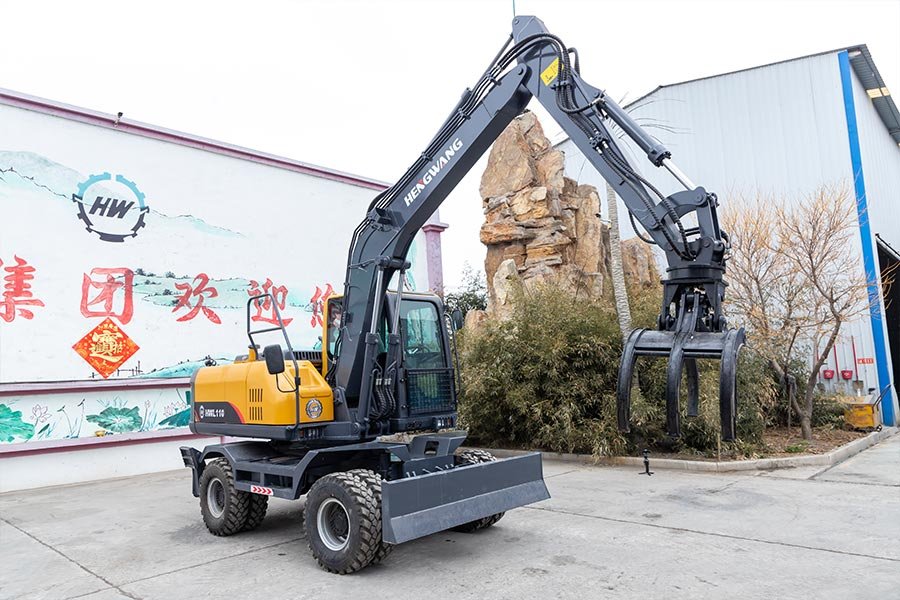
The strategic value of the HWL110 Wheel Excavator is most evident in its core application areas, particularly those where time and space are constraints.
Municipal and Utility Projects: Its mobility and relatively compact swing radius make it ideal for street repairs, water and sewer line installations, and fiber-optic cable laying. In these scenarios, the machine must work efficiently adjacent to live traffic or existing infrastructure, and the HWL110’s ability to drive between job sites without disrupting traffic for heavy transport logistics provides a massive operational advantage.
Road and Bridge Maintenance: For intermittent and often emergency repair work on highways and local roads, the HWL110’s fast travel speed allows it to arrive, execute the necessary work (such as pavement breaking or ditch clearing), and depart quickly, minimizing lane closures and public inconvenience.
General Urban Construction: In restricted urban construction sites, where space for large machinery and material staging is limited, the machine’s small footprint and precision controls enable deep digging, material handling, and loading within the tight confines of property lines or existing building structures.
The Bottom Line: Value and Sustainability in Investment
The decision to invest in a machine like the HWL110 Wheel Excavator is not just about purchasing a piece of equipment; it is a strategic business choice centered on maximizing return on investment through efficiency and operational flexibility. By integrating features that enhance fuel economy, reduce logistical costs, and significantly increase on-site versatility, the HWL110 offers a compelling total cost of ownership (TCO) proposition.
Moreover, the engineering focus on efficient hydraulics and Tier-compliant engines aligns with a growing global trend toward more sustainable construction practices. By consuming less fuel per task and reducing the need for diesel-intensive transportation, the machine supports a better environmental footprint—an increasingly important factor in securing modern, environmentally conscious municipal contracts. Therefore, for engineering product users seeking an agile, powerful, and economically sound solution for today’s dynamic urban landscape, the HWL110 Wheel Excavator proves to be a smart, future-proof choice.
Frequently Asked Questions (FAQ)
Q: What is the primary advantage of a wheel excavator like the HWL110 over a crawler excavator?
A: The primary advantage is mobility and travel speed. The HWL110 can travel between job sites quickly on its own power (up to 30-40 km/h), eliminating the time and cost associated with securing and operating a separate transport truck and trailer, which is required for crawler excavators. This drastically reduces project downtime and logistical costs in urban environments.
Q: Is the digging force of the HWL110 compromised because it is wheeled?
A: No, the digging force is maintained through a combination of a powerful, optimized hydraulic system and the use of stabilizing features (outriggers or dozer blade). When deployed, these features anchor the HWL110 Wheel Excavator firmly, allowing it to leverage its full breakout force effectively, comparable to a similarly sized crawler machine.
Q: Can the HWL110 Wheel Excavator operate on uneven, soft terrain?
A: While wheel excavators are generally optimized for harder surfaces, the HWL110 is designed with heavy-duty tires and axles that provide good traction. For moderately soft or uneven ground, it performs well. For extremely soft or swampy conditions, however, a crawler excavator would still be the preferred tool.