The demands of modern infrastructure development, especially in densely populated urban areas, necessitate construction machinery that excels not only in digging power but also in mobility and operational versatility. Traditional crawler excavators offer unparalleled stability but are slow to relocate and often require costly transportation, causing road damage. The HWL80 Wheel Excavator is a purpose-built solution designed to overcome these challenges. By integrating powerful hydraulic excavation capabilities with high-speed wheeled mobility, the HWL80 Wheel Excavator presents a compelling case for its dominance in municipal, utility, and road maintenance projects. Consequently, project managers, public works departments, and specialized utility contractors must assess: Does the HWL80 Wheel Excavator truly offer the necessary balance of speed, versatility, and power to redefine efficiency in urban engineering? We will thoroughly examine the specific engineering features, mobility advantages, and comprehensive applications that establish the HWL80 Wheel Excavator as a strategic asset in today’s fast-paced construction sector.
The Mobility Advantage: Defining the HWL80 Wheel Excavator
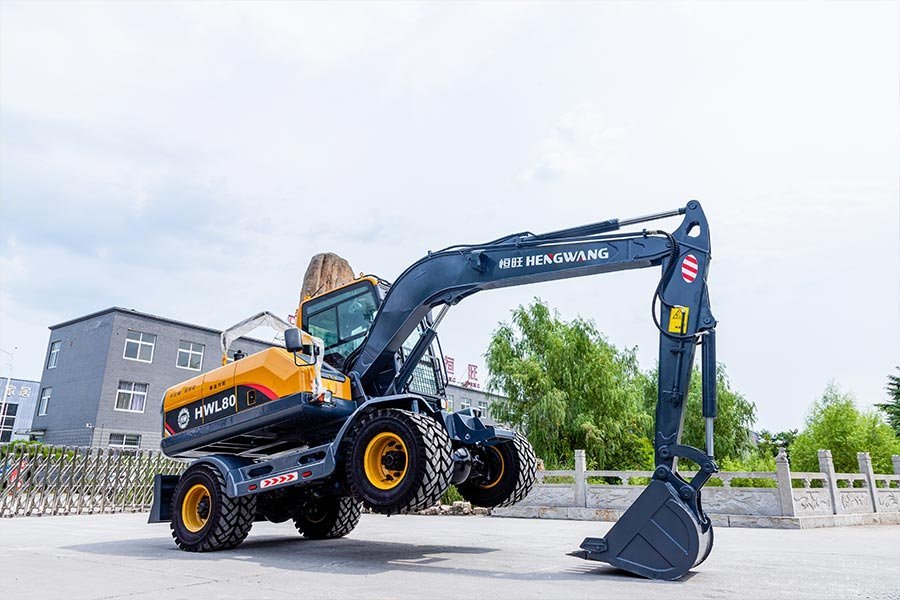
The most significant differentiator of the HWL80 Wheel Excavator is its tire-based undercarriage, which fundamentally alters its operational scope compared to track-based machines.
Unmatched Speed and Relocation Efficienc
The core value proposition of the HWL80 Wheel Excavator lies in its on-road mobility. Unlike crawler models, which are limited to creeping or must be loaded onto a separate flatbed for transport, the HWL80 Wheel Excavator can drive itself between job sites at road speeds , significantly reducing downtime and logistics costs. This self-relocation capability is particularly crucial for linear projects, such as pipeline installation or continuous road repair, where the work front moves consistently over distance. Furthermore, the use of pneumatic tires means the machine can transition seamlessly from asphalt and concrete to rough terrain without requiring external surface protection, an essential consideration in urban environments where minimizing surface damage is critical. This speed and independence streamline project schedules and reduce reliance on external transport services.
Stability and Operational Flexibility
Although mobility is key, the HWL80 Wheel Excavator sacrifices none of the necessary operational stability. It achieves reliable platform stability through hydraulic stabilizers (often referred to as outriggers) and/or a dozer blade, which are deployed during digging and lifting operations. Once stabilized, the machine provides a firm base for maximizing hydraulic breakout force and lifting capacity, rivaling its crawler counterparts. Furthermore, the wheeled undercarriage often allows for a greater turning radius and easier positioning in highly constrained spaces, providing superior maneuverability when working on narrow streets or between utility poles. This combined agility and stability make the HWL80 Wheel Excavator an adaptable performer across diverse site conditions.
Performance Metrics: Hydraulic Power and Precision Control
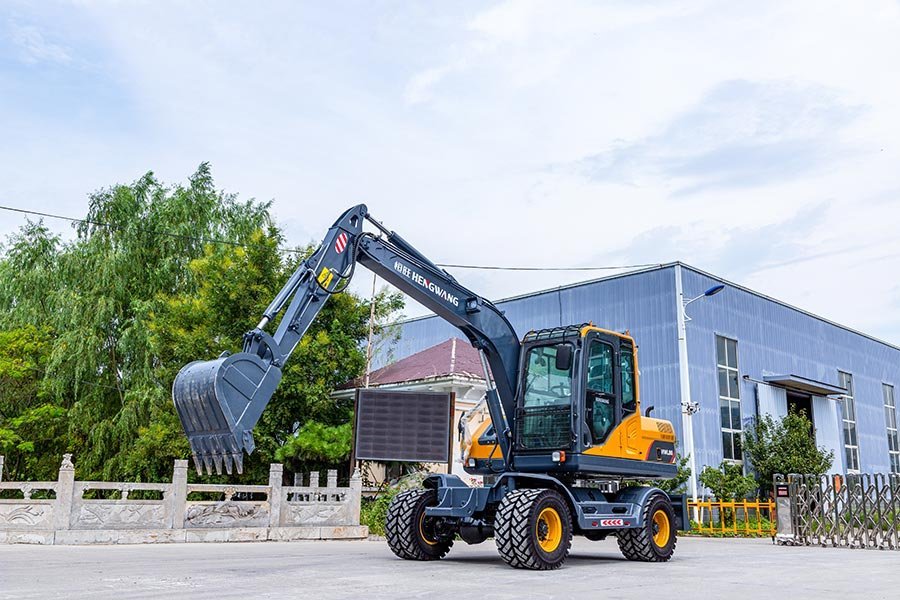
Beyond mobility, the effectiveness of the HWL80 Wheel Excavator in demanding tasks is ensured by its high-performance engine and expertly calibrated hydraulic system.
Advanced Hydraulic Flow Management
The HWL80 Wheel Excavator is powered by a robust engine system that adheres to contemporary emission standards, guaranteeing reliable power delivery. The sophisticated hydraulic system is engineered to manage multiple functions concurrently and precisely. This system uses load-sensing technology to allocate power efficiently, ensuring that digging force is instantly available at the attachment interface while maintaining smooth control over slewing and boom movements. This level of precision is vital for tasks like accurate utility location and careful material handling. For the operator, this translates into reduced effort and superior control, minimizing fatigue and boosting overall productivity during intense, long-duration tasks like highway shoulder excavation or utility trenching.
Optimized Digging Geometry
The boom and stick geometry of the HWL80 Wheel Excavator is often optimized for deep vertical digging and maximum reach—critical for utility applications where deep trenching is required adjacent to existing structures. Furthermore, the design usually accommodates a wide range of articulation, allowing the operator to work effectively over obstacles or reach across lanes of traffic safely. The ability to articulate the boom allows for highly controlled placement of spoil material or loading trucks from a fixed position, reducing machine movement and enhancing job site safety.
Strategic Applications: Where the HWL80 Wheel Excavator Dominates
The unique combination of mobility and power makes the HWL80 Wheel Excavator the machine of choice for specific segments of the construction and public works industries.
Municipal and Utility Infrastructure Projects
For city maintenance—including water line repairs, sewer upgrades, and telecommunication cable installation—the speed of the HWL80 Wheel Excavator is unmatched. Its quick deployment minimizes road closure times and traffic disruption, a major cost factor in urban projects. The machine can perform a localized excavation, backfill the trench, and move to the next service point quickly, often without needing an expensive low-bed trailer. This continuous movement capability dramatically improves the linear throughput of utility installation projects, offering substantial time savings over traditional crawler methods.
Road Construction and Maintenance
In highway maintenance, shoulder work, and drainage ditch cleaning, the HWL80 Wheel Excavator provides a unique advantage. Its ability to travel along the shoulder at speed, stopping only to set the stabilizers and perform the necessary work (such as replacing culverts or clearing debris), makes it highly productive. Furthermore, the wheeled chassis is gentler on existing pavement than steel tracks, reducing the need for costly post-project road repairs. This low-impact operation combined with rapid self-relocation solidifies the HWL80 Wheel Excavator‘s position as the ideal tool for projects where minimizing environmental and infrastructural damage is paramount.
Enhancing ROI: Versatility Through Attachments and Technology
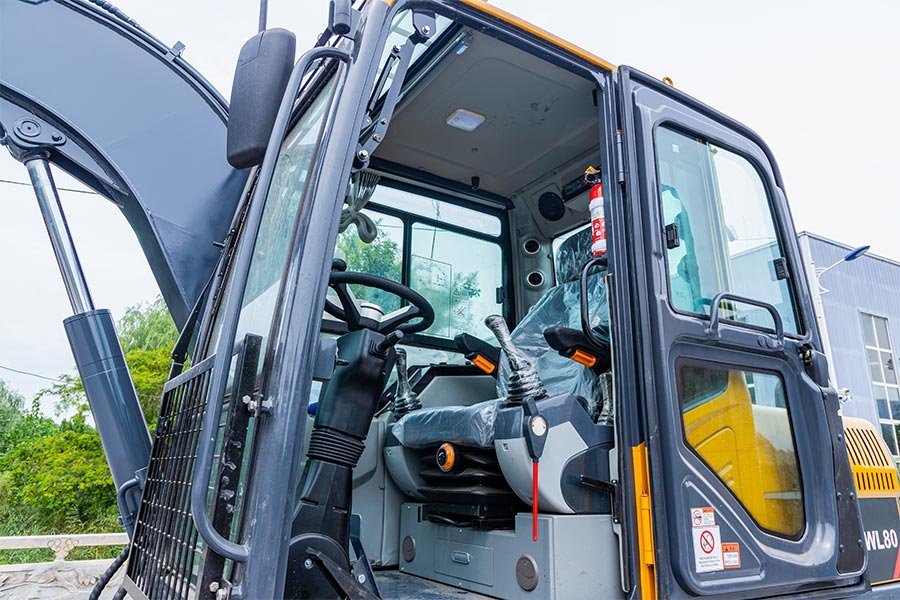
Maximizing the return on investment (ROI) for the HWL80 Wheel Excavator requires utilizing its full range of attachment capabilities and integrated modern technology.
Attachment Versatility
The machine is engineered to support a diverse array of hydraulic attachments beyond standard digging and grading buckets. Hydraulic hammers or breakers allow the HWL80 Wheel Excavator to perform light demolition of concrete sidewalks or asphalt paving. Grapples and specialized thumbs enhance its material handling capacity, making it excellent for clearing debris, sorting scrap, or positioning pipes. The quick-coupler system ensures that operators can swap between these tools rapidly, keeping the machine active and versatile throughout various phases of a complex project. This adaptability ensures that the single investment covers multiple operational needs.
Integrated Technology and Safety Features
Modern HWL80 Wheel Excavator models integrate advanced telematics and GPS systems. These technologies provide real-time data on machine location, fuel consumption, engine performance, and preventative maintenance needs. This intelligent monitoring allows fleet managers to optimize scheduling, reduce unauthorized usage, and address technical issues proactively, thereby minimizing unexpected downtime. Furthermore, safety features such as integrated cameras, audible proximity warnings, and enhanced cab visibility are essential for safe operation in complex, high-traffic urban environments, ensuring worker safety and compliance with stringent site regulations.
Conclusion
The HWL80 Wheel Excavator is a specialized machine that offers distinct strategic advantages over conventional excavators, particularly for infrastructure and urban-centric projects. Its core strengths—rapid self-relocation, low-impact operation on paved surfaces, and the combination of high hydraulic power with excellent stability—address the defining logistical challenges of modern municipal and road work. By leveraging the HWL80 Wheel Excavator, contractors can achieve significantly faster cycle times and reduced external transport costs, leading to unparalleled efficiency and productivity in projects demanding continuous mobility and precise control.
Frequently Asked Questions (FAQ)
Q1: What is the main benefit of the HWL80 Wheel Excavator over a crawler excavator for city work?
A: The main benefit is rapid self-relocation. The HWL80 Wheel Excavator can drive itself between job sites at high speed without needing a low-bed truck, significantly saving time and transport costs while minimizing road damage.
Q2: How does the HWL80 Wheel Excavator achieve stability for digging without tracks?
A: Stability is achieved by deploying hydraulic stabilizers (outriggers) and/or a dozer blade before digging or lifting operations. These lock the machine in place, allowing the hydraulic system to exert maximum force safely.
Q3: Is the HWL80 Wheel Excavator effective on soft or muddy ground?
A: While crawlers have better flotation, the HWL80 Wheel Excavator performs adequately on rough or soft ground, especially with appropriate tires. However, its primary advantage is on hard, paved, or mixed surfaces where its speed and low-impact operation are key.