In the dynamic and often congested world of modern engineering and construction, the demand for versatile, rapid, and efficient machinery is constant. The traditional dominance of tracked excavators is increasingly being challenged by highly mobile alternatives, where the HWL90 Wheel excavator represents a prime example of this evolution. This medium-sized wheeled machine is designed specifically to bridge the gap between heavy digging power and essential on-road mobility. Unlike its tracked counterparts, which require costly and time-consuming transportation between nearby job sites, the HWL90 can drive itself swiftly between locations, drastically cutting down logistical overhead and improving operational fluidity. For construction companies and equipment operators prioritizing flexibility in urban infrastructure, road maintenance, and utility installation projects, understanding the detailed engineering and functional advantages of this specific model is critical. This comprehensive article will explore the core features, operational benefits, and targeted applications that make the HWL90 Wheel excavator a valuable, high-performing asset in the modern construction fleet.
Design Philosophy: Balancing Power and Road Adaptability
The engineering success of the HWL90 Wheel excavator lies in its careful balance of robust hydraulic power needed for excavation and the stable, high-speed chassis required for road use. This dual requirement dictates unique design elements not found in typical heavy equipment.
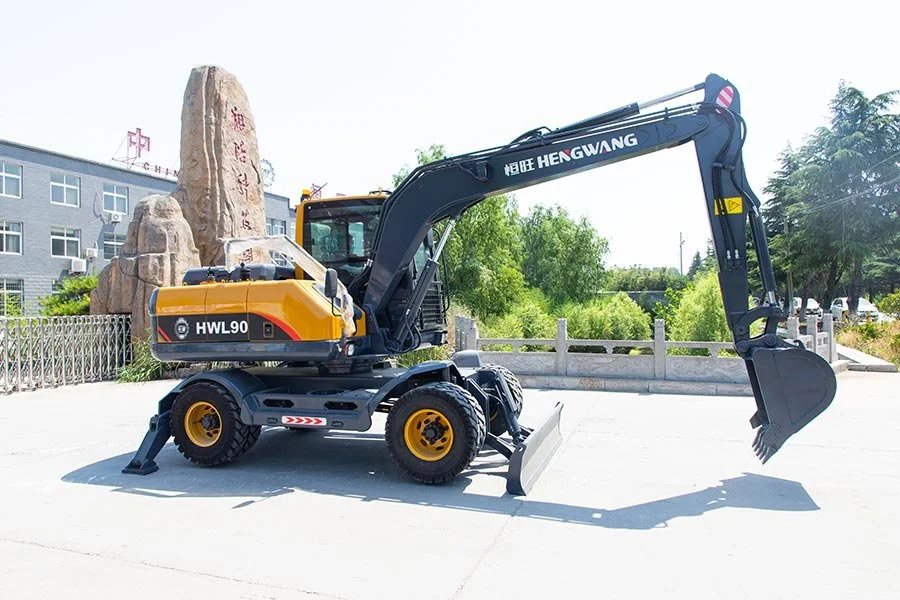
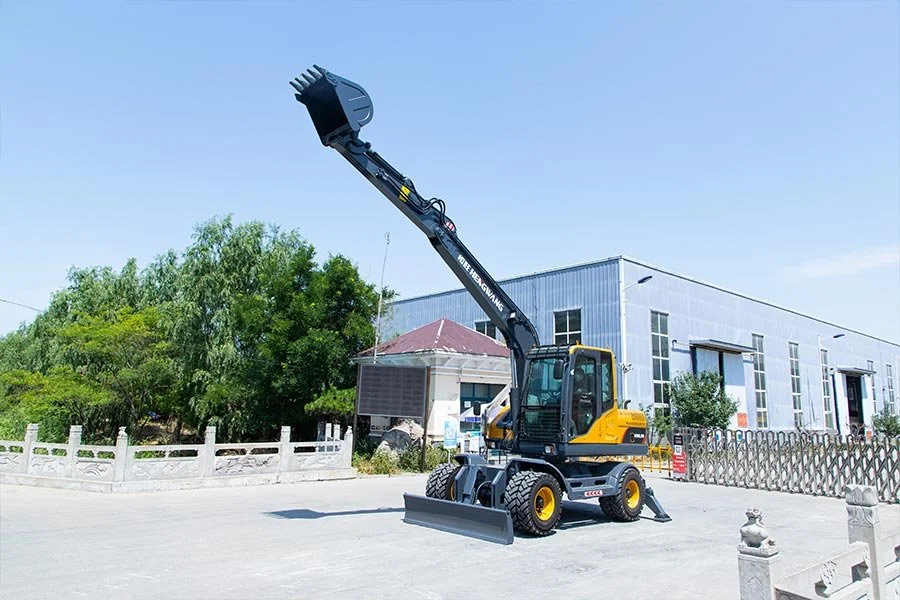
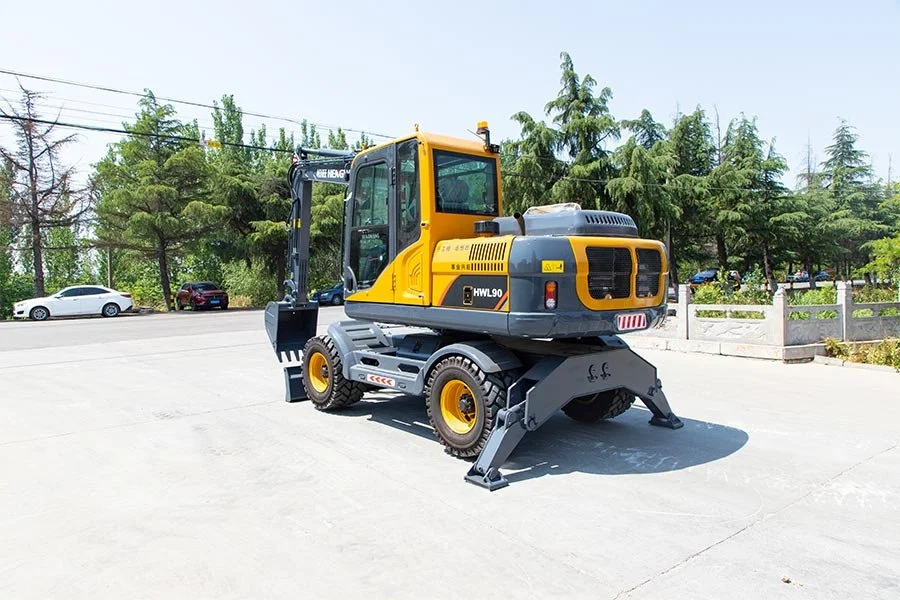
At the core of the machine is a powerful, yet fuel-efficient, engine system designed to meet strict emission standards while providing ample hydraulic output. This engine drives the main hydraulic pump, which in turn powers the digging arm and the travel motor. The wheel design introduces a crucial element of flexibility. The pneumatic tires and advanced axle configuration allow the machine to travel on public roads at speeds significantly higher than any tracked machine, often up to 30-40 km/h. Furthermore, the stabilization system is a critical component of its road-to-work transition. When arriving at the job site, the HWL90 Wheel excavator utilizes robust outriggers (stabilizer legs) and/or a dozer blade, which deploy quickly to provide a fixed, stable platform. This ensures the necessary stability for heavy lifting and deep trenching, effectively transferring the machine’s center of gravity and preventing tipping during maximum reach operations. The integration of high-pressure lines and precise valve blocks ensures that the operator maintains fine control over digging and slewing movements, even while operating on potentially uneven terrain stabilized by the outriggers. This combination of speed and stability defines its operational superiority in dynamic, scattered job environments.
Operational Efficiency: The Time and Cost Savings of Mobility
The most compelling economic argument for utilizing the HWL90 Wheel excavator revolves around its ability to drastically reduce non-productive time, resulting in substantial savings on project costs and timelines.
In typical urban or road construction, projects often involve moving equipment short distances—perhaps only a few blocks or from one side of a highway to another. For tracked excavators, this necessitates scheduling and paying for lowboy trailers and specialized transport permits. The HWL90 Wheel excavator eliminates these delays and costs entirely. The operator simply stows the bucket, raises the stabilizers, and drives the machine to the next work area. This ability to self-mobilize maximizes the time the machine spends actively digging or loading, directly improving overall site productivity. Moreover, wheeled excavators, due to the pressure distribution of the tires, inflict less damage on paved surfaces than tracks do, reducing the need for costly road repairs after the project is complete. The smooth, fast travel capability also makes it an excellent choice for support tasks, such as transporting small loads of materials or quickly moving to different points in a large utility corridor for inspection or minor adjustments. Therefore, for project managers, the acquisition of a HWL90 Wheel excavator is fundamentally an investment in maximizing machine uptime and logistical independence.
Precision and Versatility: Adapting to Specialized Tasks
The inherent design of the HWL90 Wheel excavator lends itself well to high-precision tasks and multi-functional versatility, which are crucial attributes in modern, complex engineering projects.
Modern construction requires more than just digging; it demands accurate material handling, precise trenching, and utility installation. The HWL90’s hydraulic system is typically equipped with auxiliary circuits designed to power a wide range of hydraulic attachments beyond the standard digging bucket. Operators can quickly couple specialized tools, such as hydraulic hammers for breaking concrete, tiltrotators for 360-degree material manipulation, grapples for sorting debris, and various specialized trenching buckets. The cab design often incorporates advanced ergonomic controls and excellent visibility, enabling the operator to manage these complex attachments with high degrees of accuracy. This fine control is particularly important in utility work, where digging around existing underground pipes and cables requires millimeter precision to avoid costly damage. Furthermore, the machine’s ability to quickly reposition itself without affecting adjacent traffic or pavement makes it ideal for working within the constrained boundaries of active city streets. This versatility ensures that the HWL90 Wheel excavator can serve multiple roles on a single job site, often replacing two or three less adaptable machines, thereby streamlining the overall construction process.
Operator Comfort and Safety in High-Paced Environments
In line with modern construction industry values, the design of the HWL90 Wheel excavator places significant emphasis on operator comfort, safety, and intuitive control, recognizing that human factors directly influence productivity.
The operator’s cab is designed as a focused workspace, typically featuring advanced heating, ventilation, and air conditioning (HVAC) systems to maintain a comfortable temperature regardless of external weather conditions. Key features include adjustable, air-suspended seating to reduce fatigue during long shifts and low-effort hydraulic joysticks that minimize physical strain. Safety is enhanced through several integrated systems. Excellent all-around visibility, often supplemented by multiple rearview and side-view cameras, helps the operator navigate safely in crowded urban sites. Furthermore, advanced braking systems and stable road handling characteristics are essential for safe travel between locations. The machine’s integrated monitoring system continuously tracks critical operational parameters—such as engine temperature, hydraulic pressure, and fuel levels—providing real-time feedback to the operator and allowing potential issues to be addressed before they lead to downtime. Prioritizing operator well-being and safety ensures that the HWL90 Wheel excavator maintains high productivity and minimizes the risks inherent in fast-paced construction work.
Long-Term Value: Maintenance and Durability Factors
For buyers of heavy machinery, the long-term value of the HWL90 Wheel excavator is defined not just by its initial performance but by its durability and ease of maintenance, impacting the total cost of ownership (TCO).
Hengwang machinery is designed with accessibility in mind. Routine maintenance points, such as engine filters, fluid check points, and grease zerks, are typically grouped together and easily accessible from ground level or wide-opening service doors. This simple design significantly reduces the time required for daily inspections and scheduled maintenance, translating directly into higher machine availability. The structural components, including the boom and arm, are fabricated from high-strength steel, engineered to withstand the continuous stresses of heavy digging and lifting over the machine’s lifespan. The wheeled chassis, while offering mobility, is also simpler to maintain than complex tracked undercarriages, which frequently require expensive component replacement. By focusing on robust component protection, durable hydraulic lines, and accessible service points, the HWL90 Wheel excavator is positioned as a machine built for enduring use in varied and challenging construction environments, offering a strong return on investment through reduced maintenance complexity and extended operational life.
The Future of Mobility: Integrating the HWL90 into Smart Sites
The increasing connectivity and data requirements of modern “smart” construction sites suggest a growing future role for highly mobile, versatile machines like the HWL90 Wheel excavator.
Future construction methodologies emphasize real-time data exchange, precise GPS guidance, and remote diagnostics. Machines like the HWL90 are ideally suited for this environment. They can be quickly moved to capture accurate site data or perform immediate remediation based on digital feedback. Furthermore, the inherent mobility facilitates the rapid implementation of semi-autonomous or remotely controlled operations in dangerous or hard-to-reach areas. The integration of advanced telematics systems allows fleet managers to monitor the machine’s location, fuel consumption, and operational health remotely, enabling highly efficient scheduling and predictive maintenance. This data-driven approach, powered by the operational flexibility of the wheeled design, ensures that the HWL90 Wheel excavator remains at the forefront of the digital transformation sweeping the heavy machinery industry.
Frequently Asked Questions (FAQ)
Q1: What is the main benefit of the HWL90 Wheel excavator compared to a tracked model?
The main benefit is superior mobility and lower logistical costs. The HWL90 can travel on paved roads under its own power at high speeds between job sites, eliminating the need for expensive, time-consuming lowboy trailers and transport permits for short-distance moves.
Q2: How does the HWL90 ensure stability during heavy digging operations?
The HWL90 ensures stability by deploying specialized outriggers (stabilizer legs) and/or a front-mounted dozer blade. These components are lowered to the ground to lift the tires slightly and create a wide, stable, fixed platform, securely anchoring the machine during powerful lifting and digging.
Q3: Is the HWL90 Wheel excavator suitable for rough, off-road terrain?
While designed for versatility, its wheeled chassis is best suited for stable surfaces like pavement, gravel, and packed earth. For extremely muddy, rocky, or soft off-road terrain, a conventional tracked excavator would generally be more appropriate due to its larger ground contact area.