In the dynamic and ever-evolving field of construction and civil engineering, choosing the correct piece of equipment is paramount to a project’s success, efficiency, and overall profitability. For excavation and earthmoving tasks, the choice traditionally boiled down to the robust power of a crawler excavator. However, in recent years, the wheeled excavator has surged in popularity, offering a highly versatile alternative. This shift is particularly evident with models like the HWL90 Wheel Excavator, which presents a compelling blend of strength, speed, and maneuverability. This article will provide a detailed, professional comparison of the HWL90 Wheel Excavator against its tracked counterparts, offering construction professionals a valuable perspective on where this machine truly excels.
Introducing the Versatility of the HWL90 Wheel Excavator
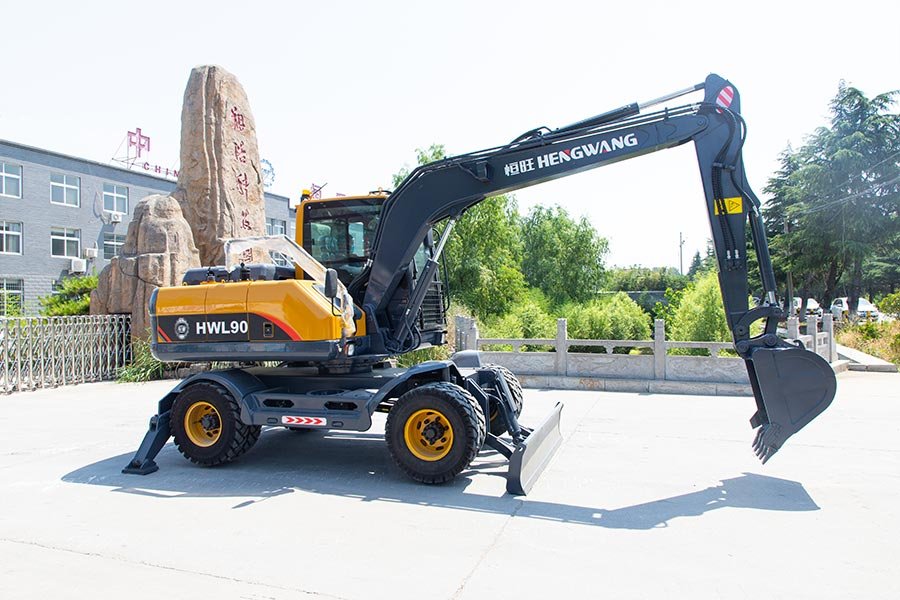
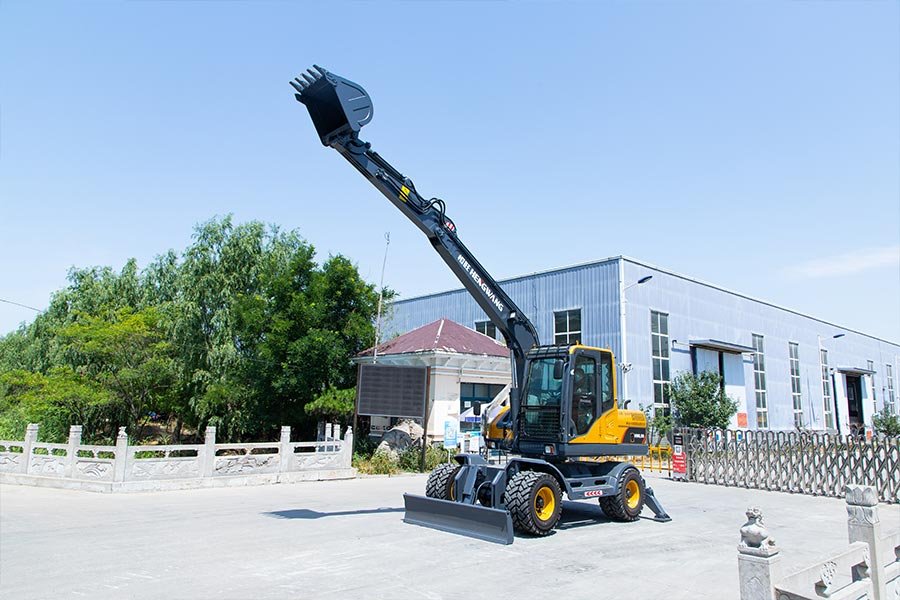
The HWL90 Wheel Excavator is an excellent example of modern engineering designed to meet the complex demands of contemporary construction sites. Unlike traditional crawler machines that rely on tracks for locomotion, the HWL90 utilizes heavy-duty, high-speed tires, fundamentally altering its operational capabilities and the types of environments in which it thrives. With an operating weight of around 7.2 tons and a robust 48 kW engine, it’s built for heavy-duty performance while maintaining a compact footprint. Its 0.28 cubic meter bucket capacity ensures efficient material handling for medium-duty tasks.
The core philosophy behind the HWL90 Wheel Excavator is mobility and versatility. In an industry where time is money and job sites are often spread across a city, the ability of a machine to move itself quickly and efficiently without the need for additional transport is a game-changer. This self-deployable nature is the foundational feature that sets the HWL90 apart from its tracked relatives.
Mobility and Site-to-Site Transit: The Defining Difference
The most striking advantage of the HWL90 Wheel Excavator lies in its unparalleled mobility. Traditional crawler excavators are workhorses on-site, offering superior traction and stability for heavy digging in demanding, uneven, or soft terrains. However, their slow travel speed (typically 2–6 mph) necessitates the use of a lowboy trailer and a commercial driver’s license (CDL) for transport between job sites, which introduces significant costs and time delays.
Conversely, the HWL90 can travel at road-legal speeds, often exceeding 20 mph. This single feature dramatically reduces non-productive downtime and overall project costs. For contractors managing multiple, scattered urban projects, the HWL90 Wheel Excavator eliminates the expense of a separate hauling truck and the time lost in loading and unloading. Consequently, a small- to medium-sized project requiring multiple daily moves becomes significantly more efficient. This speed and self-sufficiency make the HWL90 an economically sound choice for utility work, road maintenance, and municipal engineering where rapid relocation is a frequent necessity.
Ground Conditions and Surface Preservation in Application
The difference in locomotion systems translates directly into how each machine interacts with the ground. Crawler excavators, with their large track surface, distribute the machine’s weight over a greater area, resulting in lower ground pressure. This makes them the undisputed champions for work in muddy, soft, or highly uneven terrain, such as mining sites, forestry, and large-scale, undeveloped earthmoving projects.
However, the HWL90 Wheel Excavator offers a distinct advantage on finished surfaces. The rubber tires of the HWL90 minimize damage to concrete, asphalt, and manicured landscapes, a crucial factor for urban and suburban projects. In city construction—from installing utility lines beneath a paved street to sidewalk repair and landscaping—preserving the surrounding infrastructure is often as important as the excavation itself. The tracks of a crawler can easily damage these surfaces, leading to costly and time-consuming repairs.
Furthermore, wheeled machines like the HWL90 are often equipped with stabilizers or outriggers and a dozer blade, which, when deployed, significantly enhance stability during demanding digging or lifting operations. With these features engaged, the operational stability of the HWL90 Wheel Excavator can be comparable to that of a tracked machine on flat, hard ground, effectively removing a common misconception that wheeled excavators sacrifice stability for speed.
Operational Efficiency and Versatility: A True All-Rounder
When assessing the operational capabilities, both types of excavators utilize powerful hydraulic systems and can accept a wide array of attachments, from hammers and shears to grapples and tiltrotators. The HWL90 Wheel Excavator, however, often leverages its wheeled design to become a “Swiss Army knife” for contractors.
Its high travel speed, coupled with the ability to tow a trailer (often fitted with a hitch), means the operator can transport not just the machine itself but also all necessary tools and attachments for a day’s work. This single-unit efficiency contrasts sharply with a crawler setup, which typically requires separate transportation for the machine and the tools.
For tasks in confined spaces, the maneuverability of the HWL90 Wheel Excavator is a clear winner. Many wheeled models, including those with a short-swing radius, are designed to operate effectively within the constraint of a single traffic lane. This is a critical factor in busy urban roadwork where minimizing disruption to traffic flow is a primary goal. While crawler excavators offer supreme stability for sheer brute-force digging—especially in rocky or heavily compacted areas—the versatility and quick repositioning of the HWL90 make it more efficient for the frequent, multi-task, light-to-medium digging and handling operations common in modern infrastructure projects.
Cost of Ownership and Long-Term Value
Examining the long-term cost of ownership reveals another area where the HWL90 Wheel Excavator often provides superior value, especially when factoring in maintenance. While the initial purchase price of a wheeled excavator may sometimes be slightly higher than a comparable crawler, the reduced maintenance costs of the undercarriage typically provide a significant return on investment.
The undercarriage of a crawler excavator—including tracks, rollers, and sprockets—is expensive to maintain and replace, often representing a substantial portion of the machine’s operating expenses over its lifetime. Rubber tires on the HWL90, on the other hand, are generally less expensive to replace and less prone to major failures than a complex track system. Furthermore, the enhanced fuel efficiency resulting from reduced reliance on transportation trucks contributes to a lower overall operational cost.
The versatility of the HWL90 Wheel Excavator also plays into its financial value. A contractor may use this single machine for everything from deep digging and trenching to material handling and roadside mowing by simply swapping attachments. This multi-functionality can potentially eliminate the need to purchase, insure, and maintain several specialized machines, further boosting the machine’s long-term economic value.
Conclusion: A Shift in the Engineering Paradigm
Ultimately, the choice between the HWL90 Wheel Excavator and a traditional crawler excavator is not about which machine is “better” but which is best suited for the project profile.
For large-scale, heavy-duty excavation in challenging, soft, or severely uneven terrain, the crawler excavator remains the gold standard, providing unmatched traction and stability.
However, for contractors whose work primarily revolves around municipal contracts, utility installation, road maintenance, and general construction in urban and suburban environments, the HWL90 Wheel Excavator offers a persuasive case. Its distinct advantages in high-speed mobility, low ground disturbance, operational versatility, and lower cost of ownership position it as a modern and highly efficient alternative. The HWL90 Wheel Excavator is more than just an earthmover; it’s a strategic asset that enhances site logistics, protects existing infrastructure, and ultimately drives greater efficiency and profitability in a demanding industry. This machine truly embodies the value of speed and versatility in the engineering mechanical world.
Frequently Asked Questions (FAQ)
Q1: Is the HWL90 Wheel Excavator capable of heavy digging?
A: The HWL90 Wheel Excavator is built for heavy-duty performance, featuring a powerful engine and strong breakout force. While a comparable crawler may offer superior stability and traction for continuous, extremely heavy digging in soft or rocky terrain, the HWL90 is perfectly capable of handling most medium-to-heavy excavation tasks, especially when its outriggers and dozer blade are deployed for maximum stability on hard surfaces.
Q2: What are the main maintenance cost differences?
A: The most significant difference is in the undercarriage. The complex track system of a crawler excavator has a high replacement cost and requires more extensive, time-consuming maintenance (lubrication, tension adjustments). The rubber tires and simpler axles of the HWL90 Wheel Excavator are generally less costly to replace and maintain, contributing to a lower total cost of ownership over the machine’s lifespan.
Q3: Can a wheeled excavator tow attachments?
A: Yes, many wheeled excavators, including the HWL90 Wheel Excavator, can be factory-fitted with a hitch. This capability allows the machine to tow a trailer loaded with attachments, tools, or materials, further enhancing its self-sufficiency and reducing the need for separate transport vehicles on a multi-site project.