Precision defines profitability in the pavement maintenance industry. As a contractor or fleet manager, you know that a road marking machine is not just a tool; it is the backbone of your project compliance. Poor equipment leads to uneven lines, wasted material, and rejected inspections.
You are likely evaluating whether to upgrade your current fleet or find a new supplier for an upcoming contract. The market is flooded with specifications that often obscure real-world performance. I will guide you through the technical criteria that truly impact your operational efficiency.
The Advantage of Airless Spraying Technology
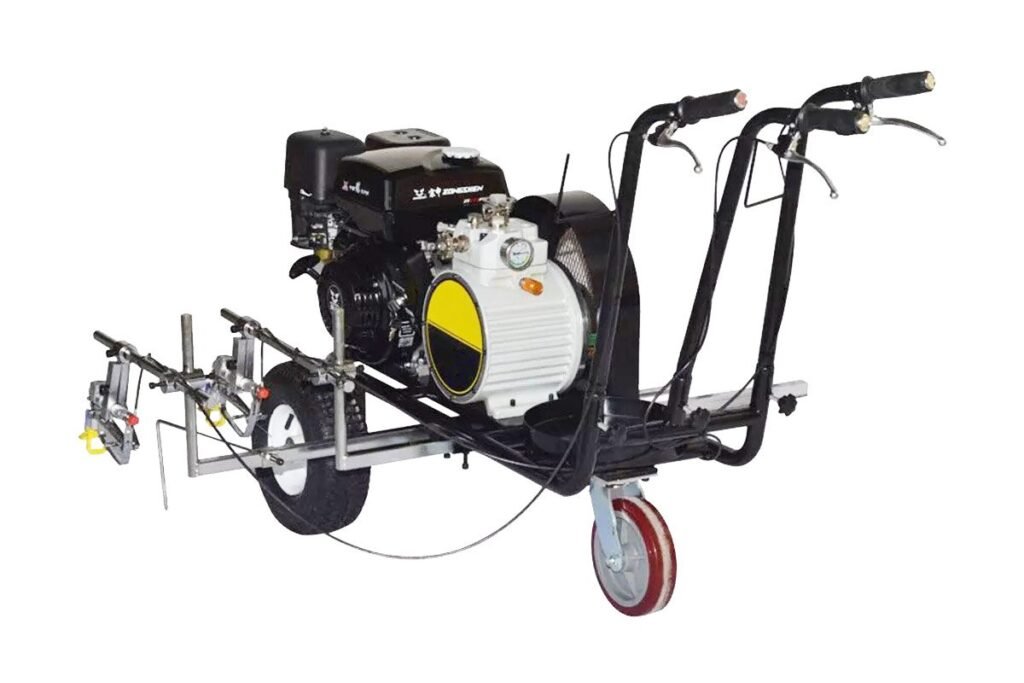
Modern B2B buyers prioritize efficiency and line definition. This is why finding a competent airless spraying road marking machine supplier is critical for your business. Unlike conventional air spray systems, airless technology uses high pressure to atomize the paint.
This method results in sharper line edges and reduced overspray.According to the Federal Highway Administration (FHWA), clear pavement markings are essential for maintaining safety standards and retroreflectivity. Airless systems ensure the glass beads embed properly into the paint, meeting these strict visibility requirements.
Furthermore, airless technology supports faster application speeds. A high-pressure pump delivers a consistent flow, allowing your operators to move quickly without sacrificing quality. This efficiency directly translates to lower labor costs per linear foot.
Evaluating Road Marking Machine Manufacturers
Not all equipment is built to withstand the rigors of daily construction work. When researching road marking machine manufacturers, you must look beyond the glossy brochures. You need to verify the durability of the hydraulic systems and the engine quality.
Reliable manufacturers use standardized components that are easy to source. If a pump seal fails mid-project, you cannot afford to wait weeks for a proprietary part. I always advise clients to check if the manufacturer adheres to ISO quality standards regarding component consistency.
Additionally, consider the machine’s flow rate capabilities. A machine suited for parking lots may struggle with long-highway runs. You must match the manufacturer’s specifications to your primary use case to avoid premature equipment burnout.
Operational Versatility and Handling
Your crew needs a machine that adapts to different environments. A rigid machine works well on straight highways but fails in complex intersections. You should look for equipment with a lockable front caster wheel system.
This feature allows operators to switch seamlessly between straight-line striping and radius turning. Professional associations like the American Traffic Safety Services Association (ATSSA) emphasize that correct application geometry is vital for traffic guidance. A machine that fights the operator causes fatigue and irregular lines.
Weight distribution also matters. A well-balanced machine ensures that the spray gun remains stable, even over uneven asphalt. This stability is the difference between a professional finish and a jagged, amateur line.
How to Judge Equipment Suitability for Agile Projects
When you are ready to finalize your purchase, you must validate the machine against your specific project needs. Large highway trucks are overkill for city streets, while small gravity-fed units are too slow.
You need a “sweet spot” machine that balances portability with power. Look for a unit that offers high-pressure output but remains compact enough for a single operator to load. The ability to handle various paint types without clogging is also a key indicator of a quality build.
If you are looking for a versatile solution that fits this criteria, you should examine the HW-8L Road Marking Machine. This unit is designed to provide professional airless performance in a maneuverable package. It is particularly effective for contractors who need reliable output for both long lines and intricate stencil work.
Choosing a machine like this often bridges the gap between light-duty sprayers and heavy industrial trucks. It allows you to bid on a wider variety of contracts with confidence.
Conclusion
Selecting the right road marking machine requires balancing pressure capabilities, ease of maintenance, and manufacturer reputation. Prioritize airless technology for cleaner lines and ensure your supplier offers robust support. The right investment today secures your compliance and profitability for years to come.
FAQ
1. What is the main advantage of an airless road marking machine?
Airless machines provide sharper line edges and superior paint atomization, which improves drying time and glass bead retention compared to air-spray systems.
2. How do I choose between different road marking machine manufacturers?
Focus on manufacturers that offer standardized engine components, accessible spare parts, and verified flow rate specifications to ensure long-term reliability.
3. Can the HW-8L machine handle different types of road paint?
Yes, most high-pressure airless machines in this class are designed to handle standard cold solvent-based and water-based traffic paints effectively.
4. Why is the front wheel design important for these machines?
A swiveling front wheel that can be locked allows the operator to switch instantly between painting straight lines and executing curved radius lines in parking lots.
5. How does equipment quality affect retroreflectivity standards?
Consistent pump pressure ensures an even film thickness, which is necessary to hold glass beads at the correct depth for meeting government visibility regulations.
Reference Sources
Federal Highway Administration (FHWA)
Manual on Uniform Traffic Control Devices (MUTCD)
https://highways.dot.gov/
American Traffic Safety Services Association (ATSSA)
Pavement Marking Standards & Best Practices
https://www.atssa.com/