Efficient soil compaction is the backbone of any durable construction project. Whether you are paving a highway or preparing a foundation, the equipment you choose dictates the longevity of the work. As a procurement manager or contractor, selecting the right single drum road roller is often a trade-off between compaction force and maneuverability. You need machinery that delivers specific density targets without inflating your operational costs. In this guide, I will break down the technical criteria for selecting the best single drum road roller for your fleet.
Mechanics of Compaction: Static vs. Dynamic Force
Understanding how a roller achieves density is crucial for making an informed purchase. A single drum road roller relies on two distinct forces: static linear load and dynamic centrifugal force.
Static linear load refers to the weight of the roller drum applied to the ground. This is primarily effective for smoothing and finishing upper soil layers. However, static weight alone is rarely sufficient for deep compaction.
Dynamic force, generated by an internal eccentric weight mechanism, creates vibration. According to general industry principles, high amplitude (the distance the drum moves vertically) combined with lower frequency is ideal for cohesive soils like clay. Conversely, low amplitude with high frequency suits granular soils like sand or gravel. When evaluating a single drum road roller factory specification sheet, verify that the vibration system aligns with your primary soil type.
Determining the Best Applications for Single Drum Models
Not all compaction tasks require the same machinery. B2B buyers must distinguish when a single drum unit is superior to a double drum option. The primary advantage of a single drum design is the set of pneumatic tires at the rear.
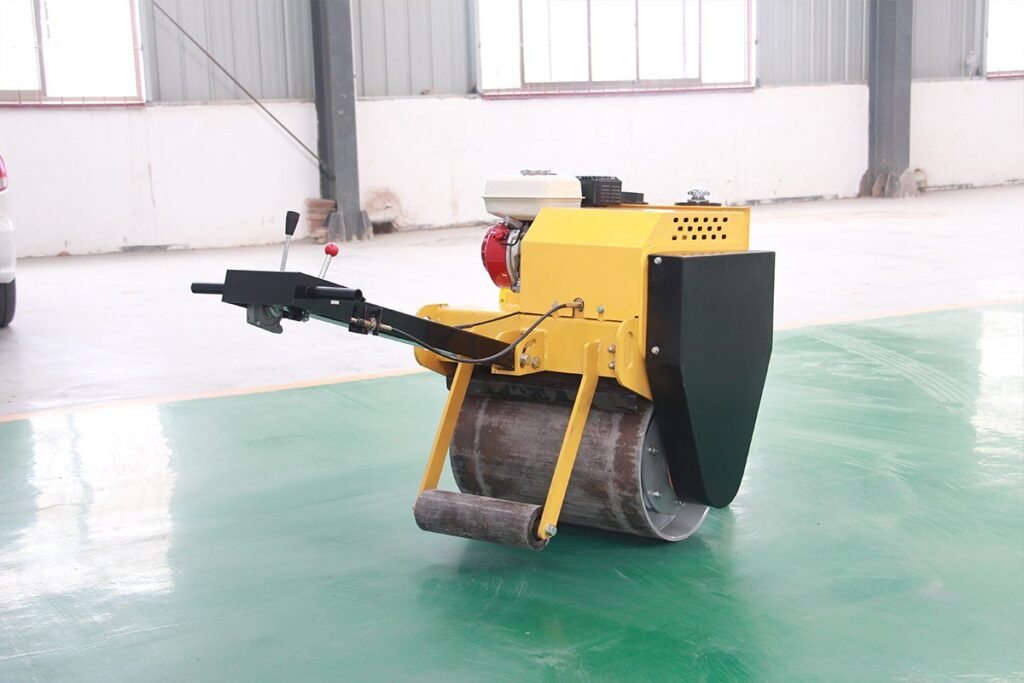
These tires provide exceptional traction on uneven or steep terrain. This makes the single drum road roller the standard choice for site preparation and earthworks. The rear tires also allow the machine to push up grades that would stall a double drum roller.
For specialized applications, consider the drum surface. Smooth drums are standard for granular soil and asphalt base courses. However, if your projects involve heavy clay, you may need a padfoot shell kit. Many China single drum road roller wholesaler options now offer bolt-on padfoot kits, providing versatility for mixed fleets.
Vetting a China Single Drum Road Roller Wholesaler
Sourcing heavy machinery globally requires strict due diligence regarding safety and manufacturing standards. When I evaluate a potential supplier, I look for adherence to international safety protocols.
First, check for Rollover Protective Structures (ROPS) compliance. Organizations like OSHA (Occupational Safety and Health Administration) emphasize the necessity of ROPS for operator safety in earthmoving machinery. A reputable manufacturer will explicitly state their compliance with ISO 3471 or equivalent safety standards regarding the cabin or protective frame.
Second, examine the hydraulic components. The best single drum road roller models often utilize hydraulic pumps and motors from established global brands to ensure reliability. Ask the factory about their quality management systems, specifically looking for ISO 9001 certification. This indicates a consistent manufacturing process, reducing the risk of premature component failure in your fleet.
How to Evaluate Compact Single Drum Models
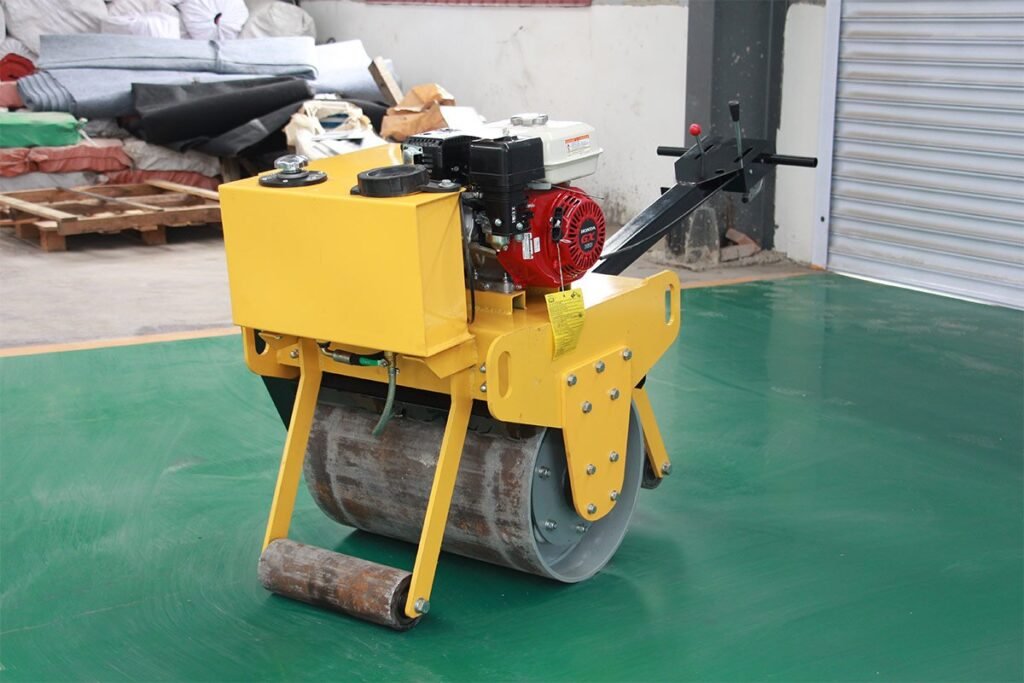
When your project involves narrow trenches, sidewalks, or confined repair work, massive ride-on rollers are impractical. In these scenarios, the focus shifts from sheer weight to maneuverability and ease of transport.

Critical Selection Criteria for Compact Rollers
You must assess the machine’s ability to operate in tight radiuses without sacrificing compaction power. Look for features that allow the operator to control the unit safely from a distance or with high visibility.
- Engine Reliability: Ensure the power unit is a recognizable standard engine, simplifying maintenance and parts sourcing.
- Control Ergonomics: For walk-behind models, the handle mechanism should reduce vibration transfer to the operator, preventing fatigue.
- Transportability: Compact units should be easily loaded onto standard trailers or pickup trucks.
If you are currently assessing compact options for municipal repairs or landscape construction, you need verified specifications. For a detailed look at a machine designed specifically for these confined applications, you can review the specifications of the HW-450 Single Drum Road Roller. This specific model offers a practical balance of size and centrifugal force for targeted compaction tasks.
Summary
Selecting the right single drum road roller requires balancing dynamic force capabilities with terrain requirements. Whether sourcing from a China single drum road roller wholesaler or a local dealer, prioritize units with verified hydraulic reliability and safety certifications. Always match the drum width and vibration frequency to your specific project soil types to ensure maximum efficiency.
FAQ
1. What is the main difference between a single drum and a double drum road roller?
A single drum road roller features pneumatic rear tires for better traction on soil and grades, while a double drum roller has two steel drums for smoothing asphalt.
2. How do I choose the best single drum road roller for clay soil?
For clay or cohesive soil, you should select a roller with a high amplitude vibration setting or equip the machine with a padfoot drum shell.
3. What maintenance is critical for a single drum road roller?
Regularly checking the vibration system’s hydraulic fluid levels and ensuring the eccentric weight mechanism is lubricated are essential for preventing expensive breakdowns.
4. Why is ISO certification important when choosing a roller factory?
ISO 9001 certification confirms that the single drum road roller factory follows consistent quality management practices, ensuring standard manufacturing tolerances and reliability.
5. Can a single drum roller be used on asphalt?
Yes, they are often used for the base layer of asphalt, but a double drum roller is typically preferred for the finish layer to avoid tire marks.
Reference Sources
International Organization for Standardization (ISO)
ISO 3471: Earth-moving machinery — Roll-over protective structures
ISO 9001: Quality management systems
Occupational Safety and Health Administration (OSHA)
Rollover Protective Structures (ROPS) for Material Handling Equipment
Association of Equipment Manufacturers (AEM)
Earthmoving & Compaction Equipment Safety Guidelines