In the demanding world of construction and earthmoving, selecting a high-performance site dumper is a critical decision for B2B procurement officers. These machines are the workhorses of the job site, bridging the gap between excavators and large-scale haulers. However, the wrong choice can lead to excessive downtime, safety risks, and inflated operational costs.
For commercial buyers, the challenge lies in balancing initial investment with long-term reliability and site-specific utility. You are likely evaluating whether a wheeled or tracked configuration suits your fleet, or if the specialized functionality of a self loading site dumper wholesale purchase offers the best ROI. This guide provides a professional framework for assessing technical specifications and safety standards to ensure your investment protects both your crew and your bottom line.
What to Look for in a Reliable Site Dumper
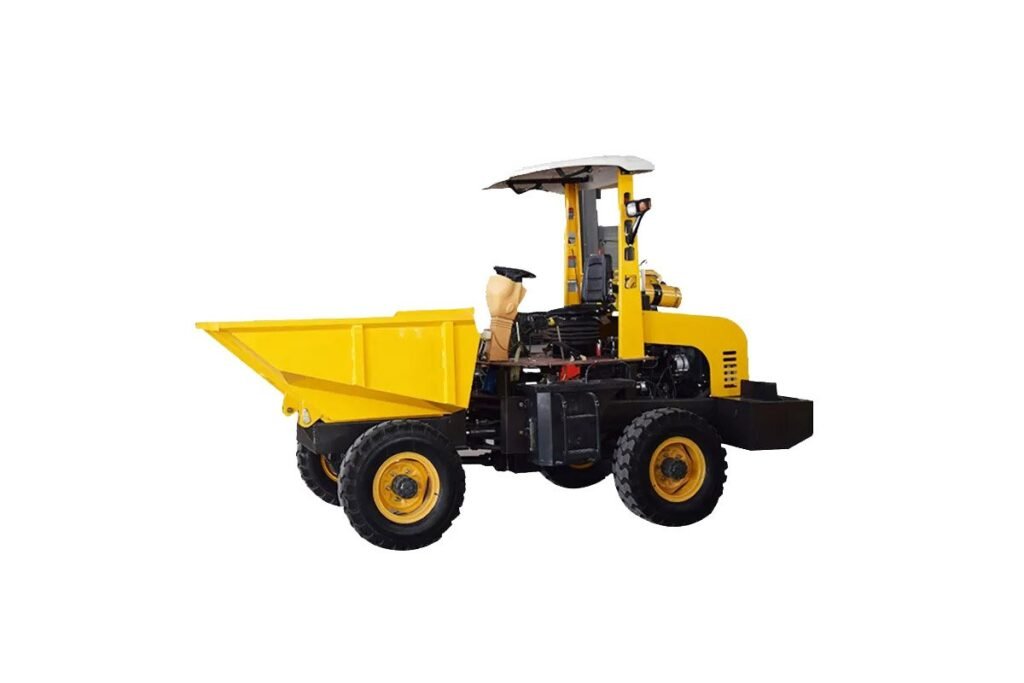
When auditing equipment for a B2B fleet, reliability isn’t just a marketing term—it is a measurable set of technical standards. A reliable site dumper must comply with international safety regulations such as ISO 20474-6, which dictates specific safety requirements for wheeled and crawler dumpers. From my professional perspective, the first thing to inspect is the structural integrity of the skip and the chassis.
The most resilient models utilize high-grade, fully welded steel base plates reinforced with box sections. This prevents the “warping” of the skip mouth often seen in lower-quality units after heavy use with abrasive materials like rubble or rock. Furthermore, look for Stage V or Tier 3 compliant engines from reputable global manufacturers. Integrated components from recognized supply lines ensure that you can source spare parts locally, minimizing the risk of a machine sitting idle during peak project phases.
Safety features are non-negotiable for commercial operations. A robust dumper must include a Roll-Over Protection System (ROPS) and highly visible retractable seatbelts. For larger units, such as a 5t site dumper, additional visibility aids like front-facing cameras or green LED beacons are increasingly required on modern job sites to meet transport guidelines.
Wheeled Site Dumper vs. Tracked Dumper: Operational Trade-offs
The decision between a wheeled site dumper and its tracked counterpart often defines the efficiency of your material handling. A wheeled dumper is the industry standard for speed and mobility on consolidated ground. These machines can typically reach speeds of 20-30 km/h, significantly reducing cycle times across sprawling construction sites compared to tracked models.
However, the wheeled site dumper concentrates its entire weight on four contact points, resulting in higher ground pressure. While this is ideal for compacting sub-bases or operating in quarries, it can cause soil compaction or lead to the machine getting stuck in muddy conditions. In contrast, tracked dumpers “float” over the ground, making them indispensable for land reclamation or sensitive landscaping projects.
From a maintenance standpoint, wheeled units generally offer a longer lifespan and lower overhead costs. Their drivetrains are simpler to access, and they lack the expensive undercarriage wear parts associated with crawlers. If your projects involve frequent travel between sites and operation on relatively stable terrain, the wheeled configuration provides the most cost-effective solution for your fleet.
Maximizing Project ROI with 5t Site Dumper Specifications
The 5t site dumper occupies a unique “sweet spot” in the market, providing enough power for medium-to-large building sites while maintaining enough agility for urban environments. When sourcing a 5-tonne unit, pay close attention to the permanent four-wheel-drive (4WD) capabilities. A reliable 5t model should feature heavy-duty axles with epicyclic reduction to handle the high torque required when navigating steep gradients fully loaded.
Always verify the unladen weight versus the payload ratio during your inspection. A 5t dumper typically weighs approximately 3,800kg to 4,000kg to maintain stability. If a machine is significantly lighter, it may lack the structural steel needed to withstand years of heavy tipping and impact.
For B2B buyers looking to further reduce labor costs, a self loading site dumper wholesale order can be a strategic move. These specialized units feature a front-mounted loading shovel that allows a single operator to load, transport, and dump materials without a secondary excavator. This “all-in-one” functionality is particularly valuable for small road repairs and remote sites where mobilizing multiple pieces of heavy equipment is logistically difficult.
Selecting Equipment for Longevity and Resale Value
Choosing a site dumper is not just about meeting today’s project needs; it is about long-term asset management. The best way to judge a machine’s future reliability is to examine its service access and hydraulic protection. Look for fill points that are accessible from ground level and wiring harnesses contained within water-resistant conduits.
If you are currently comparing different dumper classes, it is essential to review the specific hydraulic pressures and load-testing protocols used by the manufacturer. You can explore a wide range of industrial-grade 5-tonne configurations and high-efficiency designs at HW-FCY50 Site Dumper Technical Specs. This will help you determine if the machine’s dimensions and tipping height are compatible with your existing transport trailers and on-site discharge requirements.
Professional Conclusion for Procurement Officers
In summary, a site dumper is a vital investment that requires a focus on structural reinforcement, engine reliability, and terrain-specific configuration. Prioritize the 5t site dumper for its versatility, and consider a wheeled site dumper for high-speed, low-maintenance operations on stable ground. By adhering to ISO safety standards and verifying component origins, you ensure that your fleet remains a productive asset rather than a maintenance liability.
FAQ
Q1: What is the primary safety standard for a site dumper? Site dumpers should comply with ISO 20474-6, which covers the specific safety requirements for both wheeled and crawler earth-moving machinery.
Q2: When should I choose a tracked dumper over a wheeled site dumper? You should choose a tracked dumper when working on soft, muddy, or environmentally sensitive terrain where low ground pressure is required to prevent the machine from sinking.
Q3: Is a 5t site dumper suitable for public road use? Typically, site dumpers are designed for off-road use, though some models can be road-homologated with the addition of specific lighting, mirrors, and registration.
Q4: What is the benefit of a self loading site dumper? A self loading dumper eliminates the need for a separate loader or excavator, allowing a single machine and operator to handle the entire loading and transport cycle.
Reference Sources
- Health and Safety Executive (HSE): Safe use of site dumpers on construction sites. https://www.hse.gov.uk
- Standards Australia: AS 20474.6:2025 Safety Requirements for Dumpers. https://www.standards.org.au
- SANY Group: Guide to Choosing Dump Truck Load Capacity and Axle Configuration. https://www.sanyglobal.com