As a fleet manager or contractor, you face constant pressure to maximize job site productivity. You likely need a machine that balances power with maneuverability in tight spaces. The skid steer loader remains a staple in construction because of its unique mechanical design and versatility.
However, choosing the right unit goes beyond just looking at horsepower. You must evaluate terrain, operating costs, and hydraulic compatibility. This guide analyzes technical criteria to help you determine if this machine fits your current project requirements.
How Does a Skid Steer Loader Work in Confined Spaces?
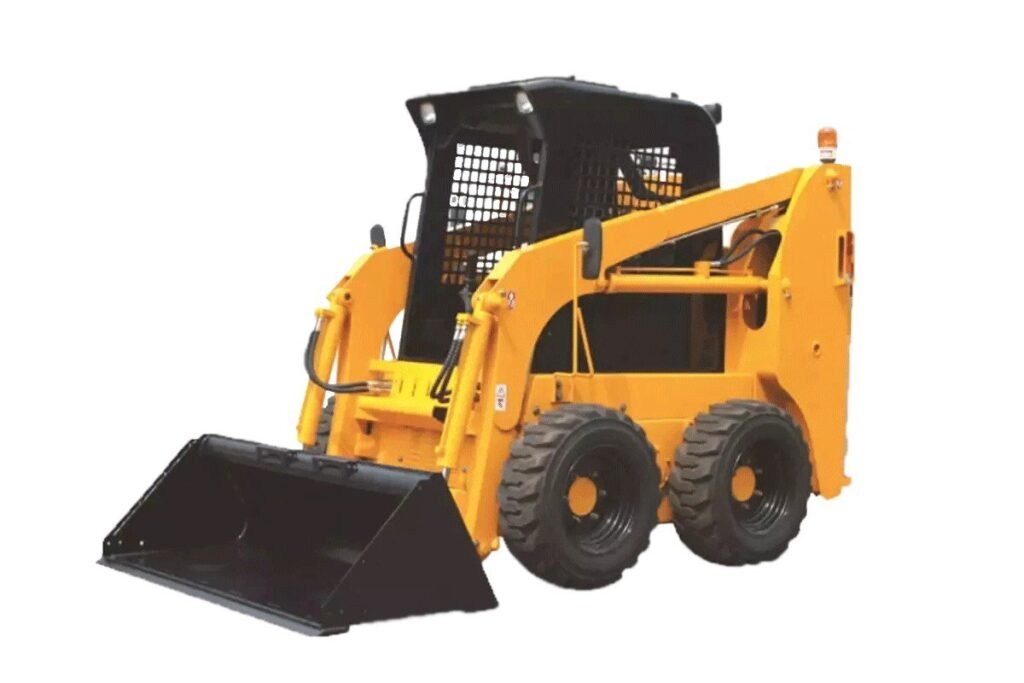
To understand the value of this machine, you must look at its steering mechanism. A skid steer loader does not have a steering rack like a car or articulated loader. Instead, the wheels on the left and right sides operate independently of each other.
The operator controls the speed and direction of the wheels separately. To turn left, the right wheels spin forward while the left wheels stop or spin backward. This action causes the machine to “skid” into the turn.
According to ISO 6165, which classifies earth-moving machinery, this design allows for a zero-turn radius. You can pivot the machine 360 degrees within its own footprint. This is the primary reason construction skid steer loader units are preferred for interior demolition or narrow urban sites.
Track Loader vs Skid Steer: Calculating Operational Costs
The debate between a Compact Track Loader (CTL) and a wheeled skid steer often comes down to Total Cost of Ownership (TCO). While they share similar frames and hydraulics, their undercarriages dictate their profitability.
Wheeled Skid Steers (The Cost-Effective Choice)
If your projects take place on concrete, asphalt, or hard-packed dirt, wheels are superior. Tires wear significantly slower than rubber tracks on abrasive surfaces. Furthermore, replacing a set of tires typically costs 30% to 40% less than replacing tracks and undercarriage components.
Compact Track Loaders (The Terrain Specialist)
Tracks provide lower ground pressure and superior traction. They are essential for muddy, sandy, or snowy conditions where a wheeled machine would bog down. However, the maintenance costs are higher.
Decision Factor:
For B-end users focused on ROI, choose the skid steer loader (wheels) if your work involves developed surfaces. The lower maintenance overhead directly improves your project margin.
Versatility of a Construction Skid Steer Loader
The true value of this equipment lies in the “tool carrier” concept. A single construction skid steer loader can replace multiple dedicated machines. This is achieved through the universal quick-attach system.
Common Attachment Applications:
- General Construction: Buckets for material handling.
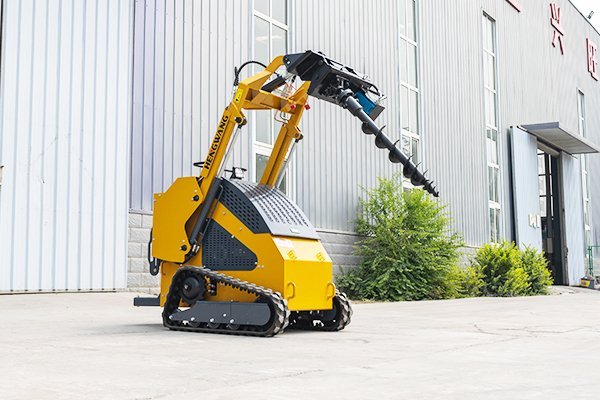
- Utilities: Augers for drilling post holes.
- Roadwork: Cold planers for milling asphalt.
- Landscaping: Trenchers for irrigation lines.
The Association of Equipment Manufacturers (AEM) highlights that hydraulic flow is the limiting factor here. Standard flow handles buckets and forks. High-flow hydraulics are required for energy-intensive tools like planers or brush cutters. You must match the machine’s hydraulic output (GPM and PSI) to your intended attachments.
Safety Considerations and Operator Training
Operating a skid steer involves unique risks due to the limited visibility and rapid movement. The “skidding” motion requires precise control to avoid tipping when the bucket is raised.
OSHA regulations emphasize that operators must be trained specifically on the equipment type they use. The short wheelbase can make the ride bumpy, potentially causing material spillage if handled roughly.
Modern units now feature enclosed cabs with ROPS (Roll-Over Protective Structures). Always ensure your selected model meets current safety standards. This protects your workforce and reduces liability for your company.
Evaluating Specs: Finding the Right Machine for Your Fleet
When finalizing your procurement plan, you must look at the Rated Operating Capacity (ROC) and lift path. These two metrics determine if a specific model can handle your daily loads.
Vertical vs. Radial Lift:
- Radial Lift: The bucket moves in an arc. It provides better reach at mid-range heights. This is ideal for digging and grading.
- Vertical Lift: The bucket rises straight up. This offers better reach at maximum height. It is superior for loading dump trucks or pallet stacking.
Assessing the HW-JC45:
For many contractors, a mid-frame loader offers the best balance of power and transportability. If you are investigating options in this class, consider the specifications of the HW-JC45 Skid Steer Loader.
This model is designed for versatility in small to medium projects.
- Rated Load: It features a 700kg rated load, suitable for standard pallet handling.
- Power: The 50HP engine provides sufficient torque for ground engagement without excessive fuel consumption.
- Dimensions: Its compact size allows access through narrow passages where larger loaders cannot fit.
By analyzing the specs of the HW-JC45 Skid Steer Loader, you can verify if its lift capacity aligns with your material handling needs. Comparing these technical details against your job site constraints ensures a smart purchase.
Summary
Selecting the right equipment requires balancing acquisition costs with operational capabilities. A skid steer loader offers unmatched maneuverability on hard surfaces and lower maintenance costs compared to track loaders. By verifying hydraulic flow and lift capacity, you ensure the machine meets your project demands.
FAQ
1. What is the difference between a skid steer and a bobcat?
“Bobcat” is a brand name that became a generic term, while skid steer loader is the technical name for the type of machine.
2. How much weight can a skid steer lift?
Lifting capacity depends on the Rated Operating Capacity (ROC), which typically ranges from 700 lbs to over 3,500 lbs depending on the model size.
3. Can I use a skid steer on grass or turf?
You can, but the skidding action of the wheels will likely tear up the turf; a track loader or articulated loader is gentler on sensitive ground.
4. What maintenance does a skid steer require?
Regular maintenance includes checking hydraulic fluid levels, greasing pivot points daily, maintaining tire pressure, and cleaning air filters.
Reference Sources
OSHA (Occupational Safety and Health Administration) : Skid Steer Loader Safety eTool. (https://www.osha.gov)
AEM (Association of Equipment Manufacturers) : Skid Steer Loaders vs. Compact Track Loaders. (https://www.aem.org)