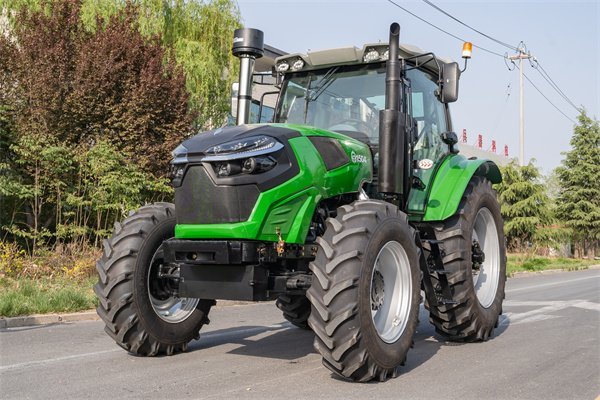
Finding a high-quality tractor on sales requires a deep understanding of mechanical efficiency and long-term durability. For professional users, a tractor is more than a vehicle; it is the backbone of daily agricultural production. A machine in the 110-200HP range provides the necessary power for heavy-duty tasks like deep plowing and large-scale seeding. This guide explains how to identify the best technical features that ensure a high return on investment.
Modern professional tractors must balance raw power with operational precision. When browsing a tractor on sales, you should focus on engine torque reserves and transmission flexibility. Machines with a 20% to 30% torque reserve are better equipped to handle sudden changes in soil resistance. These specifications directly impact your field productivity and fuel economy over a full season of work.
When Should Pros Choose Compact Tractors for Sale?
Professional farmers often use compact tractors for sale to complement their heavy-duty fleets. These smaller units usually offer between 25 and 60 horsepower. They are indispensable for operating in confined spaces like orchards, vineyards, or greenhouses. Their smaller frame allows for high maneuverability where larger machines simply cannot go.
The value of compact tractors for sale lies in their versatility for specialized maintenance. They can support various attachments, including front-end loaders, backhoes, and precision mowers. While they lack the raw pulling power of a 150HP unit, they reduce soil compaction in sensitive areas. For a diversified operation, having both a heavy-duty model and a compact unit is often the most efficient strategy.
However, if your primary goal is heavy soil preparation, a compact unit will not suffice. Transitioning to a high-horsepower series ensures you have the traction needed for heavy implements. Professional users must match the tractor size to the specific resistance of their land and tools.
Evaluating Transmission and Engine Specs for a Tractor on Sales
The transmission system is the most critical factor when evaluating a tractor on sales for professional use. A 16F+8R shuttle shift transmission is the industry standard for high-performance models. This configuration offers 16 forward gears and 8 reverse gears. It allows the operator to select the perfect speed for tasks ranging from slow-speed planting to high-speed transport.
Data shows that a wide gear range can improve fuel efficiency by up to 15% compared to basic gearboxes. By keeping the engine in its optimal RPM range, you reduce wear and tear on internal components. High-torque engines, such as those produced by Yuchai or Weichai, provide the stability needed for continuous heavy-duty work. These engines are designed to operate for thousands of hours with minimal maintenance.
Fuel capacity is another vital metric for professional efficiency. A 300-liter large fuel tank is a significant advantage for large-scale operations. It enables the machine to run for 10 to 12 consecutive hours without stopping for fuel. This ensures that you can maximize the narrow windows of favorable weather during the planting and harvesting seasons.
Standards Set by the Largest Tractor Manufacturers
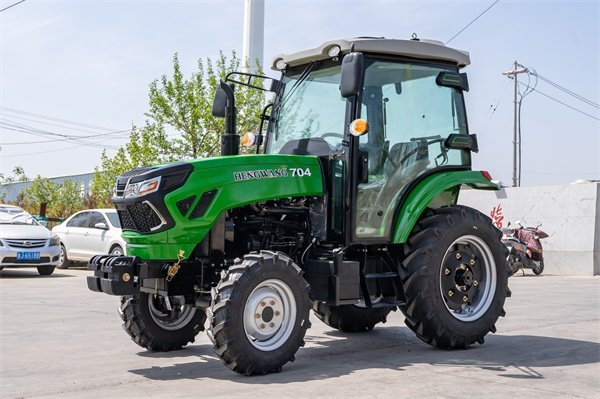
The global market is influenced by the largest tractor manufacturers who define the benchmarks for reliability. Brands like John Deere and CNH Industrial focus on integrating advanced digital technology into their machines. Their tractors often include GPS-guided steering and automated headland management systems. These features help professionals reduce overlapping rows and save on seed and fertilizer costs.
While Western brands lead in technology, many of the largest tractor manufacturers in Asia focus on mechanical durability. These manufacturers provide tractors with simplified hydraulic systems that are easier to repair in the field. Professional users often choose these models for their lower initial cost and reliable performance in harsh environments. Choosing a brand that adheres to ISO 9001 standards ensures that the manufacturing process meets global quality requirements.
A professional tractor must also feature a robust hydraulic system. Look for models equipped with dual-group high-pressure lifters. These systems are capable of lifting implements weighing over 3,000 kilograms. High hydraulic flow rates allow for the simultaneous operation of multiple functions, such as folding a seeder while adjusting its depth.
Maximizing Operator Productivity and Safety
Operator comfort is a technical requirement, not a luxury, for professional farming. A high-performance tractor on sales should feature an ergonomic cabin with 360-degree visibility. Modern cabins are pressurized to keep dust out and are equipped with high-capacity air conditioning systems. Reducing operator fatigue leads to fewer mistakes and safer operations during long night shifts.
The structural integrity of the chassis is equally important. Professional tractors utilize reinforced front and rear axles to handle the stress of four-wheel drive (4WD) operations. A heavy-duty chassis prevents frame twisting when pulling high-resistance plows. The use of radial tires also helps by increasing the contact patch, which improves traction and reduces fuel consumption by up to 10% in wet conditions.
Finally, consider the ease of daily maintenance. A well-designed tractor allows for easy access to oil filters, air cleaners, and cooling systems. Professional users cannot afford long periods of downtime. Quick-access panels and centralized lubrication points ensure that the machine remains in peak condition with minimal effort.
Selecting the Right Heavy-Duty Tractor for Your Fleet
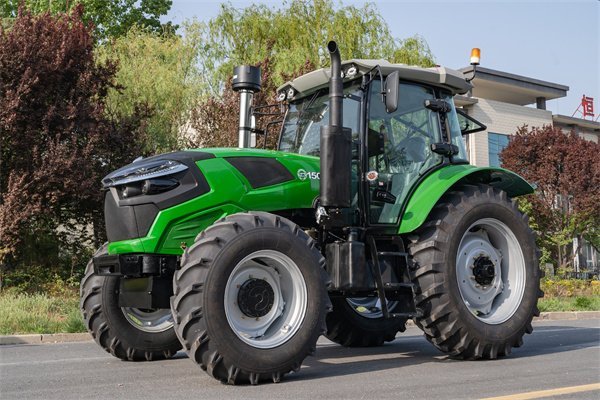
When you are ready to invest, you must verify that the machine’s power output matches your largest implements. The 110-200HP series is ideal for mid-to-large-scale grain production. These tractors are engineered to handle five-bottom plows and heavy disc harrows with ease. Their weight distribution is optimized to provide maximum drawbar pull without excessive wheel slip.
The transmission must also be checked for smooth shifting under load. A high-quality shuttle shift allows for quick directional changes without stopping the tractor completely. This is essential for loader work or when maneuvering at the ends of a field. Ensure that the Three-Point Linkage is Category II or III to maintain compatibility with professional-grade tools.
For those seeking a machine that combines high-torque mechanical power with modern cabin comfort, the 110-200HP 16F+8R series is a strong candidate. This series is built for durability and ease of operation in demanding global climates. You can explore the detailed technical parameters and configuration options by visiting the Hengwang Tractor Series page.
Summary
Choosing the right tractor on sales involves prioritizing a high-torque engine, a versatile 16F+8R transmission, and a large 300L fuel tank. These features ensure that professional users can maintain high productivity while minimizing operational costs. By selecting a machine with robust hydraulic lifting and ergonomic design, you secure a reliable asset for years of intensive agricultural work.
FAQ
Q1: What is the main advantage of a 16F+8R transmission in a professional tractor?
The 16F+8R transmission offers a wide range of gear ratios to match specific agricultural tasks. This allows for precise speed control, which optimizes fuel consumption and maximizes the efficiency of different implements.
Q2: How does a high torque reserve benefit a tractor on sales?
A torque reserve of 20% to 30% provides the engine with extra “lugging” power. This prevents the tractor from stalling when it hits patches of hard soil or works on steep inclines.
Q3: Can compact tractors for sale handle heavy plowing tasks?
Generally, no. Compact tractors are designed for maneuverability and lighter tasks. For heavy plowing or deep ripping, a high-horsepower tractor in the 110-200HP range is required for adequate traction and power.
Q4: Why is fuel tank capacity critical for professional users?
A large fuel tank, such as 300 liters, allows for 10-12 hours of continuous work. This eliminates the need for mid-day refueling, which saves time and increases productivity during peak seasons.
Reference Sources
- Association of Equipment Manufacturers (AEM) – Industry Statistics: https://www.aem.org/
- American Society of Agricultural and Biological Engineers (ASABE) – Tractor Standards: https://www.asabe.org/
- Food and Agriculture Organization of the United Nations (FAO) – Sustainable Mechanization: https://www.fao.org/