The Indispensable Powerhouse of Earthmoving
In the world of heavy machinery, few pieces of equipment are as recognizable or as vital as the bulldozer. A true workhorse of the modern era, this powerful machine, also known as a dozer or crawler, is fundamentally a large tractor equipped with a heavy metal blade at its front. Its primary purpose is to push vast quantities of materials—such as soil, sand, rock, and rubble—across construction sites, mines, and farmlands. While its brute strength is its most obvious characteristic, the true value of a dozer lies in its precise engineering and specialized design, which allows it to excel in a diverse range of demanding applications.
The bulldozer’s history is a testament to continuous innovation, evolving from a simple farm tractor attachment to a highly specialized machine. The initial designs, patented in 1925 as an “Attachment for Tractors,” relied on the tractor’s power and the blade’s weight to move materials. However, a transformative development in the 1940s—the addition of hydraulic cylinders—provided powerful down-force, making the blade a much more effective tool and establishing the term “bulldozer” as a reference to the entire machine, not just the attachment. This report delves into the intricate anatomy of the modern dozer, explores its various types and applications, and provides a professional guide to its operation, maintenance, and safety.
The Anatomy of a Bulldozer: Core Components and Their Functions
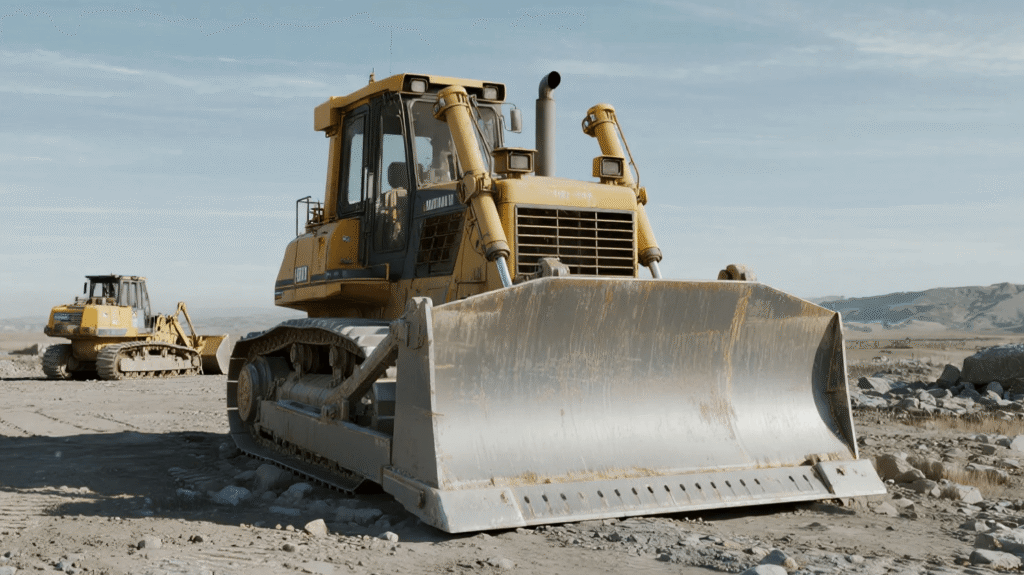
A comprehensive understanding of a dozer begins with its fundamental components, each engineered for a specific, demanding role. From the engine that provides the power to the specialized attachments that perform the work, every part of the machine is a critical link in the chain of its powerful operation.
The Engine and Drivetrain: The Power-Transfer System
At the core of every dozer is a high-torque, diesel-powered engine. This powerhouse generates energy through combustion, which is then converted into torque to drive the machine’s movement. The transmission system is responsible for controlling this power and transmitting it to the tracks or wheels, allowing the operator to manage speed and direction with precision.
A crucial element of the drivetrain is the final drive, which serves as the last stage of gear reduction. Its primary function is to decrease the engine’s RPM while simultaneously increasing rotational torque. This mechanical advantage is what gives the dozer its immense pushing force, allowing it to move heavy loads with controlled power. It is a critical component that bears the brunt of the machine’s workload. As a result, the final drive is one of the parts most susceptible to wear and tear, and its maintenance is paramount to the dozer’s longevity. The fact that two final drives are often replaced together when one fails highlights the immense stress placed on these components. The engineering of the entire drivetrain, from the engine’s combustion to the final drive’s torque application, represents a direct, cause-and-effect relationship where a sophisticated power-transfer system is required to handle the extreme loads inherent in earthmoving tasks.
The Blade and Ripper: The Work Tools of the Machine
The blade is the most iconic feature of the dozer. Made from heavy-duty steel and powered by hydraulic arms, it can be raised, lowered, and tilted to push, grade, and spread materials. Its ability to handle materials ranging from dirt to snow and large rocks makes it the primary work tool for a wide variety of tasks.
On the other hand, the ripper, a large claw-like attachment located at the rear of the machine, performs a preparatory function. Its purpose is to penetrate and break up hard, compacted materials—such as rock, frozen ground, or dense soil—into smaller, more manageable pieces. The ripper’s function is not an isolated task but a critical first step that directly impacts the efficiency of the blade’s operation. By pre-treating the ground, the ripper reduces the resistance faced by the blade, allowing for more efficient material pushing and grading. This synergistic relationship between the ripper and the blade is a defining characteristic of the dozer’s design, illustrating its capacity as a complete earthmoving system.
The Undercarriage: Tracks vs. Wheels
The undercarriage is a fundamental choice that defines a dozer’s capabilities and its ideal operating environment. The two primary systems, tracks and wheels, offer distinct advantages and trade-offs in performance and cost.
Tracked dozers, or crawlers, are the most common type. Their continuous tracks provide superior traction and stability, distributing the machine’s immense weight over a large surface area. This design results in lower ground pressure, preventing the machine from sinking in soft or wet terrain like mud and sand. Tracked machines are unmatched in their ability to operate on slopes and navigate rough, uneven ground, making them ideal for heavy-duty grading, mining, and forestry applications.
In contrast, wheeled dozers, which operate on large rubber tires, prioritize speed and mobility over raw tractive force. Their higher travel speeds, up to four to five times faster than tracked machines, significantly reduce transit times on large job sites and are well-suited for projects that require frequent relocation. Wheeled machines also cause less damage to hard surfaces like paved roads and turf, making them a better choice for certain high-performance construction and maintenance tasks.
The selection between a tracked and wheeled dozer is not just a performance consideration; it is also a significant financial decision. The undercarriage of a tracked dozer is its most expensive component to maintain, accounting for up to 50% of the total maintenance costs. A full set of new tracks can cost between $30,000 and $60,000, while a set of heavy-duty tires for a wheeled model costs between $15,000 and $40,000. Furthermore, wheeled machines consume less fuel on hard surfaces due to lower rolling resistance. The decision, therefore, must balance a project’s terrain and workload with long-term operating costs. A project requiring frequent, long-distance movements on hard ground would benefit from the lower fuel and maintenance costs of a wheeled machine, while a site with soft ground and heavy-duty pushing would necessitate the superior traction of a tracked model.
A comparison of their key metrics is provided in the table below:
| Feature | Tracked Dozer | Wheeled Dozer |
| Ideal Terrain | Rough, uneven, soft, or unstable ground; slopes | Hard, compact surfaces; paved roads, turf |
| Speed | Slow (5-10 km/h) | Fast (20-30 km/h) |
| Traction | Superior, excellent for heavy loads | Reduced traction on loose or wet ground |
| Fuel Efficiency | Lower efficiency due to higher rolling resistance | Higher efficiency, less rolling resistance |
| Maintenance Costs | High; undercarriage accounts for up to 50% of total maintenance | Lower; tires are less expensive to replace than tracks |
Bulldozer Types and Specialized Functions
The evolution of the dozer has led to the development of several specialized variants, each tailored to a specific set of tasks and operational environments. This market specialization allows for greater efficiency and precision by matching the machine’s capabilities to the demands of the job.
Crawler Bulldozer(Track Dozers)
Crawler dozers are the most common and versatile type of machine in the industry. With their continuous tracked treads, they provide excellent traction and stability on a wide range of challenging terrains. They are the go-to choice for heavy-duty tasks such as leveling roads, clearing large parcels of land for construction, and moving massive quantities of material in mining operations. Their robust design and sheer power make them the standard for projects that demand durability and high tractive force.
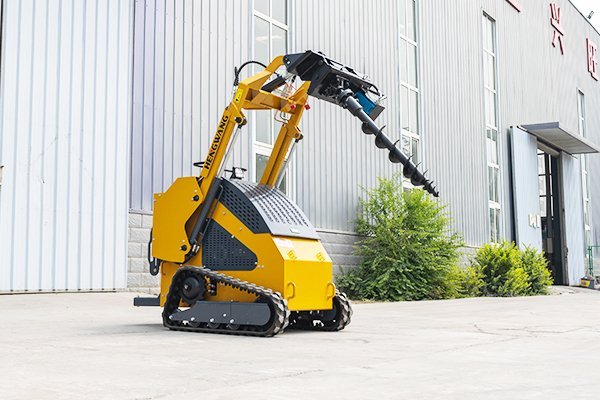
Mini Bulldozer
Also known as compact dozers, these smaller machines are designed for agility and versatility in confined spaces. Weighing significantly less than their larger counterparts, mini dozers are ideal for residential and small-scale commercial projects. Their compact size allows them to navigate narrow areas and perform precision work like grading, backfilling, and clearing land in urban environments or backyards where a full-sized machine could not operate effectively. The existence of mini dozers highlights a clear trend of engineering specialization based on scale, where manufacturers develop machines to solve specific problems for a different user base, such as landscapers and small-scale contractors.
Other Specialized Bulldozer Variants
In addition to the main types, a number of specialized dozers have been engineered for niche applications:
- Wheel Dozers: These large, wheeled machines are designed for speed and maneuverability on firm surfaces. They are often used in highway construction and quarry operations where rapid movement between work areas is required.
- Mulcher Dozers: These variants are equipped with a mulching attachment, making them ideal for clearing land with dense vegetation. They can shred and grind bushes, shrubbery, and even trees, and are commonly used in forestry and for wildfire prevention.
- Shiphold Dozers: These compact machines are specifically designed for maritime environments. They are used to efficiently move and organize bulk cargo within the confined spaces of a cargo ship’s hold, optimizing loading and unloading operations.
- Hybrid Bulldozers: An emerging technology, hybrid dozers combine traditional internal combustion engines with electric components to improve fuel efficiency and reduce emissions. They are particularly valuable for urban construction sites where noise and environmental impact must be minimized.
The Right Tool for the Job: A Guide to Bulldozer Blades
The blade is the primary tool that defines a dozer’s capabilities for a specific task. Selecting the correct blade is a crucial decision that directly impacts a project’s efficiency and success.
The Straight (S) Blade
The Straight (S) blade is the most basic and common type, with a flat, wingless design. It is ideal for precision tasks such as fine grading and leveling, where its forward-pushing motion creates a smooth, even surface. This blade excels at handling high-density materials and is often used for stumping and stripping in construction and forestry.
The Universal (U) Blade
Distinguished by its tall, curved design and large side wings, the Universal (U) blade is engineered for maximum material carrying capacity. The curved shape and wings work together to contain large volumes of material, minimizing spillage and making it highly efficient for pushing loose materials like soil or sand over long distances. U-blades are a staple in mining, large-scale land clearing, and bulk earthmoving projects.
The Semi-Universal (S-U) Blade
The Semi-Universal (S-U) blade is a versatile hybrid that combines the best features of both the S and U blades. It is narrower and less curved than a U-blade, with smaller side wings, which gives it a balance of pushing power and maneuverability. This design is excellent for rough grading and handling large, heavy materials, making it a common choice for road construction and land development projects.
The Power-Angle-Tilt (PAT) Blade
The PAT blade offers the most versatility and control. It is hydraulically controlled and can be angled, tilted, and lifted in multiple directions from the operator’s cab. This flexibility makes it ideal for a wide range of complex tasks, including backfilling, land clearing, shaping, and precise grading on difficult or uneven terrain.
The table below provides a concise overview of the most common blade types and their primary applications:
| Blade Type | Key Features | Primary Applications |
| Straight (S) Blade | Flat, wingless design, rigid and strong | Fine grading, leveling, pushing high-density materials |
| Universal (U) Blade | Tall, curved design with large side wings | Moving large volumes of loose material, stockpiling, ditching |
| Semi-Universal (S-U) Blade | Hybrid design, less curved than a U-blade with small side wings | Rough grading, moving heavy material, ditching, crowning |
| Power-Angle-Tilt (PAT) Blade | Hydraulically controlled, can be angled, tilted, and lifted in all directions | Backfilling, leveling, shaping, land clearing, fine grading |
The Bulldozer in Action: Applications Across Industries
A dozer’s true value is seen in its diverse applications across key industries, where its power and specialized capabilities are used to perform a wide range of critical tasks.
Construction and Infrastructure Development
Dozers are indispensable in the early stages of construction projects. They are used for land clearing to prepare building sites, removing rubble, rocks, and debris. They are also crucial for grading land, leveling the ground for foundations, and creating the initial pathways and access roads for other equipment.
The use of a dozer in construction is often a multi-stage process. A large tracked dozer with a U-blade may be used for the initial, heavy-duty land clearing and moving of massive amounts of earth. In a later phase, a smaller machine with a PAT blade could be brought in for fine-grading and shaping the landscape with high precision. This illustrates that a single project may require different types of dozers and blades at different stages, highlighting the importance of strategic fleet management and matching equipment to the specific task at hand.
Mining and Quarrying Operations
In the mining industry, dozers are foundational equipment for surface operations. They are used to remove overburden—the layer of soil and rock that must be stripped away to access mineral deposits. Their ability to push heavy loads with minimal wheel slip makes them ideal for tasks like slot dozing and creating and maintaining access roads within large, demanding environments. The scale of mining operations has led to the development of massive dozers with horsepower exceeding 800 and operating weights over 112 metric tons, such as the Komatsu D475A-8, demonstrating the engineering required to meet the industry’s immense demands.
Landfill and Waste Management
Dozers play a vital role in landfill operations, where they are used to prepare embankment sites, build access roads for garbage trucks, and spread daily cover materials. They are also used for waste compaction, pushing trash into dense layers to maximize valuable airspace.
However, a deeper analysis reveals an important industry distinction. While dozers are effective at spreading waste, specialized landfill compactors are engineered to achieve significantly higher waste densities. Data indicates that compactors can achieve up to 30% better compaction rates and use up to 40% less fuel than a standard dozer when performing the same task. This demonstrates that while the dozer remains a valuable piece of equipment for road building and spreading within a landfill, for the most efficient long-term use of airspace and maximum profitability, dedicated compactors are the more advanced and effective choice.
Agriculture and Land Preparation
Though less common than in construction or mining, dozers are also used in large-scale agriculture for specific, high-demand tasks. They are deployed for land clearing, deep-breakup plowing, and removing trees and stumps to prepare fields for planting.
The use of a tracked dozer in agriculture provides a significant advantage over conventional farm tractors in difficult conditions. A dozer has a weight-to-power ratio more than double that of a typical farm tractor, providing a much higher adherence coefficient on farmlands. This means it can generate superior traction with the same power and fuel consumption, making it highly effective for plowing in hard or heavy ground. Furthermore, the dozer’s weight is distributed over a large area, which limits soil compacting and allows it to operate in fields that are too wet for a wheeled tractor, enabling farmers to get back to work much sooner after heavy rainfall. The financial benefit of using a dozer in these conditions comes from reduced wear and tear on a tractor’s tires and gears, which would otherwise be under immense stress.
Best Practices for Operation, Maintenance, and Safety
For any professional in the heavy equipment industry, operational excellence is defined by a commitment to safety, regular maintenance, and smart decision-making. These practices are not mere formalities but are essential for protecting personnel, extending asset life, and ensuring project profitability.
Daily Maintenance Rituals: A Proactive Approach to Longevity
Proactive maintenance is a critical component of dozer management. It extends the machine’s lifespan and prevents costly, unscheduled downtime. Before any operation, a thorough walk-around inspection is essential. This daily ritual should include:
- Fluid Levels: Check the levels of engine oil, hydraulic fluid, and coolant. These fluids are vital for smooth operation and for preventing component damage and overheating.
- Air Filters: Inspect and clean air filters, as they trap pollutants that can impact the engine’s lifespan and productivity.
- Undercarriage: Examine the tracks or tires for signs of damage, misalignment, or excessive wear, which could lead to a breakdown.
- General Condition: Look for leaks, loose bolts, and any noticeable signs of excessive wear.
The act of keeping detailed maintenance records allows for the prediction of future service needs, transforming maintenance from a reactive cost into a strategic investment. Proactive checks and timely repairs directly increase a machine’s uptime and extend its operational life, leading to lower total cost of ownership and higher profitability.
Safety Protocols: Protecting People and Assets
Operating heavy equipment requires unwavering attention to safety. Operators must conduct a pre-shift safety check to ensure all systems are functioning properly before starting work. Key safety practices include:
- Mounting and Dismounting: Always maintain three points of contact when entering or exiting the cab to prevent slips and falls.
- Operator Awareness: Stay constantly aware of personnel and other equipment in the vicinity. The “danger zone” around the machine must be clear before any movement begins.
- Working on Slopes: Always work up and down slopes rather than sideways to reduce the risk of tipping. If the machine begins to sideslip, the operator should immediately dispose of the load and turn downhill.
- Travel and Visibility: Travel at slow speeds to maintain full control, especially in rough terrain. If a load obstructs visibility, back up with the load instead of trying to move forward.
These procedures are critical for protecting not only the operator but also all personnel and assets on the job site.
Frequently Asked Questions
Q: What is the biggest bulldozer in the world?
A: The largest dozer ever manufactured is the ACCO Super Bulldozer, which has an operating weight of 183 tons. However, for machines currently in production, the Komatsu D575A-3 SD is considered the world’s largest, with an operating weight of 152.6 tons and a powerful 1,150 HP engine. Other massive models include the Caterpillar D11T CD and Komatsu D475A-8.
Q: Can a bulldozer remove tree stumps?
A: Yes, a dozer can remove tree stumps, but the efficiency depends on the stump’s size and the machine’s power. The ripper attachment on the back of the machine is designed to break up and loosen the ground, making it easier to extract a stump. While dozers are capable of this task, other machines like excavators and backhoes are often considered more efficient because they can get under the stump to provide leverage and loosen the surrounding soil more easily.
Q: How do you choose the right bulldozer for a project?
A: Selecting the right dozer depends on three key factors: the tasks to be performed, the conditions of the terrain, and your overall project goals. For heavy-duty earthmoving on rough terrain, a large tracked machine is ideal. For fine grading and landscaping in tight spaces, a mini dozer is a better choice. Finally, for projects with frequent travel on hard surfaces, a wheeled dozer can provide greater speed and fuel efficiency. Assessing these variables will ensure the optimal selection for performance and cost-effectiveness.
Conclusion: The Enduring Legacy of the Bulldozer
From its humble beginnings as a tractor attachment, the modern bulldozer has evolved into a sophisticated, highly specialized piece of engineering machinery. Its robust design, characterized by a powerful drivetrain, versatile blades, and either high-traction tracks or high-speed wheels, has cemented its role as a foundational tool in global development.
The analysis of its applications reveals a machine that is not confined to a single role but is an adaptable instrument for shaping landscapes, building infrastructure, extracting resources, and managing waste. The continued innovation in dozer technology, from specialized variants for confined spaces to emerging hybrid powertrains, ensures its enduring relevance in an ever-changing industry. By understanding its core functions, selecting the appropriate type and blade, and adhering to best practices in maintenance and safety, professionals can leverage the full potential of this indispensable machine to achieve operational excellence and contribute to building a better world.