Introduction — an engineer’s first look
In the crowded field of compact wheeled excavators, few models manage to balance power, maneuverability, and cost-effectiveness as convincingly as the HWL75S Wheel Excavator. From city utilities and road repair to landscaping and mid-sized earthworks, machine buyers ask not only “can it dig?” but “how quickly, safely, and cheaply will it keep working on real sites?” This article examines the machine from a technical and application-focused perspective, explaining why the HWL75S Wheel Excavator often appears on procurement shortlists and how its design choices translate into measurable on-site value. The piece begins with a clear technical profile, moves through distinctive features and operational advantages, then closes with practical guidance for buyers and maintenance teams.
Technical profile: what the numbers say
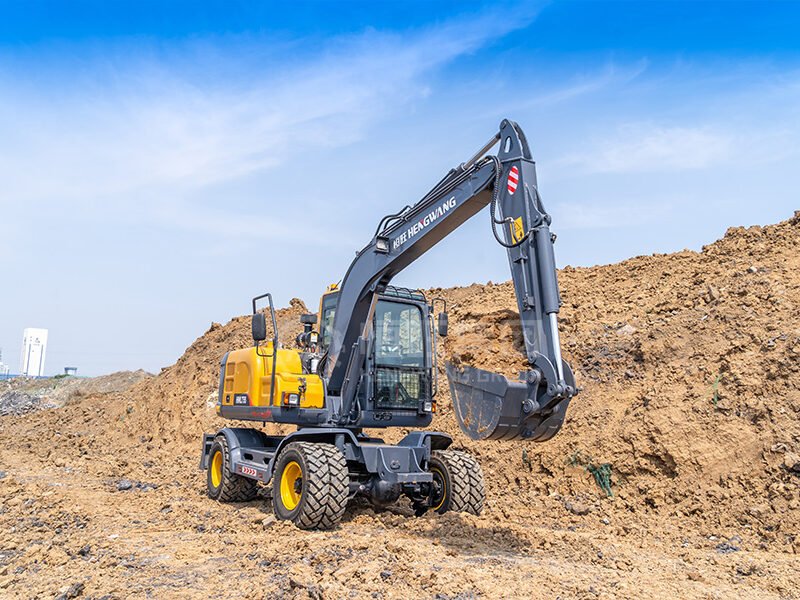
The HWL75S Wheel Excavator is positioned as a 7.2-ton wheeled excavator with a rated power in the 48 kW range and a bucket capacity around 0.28 m³ — a specification set that targets contractors who need more capability than mini-excavators but prefer wheeled mobility to a crawler undercarriage. Typical machine dimensions and working ranges include a digging depth around 3.67 m and a maximum digging height of roughly 6.65 m, measurements that make the unit versatile across trenching, loading, and light demolition tasks.
Those figures matter because they place the machine in a practical mid-range: heavy enough to handle routine construction loads, yet compact and light enough to be truck-transported without an oversized permit in many jurisdictions. This situates the HWL75S Wheel Excavator as a pragmatic tool for municipal fleets, rental yards, and contractors seeking a single machine that can cover multiple job types.
Design philosophy and core strengths
At its heart, this model follows a clear engineering philosophy: deliver robust hydraulic digging capability while preserving speed, maneuverability, and serviceability.
Compact mobility and operational agility
One of the most valuable attributes of a wheeled excavator is how easily it moves between points on site. The HWL75S Wheel Excavator was designed with a small front and rear turning radius. That design choice reduces repositioning time in tight urban or roadwork environments and lowers the footprint needed to perform cyclical tasks such as utility trenching or kerb work.
Powertrain and fuel economy considerations
The machine typically uses mid-range turbocharged diesel engines supplied by established manufacturers, which balance low-speed torque for digging with modest fuel consumption during travel and idling. Product descriptions often highlight stable power output and an emphasis on smooth hydraulic response — important for precise grading and load control. For fleets concerned about operating costs, this powertrain selection often yields a lower total cost of ownership than larger, higher-consumption alternatives.
Multi-tool versatility
A wheeled excavator is most valuable when it serves as a platform for attachments. The HWL75S Wheel Excavator is marketed and built to accept a range of auxiliary tools — from buckets of varying profiles to hydraulic breakers, augers, and grapples — which turns a single asset into many. That adaptability reduces equipment changeover time and the need to carry multiple machines on the same job, improving utilization rates for contractors.
Real-world performance: productivity and durability
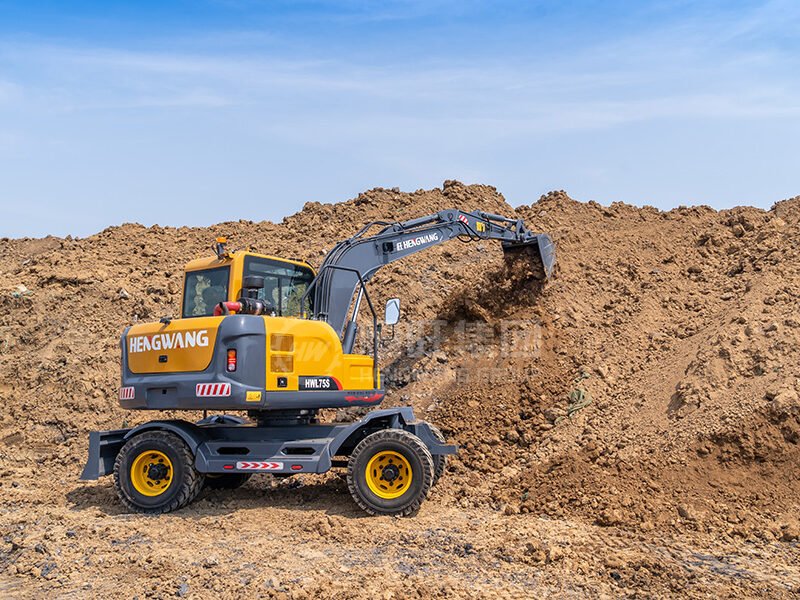
Numbers are necessary, but what matters to operators is how a machine behaves under repeated loads, in dusty conditions, and across long shifts.
Cycle time and on-site throughput
Because the HWL75S Wheel Excavator combines reasonable bucket capacity with a hydraulic system tuned for steady digging torque, operators frequently report consistent cycle times for loading trucks and moving spoil in constrained environments. The wheel chassis enables higher travel speed between points compared with crawlers, which translates directly into higher effective productivity on linear jobs like road repairs or landscaped terraces.
Durability and maintainability
The machine’s structural layout—boom, arm and chassis—follows conventional, proven geometry. Key wear components (pins, bushing surfaces, hydraulic hoses) are located to allow straightforward inspection and replacement. Local service and parts availability for common engine models can further shorten downtime. For procurement managers, shorter service intervals and easier access to consumables reduce life-cycle cost, even when initial price differences versus competitors are small.
Safety and operator experience
Safety design is not optional on busy sites. The HWL75S Wheel Excavator includes ergonomically arranged controls, a clear sightline from the cab, and stabilizing outriggers (on many configurations) that increase lifting safety when using attachments. Cab comfort and visibility contribute to operator confidence, which reduces the risk of costly mistakes and rework. A well-designed operator environment also keeps fatigue lower over long shifts, which is a practical safety and productivity advantage.
Applications where the HWL75S excels
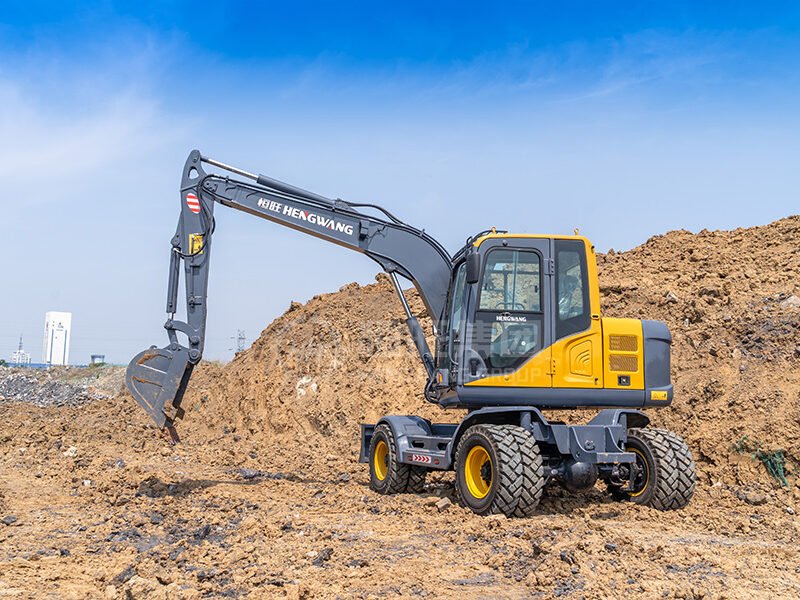
Rather than listing generic tasks, it helps to connect machine traits to specific job profiles.
- Urban maintenance and utilities: Compact swing radius and wheeled mobility let crews move quickly between street repairs, manhole work, and curb adjustments without constant crane or transport assistance.
- Roadside drainage and culvert work: The combination of reach and travel speed lets teams maintain continuous progress on linear projects.
- Landscaping and park works: Bucket control and attachment flexibility make the model effective for grading, tree pit excavation, and site cleanups.
- Light demolition and material handling: Hydraulic breaker and grapple attachments expand the role beyond digging, reducing the need for specialized machines on small to medium demolition tasks.
In short, the HWL75S Wheel Excavator is best specified where mobility, multi-function capability, and compact operational footprint yield outsized returns versus pure digging power.
Economic case: acquisition and operating costs
A buying decision balances capex and opex. The HWL75S Wheel Excavator sits in a segment where initial purchase price is attractive to small and medium contractors, while fuel use, routine maintenance needs, and parts prices keep operating costs predictable. Because it often replaces a two-machine solution (for example, a small loader plus a mini-excavator), the consolidated functionality can show a fast payback in rental utilization and reduced labor coordination.
When comparing total cost of ownership across vendors, consider:
- Standard engine type and parts network (affects spare availability).
- Warranty and service agreements.
- Resale values in regional secondhand markets.
- Attachment ecosystems (compatibility reduces extra expenditure).
Specifying the right configuration
Buyers should not pick based on headline weight or power alone. Important practical choices include:
- Attachment interfaces: Confirm hydraulic flow rates and coupler compatibility to avoid costly retrofits.
- Tyre and axle options: Choose tyres and final drive specifications that match the typical terrain (paved urban vs. soft ground).
- Auxiliary hydraulics: If frequent breaker or auger use is planned, ensure the hydraulic package supports continuous operation.
- Cab and control packages: For operators working long shifts, prioritize visibility and suspension-seated cabs.
A thoughtful specification ensures the HWL75S Wheel Excavator matches real site demands rather than theoretical performance numbers.
Maintenance best practices to extend life and uptime
Good maintenance extends productive life and lowers repair bills. For this model, recommended practices include:
- Daily grease and wear inspection for pins and bushings.
- Regular hydraulic fluid sampling to detect contamination early.
- Scheduled checks on tyre condition and axle seals.
- Keeping a small on-site consumables kit (filters, belts, hoses) to prevent long waiting times after a minor failure.
Because the machine uses commonly available engine platforms and hydraulic components, maintaining a parts “kit” for common failures often pays for itself in recovered uptime.
Competitive positioning: when to choose this model over others
No machine is universally best. Choose the HWL75S Wheel Excavator when:
- The job mix requires wheeled mobility and frequent on-site repositioning.
- Attachment versatility will be leveraged to replace multiple single-purpose machines.
- Operators need a balance between digging reach and transportability.
- The fleet values lower purchase cost with acceptable digging performance.
If primary tasks demand very deep excavation, extreme breakout force, or heavy continuous rock work, a larger crawler excavator or a higher-capacity wheeled model could outperform it.
Final assessment — pragmatic value for engineering users
For engineering professionals and procurement teams, the HWL75S Wheel Excavator represents a pragmatic middle ground. It is engineered to provide enough digging power for common construction tasks while prioritizing agility, attachment versatility, and manageable operating costs. Those traits translate directly into higher utilization rates and simpler logistics on mixed job sites.
In short, the machine stands out not because it redefines a performance frontier, but because it skillfully balances the constraints most contractors face every day: limited space, varied tasks, and pressure to keep machines working rather than parked. That pragmatic value often makes it the wiser commercial choice.
FAQ
Q: What is the machine weight and engine power of the HWL75S?
A: Published specifications list the machine at around 7.2 t with a rated power near 48 kW and a bucket around 0.28 m³. These numbers make it a mid-range wheeled excavator suitable for many urban and light construction tasks.
Q: Is the HWL75S suitable for road maintenance and utilities?
A: Yes—its compact swing, wheeled travel speed, and attachment options make it well suited to urban road repairs, trenching, and utility work.
Q: How does the HWL75S compare to crawler excavators?
A: Wheeled machines offer faster travel on paved surfaces and simpler repositioning; crawler models generally provide superior traction and stability on very soft or steep ground. Choose based on predominant site conditions.
Q: What attachments are commonly used with this model?
A: Buckets of various sizes, hydraulic breakers, augers, and grapples are typical. Verify hydraulic flow and coupler compatibility for heavy-duty attachments.
Q: Where can I find official specs and brochures?
A: Manufacturer product pages and distributor catalogs publish detailed specifications including dimensions, digging ranges, and engine options. Official product listings provide the most accurate current spec sheets.