Wheel loaders are essential machines in construction, mining, and agriculture. These versatile vehicles move large amounts of material quickly and efficiently. Understanding the wheel loader working principle helps operators and fleet managers maximize productivity. By focusing on how power transfers from the engine to the bucket, we can appreciate the engineering behind these giants.
At its core, a wheel loader uses a combination of internal combustion and fluid power. The engine generates mechanical energy, which then powers the drivetrain and the hydraulic system. This dual-purpose energy distribution allows the machine to travel across rough terrain while lifting heavy loads. Most modern loaders, such as the Hengwang ZL930, utilize articulated steering to improve maneuverability in tight spaces.
The efficiency of these machines depends on the balance between torque and hydraulic flow. When the operator pushes into a pile of dirt, the transmission provides the necessary pushing force. Simultaneously, the hydraulic system provides the breakout force needed to lift the material. This integrated approach ensures that the wheel loader working principle remains consistent across various applications.
How the Hydraulic System Powers Movement
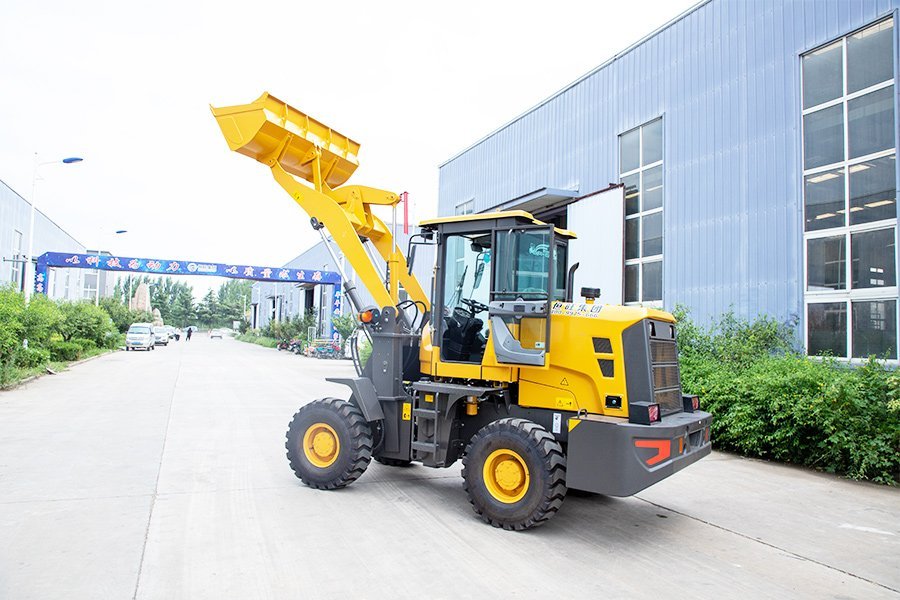
The hydraulic system is the heart of the wheel loader working principle. It consists of a high-capacity pump, control valves, and heavy-duty cylinders. The pump draws hydraulic oil from a reservoir and pressurizes it. This pressurized fluid travels through high-pressure hoses to reach the lift and tilt cylinders.
When the operator moves the joystick, the control valve directs fluid to specific cylinder chambers. The pressure forces the piston to extend or retract, moving the loader arms. This system allows a compact machine to lift several tons with precision. For instance, a loader with a 2000kg rated load relies on consistent hydraulic pressure to maintain stability.
Hydraulic systems are also responsible for the steering mechanism. Most wheel loaders use a central articulated joint powered by two steering cylinders. This design allows the front and rear frames to pivot independently. Consequently, the machine can turn in much tighter circles than a fixed-frame vehicle.
Understanding the Wheel Loader Working Principle in the Powertrain
The powertrain determines how effectively a loader moves across a job site. It starts with a powerful diesel engine that provides the primary energy source. Most mid-sized loaders utilize engines producing between 60kW and 70kW of power. This energy travels through a torque converter before reaching the transmission.
A torque converter acts as a fluid coupling between the engine and the gearbox. It allows the engine to keep running even when the loader stops moving. This component also multiplies torque when the machine faces high resistance. Because of this, the wheel loader working principle ensures the machine does not stall during heavy digging.
From the transmission, power moves through drive shafts to the front and rear axles. Modern loaders typically feature four-wheel drive to ensure maximum traction on slippery or uneven surfaces. Differential gears in the axles distribute power to individual wheels. This setup prevents wheel slippage and increases the overall lifespan of the tires.
| Component | Function | Technical Metric (Example: ZL930) |
| Engine | Primary power source | 65 kW Output |
| Hydraulic Pump | Pressurizes fluid for lifting | 20 MPa Pressure |
| Bucket Capacity | Volume of material moved | 1.0 m³ |
| Rated Load | Maximum weight capacity | 2000 kg |
| Dump Height | Maximum clearance for unloading | 3200 mm |
Mechanical Structure and Lifting Geometry
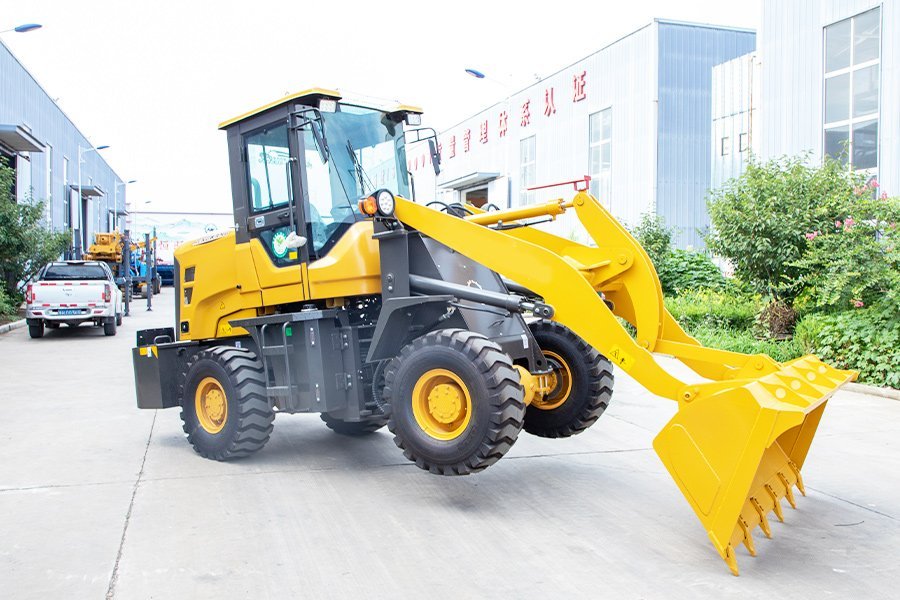
The physical design of the loader is just as important as its internal systems. The “Z-bar” linkage is the most common geometry used in modern loaders. This design features a single tilt cylinder connected to a bell crank. It provides a high level of breakout force, which is essential for digging into hard-packed materials.
The lift arms are constructed from high-tensile steel to resist bending under pressure. These arms must support the weight of the bucket and the material inside it. A loader with an operating weight of 4800kg needs a robust frame to prevent tipping. The counterweight at the rear of the machine balances the load in the front.
Stability is a critical part of the wheel loader working principle during high-speed transport. As the bucket is raised, the center of gravity shifts forward. Manufacturers design the wheelbase and track width to maintain safety during these shifts. Operators must understand these limits to prevent accidents on the job site.
Evaluating Technical Specs for Your Project
Choosing the right equipment requires a deep dive into specific performance data. You must evaluate the rated load against the density of the material you plan to move. If the machine is undersized, the hydraulic system will experience premature wear. Conversely, an oversized machine will lead to unnecessary fuel consumption and higher costs.
The dump height is another vital factor to consider during the selection process. If you are loading high-sided trucks, you need a machine that can clear at least 3200mm. Looking at the specifications of models like the Hengwang ZL930 provides a baseline for mid-sized project needs. These machines balance compact size with significant lifting power.
Finally, consider the transmission type and maintenance accessibility. A hydraulic torque converter simplifies operation for less experienced drivers. Easy access to grease points and filters ensures the machine stays in peak condition. Evaluating these technical aspects ensures that the wheel loader working principle works in your favor over the long term.
Summary
The wheel loader working principle relies on the seamless integration of a diesel engine, a hydraulic system, and a robust powertrain. By converting mechanical energy into fluid pressure, these machines can lift heavy loads with great precision. Understanding these core mechanics allows for better equipment selection and more efficient site operations.
FAQ
Q:What is the main function of the torque converter?
The torque converter connects the engine to the transmission using fluid. It allows the loader to stop without stalling the engine and provides extra power when digging.
Q:Why is articulated steering used in wheel loaders?
Articulated steering uses a pivot point in the middle of the chassis. This design allows the loader to have a very small turning radius, making it ideal for narrow workspaces.
Q:How often should the hydraulic fluid be checked?
You should check hydraulic fluid levels daily before starting the machine. Contaminated or low fluid can damage the pumps and reduce the overall lifting capacity.
Q:What does “breakout force” mean?
Breakout force is the maximum upward force the bucket can exert. It is a key metric in the wheel loader working principle that determines how well the machine can dig.
Q:Can wheel loaders be used for snow removal?
Yes, wheel loaders are highly effective for snow removal. Their four-wheel-drive systems and high dump heights allow them to move and pile snow much faster than smaller tractors.
Reference Sources:
- Association of Equipment Manufacturers (AEM): Heavy Equipment Safety and Operation. https://www.aem.org/
- Society of Automotive Engineers (SAE International): Standards for Off-Road Machinery. https://www.sae.org/
- Occupational Safety and Health Administration (OSHA): Heavy Equipment Ground Safety. https://www.osha.gov/