Operating a bulldozer involves managing massive torque and complex hydraulic systems simultaneously. For a beginner, the power of a crawler dozer can be intimidating. However, mastering this machine is a fundamental skill for any earthmoving project.
Success begins with understanding the physical principles of soil displacement. This guide provides a technical roadmap for novice operators to improve their proficiency. By following these industry-standard practices, you will maximize hourly production rates. Professional operation reduces machine wear and ensures site safety.
Fundamental Bulldozer Operating Tips for Beginners: Mastering Blade Mechanics
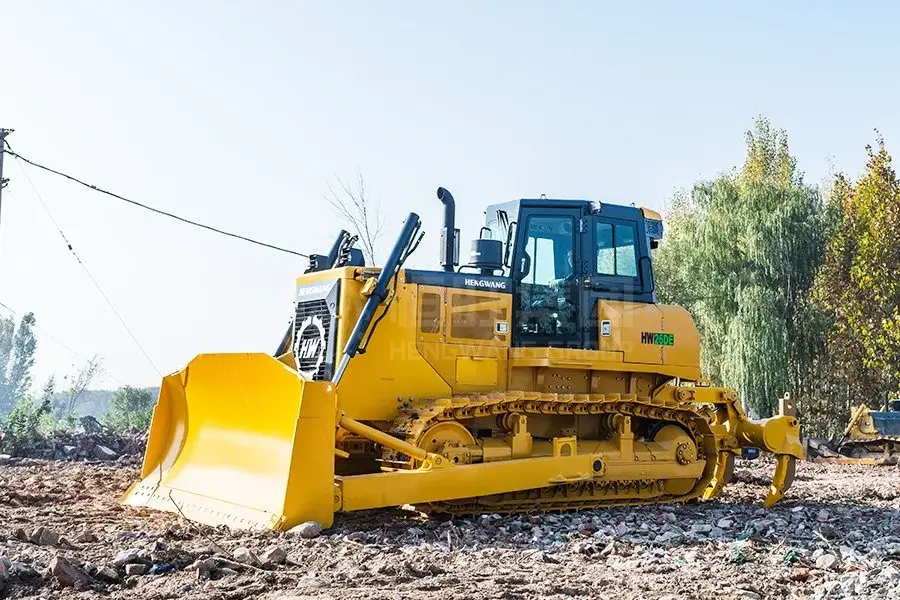
The blade is the most critical component of any bulldozer. Beginners must distinguish between the standard blade types found on units like Hengwang’s industrial dozers. These typically include the S-blade for grading and the U-blade for moving large loads.
Blade control requires managing lift, tilt, and angle settings precisely. Lift determines the cutting depth, while tilt allows for cutting into hard ground. Angling the blade directs the side-cast of the material away from the machine. Small, incremental adjustments are more effective than large, abrupt movements.
Modern bulldozers often utilize advanced hydrostatic transmissions. These systems allow for “power turns,” maintaining speed on both tracks while maneuvering. Beginners should use the decelerator pedal to manage engine RPM during tight turns. This technique prevents jerky movements and protects the hydraulic system.
| Blade Type | Optimal Application | Technical Advantage |
| Straight (S-Blade) | Fine grading and stripping | High maneuverability and precision |
| Universal (U-Blade) | Moving large soft-soil volumes | Maximum capacity for long-distance pushing |
| Semi-U Blade | General earthmoving/backfilling | Combines wing strength with straight blade control |
Beginner Techniques for Soil Management: Slot Dozing and Efficiency Tips
The most efficient way to move material is called “slot dozing.” This involves cutting a trench and using the walls to keep material centered. This prevents “windrowing,” where material spills off the sides of the blade. Slot dozing can increase the machine’s push capacity by up to 30%.
Always work from the top down when clearing a bench. Use the machine’s weight to your advantage by dozing downhill. Downhill dozing increases the blade’s cutting force significantly. This method also reduces the load on the transmission and saves fuel.
Avoid spinning the tracks when you encounter heavy resistance. Spinning does not increase the push; it only damages the grousers. If the machine slows down, slightly lift the blade to shed weight. This maintains forward momentum and protects the undercarriage.
Pre-Operation Checklist: Critical Maintenance Tips for First-Time Operators
A professional operator performs a thorough “walk-around” inspection every morning. This identifies potential mechanical failures before they become safety hazards. Focus specifically on the undercarriage, which accounts for nearly half of lifetime maintenance costs.
Check for loose track bolts and leaking final drive seals. Ensure that the track tension is adjusted for your specific soil. In muddy conditions, a slightly looser track prevents material packing. This protects the pins and bushings from premature wear.
Daily Technical Inspection Points:
- Check engine oil and hydraulic fluid levels.
- Inspect the cooling system for debris or blockages.
- Verify the integrity of the ROPS (Roll-Over Protective Structure).
- Test the backup alarm and all exterior work lights.
- Drain the fuel-water separator to prevent engine damage.
Navigating Slopes and Rough Terrain: Safety Tips for New Operators
Stability is the most critical factor when working on uneven ground. Always travel straight up or straight down a steep slope. Never travel across an incline, as this shifts the center of gravity. This movement significantly increases the risk of a machine rollover.
If the machine begins to slide, immediately drop the blade. The blade acts as an anchor to stabilize the machine instantly. Maintain a clear “buffer zone” from the edges of vertical drops. The weight of a dozer can cause the ground to collapse unexpectedly.
Understanding the machine’s center of gravity is essential for safety. When cresting a hill, slow down and keep the blade low. This prevents the machine from “teetering” or slamming down on the other side. Controlled movements protect both the operator and the machine’s chassis.
Reducing Undercarriage Wear: Operating Tips for Machine Longevity
High-speed operation in reverse causes the most undercarriage wear. Manufacturers, including Hengwang Crawler Dozers, design these machines for power at low speeds. Operating at the lowest necessary speed extends the life of track components.
Avoid unnecessary reverse travel whenever the job site allows. It is often more efficient to turn the machine around. Forward travel places stress on the “pulling” side of the track. Reversing increases friction on the bushings and sprocket teeth.
Always match the machine’s power to the material density. If you are working in hard-packed clay, use the ripper first. This reduces the strain on the hydraulic pumps and engine. Using the ripper ensures the blade maintains a consistent depth.
FAQ: Common Questions on Bulldozer Operating Tips for Beginners
Q: How long does it take for a beginner to master grading?
A: Basic operation can be learned in a few days. However, achieving “finish grade” precision typically requires 500 to 1,000 seat hours. Proficiency involves reading the soil and anticipating machine reactions.
Q: Can I use a bulldozer to remove large tree stumps safely?
A: Yes, but you must use the correct technique. Cut the roots around the stump with the blade first. Then, apply upward pressure with the lift cylinders to pry it out.
Q: Why is the decelerator pedal important for new operators?
A: The decelerator allows for precise engine control during maneuvers. It helps you slow down without shifting gears or using brakes. This is essential for safety in tight working environments.
Q: How do I know if my track tension is set correctly?
A: There should be a visible “sag” between the idler and the roller. Consult your manufacturer’s manual for the exact measurement in millimeters. Correct tension prevents excessive wear on the drive sprocket.
Reference Sources
- ISO 9244:2008 – Earth-moving machinery — Machine-mounted visual aids — Safety manual requirements.
- AEM (Association of Equipment Manufacturers) – Safety Manual for Operating and Maintenance Personnel: Crawler Units.
- OSHA Standard 1926.602 – Material handling equipment and earthmoving equipment safety.
- Hengwang Group Technical Support – Dozer Operational and Maintenance Documentation.