Mini excavators are essential tools for modern construction and landscaping projects. These compact machines provide immense power in confined spaces. Many operators ask how does an excavator work to achieve such high force. The answer lies in the sophisticated integration of diesel power and hydraulic pressure.
A mini excavator functions by converting mechanical energy into hydraulic energy. This energy then moves the machine’s arm, bucket, and tracks. Most models, like the HW-12, are designed for precision and durability. They allow users to perform tasks that would be impossible with manual labor.
Understanding the internal mechanics is vital for safe and efficient operation. This knowledge helps in maintaining the equipment and troubleshooting common issues. We will explore the hydraulic systems, structural components, and control logic. This guide provides a clear look at the technology behind these versatile machines.
The Mechanics of Hydraulic Power

The hydraulic system is the core of every modern excavator. It relies on Pascal’s Law to transmit force through an incompressible fluid. How does an excavator work without a complex set of gears? It uses high-pressure oil to move heavy steel components smoothly.
An engine-driven pump creates a steady flow of hydraulic fluid. This fluid travels through a series of control valves and reinforced hoses. When the operator activates a control, the valve directs oil into a cylinder. The oil pressure then forces a piston to extend or retract.
Most mini excavators operate at pressures between 2,500 and 3,500 PSI. This high pressure allows a small machine to lift hundreds of kilograms. Variable displacement pumps are often used to optimize power distribution. These pumps ensure the machine uses only the energy required for the specific task.
| Component | Function | Material/Type |
| Hydraulic Pump | Converts engine power to fluid flow | Axial Piston or Gear |
| Control Valve | Directs oil to specific cylinders | Multi-spool Manifold |
| Hydraulic Cylinder | Converts fluid pressure to linear motion | Double-acting Steel |
| Hydraulic Motor | Converts fluid pressure to rotation | High-torque Radial |
Key Components of the Mini Excavator
The structure of a mini excavator is divided into three functional groups. These are the undercarriage, the upper structure (house), and the work group. Understanding these sections explains how does an excavator work in different environments. Each part must function in harmony to ensure stability and power.
The undercarriage provides the base and includes the rubber or steel tracks. Tracks distribute the machine’s weight over a large surface area. This prevents the machine from sinking into soft or muddy ground. The undercarriage also houses the final drive motors that move the tracks.
The upper structure is mounted on a large swing bearing. This allows the cabin and engine to rotate 360 degrees continuously. The engine provides the primary power source, usually ranging from 7.5 kW to 9.0 kW for mini models. A counterweight is placed at the rear to balance the weight of the load.
Operational Controls and Movement

The operator manages the machine from the cabin using intuitive controls. How does an excavator work under the hand of a skilled operator? Most modern units utilize two primary joysticks to control the digging arm. These joysticks send signals to the hydraulic manifold to manage fluid flow.
The left joystick usually controls the swing of the house and the arm movement. The right joystick manages the boom lift and the bucket curl. Foot pedals are used to control the tracks for forward and backward movement. This separation of controls allows for simultaneous digging and rotating maneuvers.
Precision is a hallmark of the mini excavator’s control system. Pilot-operated controls allow for very subtle movements with minimal physical effort. This level of control is essential when digging near delicate utility lines. The machine’s responsiveness depends on the calibration of the hydraulic valves.
Understanding Digging Depth and Force
The digging capability is the most critical metric for any excavator. How does an excavator work to penetrate hard soil or clay? It combines the weight of the machine with the force of the hydraulic cylinders. This combination is known as the “breakout force” at the bucket teeth.
A typical 1-ton mini excavator offers a digging depth of approximately 1,650 mm. This depth is sufficient for most residential drainage and utility projects. The bucket capacity, often around 0.025 m³, determines how much material is moved per cycle. These specs ensure the machine remains productive while staying compact.
| Feature | HW-12 Mini Excavator Data |
| Operating Weight | 1,000 kg |
| Engine Power | 7.5 kW – 8.6 kW |
| Max Digging Depth | 1,650 mm |
| Machine Width | 940 mm |
| Bucket Capacity | 0.025 m³ |
The arm length and boom geometry also dictate the “reach” of the machine. A longer reach allows the operator to dump material further from the trench. However, a longer reach can reduce the overall lifting capacity. Engineers balance these factors to provide the best performance for the machine’s size.
Versatility Through Advanced Attachments
A mini excavator is more than just a digging machine. Its utility increases significantly when using different hydraulic attachments. How does an excavator work as a multi-tool on a job site? It uses an auxiliary hydraulic circuit to power external tools.
Quick-couplers allow operators to switch attachments in just a few minutes. Common tools include hydraulic hammers for breaking concrete or rock. Augers are frequently used for drilling holes for fences or trees. Grading buckets help in creating smooth surfaces for landscaping or paving.
Each attachment requires a specific flow rate and pressure from the machine. Operators must match the attachment’s requirements with the excavator’s output. Using the wrong attachment can lead to hydraulic overheating or component failure. Proper matching ensures the machine operates within its designed safety limits.
Choosing the Right Mini Excavator for Your Project
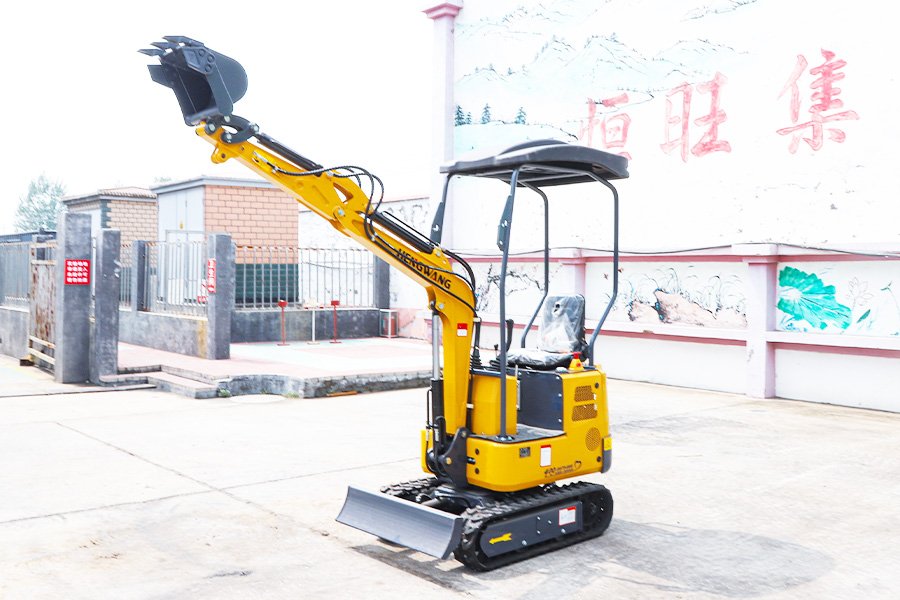
Selecting the correct machine requires a clear understanding of your site requirements. You should evaluate the narrowest point of entry at your project location. How does an excavator work for you if it cannot reach the work area? A machine width of 940 mm is ideal for passing through standard gates.
Consider the weight of the machine if you are working on finished surfaces. A 1,000 kg machine exerts low ground pressure, which protects lawns and pavement. If you need to dig deeper than five feet, check the boom’s vertical reach. Ensure the engine power is sufficient for the soil types you expect to encounter.
Fuel efficiency is another vital factor for long-term project costs. Look for models with reliable engines that offer easy access for maintenance. A well-maintained machine will provide consistent hydraulic power throughout its lifespan. Choosing a model with a balanced weight-to-power ratio ensures maximum job site efficiency.
Summary
A mini excavator works by using a diesel engine to power a hydraulic pump. This pump creates pressure that moves the boom, arm, and bucket with high precision. How does an excavator work effectively? It relies on a 360-degree rotating house and specialized attachments to perform diverse construction tasks in tight spaces.
FAQ
Q:How does an excavator work to rotate 360 degrees?
The machine uses a hydraulic swing motor connected to a large circular bearing. This allows the upper cabin and arm to spin while the tracks remain stationary.
Q:What kind of fuel do mini excavators use?
Most mini excavators use diesel fuel because it provides high torque for hydraulic systems. Diesel engines are also known for their durability in heavy-duty applications.
Q:Can I use a mini excavator for indoor demolition?
Yes, because they are compact and often have low-emission engines. Their small width allows them to pass through standard interior doorways easily.
Q:How does an excavator work on slopes?
It uses wide tracks to maintain traction and a low center of gravity for stability. Operators should always point the boom uphill when traveling on an incline.
Q:What is the “thumb” on an excavator bucket?
The thumb is a hydraulic or manual clamp that works against the bucket. It allows the operator to grip and lift irregular objects like logs or rocks.
Reference Sources
Association of Equipment Manufacturers (AEM)
https://www.aem.org/
Occupational Safety and Health Administration (OSHA)
https://www.osha.gov/
SAE International – Mechanical and Hydraulic Standards
https://www.sae.org/