The modern excavator is no longer just a “digging machine”; it is a sophisticated hydraulic power unit designed to support a vast ecosystem of specialized tools. In the heavy machinery industry, the transition from a standard bucket to a specialized attachment can improve onsite efficiency by over 50%. Understanding the specific engineering purpose of each attachment is critical for project managers, OEM consultants, and site engineers aiming to optimize machine ROI.
Whether you are operating a 1-ton mini-excavator or a 50-ton heavy-duty crawler, the selection of the right attachment dictates the project’s success. This guide provides a technical breakdown of the most essential excavator attachments, their mechanical functions, and their ideal application environments.
The Foundation of Versatility: Quick Hitches and Couplers
Before exploring specific tools, we must address the Quick Hitch (or Quick Coupler). This is the interface that allows operators to switch between attachments in seconds without manual pin removal.
- Mechanical Couplers: Cost-effective and reliable for long-term attachment use.
- Hydraulic Couplers: Controlled from the cab, these are essential for high-tempo job sites where switching between a bucket and a breaker happens multiple times per hour.
Engineering-grade couplers, such as those integrated into Hengwang’s accessory lineup, utilize safety locking mechanisms to ensure the attachment remains secure even in the event of a hydraulic pressure drop.
1. Earthmoving and Excavation Attachments
While the bucket is the most common attachment, it is not a “one size fits all” tool. Engineering variations in geometry and tooth configuration determine performance in different soil types.
General Purpose (GP) Buckets
Designed for standard dirt and loam. They feature a balanced capacity-to-weight ratio, allowing for maximum fuel efficiency during routine loading tasks.
Heavy-Duty (HD) & Rock Buckets
Constructed with reinforced side cutters and wear-resistant materials like Hardox steel. These are essential for handling abrasive materials like shot rock, high-density clay, and demolition debris. The increased weight requires the operator to monitor the machine’s lifting capacity (Load Chart) closely.
Ditching and Grading Buckets
These are wide, toothless buckets with flat edges. Their primary use is finishing work—leveling slopes, cleaning trenches, and grading landscapes. Some variants feature a “tilting” mechanism, allowing the bucket to rotate up to 45 degrees for precision contouring.
2. Demolition and Breaking Attachments
Demolition requires high-impact energy or high-shear force. The following tools transform an excavator into a surgical demolition instrument.
Hydraulic Breakers (Hammers)
The hydraulic breaker is the industry standard for removing concrete structures or breaking up oversized rocks in mining.
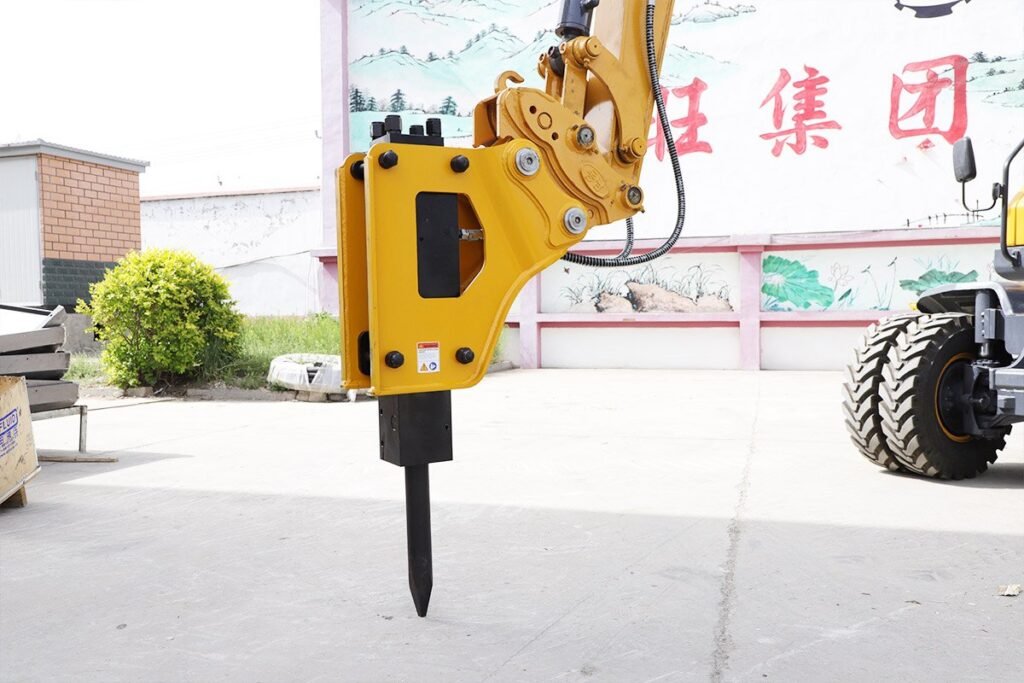
- Technical Tip: Matching the breaker’s frequency (BPM) and impact energy (Joules) to the excavator’s hydraulic flow is vital. An oversized breaker can damage the excavator’s arm, while an undersized one will lead to overheating and inefficiency.
Hydraulic Shears
Used primarily in scrap yards and structural demolition. These act as giant scissors, capable of cutting through I-beams and reinforced steel. They rely on high-pressure hydraulic circuits to deliver the necessary crushing force.
Multi-Processors and Pulverizers
These attachments use a “crush and cut” logic. Pulverizers are specifically designed to separate rebar from concrete, allowing for onsite recycling of materials.
3. Material Handling and Forestry Attachments
In logistics, waste management, and forestry, the ability to “grab and manipulate” is more important than the ability to “dig.”
Grapples (Mechanical and Hydraulic)
Grapples are used for moving large volumes of irregularly shaped material—logs, scrap metal, or boulders.
- Rotary Grapples: These offer 360-degree rotation, providing the “wrist” movement necessary for precise placement in stone masonry or waste sorting.
Power Thumbs
A thumb works in tandem with a bucket, functioning like a human hand. This is perhaps the most versatile addition for general contractors, allowing the machine to switch from digging to picking up a single pipe or tree trunk without changing attachments.
Mulchers and Tree Shears
In land clearing, mulcher heads use high-speed rotating drums with teeth to grind vegetation into mulch instantly. Tree shears allow for the controlled felling of timber, holding the tree upright after the cut for safe placement.
4. Specialized Engineering Attachments
For niche applications like utility installation and foundation work, specialized tools are required.
Augers (Earth Drills)
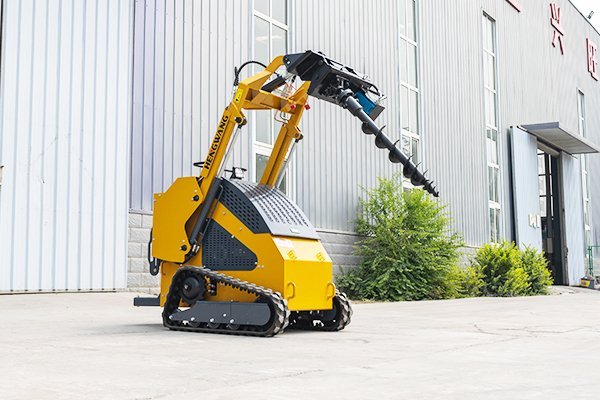
Augers are high-torque planetary drives used for drilling holes for fencing, solar panel posts, or foundation piers.
- Selection Logic: Torque is more important than speed here. For rocky soil, heavy-duty flighting with tungsten carbide teeth is recommended.
Rippers
A ripper is a single, pointed shank designed to break through “unrippable” ground like frozen earth or shale. It concentrates the entire breakout force of the excavator onto a single point.
Plate Compactors (Vibratory)
Instead of using a walk-behind compactor, these hydraulic attachments use high-frequency vibration to densify soil in trenches or on slopes where manual operation is dangerous.
Technical Summary Table: Matching Attachment to Tas
| Attachment | Primary Function | Ideal Application | Key Technical Metric |
| Hydraulic Breaker | Impact Breaking | Concrete demolition, Mining | Oil Flow (L/min) & Pressure |
| Auger | Precision Drilling | Post holes, Utility poles | Torque (Nm) |
| Grapple | Material Handling | Scrap, Forestry, Waste | Rotation Angle & Clamping Force |
| Ripper | Ground Penetration | Frozen soil, Shale | Shank length & Tip hardness |
| Plate Compactor | Soil Densification | Trenching, Slopes | Impulse Force (kg) |
Engineering Considerations: The “System” Approach
When selecting attachments from providers like Hengwang Machine, it is crucial to view the excavator and attachment as a single integrated system. Engineers should prioritize the following three factors:
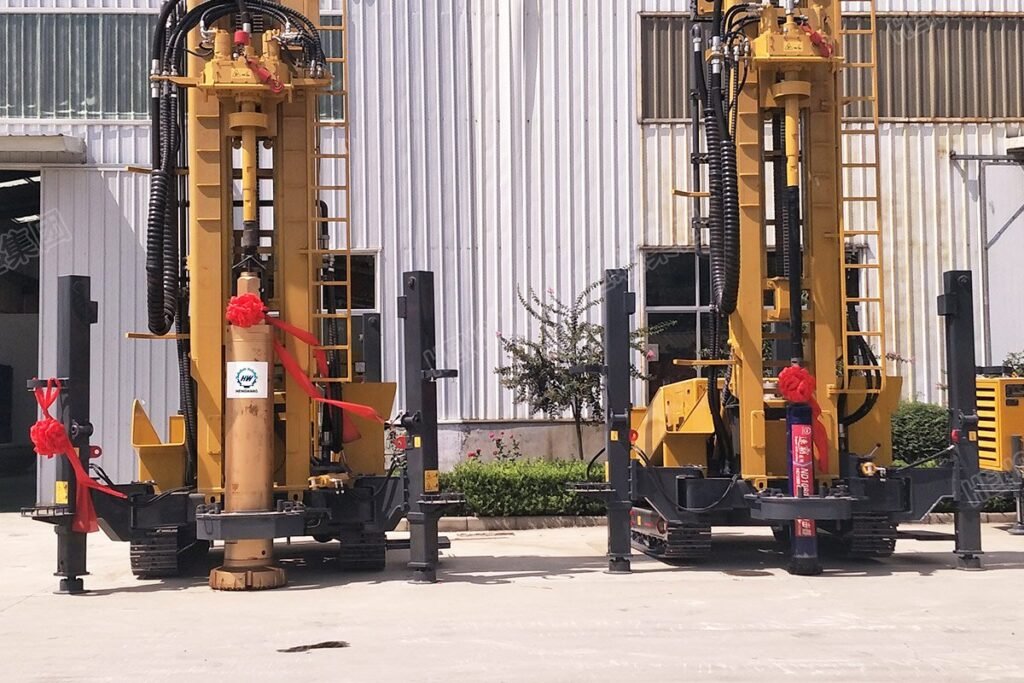
- Hydraulic Compatibility: Does the machine have enough auxiliary hydraulic lines? Some attachments (like tilt-rotators) require dual-direction high-flow circuits, while a simple thumb might only need a single-direction line.
- Weight and Stability: The “Operating Weight” of the excavator must account for the attachment plus the weight of the material being moved. Exceeding the center of gravity leads to tip-overs or premature wear on the swing motor.
- The Quick-Change Advantage: For B2B operations, downtime is the greatest cost driver. Utilizing high-quality quick hitches ensures that a single excavator can perform the roles of three different machines in a single shift.
FAQ
Q: Can I use any attachment on any excavator?
A: No. Attachments are categorized by the “Carrier Weight” of the excavator. Using a 20-ton breaker on a 10-ton machine will cause structural failure, while using a 5-ton bucket on a 20-ton machine will be inefficient and likely break the attachment under the machine’s high breakout force.
Q: What is the difference between a Mechanical and Hydraulic Thumb?
A: A mechanical thumb is fixed at a set angle and relies on the bucket’s movement to “pinch” items. A hydraulic thumb is connected to the machine’s hydraulics, allowing the operator to open and close the thumb independently for much better control and versatility.
Q: Do all attachments require auxiliary hydraulics?
A: No. Simple tools like mechanical quick hitches, standard buckets, and mechanical rippers do not require hydraulic power. However, “active” tools like hammers, augers, and grapples require auxiliary hydraulic lines to function.
Q: How do I maintain hydraulic attachments?
A: The most critical maintenance task is greasing moving parts every 4–8 hours of operation and checking hydraulic hoses for abrasions. For breakers, ensuring the nitrogen gas pressure is within the manufacturer’s spec is vital for performance.
Reference Sources
ISO 6016:2008 – Earth-moving machinery — Methods of measuring the masses of whole machines, their equipment, and components.
AEM (Association of Equipment Manufacturers) – Best practices for excavator attachment safety and operation.
Hardox® Wearparts Technical Specifications – Industry standard for high-durability steel used in buckets and shears.