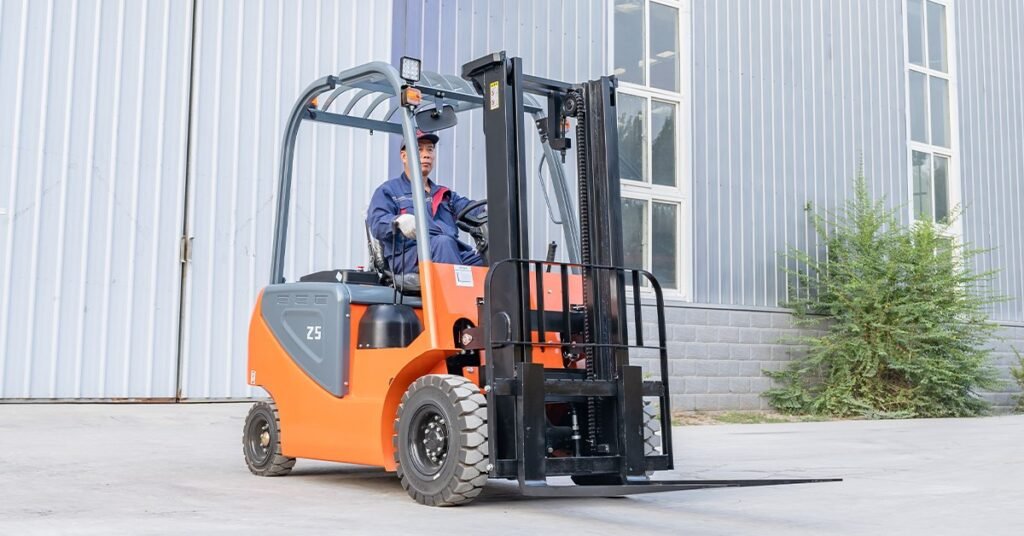
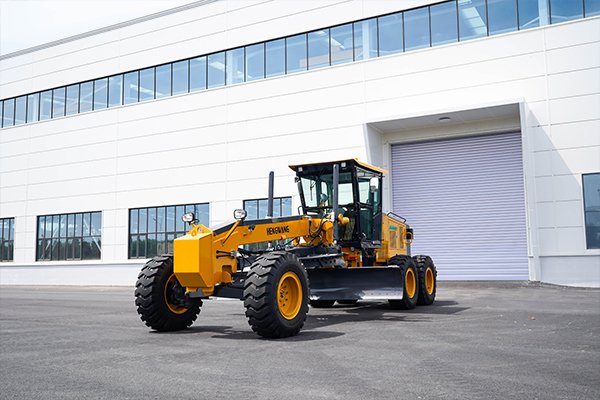
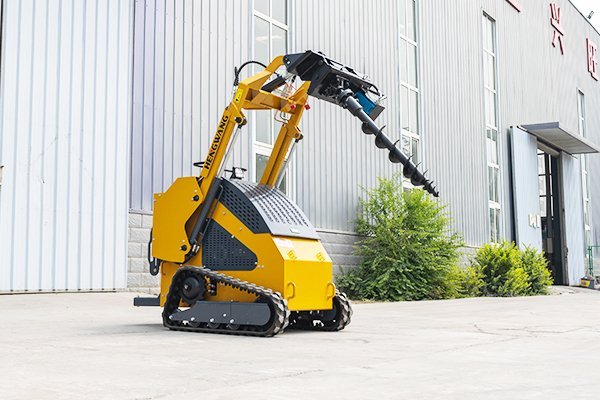
In heavy construction and earthmoving, a bulldozer is often the foundation of a project’s pace. Whether it is a compact crawler used for grading or a heavy-duty unit for mining, the mechanical stress these machines endure is immense. From the abrasive nature of soil on the undercarriage to the thermal cycles of high-torque engines, every component has a finite lifespan that is directly influenced by maintenance rigor.
Preventive maintenance (PM) is not merely a task to be checked off; it is a strategy to minimize the Total Cost of Ownership (TCO). A well-executed maintenance program identifies minor issues—such as a weeping hydraulic seal or a slightly loose track—before they escalate into catastrophic failures that halt production.
For fleet managers and owner-operators, understanding the specific technical requirements of modern bulldozers is critical. This guide outlines a professional-grade maintenance framework designed to keep your iron moving.
The Daily Walk-Around: The First Line of Defense
Before the engine ever turns over, a visual and physical inspection must occur. This phase focuses on safety and immediate operational integrity.
- Fluid Level Verification: Check engine oil, coolant, and hydraulic fluid levels. Look for signs of “milky” oil, which indicates water contamination, or a burnt smell, suggesting overheating.
- Leak Detection: Inspect the ground beneath the machine for fresh puddles. Check hydraulic hoses for “sweating” or abrasions that could lead to a high-pressure burst.
- Cooling System Inspection: Construction environments are dusty. Ensure the radiator and oil cooler fins are free of debris. Clogged cooling fins are a primary cause of hydraulic component degradation.
- Ground Engaging Tools (GET): Examine the blade’s cutting edges and the ripper tips. If the cutting edge wears into the base metal of the blade, repair costs triple.
- Grease Points: Modern bulldozers rely on grease to purge contaminants. High-friction areas like the blade C-frame and pivot pins require daily lubrication to prevent “pin slop.”
Managing the Undercarriage: The 50% Cost Factor
Statistical data from heavy equipment manufacturers suggests that the undercarriage can account for up to 50% of a bulldozer’s lifetime maintenance costs. Therefore, undercarriage management is the most critical part of any bulldozer maintenance checklist.
Track Tension Adjustment
Track tension must be adjusted based on the specific terrain. If the tracks are too tight, it causes excessive wear on the bushings and sprockets. If they are too loose, “throwing a track” becomes a risk. In muddy conditions, tracks should be run slightly looser to allow material to pack and discharge without over-tensioning the chain.
Component Wear Patterns
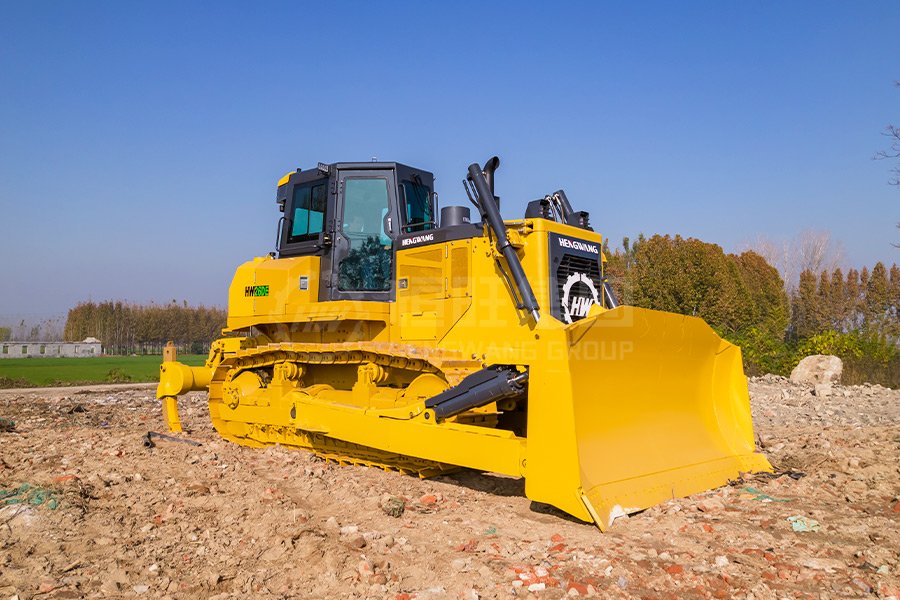
Inspect the rollers, idlers, and sprockets. Look for “scalloping” on the sprocket teeth or flat spots on the rollers. Most modern crawler bulldozers, such as those found in Hengwang’s bulldozer lineup, feature heavy-duty undercarriage designs that include sealed and lubricated tracks (SALT) to reduce internal friction. However, even these advanced systems require regular cleaning to prevent “packing”—where dried mud prevents rollers from turning, leading to flat spots.
Periodic Maintenance Intervals (PM Levels)
Maintenance should be categorized by service hours to ensure deep-system health.
| Interval | Primary Focus Area | Key Actions |
| 250 Hours | Lubrication & Filtration | Change engine oil and filter; inspect air intake seals; check fan belt tension. |
| 500 Hours | Fuel & Hydraulic Health | Replace fuel filters and water separators; clean hydraulic tank breathers. |
| 1,000 Hours | Drivetrain & Cooling | Change final drive oil; replace hydraulic filters; inspect ROPS/FOPS mounting. |
| 2,000 Hours | Major Systems | Flush and replace coolant; change hydraulic oil; inspect valve lash (engine). |
Hydraulic System Integrity
The hydraulic system is the lifeblood of the bulldozer’s clearing and ripping power. Beyond checking levels, technicians must monitor the quality of the oil.
Cavitation—caused by air bubbles in the fluid—can destroy a hydraulic pump from the inside out. If you hear a high-pitched “whining” noise during blade operation, it is a signal of air ingestion or pump starvation. During the 1,000-hour service, it is highly recommended to perform an oil analysis. This laboratory test detects microscopic metal shavings, indicating which internal components (pumps, valves, or cylinders) are beginning to wear.
Electrical and Control Systems
Modern bulldozers are increasingly reliant on Electronic Control Units (ECUs). Maintenance now includes:
- Battery Terminal Cleaning: Corrosion can cause voltage drops that lead to “ghost” error codes in the cab.
- Sensor Calibration: Ensure the grade control sensors (if equipped) are calibrated to maintain leveling accuracy.
- Harness Inspection: Check wiring harnesses for rodent damage or heat-induced brittleness, especially near the exhaust manifold.
Matching Maintenance to Machine Type
The complexity of your maintenance routine often depends on the machine’s design. For instance, Hengwang’s crawler bulldozers are engineered for high-durability environments, often featuring modular designs that make filter and hose access more efficient for the operator. When selecting a machine, engineers look for “serviceability indices”—how quickly a technician can perform a standard PM. Machines with centralized grease banks and ground-level fluid checks significantly reduce the likelihood of skipped maintenance steps.
Environmental Considerations
Maintenance logic must adapt to the geography:
- Arctic Conditions: Require specific low-viscosity oils and the inspection of engine block heaters.
- Desert/High-Dust: Air filter replacement intervals may need to be halved. The use of pre-cleaners is essential.
- Coastal/Corrosive: Requires frequent washing to prevent salt-induced corrosion on the electrical connectors and chassis.
FAQ
Q: How often should I check the track tension on my bulldozer?
A: Track tension should be checked daily or whenever the machine moves to a different soil type. Soil packing can change the effective tension within hours of operation.
Q: What is the most common cause of bulldozer engine failure?
A: Overheating and lubrication neglect are the leading causes. This is often traced back to a clogged radiator or failing to replace oil filters at the 250-500 hour mark.
Q: Why is my bulldozer losing power under load?
A: This is typically a fuel system issue (clogged filters) or a hydraulic pump efficiency loss. Start by replacing the primary and secondary fuel filters.
Q: Should I use “Original Equipment Manufacturer” (OEM) filters?
A: Yes. While aftermarket filters may fit, OEM filters are designed with specific micron ratings and flow capacities to match the hydraulic pump’s requirements. Using the wrong filter can lead to premature pump wear.
Q: How do I know when the undercarriage needs replacement?
A: Use a wear gauge to measure the height of the grouser bars and the diameter of the rollers. Most manufacturers provide a “percent worn” chart. When components reach 100% wear, they risk breaking other parts of the drive system.
Reference Sources
- Association of Equipment Management Professionals (AEMP): Best Practices for Heavy Equipment Maintenance.
- ISO 15818: Earth-moving machinery — Lifting and tying-down attachment points — Performance requirements.
- SGS Oil Analysis Standards: Guidelines for Construction Equipment Fluid Testing.
- Hengwang Group Technical Specifications: Bulldozer Operation and Maintenance Documentation.