The modern mining landscape relies on a hierarchy of heavy machinery, but few assets are as versatile or essential as the bulldozer. While excavators and haul trucks often grab the headlines for volume, the bulldozer—specifically the high-horsepower crawler variety—functions as the “Swiss Army Knife” of the mine site. In large-scale surface mining, the bulldozer is often the first machine to arrive and the last to leave, bridging the gap between initial exploration and final land reclamation.
Understanding bulldozer mining applications requires a shift from viewing them as mere “dirt movers” to seeing them as precision tools for material management, safety, and infrastructure maintenance.
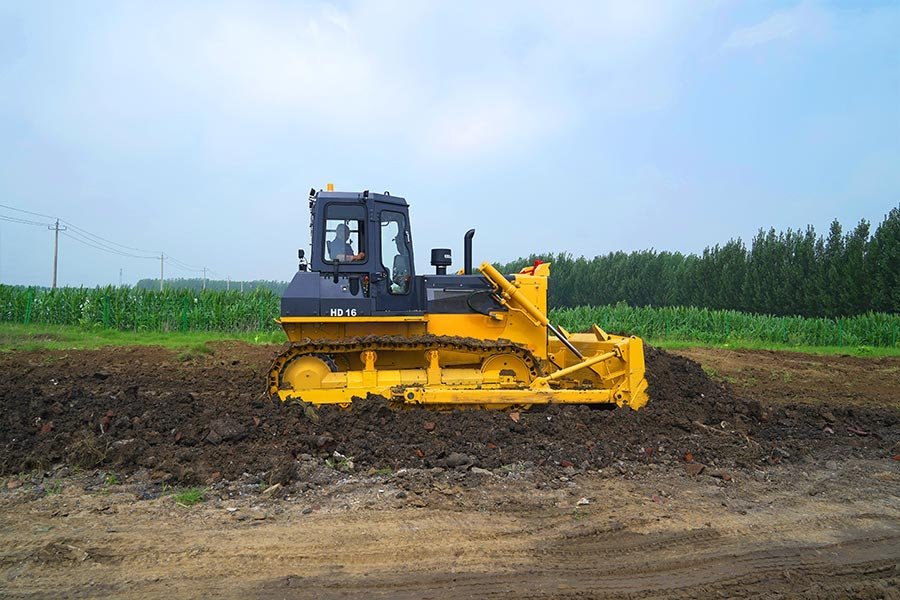
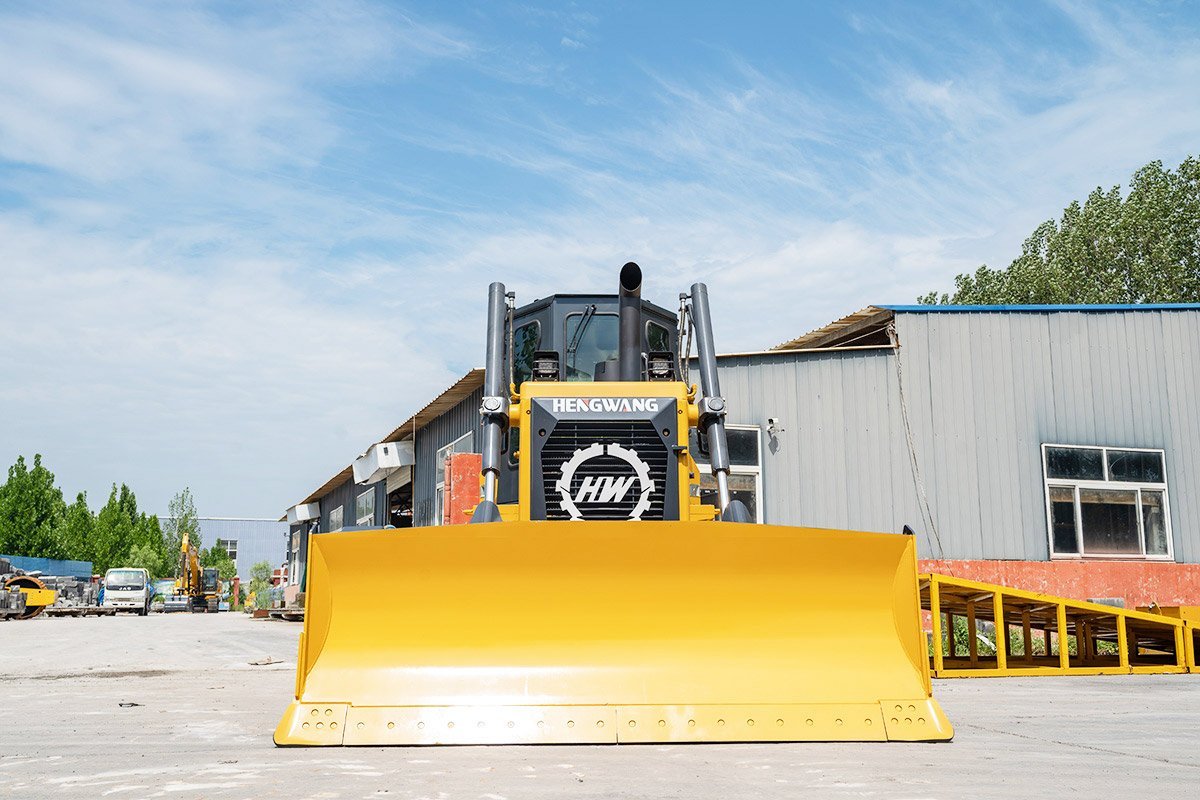
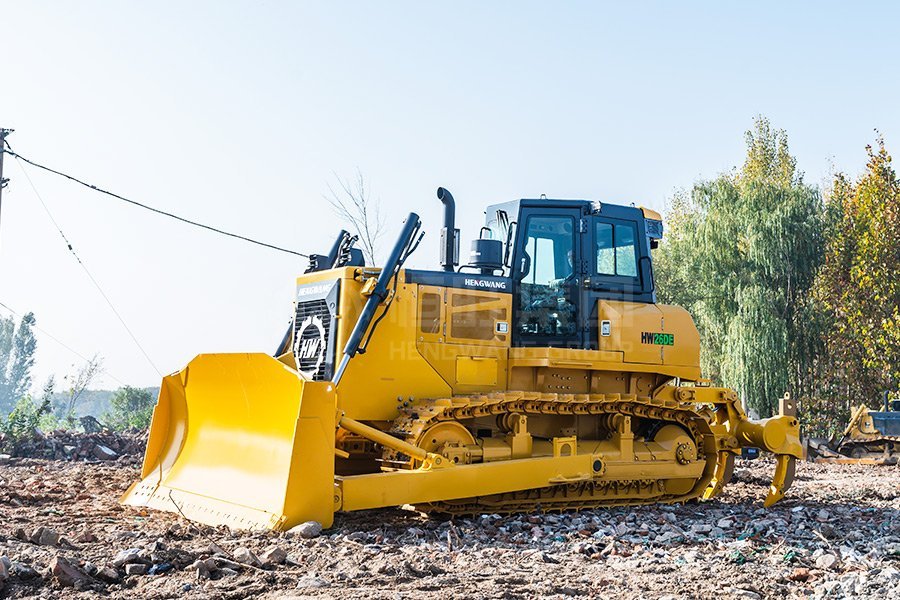
Core Functions of Bulldozers in Surface Mining
In surface mining operations, the primary objective is the efficient removal of overburden to access the ore body. Bulldozers are the primary engines of this process, utilizing high drawbar pull to move massive volumes of rock and soil.
1. Stripping and Overburden Removal
Before drilling or blasting can occur, the topsoil and subsoil must be removed. Bulldozers equipped with Universal (U) blades are typically used here. The U-blade’s large wings allow it to carry more material over longer distances compared to standard construction blades. This “short-haul” earthmoving is more cost-effective than using an excavator-truck fleet for distances under 100 meters.
2. Bench Cleansing and Pit Maintenance
Efficiency in a mine is dictated by the speed of the haul trucks. If a haul road is uneven or littered with spill rock, cycle times increase and tire wear accelerates—a significant operational cost. Mining dozers are continuously deployed to “clean” the benches near loading shovels and maintain the smoothness of haul roads, ensuring the primary production fleet stays at peak velocity.
3. Stockpile Management
At the processing plant or rail head, material is often stored in massive stockpiles. Bulldozers are used to push the material into feeders or to shape the piles to maximize storage density. In these high-cycle environments, the undercarriage of the dozer undergoes extreme stress, requiring specific heavy-duty configurations.
Strategic Comparison: Crawler vs. Wheel Dozers in Mining
Choosing the right platform is a matter of ground pressure, traction, and mobility. The following table breaks down the application suitability for each type.
| Feature | Crawler Bulldozer (Track) | Wheel Dozer |
| Traction | Exceptional; best for steep grades and soft ground. | Moderate; relies on weight and tire footprint. |
| Ground Pressure | Low; ideal for reclamation and boggy terrain. | High; can damage soft surfaces but offers speed. |
| Primary Mining Task | Heavy ripping, pioneering, and bulk pushing. | Cleanup around shovels, haul road maintenance. |
| Mobility | Low; requires a trailer for long-distance moves. | High; can travel between sites independently. |
| Maintenance Focus | Undercarriage wear (bushings, links). | Tire life and drivetrain heat management. |
Technical Synergy: The Role of Ripper Attachments
One of the most critical bulldozer mining applications is “ripping.” In many geological formations, the rock is too hard for a blade to penetrate but not hard enough to justify the high cost of drilling and blasting.
A dozer equipped with a single-shank or multi-shank giant ripper uses its weight and hydraulic down-pressure to fracture the strata. This mechanical fragmentation prepares the ground for the blade or an excavator. Advanced mining dozers now utilize “automated ripping” software, which adjusts the engine RPM and track speed to prevent track slip, significantly extending the life of the undercarriage—the single most expensive maintenance component of any tracked machine.
Integration of Industrial Materials in Machinery Assembly
The durability of a mining bulldozer is not only found in its steel chassis but also in the high-performance materials used in its sub-assemblies. For instance, the operator’s cabin is a pressurized, sound-dampened environment designed to protect the engineer from extreme external noise and vibration.
During the manufacturing of these cabins, engineers often utilize high-viscosity bonding solutions. Products like the F5015 Ultra Viscosity Tissue Double-Sided Tape are instrumental in securing sound-deadening insulation and interior paneling. In the high-vibration environment of a mining site, mechanical fasteners can loosen over time; however, specialized high-tack tapes provide a continuous bond that dampens harmonic resonance and maintains the integrity of the cabin’s thermal seal. This attention to detail in the assembly phase directly impacts the long-term EEAT (Expertise, Experience, Authoritativeness, and Trustworthiness) of the equipment manufacturer.
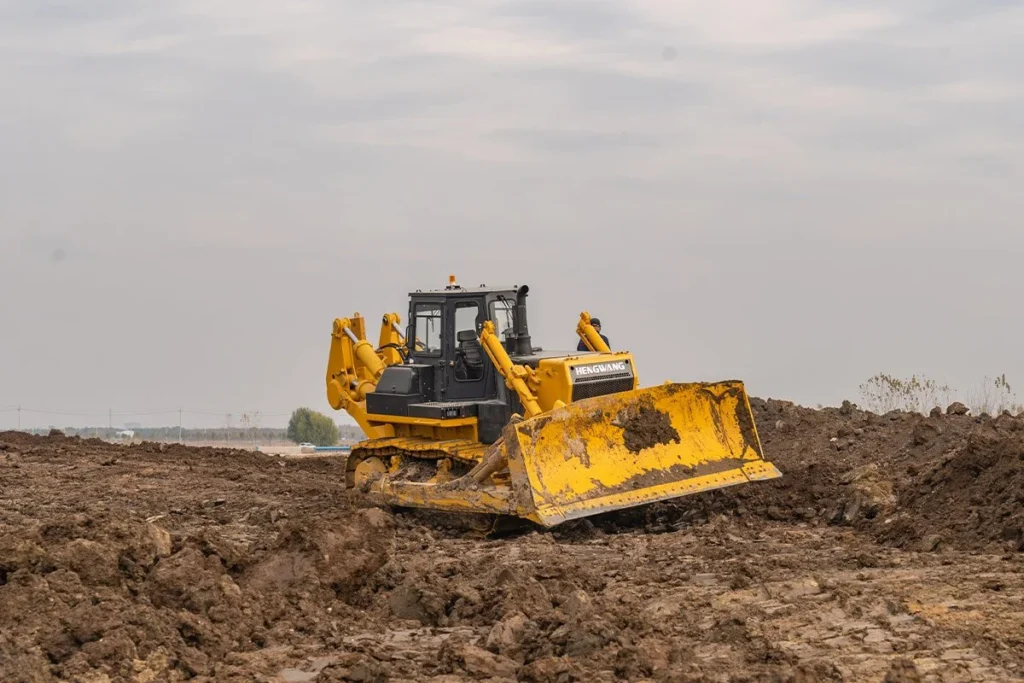
The Lifecycle Role: Reclamation and Environmental Stewardship
As a mine reaches its end-of-life or moves to a new phase, bulldozers transition from production to reclamation. This involves:
- Regrading: Contouring the land to match the natural topography.
- Topsoil Spreading: Precision pushing of stockpiled soil back over the graded rock.
- Erosion Control: Creating “benches” and water run-offs to prevent soil loss during rains.
In reclamation, the “low ground pressure” (LGP) configurations of crawler dozers are vital. They prevent the compaction of the newly laid topsoil, allowing for successful revegetation and meeting strict environmental compliance standards required by modern mining permits.
Selecting the Right Dozer for Mining Operations
When evaluating a bulldozer for a mining fleet—such as the heavy-duty models found in the Hengwang Bulldozer series—several technical parameters must be prioritized:
- Operating Weight: Heavier machines provide better penetration for ripping.
- Blade Capacity: For mining, semi-U or U-blades are standard to handle high-volume throughput.
- Cooling Systems: Mining environments are often dusty and hot; oversized cooling groups are necessary to prevent hydraulic and engine derating.
- Serviceability: In a 24/7 mining cycle, the ease of access to filters, grease points, and the modularity of the powertrain determines the machine’s Total Cost of Ownership (TCO).
FAQ
What is the most common bulldozer blade used in mining?
The Universal (U) blade is the most common for bulk earthmoving because its large side wings minimize material “spill-off.” For harder rock applications, the Semi-U (SU) blade is preferred as it offers better penetration while still maintaining a high load capacity.
How does a bulldozer improve mining safety?
Bulldozers are used to create “safety berms” along haul roads and pit edges. These embankments of soil act as a physical barrier to prevent trucks and other vehicles from accidentally driving off the edge of a bench.
Why are crawler dozers preferred over wheel dozers for heavy ripping?
Ripping requires maximum traction to pull a steel shank through solid rock. Crawler dozers have a much larger contact patch with the ground, allowing them to convert engine torque into drawbar pull without the wheel-spin that would destroy expensive tires on a wheel dozer.
What maintenance is most critical for mining dozers?
The undercarriage (tracks, rollers, idlers) typically accounts for 50% of a bulldozer’s lifetime maintenance costs. Daily inspections for track tension and debris buildup are essential to prevent premature wear in abrasive mining environments.
Reference Sources
- Society for Mining, Metallurgy & Exploration (SME): Guidelines on Surface Mining Equipment Selection.
- ISO 6165:2022: Earth-moving machinery — Basic types — Identification and vocabulary.
- ASTM D3330: Standard Test Method for Peel Adhesion of Pressure-Sensitive Tape (Relevant to cabin assembly components like F5015).
- Manufacturer Technical Specifications: Hengwang Group heavy equipment performance data.