Rental fleet managers face a unique challenge: balancing low acquisition costs with long-term machine durability. Unlike owner-operators who baby their equipment, rental customers range from novice DIYers to aggressive professional contractors. This means the best compact excavator for rental fleet success must be intuitive, rugged, and easy to service.
Total Cost of Ownership (TCO) is the primary metric for any profitable rental business. To maximize ROI, your fleet requires machines that offer high utilization rates and minimal downtime. In our experience at Hengwang, we have found that the 1-ton to 2-ton class remains the highest-demand segment for urban construction and landscaping rentals.
What Defines a Rental-Ready Compact Excavator?
A rental-ready machine is not just a smaller version of a large excavator. It must feature specific engineering choices that protect the investment from inexperienced operators. This includes protected hydraulic hoses, heavy-duty belly guards, and simplified control layouts.
Fleet managers should prioritize machines with high resale value and parts commonality. When your technicians can use the same filters and fluids across multiple units, your overhead drops significantly. Furthermore, a compact footprint allows for easier transport, often fitting on standard utility trailers, which expands your customer base to those without commercial driver’s licenses.
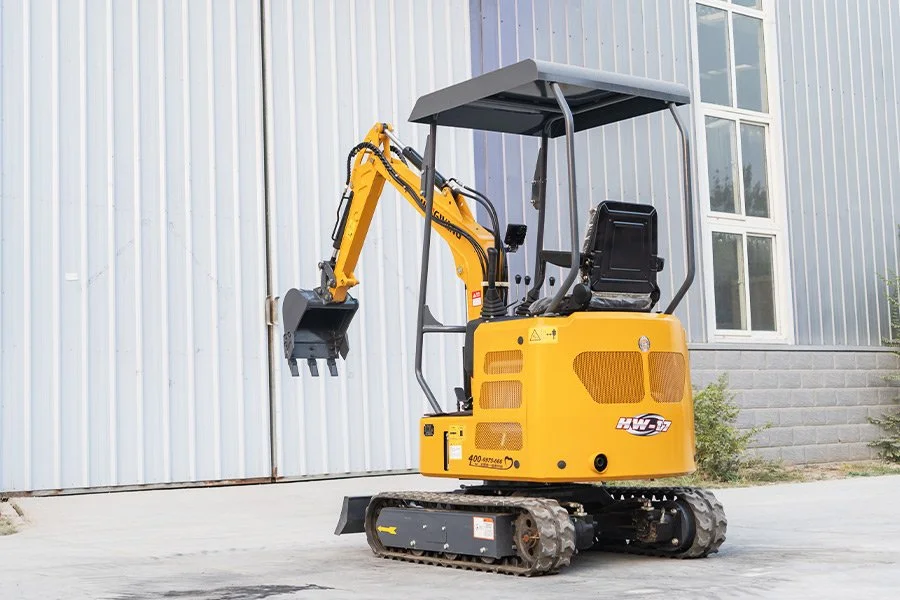
At Hengwang, we prioritize “Zero Tail Swing” designs in our development process. This feature allows operators to rotate the house within the width of the tracks. It drastically reduces the risk of accidental damage when working near walls, fences, or parked cars—a frequent occurrence in rental scenarios.
Comparing Key Performance Specs for Rental ROI
When evaluating different models, you must look beyond horsepower. Hydraulic flow, breakout force, and cooling capacity determine how the machine performs under stress. A machine that overheats during a summer rental is a machine that loses you money and reputation.
| Feature | Rental Priority | Why It Matters |
| Engine Type | High Reliability | Minimizes field service calls and engine failure. |
| Hydraulic Flow | Versatility | Allows the use of augers, breakers, and thumbs. |
| Operating Weight | Transportability | Determines if a customer can tow it with a pickup. |
| Swing Type | Zero Tail Swing | Prevents structural damage in tight spaces. |
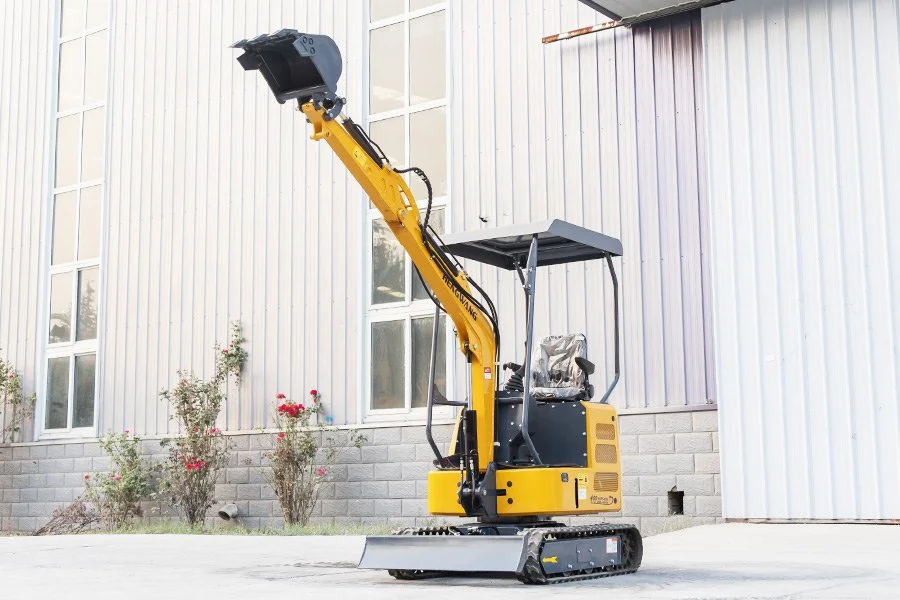
We designed our HW-12 Mini Excavator specifically to hit these high-ROI markers. It features a streamlined hydraulic system and an accessible engine bay, ensuring your shop spends less time on routine oil changes and more time getting the unit back on the rental line.
Why Maintenance Accessibility is the Secret to Fleet Profit?
Maintenance is the single largest controllable expense in a rental fleet. If a technician has to spend two hours removing body panels just to reach a fuel filter, your labor costs will erode your margins. Rental-grade machines should feature wide-opening service doors and grouped grease points.
We advocate for daily check points that are accessible from ground level. This encourages rental customers to perform basic checks, though we know many will not. Therefore, the machine’s cooling system must be robust enough to handle dust and debris buildup between scheduled cleanings.
Beyond physical maintenance, consider the durability of the tracks. For rental fleets, high-quality rubber tracks are usually preferred over steel. They minimize damage to a customer’s driveway or finished landscape, reducing your liability and increasing customer satisfaction.
How to Match Excavator Size to Your Local Rental Market?
The “best” machine depends heavily on your local geography and typical customer profile. In dense urban areas, a 1.2-ton machine like our HW-12 is the gold standard because it can pass through standard garden gates. In more rural areas, a 3.5-ton or 5-ton machine might be necessary for digging deeper footings or trenching through heavy clay.
Consider these common rental applications when building your fleet:
- Residential Landscaping: Requires light footprints and attachment versatility (augers for fence posts).
- Utility Repair: Demands high breakout force for breaking through frozen ground or light concrete.
- Interior Demolition: Needs electric or low-emission diesel engines with ultra-compact widths.
We suggest a tiered approach to fleet building. Start with a core of 1-ton to 1.5-ton units for high-volume residential rentals. As your business grows, add specialized 2.5-ton units for commercial contractors who require more reach and lifting capacity.
Which Technical Features Reduce Accidental Damage?
Damage in the rental industry is an inevitability, but smart equipment selection can mitigate the severity. Cylinder guards are a non-negotiable feature for rental fleets. These metal shields protect the boom and bucket cylinders from impacts with rocks or debris.
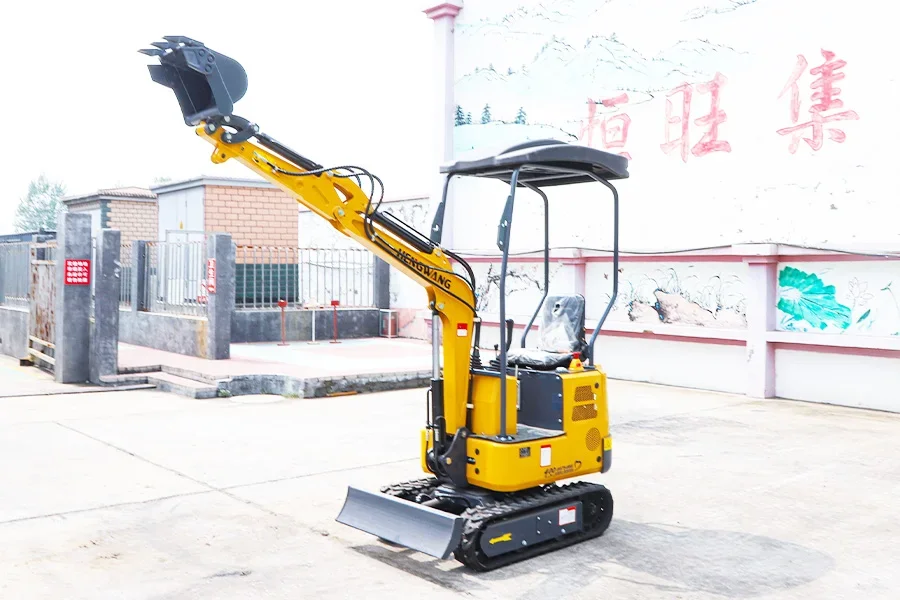
Another critical feature is the routing of hydraulic lines. At our manufacturing facility, we ensure that hoses are tucked inside the boom arm whenever possible. This prevents hoses from getting snagged on branches or rebar during operation, a common cause of expensive hydraulic leaks.
Furthermore, consider the operator’s station. A simple, robust canopy is often better for rentals than a fully enclosed cab with glass. Glass breaks easily and is expensive to replace, whereas a ROPS (Roll-Over Protective Structure) canopy provides the necessary safety without the high repair overhead.
Why Manufacturer Support Matters for Your Fleet?
Buying a compact excavator is the start of a multi-year partnership. A machine is only an asset if you can get parts for it quickly. Before committing to a specific brand, evaluate the manufacturer’s lead times for wear parts like teeth, bushings, and seal kits.
We focus on providing comprehensive technical documentation and rapid parts support to our global partners. We understand that in the rental world, “Time is Money.” A machine sitting in the yard waiting for a $50 sensor is a machine that is costing you hundreds of dollars in lost rental revenue every day.
Finally, look for manufacturers who offer customization for fleet branding. Consistent paint schemes and professional decals not only protect the machine from rust but also serve as mobile billboards for your rental business. High-quality finishes reflect a well-maintained fleet, which allows you to command higher daily rental rates.
FAQ
Q: What is the most popular excavator size for small rental fleets?
A: The 1-ton to 1.5-ton class is generally the most popular due to its ease of transport and ability to fit through narrow access points like gates.
Q: How many hours should I keep a compact excavator before selling it?
A: Most rental fleets aim to rotate their inventory every 2,000 to 3,000 hours to maximize resale value and avoid major component overhauls.
Q: Are rubber tracks or steel tracks better for rental units?
A: Rubber tracks are standard for rental fleets because they are versatile and do not damage asphalt or concrete surfaces, making them suitable for residential work.
Q: Can I use hydraulic attachments from other brands on my excavator?
A: Yes, as long as the hydraulic flow (GPM) and pressure (PSI) requirements of the attachment match the machine’s output and the hitch system is compatible.
Q: How does Zero Tail Swing benefit a rental customer?
A: It allows the operator to focus on the bucket without worrying about the back of the machine hitting an obstacle, which significantly reduces accidental damage.
Reference Sources
Association of Equipment Manufacturers (AEM) Industry Trends
https://www.aem.org/
Construction Equipment Magazine Mini Excavator Comparisons
https://www.constructionequipment.com/
International Powered Access Federation Safety Standards
https://www.ipaf.org/
Committee for European Construction Equipment (CECE)
https://www.cece.eu/