Selecting a hydraulic breaker is not as simple as picking the largest model within your budget. An incorrectly sized hammer leads to two costly outcomes: either the breaker destroys itself through excessive blank firing and heat, or it catastrophically damages the carrier’s hydraulic pump and boom structure.
To maximize ROI in demolition, mining, or road construction, engineers and fleet managers must evaluate the synergy between the attachment, the carrier, and the material density. This guide outlines the professional framework for making that selection.
Carrier Weight and Lifting Capacity Compatibility
The primary constraint is the operating weight of your carrier (excavator, backhoe, or skid steer). A breaker that is too heavy compromises the stability of the machine, especially when the boom is fully extended. Conversely, a breaker that is too light fails to utilize the machine’s power, leading to “floating” where the hammer bounces on the rock rather than penetrating it.
Typically, the breaker should account for approximately 8% to 12% of the carrier’s total operating weight.
| Carrier Class | Recommended Breaker Weight | Typical Application |
| Mini (1-3 Tons) | 100 – 250 kg | Landscaping, indoor demolition |
| Mid-Size (12-20 Tons) | 800 – 1,500 kg | Trenching, utility work, road repair |
| Heavy (30-50+ Tons) | 2,000 – 4,500 kg+ | Quarrying, primary rock breaking |
Matching Hydraulic Flow and Pressure
The carrier’s hydraulic system provides the lifeblood of the breaker. You must match the Oil Flow (LPM/GPM) and Operating Pressure (Bar/PSI) to the breaker’s specifications.
- Flow Rate: If the flow is too high, the breaker will cycle too fast, causing internal heat buildup and seal failure. If it is too low, the impact energy drops significantly.
- Operating Pressure: This is the pressure required to trigger the firing stroke. Ensure your excavator’s relief valve is set higher than the breaker’s operating pressure (usually 30-50 Bar higher) to prevent constant bypass.
Before finalizing a purchase, consult the hydraulic schematics of your machine to verify that the auxiliary circuit can maintain the required flow under load.
Structural Configurations: Side, Top, or Box Type?
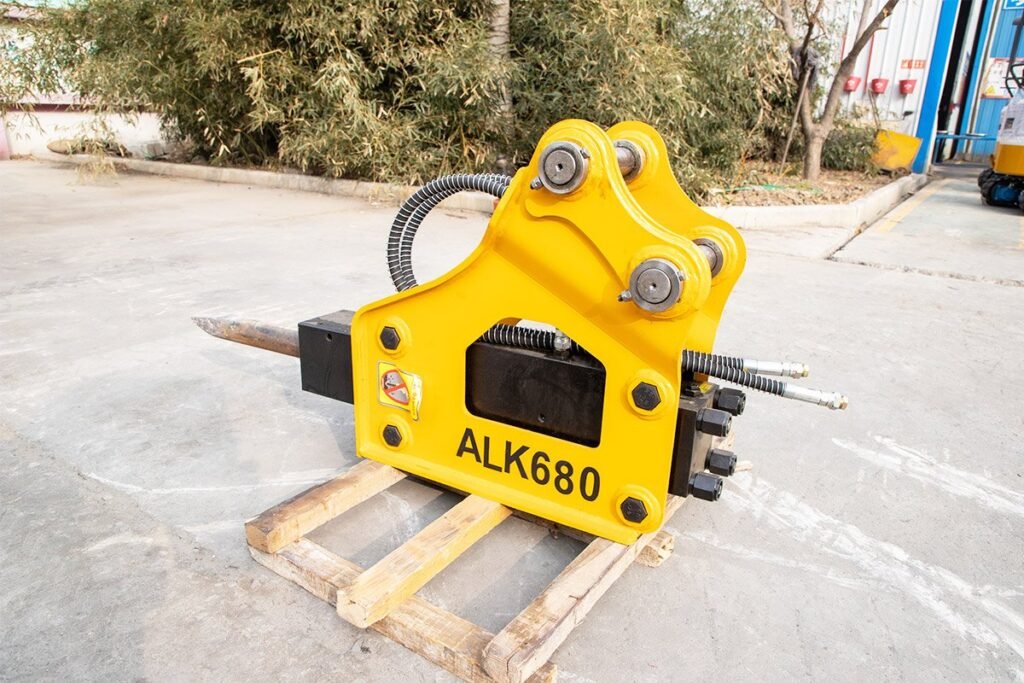
The “housing” of the breaker dictates its ergonomics and durability. As seen in the Hengwang Hydraulic Hammer lineup, there are three industry-standard configurations:
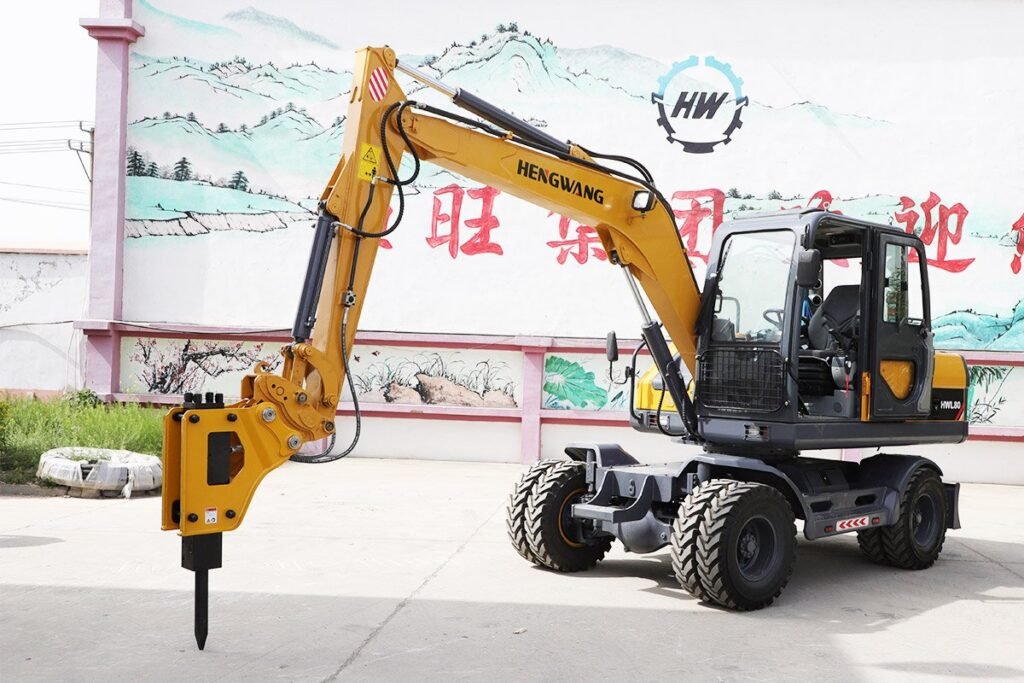
Side-Type Breakers
The mounting bracket is bolted to the side. These are preferred for:
- Trenching: The shorter overall length allows for better maneuverability in tight spaces.
- Ease of Maintenance: Access to the power cell is more direct for quick repairs.
Top-Type Breakers
The bracket is at the top of the hammer. These are ideal for:
- Vertical Demolition: The straight-line design provides a direct transfer of force, making them excellent for floor slabs or quarrying.
- Extended Reach: The longer design provides a slight advantage in reach depth.
Box (Silence) Type Breakers
The power cell is fully enclosed in a rectangular housing with dampening materials.
- Urban Environments: Significantly reduces decibel levels, essential for meeting city noise ordinances.
- Protection: The box protects the main body from dust and debris, extending the service life of the internal components.
Material Hardness and Chisel Selection
The “Impact Energy” (measured in Joules) must be matched to the material’s Compressive Strength. Breaking reinforced concrete requires a different approach than breaking igneous rock like granite.
The choice of tool (chisel) is equally critical:
- Moil Point: General-purpose demolition and soft rock.
- Wedge/Chisel: Ideal for trenching and cutting through asphalt or sedimentary rock.
- Blunt Tool: Best for secondary breaking in quarries where you need a “shattering” effect through vibration rather than penetration.
Advanced Features for Professional Buyers
When evaluating high-performance models like those from Hengwang, look for these “Total Cost of Ownership” (TCO) features:
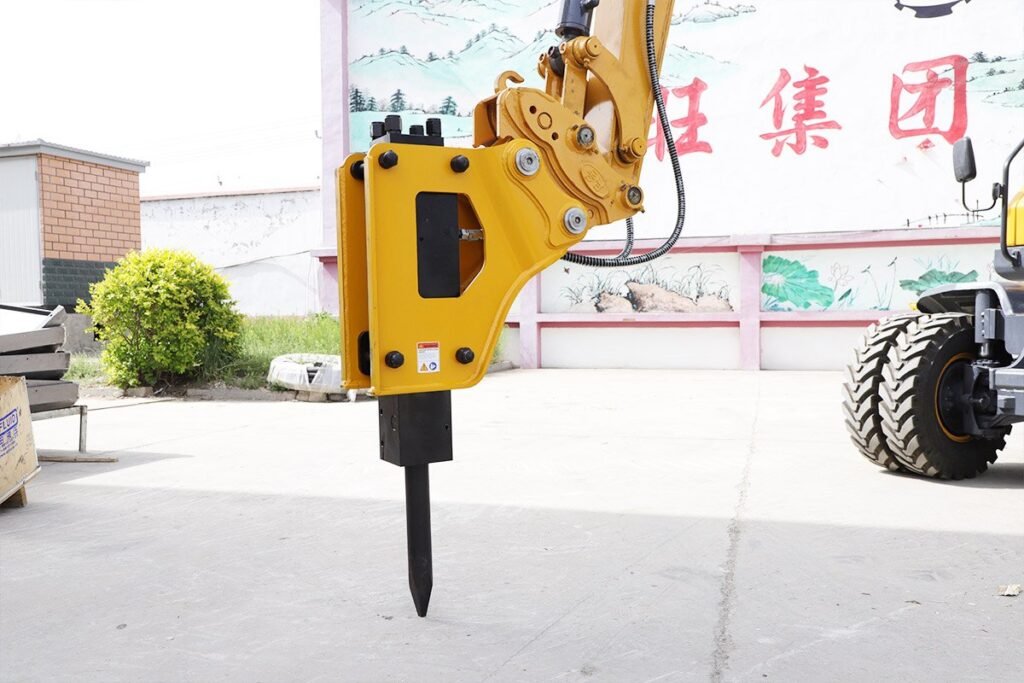
- Anti-Blank Firing (ABF) Systems: This prevents the hammer from cycling when the chisel is not firmly pressed against a surface. This single feature can double the lifespan of your tie bolts and bushings.
- Auto-Greasing Ports: Inadequate lubrication is the #1 cause of breaker failure. Units with automatic lubrication systems ensure the tool shank is always protected.
- Accumulator Technology: For larger breakers, a nitrogen-charged accumulator cushions the hydraulic spikes, protecting the carrier’s pump from premature wear.
The Commercial Evaluation: Beyond the Price Tag
A cheaper breaker often uses lower-grade alloy steel for the piston and cylinder, which deforms under high heat. When selecting a supplier, evaluate their:
- Parts Availability: Can you get replacement bushings and seal kits in 24-48 hours?
- Mounting Adaptability: Does the supplier provide the correct pins and bushings for your specific excavator quick-hitch?
- Warranty Terms: Look for warranties that cover the main power cell, not just the housing.
FAQ
Q: Can I use the same hydraulic breaker on two different excavators?
A: Only if both excavators fall within the same weight class and share identical hydraulic flow/pressure outputs. You will also need to ensure the mounting bracket (cap) is compatible with the pin diameter and ear-to-ear width of both machines.
Q: How often should a hydraulic breaker be greased?
A: Every 2 to 3 hours of actual operation. Manual greasing should be done with the breaker standing vertically and the tool pressed up into the housing to ensure the grease reaches the wear bushings.
Q: What is “Blank Firing” and why is it dangerous?
A: Blank firing occurs when the piston strikes the top of the tool, but the tool is not in contact with the material. The energy has nowhere to go but back into the breaker’s internal components, which causes metal fatigue and eventually snaps the tie bolts.
Q: How do I know if the nitrogen pressure in my accumulator is low?
A: You will notice a visible “recoil” or excessive shaking in the hydraulic hoses, along with a significant drop in impact power. Regular pressure checks with a dedicated N2 charge kit are recommended.
Reference Sources
ISO 6003:2017 – Earth-moving machinery — Hydraulic breakers — Terminology and commercial specifications:https://www.iso.org/standard/63242.html
AEM (Association of Equipment Manufacturers) – Safety and maintenance guidelines for hydraulic attachments:https://www.aem.org/
SGS Technical Specifications – Performance testing standards for high-pressure hydraulic components:https://www.sgs.com/en