Selecting the right equipment is the first step toward project success. Compact excavators offer high power in small packages. However, choosing the wrong tonnage can lead to site damage or poor efficiency.
A mini excavator size chart helps operators select the correct machine for their specific site conditions. These machines generally weigh between 1 and 6 metric tons. Understanding these categories ensures you have enough reach and breakout force.
This guide explores the standard dimensions and weights found in the industry. We will look at how width, height, and weight affect your daily operations. You will also learn how to match machine specs to your transportation limits.
Understanding the Mini Excavator Size Chart
The mini excavator size chart is more than just a list of weights. It provides a roadmap for machine capabilities. Most manufacturers categorize these machines by their operating weight.
Operating weight includes a standard bucket, a full fuel tank, and an average operator. This figure is critical for calculating ground pressure. Lower weights prevent damage to sensitive surfaces like established lawns or sidewalks.
Dimensions are equally important for urban construction. Width determines if a machine can pass through a garden gate. Height dictates whether it can work under low overhangs or inside buildings.
| Class (Metric Tons) | Operating Weight (lbs) | Typical Width (inches) | Max Dig Depth (feet) |
| 1-2 Tons | 2,000 – 4,500 | 28 – 40 | 5 – 8 |
| 3-4 Tons | 7,000 – 9,500 | 60 – 68 | 10 – 11 |
| 5-6 Tons | 10,000 – 13,500 | 70 – 80 | 12 – 14 |
Machines in the 1-2 ton class are often called micro excavators. They feature retractable tracks for narrow access. These units are perfect for interior demolition or backyard trenching.
The 3-4 ton range serves as the industry workhorse. These machines offer a balance of power and portability. They can handle utility installations and larger landscaping tasks with ease.
Finally, the 5-6 ton class provides maximum reach. These are often referred to as midi excavators. They provide the depth needed for residential foundations and heavy drainage pipes.
Key Dimensions for Site Access and Transport
Physical size often matters as much as lifting capacity. You must consider the transport dimensions before renting or buying. A machine that is too wide will require specialized trailers or wide-load permits.
The mini excavator size chart shows that width varies significantly between classes. Most 1-ton models stay under 36 inches wide. This allows them to fit through a standard backyard gate.
Larger models require more space for stability. A 5-ton machine may be 78 inches wide. You must ensure your site paths can accommodate this footprint.
Tail swing is another vital dimension. Conventional tail swing models have a counterweight that extends beyond the tracks. Zero tail swing models keep the housing within the track width during rotation.
Zero tail swing machines are safer in tight spaces. They reduce the risk of hitting walls or trees while slewing. This feature is common in the 2-ton to 5-ton weight classes.
Transport height is the final critical metric. Most mini excavators have a canopy or cab height of 7 to 9 feet. Always check bridge clearances when hauling your equipment on a trailer.
How Weight Classes Influence Performance
Weight directly correlates with the hydraulic power of the machine. Heavier machines provide higher breakout forces for digging in hard clay. They also offer better stability when lifting heavy loads at full reach.
If you choose a machine that is too light, it may tip. Stability is essential for operator safety and precision. The mini excavator size chart helps you estimate if the machine can handle your heaviest lift.
Ground pressure is a calculated value based on weight and track surface area. Smaller machines usually exert 3.5 to 4.5 psi. This is less pressure than a human footprint.
Higher ground pressure can lead to soil compaction. This is detrimental in agricultural or high-end landscaping projects. Rubber tracks are standard on most mini units to minimize surface scuffing.
Fuel efficiency also changes with weight. A 1-ton machine uses significantly less fuel than a 6-ton unit. Matching the machine size to the task optimizes your operational costs.
Engine horsepower generally increases with the weight class. A 1-ton unit might have 10 to 15 horsepower. A 5-ton unit can exceed 40 horsepower for demanding hydraulic attachments.
How to Evaluate a Mini Excavator for Your Needs
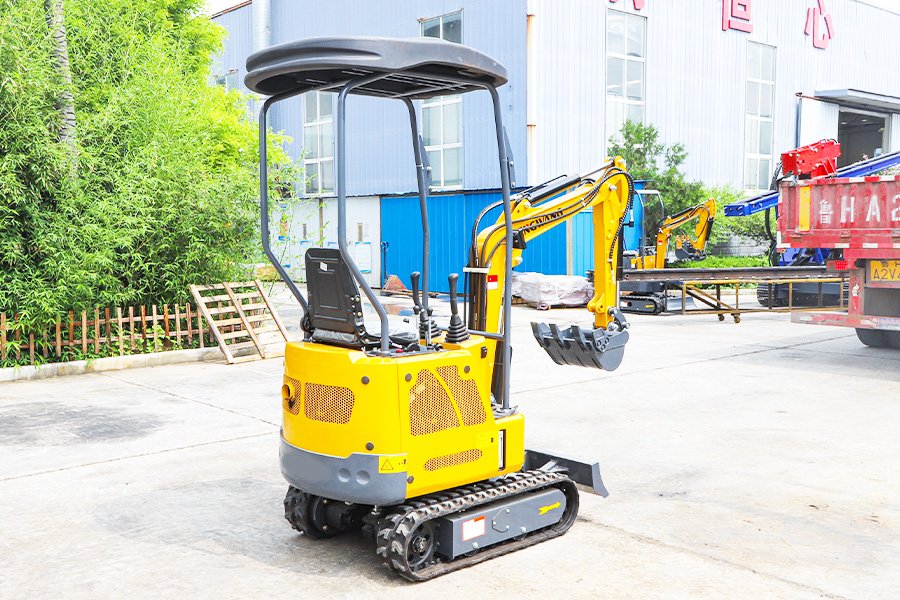
Determining the right machine involves analyzing your most frequent job site constraints. If your work involves residential renovations, narrow access is your primary concern. Look for machines with an operating weight of approximately 1,000kg to 1,200kg.
Units like the HW-12 are designed specifically for these high-access environments. This specific model features a narrow profile that suits interior work. Its lightweight design makes it compatible with standard utility trailers.

When evaluating a machine, check the bucket breakout force. For a 1-ton machine, a force of around 9.5 kN is standard. This power is sufficient for digging footings or removing small stumps.
Consider the auxiliary hydraulic flow if you plan to use attachments. Augers and hammers require specific flow rates to operate effectively. Smaller units often have simplified hydraulics for ease of maintenance.
The simplicity of a 1-ton machine reduces the learning curve for new operators. These units often feature intuitive controls and high visibility. This makes them safer for crowded or busy work zones.
Summary
A mini excavator size chart is essential for matching equipment to project demands. Most projects benefit from the 1-ton to 6-ton range due to versatility. By comparing weight, width, and dig depth, you can ensure job site efficiency. Always prioritize access and transport limits when making your final selection.
FAQ
What is the smallest mini excavator size?
The smallest mini excavators are usually in the 0.8 to 1.2-ton range. These machines are often less than 30 inches wide. They can fit through standard interior doorways for demolition work.
Can a mini excavator fit through a standard gate?
Yes, most machines in the 1-ton class are designed for this. They usually feature a width between 28 and 36 inches. You should always measure the specific machine’s width before attempting entry.
How much can a 1-ton mini excavator lift?
A 1-ton machine typically lifts between 300 and 500 pounds at full reach. Lifting capacity increases significantly when the load is closer to the machine. Always consult the specific lift chart located in the operator’s manual.
What size excavator do I need for a backyard pool?
A 3-ton to 5-ton excavator is usually best for pool excavation. These sizes provide the necessary dig depth of 8 to 12 feet. They also have the power to move large volumes of soil quickly.
Does weight include the trailer for transport?
No, the operating weight on a mini excavator size chart is only for the machine. You must add the weight of the trailer and any extra buckets. Ensure your truck’s towing capacity exceeds this combined total.
Reference Sources
Safety and performance standards for earth-moving machinery (ISO 6165).
https://www.iso.org/
Occupational Safety and Health Administration (OSHA); https://www.osha.gov/