Construction projects require specific tools to ensure long-term structural integrity. Selecting between an asphalt road roller and a soil compactor is a critical decision for engineers. While both machines aim to reduce air voids, their mechanical approaches differ significantly.
Understanding the unique requirements of your site materials prevents costly pavement failures. This guide explores the technical nuances of various road roller types. It provides the data necessary to make an informed equipment choice.
What are the Main Road Roller Types for Construction?
The construction industry utilizes several road roller types to handle different materials. Static rollers rely purely on machine weight to compress the surface. These are often used for finishing touches on sensitive areas.
Vibratory rollers incorporate internal eccentric weights to create dynamic force. This technology allows smaller machines to achieve the density of much heavier equipment. For example, a compact 800kg roller can deliver significant compaction energy.
Pneumatic tire rollers use several rows of rubber tires for a kneading effect. These machines are essential for sealing the top layer of asphalt. They provide a uniform pressure that smooth-drum rollers cannot replicate.
Grid rollers feature a heavy steel surface with a network of bars. These are specifically designed for crushing and compacting rocky sub-bases. Choosing the right design depends entirely on the material thickness and composition.
Key Differences Between Asphalt and Soil Compaction
Asphalt compaction focuses on creating a waterproof, smooth driving surface. The material is hot and pliable, requiring precise temperature management during the process. Smooth double drum rollers are the standard choice for this application.
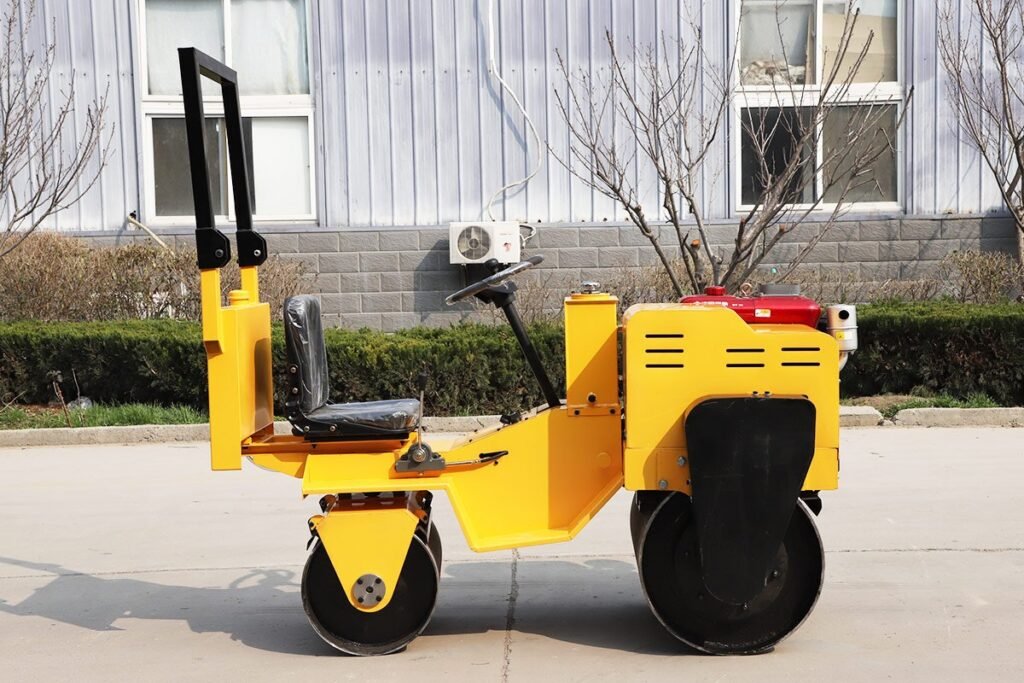
Soil compaction targets the deep stabilization of the earth’s foundation. Engineers must remove air and water to prevent future settling or shifting. This often requires heavier machines or specialized drum textures.
The following table highlights the primary technical differences between these two processes:
| Feature | Asphalt Road Roller | Soil Compactor |
| Drum Surface | Smooth Steel | Smooth or Padded (Sheep’s Foot) |
| Primary Goal | Surface Smoothness and Sealing | Deep Structural Stability |
| Vibration Frequency | High (e.g., 70Hz) | Low to Medium |
| Lift Thickness | 40mm to 100mm | 150mm to 300mm |
| Compaction Force | High Frequency / Low Amplitude | Low Frequency / High Amplitude |
Asphalt rollers usually employ a vibration frequency of 70Hz to avoid aggregate breakage. Soil compactors use higher amplitude to penetrate deeper into the ground layers. Matching the machine to the material ensures the longevity of the infrastructure.
How Soil Compaction Differs from Asphalt Surface Finishing
Soil compaction often involves cohesive materials like clay or silt. These soils require an “impact” force to break the bonds between particles. Padded drum rollers, or sheep’s foot rollers, are best for these conditions.
Asphalt finishing is a more delicate operation involving bituminous mixtures. The goal is to achieve a specific density without crushing the internal stones. Double drum rollers provide the necessary balance by distributing weight across two contact points.
Using a soil compactor on asphalt can lead to severe surface cracking. The aggressive impact of a soil-specific machine destroys the smooth finish. Conversely, a light asphalt roller may fail to stabilize a deep soil foundation.
Technical data shows that 20kN of exciting force is effective for many light-duty tasks. This force level allows for versatile performance on both sub-layers and topcoats. Always monitor the moisture content in soil to achieve maximum dry density.
How to Select a Compact Roller for Diverse Jobs
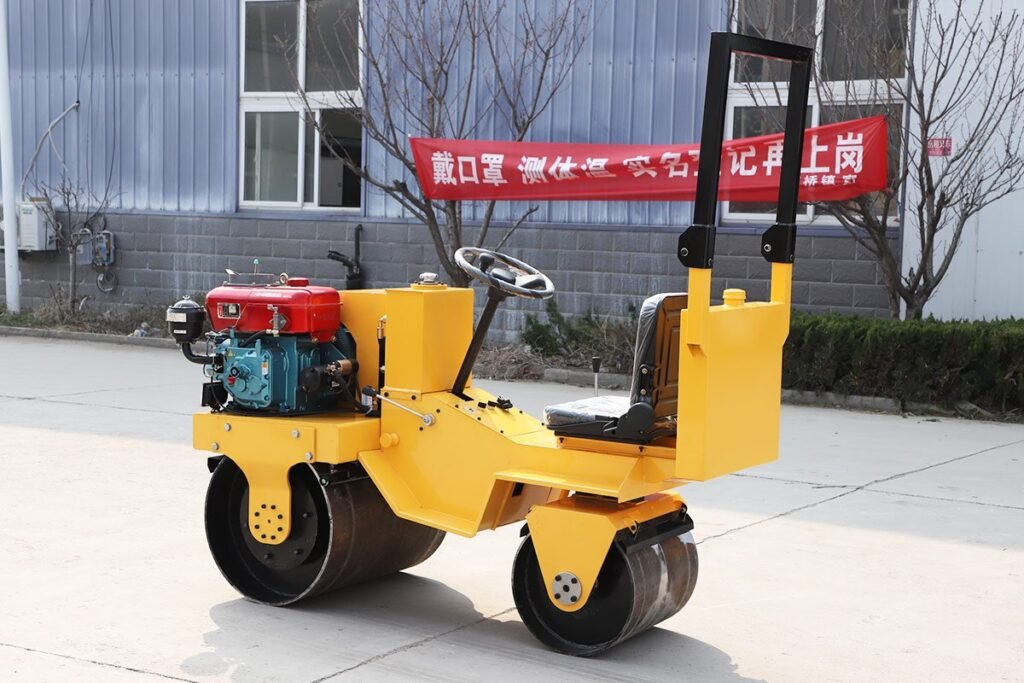
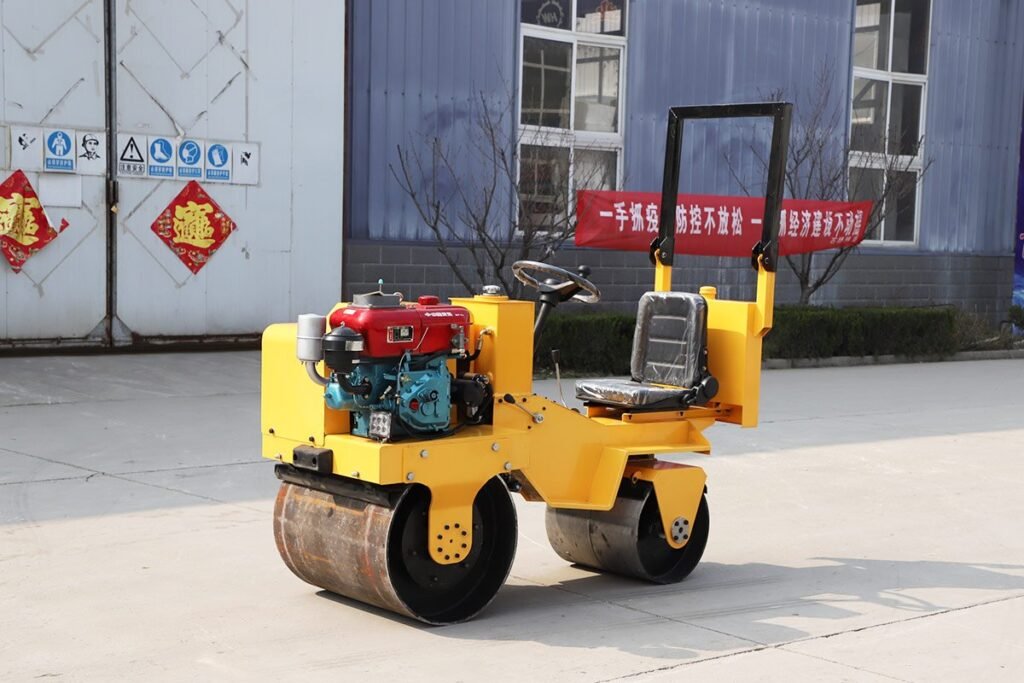
Choosing the right equipment depends on your specific site constraints and project scale. Small-scale projects, such as walkways or trench repairs, require high maneuverability. A double drum walk-behind roller offers the best control for these tight spaces.
The HW-850 model serves as an excellent example of a versatile compaction tool. It features a 700mm drum width, making it ideal for narrow urban paths. Its CF186 diesel engine provides 9 horsepower for consistent performance throughout the day.
Weight is a crucial factor when transporting equipment between various job sites. A machine weighing approximately 780kg to 800kg strikes a balance between power and portability. This weight class is sufficient for most residential and light commercial asphalt repairs.
When evaluating a roller, consider the vibration frequency and the exciting force. A 70Hz frequency ensures the asphalt surface remains smooth and free of ripples. High-quality hydraulic systems also allow for a 0-4 km/h travel speed, improving operational efficiency.
Summary
Asphalt rollers focus on smooth surface sealing, while soil compactors prioritize deep foundational stability. Choosing between these road roller types requires an analysis of material density and lift thickness. Using a versatile, high-frequency double drum roller provides the best results for small-scale asphalt and soil repair tasks.
FAQ
Q:What is the best roller for asphalt repair?
A double drum vibratory roller is the best choice for asphalt repair. These machines provide a smooth finish and consistent density through high-frequency vibration. The dual drums ensure the pavement remains level during the final pass.
Q:Can I use a smooth drum roller on clay soil?
Smooth drum rollers are generally not recommended for cohesive clay soils. Clay requires the kneading action or high-impact pressure of a padded (sheep’s foot) roller. Using a smooth drum on clay may result in a “crust” that hides uncompacted soil beneath.
Q:Why is vibration frequency important in road rollers?
Vibration frequency determines how many times the drum hits the surface per second. High frequency is essential for asphalt to prevent the cooling material from cracking. For soil, lower frequencies with higher amplitudes are better for moving deep particles.
Q:How fast should a road roller travel during operation?
Most compact rollers should operate at a speed between 2 km/h and 4 km/h. Moving too fast prevents the vibration from reaching the required depth. Consistent, slow movement is the key to achieving a uniform and professional compaction result.
Reference Sources
Asphalt Pavement Association (APA): Training on Asphalt Compaction Best Practices
https://www.asphaltpavement.org/
Volvo Construction Equipment: Compactors and Rollers Application Guide
https://www.volvoce.com/
Association of Equipment Manufacturers (AEM): Safety and Operational Standards for Rollers
https://www.aem.org/