A tamping rammer is a vital piece of compaction equipment designed specifically for cohesive and mixed soils. Professional contractors utilize these machines in confined areas like trenches, foundations, and pipe backfills. Unlike a plate compactor, this machine uses a high-velocity punching action to eliminate air and water from the soil. This process ensures a solid, stable base for any construction project. Most professional models deliver a high impact force between 10.0 and 15.0 kN to achieve maximum density.
When evaluating a rammer tamper for sale, you must focus on its percussion rate and stroke depth. High-performance units generally operate at 600 to 700 blows per minute. This high frequency allows for rapid compaction on large job sites. Additionally, a jump stroke of 40 to 85 mm provides the necessary vertical energy to penetrate deep soil layers. Choosing a machine with these specifications reduces the risk of future ground settling. It also protects the integrity of the structures built on top.
What is Tamping Rammer Technology for Professionals?
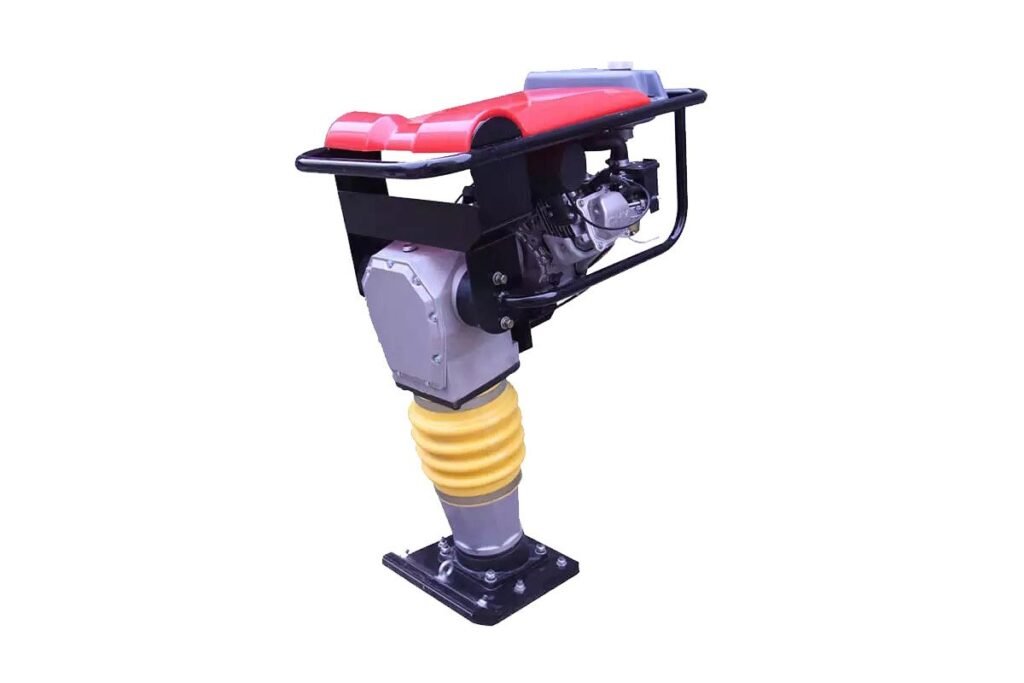
To understand what is tamping rammer technology, you must examine its internal mechanical design. The machine converts rotational energy from a motor into vertical reciprocating motion through a gear system. This motion compresses a set of heavy-duty springs within the lower cylinder. When released, these springs drive the foot plate into the ground with immense force. This mechanism is specifically engineered to handle sticky materials like clay and silt. These soils require more vertical impact than vibration to reach proper compaction levels.
A standard professional tamping rammer typically weighs between 70 kg and 85 kg. This weight range provides the ideal balance between downward pressure and operator control. Most units feature a slim body design, allowing them to work in narrow utility trenches effectively. The handles are often equipped with advanced shock absorption systems to reduce hand-arm vibration for the operator. These technical features are essential for maintaining productivity during long shifts in harsh environments.
Common Types of Tamping Rammer for Construction Sites
Contractors can select from several types of tamping rammer based on power requirements and project locations. Four-stroke gasoline engines are the most popular choice for general construction. They offer high reliability and do not require pre-mixed fuel, making them convenient for remote sites. These models, such as those using the Honda GXR120 engine, provide a consistent percussion rate even under heavy loads. They are highly efficient and meet most modern emission standards for outdoor use.
Two-stroke gasoline models remain a viable option for specific niche applications. They are generally lighter and can operate at steeper angles without risking engine lubrication issues. For indoor projects or confined tunnels, battery-powered electric rammers are becoming a standard choice. These zero-emission units significantly improve air quality and reduce noise levels for the crew. Diesel-powered rammers are also available for heavy-duty infrastructure projects where maximum torque and fuel commonality are required.
Key Criteria for Evaluating a Rammer Tamper for Sale
Finding the right rammer tamper for sale requires a deep dive into technical performance data. The most critical factor is the relationship between machine weight and impact force. For example, a 76 kg machine delivering 13.0 kN of force is considered highly efficient for clay compaction. You should also verify the material used for the ramming foot. High-quality feet are typically made of laminated wood and steel to absorb shock while resisting wear.
Durability is another essential consideration for professional buyers. Look for machines that include heavy-duty throttle cables and integrated fuel filtration systems. These components prevent downtime caused by dust and debris on the job site. A reliable tamping rammer should also feature a robust protective frame. This frame shields the engine from accidental impacts during transport or operation. Prioritizing these technical details ensures a lower total cost of ownership over the machine’s lifespan.
Strategic Factors for Selecting a Tamping Rammer Supplier
Choosing a reliable tamping rammer supplier involves more than just looking at the initial purchase price. A professional supplier should provide comprehensive technical specifications and clear maintenance schedules. They must offer machines that utilize globally recognized engine brands to ensure easy access to spare parts. Furthermore, the supplier should offer various plate sizes to suit different trench widths. A standard plate size of 330 x 285 mm is often the most versatile for utility work.
The quality of the after-sales support is a defining factor for a high-end tamping rammer supplier. You should verify that the supplier provides detailed manuals and troubleshooting documentation. Professional-grade machines like the HW-90 are built with reinforced bellows and high-strength gears. These components are designed to withstand 640-680 r/min of constant vibration. Partnering with a supplier that understands these engineering requirements guarantees a more reliable supply chain for your construction business.
Why Professional Specs Like the HW-90 Matter
When selecting high-performance machinery, it is important to understand how specific parameters like those in the HW-90 influence site results. This model is engineered for professional-grade compaction, delivering a potent 13.0 kN impact force. With a weight of 76 kg and a 330 x 285 mm plate, it offers the stability needed for precision work. The inclusion of a Honda GXR120 engine ensures the machine can maintain a percussion rate of 640-680 r/min for extended periods.
Evaluating whether a model like the HW-90 fits your project involves looking at its jumping stroke of 40-85 mm. This range allows the operator to adjust the intensity of the compaction based on soil moisture and density. If your project involves deep trenching for utility pipes, these specific metrics ensure the soil reaches the required 95% Proctor density quickly. Choosing a machine with these proven parameters minimizes the risk of rework and project delays. You can find more details on this professional configuration at the HW-90 Tamping Rammer product page.
Summary
Selecting a tamping rammer requires balancing impact force, weight, and engine reliability. Professional users should look for machines delivering at least 13.0 kN of force and 600+ blows per minute. Gasoline four-stroke models remain the most versatile for most construction sites. By focusing on high-quality components and specific technical specs, you ensure maximum soil stability and long-term equipment durability.
FAQ
What is the impact force of a standard tamping rammer?
A professional tamping rammer typically delivers between 10.0 and 15.0 kN of force. High-performance models like the HW-90 provide 13.0 kN to handle heavy clay soils.
Can I use a tamping rammer on sand?
While a tamping rammer can compact sand, it is primarily designed for cohesive soils like clay. For pure sand or gravel, a vibratory plate compactor is usually more efficient.
Which engine is best for a rammer tamper for sale?
The Honda GXR120 is widely considered the industry standard for rammers. It is specially designed to withstand the high-vibration environment of a tamping rammer.
How do I choose the right plate size for my rammer?
Most professionals use a 330 x 285 mm plate for general utility work. Narrower plates are available for extremely tight trenches, while wider plates offer more stability.
Reference Sources
American Society of Civil Engineers (ASCE): Soil Compaction in Construction Foundations. https://www.asce.org/
Association of Equipment Manufacturers (AEM): Safety and Maintenance for Compaction Equipment. https://www.aem.org/
Occupational Safety and Health Administration (OSHA): Guidelines for Trenching and Excavation Safety. https://www.osha.gov/
Hengwang Group: HW-90 Tamping Rammer Technical Data. https://hengwangm.com/