A drilling rig procurement checklist helps buyers turn a broad equipment inquiry into a specification that manufacturers can actually quote against. For mining contractors, drilling companies, dealers, and international procurement teams, this is especially important when several suppliers are being compared across different countries.
The goal is not to find the rig with the largest headline specification. It is to define the drilling job, compare equivalent configurations, verify supplier documentation, and understand what is included before a purchase decision is made.
If you are still at the earlier stage of identifying manufacturers, start with our guide on how to choose a drilling rig manufacturer for international projects. Once suitable suppliers have been shortlisted, use the checklist below to prepare the RFQ and technical review.
What Should a Drilling Rig Procurement Checklist Cover?
A useful procurement checklist should answer five basic questions before detailed price discussions begin:
- What drilling method and site conditions does the project require?
- What technical parameters must the rig meet?
- What documentation should the supplier provide?
- What equipment, tooling, spare parts, and services are included?
- What commercial and delivery terms will be used for comparison?
This prevents a common procurement problem: receiving several quotations that appear similar but actually cover different machines, accessories, tooling, freight arrangements, or after-sales responsibilities.
1. Define the Drilling Job Before Asking for a Model
Start with the hole and operating environment rather than a preferred machine model.
Prepare basic project information such as:
- Required drilling depth
- Required hole diameter
- Ground, soil, or rock conditions
- Drilling method
- Project application
- Site altitude and climate where relevant
- Available power, compressed air, or supporting equipment
- Site access and transport restrictions
- Required crawler, trailer, truck, or other mobility configuration
- Drill pipe and tooling requirements
- Expected operating schedule
Different drilling applications may require very different machine configurations. A pneumatic water-well rig, reverse-circulation rig, anchoring rig, or geological exploration rig should not be compared only by maximum depth.
Buyers who are still narrowing the equipment type can review the HengWang drilling rigs range before preparing an RFQ.
2. Build the RFQ Around Comparable Technical Data
When several drilling rig suppliers are involved, send each supplier substantially the same project information.
A simple RFQ table can make quotation comparison easier.
| RFQ Item | Information to Provide | What to Request From Supplier |
|---|---|---|
| Application | Mining, water well, construction, exploration, anchoring, etc. | Recommended rig type and model |
| Drilling capacity | Required depth and diameter | Rated operating range and applicable conditions |
| Ground conditions | Soil, fractured rock, hard rock, mixed formation | Recommended drilling method and tooling |
| Power system | Site fuel, electrical or air requirements | Engine, motor or compressor requirements |
| Mobility | Terrain, road access and transport limits | Chassis type, dimensions and operating weight |
| Drill tools | Existing or required drill pipe and bit sizes | Compatible tools and optional equipment |
| Documentation | Tender or project requirements | Datasheet, drawings, manuals and parts list |
| Destination | Country, port and jobsite | Packing, shipping option and commercial term |
This approach also reduces unnecessary back-and-forth between the buyer, supplier, engineering team, and project manager.
3. Verify Supplier Capability With Evidence
A supplier presentation can help with initial screening, but procurement decisions should rely on documents and verifiable information.
Depending on the project value and risk level, buyers can request:
- Company and factory information
- Technical datasheets
- Engineering or dimensional drawings
- Quality-control procedures
- Factory test records
- Inspection reports where applicable
- Operator and maintenance manuals
- Recommended spare-parts lists
- Previous project references
- Export packing information
- Warranty scope and exclusions
- Training and commissioning information
If a supplier refers to quality-management certification, confirm the exact certificate, scope, legal entity, validity, and certification body. The current ISO 9001 quality management standard provides a framework for quality-management systems, but certification should not be treated as proof that one particular drilling-rig model automatically meets every project requirement.
For larger fleet purchases or high-value projects, buyers may also consider a factory visit or independent pre-shipment inspection.
4. Review Actual Model Fit Before Price Negotiation
After the application is clear, compare real product specifications rather than relying on a general drilling rig brochure.
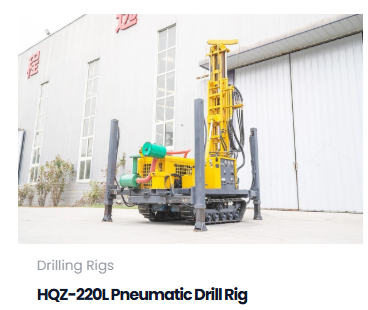
For example, the HQZ-160L Pneumatic Drill Rig is currently presented as one option within HengWang’s drilling equipment range.
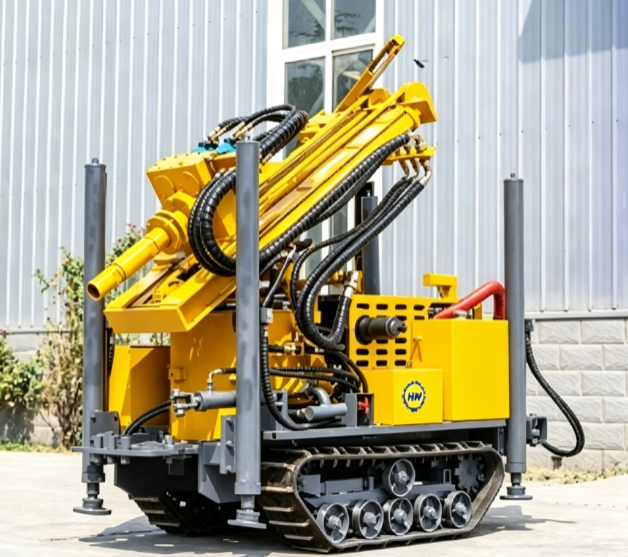
Published product information includes:
| Item | HQZ-160L Published Specification |
|---|---|
| Drilling depth | 160 m |
| Drilling diameter | 138–203 mm |
| Chassis | Rubber track |
| Engine power | 73 kW |
| Drill pipe diameter | 76 / 89 mm |
| Drill pipe length | 1.0 / 1.5 / 2.0 m |
| Lifting power | 12 T |
| Machine weight | 2.6 T |
These figures are useful for initial comparison, but the final configuration should still be confirmed with the supplier before ordering, particularly where tooling, compressor matching, local regulations, or project-specific modifications are involved.
This model-level step also improves inquiry quality. Instead of asking only for “a drilling rig price,” buyers can provide the required depth, diameter, geology, destination, and expected configuration.
5. Compare Delivered Cost, Not Only Machine Price
Initial equipment price is only one part of an international drilling-rig purchase.
A commercial comparison may also need to include:
- Base machine
- Optional equipment
- Drill pipes and drilling tools
- Compressor or supporting equipment where required
- Initial spare-parts package
- Export packing
- Inland transportation
- Ocean or land freight
- Insurance
- Commissioning
- Operator training
- Destination charges
- Import duties and taxes where applicable
For a deeper breakdown of quotation factors, see our drilling rig price and procurement guide.
Commercial terms should also be written clearly. The International Chamber of Commerce explains that Incoterms® rules allocate important delivery responsibilities, costs, and risks between sellers and buyers.
For this reason, two quotations should ideally be compared on the same commercial basis rather than simply comparing the first price shown on each offer.
6. Put Documentation, Safety, and Service Into the Purchase Scope
Documentation should not be left until the machine is ready to ship.
Before the purchase order is finalized, confirm which documents will be supplied and when they will be available.
Typical requirements may include:
- Operation manual
- Maintenance manual
- Parts catalogue
- Hydraulic or electrical diagrams where applicable
- Inspection or factory test documents
- Packing list
- Machine identification information
- Recommended maintenance schedule
- Training materials
- Warranty procedure
- Spare-parts ordering process
Maintenance arrangements also affect equipment availability after delivery. The U.S. National Institute for Occupational Safety and Health provides an equipment safety maintenance toolbox talk covering maintenance-related workplace hazards and safety discussions.
Local laws, project requirements, and applicable equipment standards should always be checked separately for the actual destination and drilling application.
7. Final Drilling Rig Procurement Checklist Before Requesting a Quote
Before sending the final inquiry, confirm that your procurement file includes:
- Project application
- Required drilling depth
- Required drilling diameter
- Ground or geological conditions
- Preferred drilling method
- Site access and terrain information
- Power or compressed-air requirements
- Drill pipe and tooling requirements
- Destination country or port
- Required quantity
- Required delivery period
- Documentation requirements
- Spare-parts requirements
- Training or commissioning requirements
- Preferred Incoterm or quotation basis
You do not need every detail to make first contact. However, the more accurate the project information is, the easier it becomes for the supplier to recommend an appropriate rig and prepare a useful quotation.
FAQ
What information should I send when requesting a drilling rig quote?
At minimum, provide the drilling application, required depth, hole diameter, ground conditions, destination, and preferred machine type if known. Details about drill pipes, tooling, mobility, and project schedule can further improve the accuracy of the recommendation.
Should I choose a drilling rig based on maximum drilling depth?
Not by depth alone. Drilling method, bore diameter, geology, torque, lifting capability, tooling, supporting equipment, mobility, and operating environment can all affect equipment suitability.
What documents should a drilling rig supplier provide?
Depending on the project, buyers may request technical datasheets, drawings, operating and maintenance manuals, parts lists, inspection records, warranty terms, and training information. Tender projects may require additional documentation.
How should I compare drilling rig suppliers?
Use the same project requirements for each supplier and compare technical configuration, documentation, equipment scope, spare-parts support, commercial terms, delivery arrangements, and after-sales responsibilities. This produces a more meaningful comparison than machine price alone.
Can a drilling rig be customized for a project?
Some configurations may allow changes to tooling, chassis, accessories, power systems, documentation, or other equipment details. Any modification should be discussed early and confirmed in drawings, specifications, quotation scope, and final order documents.
Prepare Your Drilling Rig RFQ
For international projects, a clear RFQ helps both the buyer and supplier identify technical issues before the order reaches the contract stage.
You can start by comparing the available HengWang drilling rigs. If a pneumatic configuration is relevant to your project, the HQZ-160L Pneumatic Drill Rig provides one model reference for further technical review.
When contacting HengWang, include your required drilling depth, diameter, ground conditions, destination, and any tooling or documentation requirements. This gives the technical and sales teams enough information to review the application and prepare a more relevant proposal.