The concrete mixer truck vs pump decision starts with one practical question: does your project mainly need to prepare and move concrete, move concrete to a difficult placement point, or handle both stages?
A mixer truck and a concrete pump do different jobs. On an open site where the truck can approach the formwork, direct discharge may be enough. On an upper floor, deep foundation, narrow site or pour area behind an obstruction, pumping can make placement much easier. Many projects use the two machines together rather than choosing only one.
If you are still comparing equipment types, start with HengWang’s Concrete Machinery range before narrowing the selection to a specific mixer or pump.
Concrete Mixer Truck vs Pump: What Is the Main Difference?
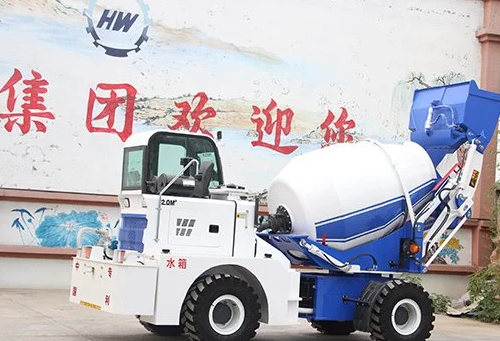
A concrete mixer truck handles concrete mixing, agitation or transportation depending on its configuration. Its main advantage is mobility: the machine can move concrete around or between working areas and discharge it when the placement point is accessible.
A concrete pump handles the next stage. It receives mixed concrete and pushes it through pipes or hoses toward the actual placement area. This becomes useful when concrete has to travel horizontally, vertically or around obstacles that prevent direct truck discharge.
In simple terms:
| Requirement | Concrete Mixer Truck | Concrete Pump |
|---|---|---|
| Mix or transport concrete | Primary function | No |
| Move concrete through pipeline | No | Primary function |
| Direct discharge beside machine | Suitable | Usually unnecessary |
| Restricted placement access | Limited by positioning and discharge arrangement | More flexible |
| Vertical delivery | Limited | Designed for this type of placement |
| Requires an external concrete supply | Depends on mixer configuration | Yes |
| Can work together | Yes | Yes |
There is also a third machine type, the concrete mixer pump, which combines mixing and pumping. That is a separate equipment category and is not the main comparison covered in this article.
Start With Access to the Pour
Site access often settles the question before equipment specifications do.
Suppose you are pouring a ground-level foundation beside a wide access road. If the mixer can position close to the formwork and the discharge route is short, adding a pump may create setup work that the project does not need.
Now consider the same volume of concrete for a basement, upper floor or slab behind an existing structure. The mixer may still deliver the concrete to site, but it cannot necessarily place it where the crew needs it. A pump and pipeline can bridge that gap.
Before selecting equipment, check:
- Entrance width and height
- Turning and reversing space
- Ground bearing conditions
- Distance from machine position to pour point
- Required vertical height
- Buildings, scaffolding, trenches and other obstacles
- Overhead utilities
- Space needed for cleaning and washout
These measurements are more useful to a supplier than a request for “a medium concrete machine.”
When a Concrete Mixer Truck Makes More Sense
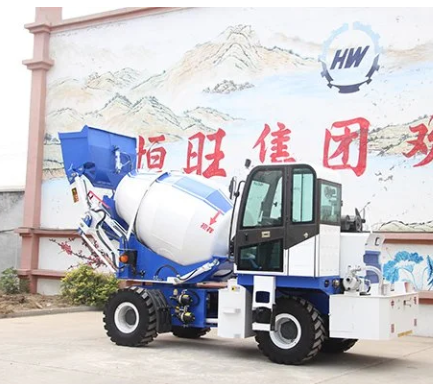
A mixer truck is worth considering when the project mainly needs concrete preparation, transportation and relatively straightforward discharge.
Typical situations include ground-level work, open construction areas and projects where the concrete placement point moves around the site but remains accessible to the machine.
For example, HengWang’s HWJB200 Concrete Mixer Truck can be reviewed when your requirement is closer to mobile mixing and transportation than long-distance pumping.
Do not select a mixer only by drum capacity. Also check dimensions, working space, road conditions, discharge arrangement, engine and power configuration, expected batch size and how frequently the machine will move during a working day.
For a deeper mixer-only purchasing discussion, keep that information in the separate Concrete Mixer Truck Buying Guide rather than expanding this comparison article into a full truck procurement guide. That helps prevent keyword cannibalization.
When a Concrete Pump Becomes More Practical
A pump becomes relevant when the difficult part of the job is placement rather than concrete supply.
This may include:
- Upper floors
- Deep foundations
- Long slabs
- Narrow urban construction areas
- Areas behind existing buildings
- Locations where mixer trucks cannot safely approach the formwork
- Projects requiring a controlled pipeline route
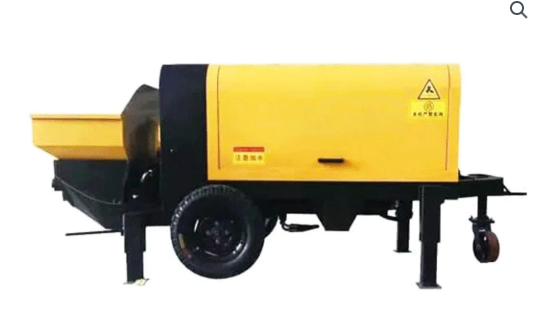
The HW20-22 Concrete Pump is one model buyers can review when comparing compact pumping configurations.
For pump selection, output alone does not tell you whether a model will work. Horizontal distance, vertical height, pipeline diameter, number of bends, aggregate size, concrete consistency and site power conditions can all affect the real installation.
For detailed pump-only sizing, HengWang already has a dedicated Concrete Pump Selection Guide: Output, Reach and Jobsite Fit. Keeping those technical details in that article prevents this comparison page from competing with the pump-selection cluster.
When You Need Both a Mixer Truck and a Pump
On many commercial and structural pours, mixer truck vs pump is not an either-or decision.
The mixer supplies concrete to the site. The pump then receives the concrete and transfers it to the final placement location.
A typical workflow looks like this:
Concrete preparation or delivery → mixer truck → pump hopper → pipeline → placement point
This arrangement can work well when concrete supply needs to remain mobile but the final pour is too far away, too high or too difficult to reach directly.
The important issue is coordination. The pump should not sit waiting for concrete for long periods, while arriving mixer trucks also need enough space to approach, unload and leave without blocking site traffic.
For continuous pours, ask how truck arrival intervals will match the expected pumping rate before work begins.
Compare the Pour Schedule, Not Just Machine Capacity
A brochure capacity does not automatically equal the amount of concrete placed each hour on site.
Setup, truck rotation, pipe routing, concrete consistency, operator coordination, cleaning and temporary interruptions all affect the actual working rate.
A useful planning question is:
How much concrete must reach the formwork during the planned pouring window?
For a small ground-level pour, direct mixer discharge may satisfy the schedule.
For a larger pour where concrete must move through a long or elevated route, pumping may keep placement more consistent.
For projects using both machines, the supply rate from the mixer side should be reasonably matched to the pump and placement crew. Buying a pump with a high theoretical output provides little benefit if the project cannot supply concrete quickly enough.
Check Concrete Mix Compatibility Before Choosing a Pump
A concrete pump places fresh concrete under pressure through a delivery system, so the mix itself becomes part of equipment selection.
Aggregate size, grading, consistency and the intended pipeline layout can affect pumpability. Instead of assuming that any available concrete can be pumped through any machine, provide the supplier with the planned mix information when requesting a recommendation.
Useful information includes maximum aggregate size, required delivery distance, vertical rise and known concrete characteristics.
This also avoids selecting equipment first and discovering later that the concrete specification and pumping configuration do not work well together.
What About Cost?
For a concrete equipment comparison, the lowest machine price is not always the lowest project cost.
Compare the complete working arrangement:
| Cost Factor | Mixer Truck | Concrete Pump |
|---|---|---|
| Equipment purchase or rental | Check truck configuration and capacity | Check pump configuration and output |
| Transport | Vehicle movement is a major factor | Transport/setup depends on pump type |
| Labor | Driver and placement crew | Operator plus placement/pipeline crew may be required |
| Site setup | Usually simpler for accessible pours | Pipeline and machine positioning may take additional time |
| Energy | Fuel or machine-specific power | Diesel or electrical demand depending on configuration |
| Cleaning | Drum/discharge cleaning | Hopper, pipes or hoses require cleaning |
| Wear parts | Mixer and vehicle components | Pumping components, seals, pipes and hoses |
| Delay risk | Traffic and truck cycle time | Supply interruptions and pipeline issues |
For contractors buying equipment, also consider annual utilization. A machine used every week is a different investment decision from equipment required for only a few pours per year.
This article should stop at that decision level. Detailed ownership-versus-rental calculations are better handled in a dedicated cost article rather than expanding this page beyond its target keyword.
Safety and Site Planning
Both mixer trucks and concrete pumps involve moving machinery, fresh concrete and restricted working areas.
Mixer operations require safe vehicle movement, reversing controls and suitable ground conditions. Pump operations add pressurized concrete lines, pipe connections and cleaning procedures.
For U.S. projects, contractors can reference OSHA construction equipment requirements alongside the requirements that apply specifically to concrete operations. OSHA Subpart Q, including 29 CFR 1926.702, addresses requirements for concrete equipment and pumping systems.
Local regulations, operator requirements and manufacturer instructions should also be checked for the destination market and jobsite.
What to Tell a Supplier Before Requesting a Quote
A useful RFQ should describe the project instead of asking only for a machine price.
Send the supplier:
- Project type
- Estimated concrete volume per pour
- Required horizontal delivery distance
- Required vertical delivery height
- Maximum aggregate size or available mix information
- Site entrance and working-space restrictions
- Available electrical supply, where relevant
- Expected working hours
- Destination country
- Whether you need mixing, transportation, pumping or a combination
With that information, you can compare the HWJB200 Concrete Mixer Truck, HW20-22 Concrete Pump and other equipment in the Concrete Machinery category against the same project requirements.
FAQ
Is a concrete mixer truck the same as a concrete pump truck?
No. A mixer truck primarily handles mixing, agitation or transportation of concrete, while a concrete pump moves mixed concrete through a delivery system to the placement point.
Can a concrete mixer truck pour concrete without a pump?
Yes, when the truck can safely approach the placement area and its discharge arrangement can reach the formwork. A pump becomes more useful when access or placement distance prevents direct discharge.
When do I need both a mixer truck and a concrete pump?
Both can be used when the mixer is needed to supply concrete but the final pour location cannot be reached directly. The mixer feeds the pump, and the pump moves concrete through the pipeline to the placement point.
Is a concrete mixer pump the same as a concrete pump?
No. A concrete mixer pump combines mixing and pumping functions in one machine. A standard concrete pump receives concrete that has already been mixed.
Which is cheaper: a concrete mixer truck or a concrete pump?
Purchase price alone is not a useful comparison because the machines perform different functions. Compare the complete project cost, including concrete supply, labor, transport, setup, energy, cleaning, maintenance and expected equipment utilization.
What information should I provide when asking for a concrete equipment quote?
Provide the project type, concrete volume, placement distance, vertical height, site access, concrete mix information, available power, destination and expected working conditions.
Choose Equipment Around the Actual Pour
The concrete mixer truck vs pump comparison becomes clearer once the complete concrete route is mapped.
If the main task is mobile mixing or transportation with accessible discharge, start with a mixer truck. If mixed concrete needs to travel through a pipe to a difficult placement point, evaluate a pump. If the job requires both concrete supply and remote placement, the two systems can work together.
Browse HengWang’s Concrete Machinery range and send the project volume, site access, placement distance and concrete requirements when requesting a quotation. That gives the supplier enough information to discuss a configuration around the actual job instead of recommending equipment from a model name alone.