Foundations are the most critical component of any engineering project. To create a solid base, construction teams utilize heavy equipment to drive supports deep into the ground. The piling machine working process integrates mechanical power with hydraulic precision to achieve this goal. This method ensures that structures like bridges and buildings remain secure for decades.
Modern machinery has transformed how we approach soil stabilization and post-installation. Whether for highway guardrails or massive skyscrapers, the principles of force application remain constant. Understanding this mechanical workflow is essential for project managers and site engineers alike. This guide examines the technical stages of modern piling operations.
Understanding the Step-by-Step Piling Machine Working Process
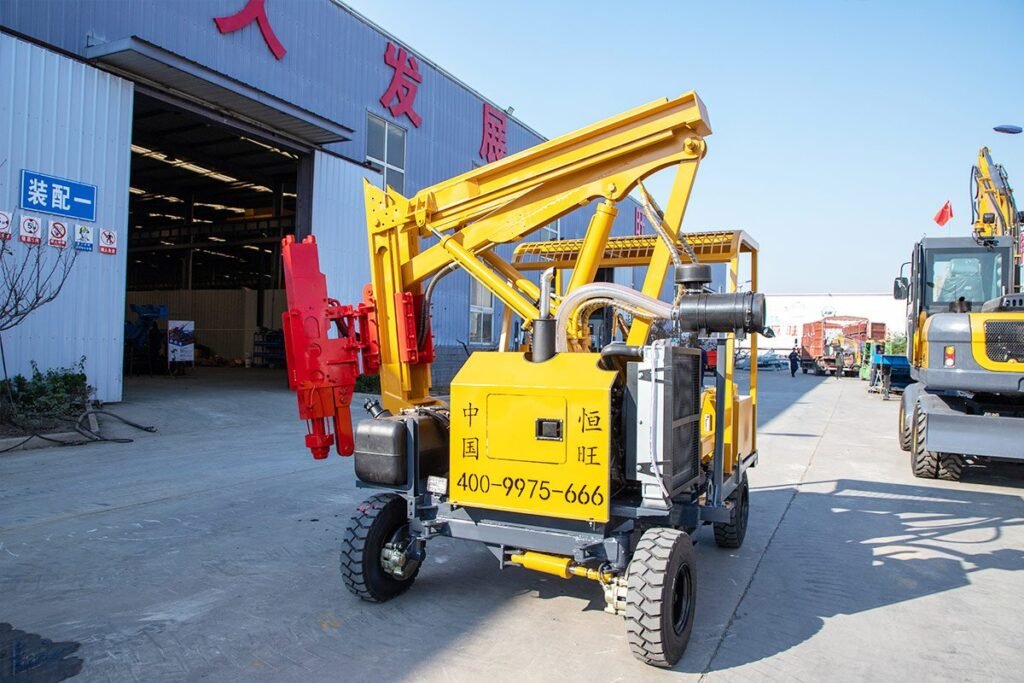
The piling machine working process begins with the critical phase of site preparation. Operators must ensure the ground is stable enough to support the machine’s weight. Once positioned, the machine uses a vertical lead or mast to align the pile perfectly. Even a minor tilt at the start can cause significant structural issues later.
After alignment, the machine engages its primary driving mechanism. For many highway projects, this involves a hydraulic hammer striking the top of the post. The hammer delivers rapid, high-energy blows that overcome soil resistance. For example, a specialized guardrail driver like the HWH380D can drive piles up to 3 meters deep.
Throughout the driving phase, the operator monitors the penetration rate. This data indicates when the pile has reached a load-bearing soil layer. In some cases, the machine uses a rotary head to drill a pilot hole first. This is common in rocky terrain where direct impact might damage the pile.
| Operational Parameter | Typical Specification (HWH380D) |
| Engine Power Output | 37 kW – 45 kW |
| Impact Strike Rate | 500 – 900 bpm |
| Maximum Pile Height | 3,000 mm |
| Hydraulic System Pressure | 16 – 20 MPa |
| Maximum Drilling Diameter | 300 mm |
How Hydraulic Power Drives the Piling Machine Working Process
Hydraulic systems are the heart of the modern piling machine working process. These systems convert diesel engine power into high-pressure fluid energy. This energy moves the heavy hammer up and down with extreme speed and force. Without hydraulics, achieving the necessary impact frequency would be impossible for compact machines.
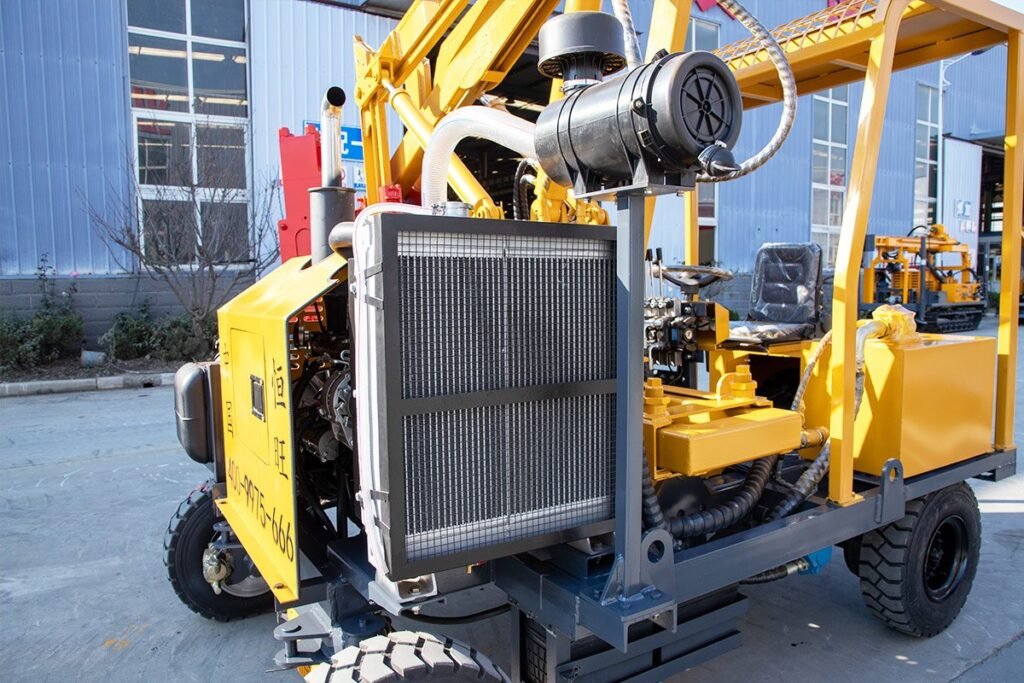
A standard 37 kW engine typically generates enough flow to maintain a pressure of 16 to 20 MPa. This pressure allows the hydraulic hammer to strike between 500 and 900 times per minute. Such high frequency allows the pile to “cut” through compacted soil efficiently. The fluid dynamics within the system also provide a cushioning effect, protecting the machine from internal damage.
The operator controls the flow via sensitive valves located in the cabin. By adjusting the hydraulic output, the operator can match the force to the specific soil density. This level of control prevents piles from buckling under excessive pressure in soft ground. It also ensures enough power is available when hitting stubborn subterranean layers.
Different Methods Within the Piling Machine Working Process
There are several variations in the piling machine working process depending on the project goals. The most common method is impact driving, which uses a heavy ram. This is the preferred choice for steel columns and highway safety posts. It provides immediate feedback on the soil’s load-bearing capacity.
Another popular method is vibratory driving, which uses counter-rotating weights. These weights create high-frequency vibrations that “liquefy” the soil around the pile. This significantly reduces friction, allowing the pile to sink under its own weight. This method is exceptionally quiet and produces less ground vibration in urban environments.
Rotary drilling is used when the soil is too hard for traditional driving. An auger attachment removes earth to create a void for the pile. In the HWH380D workflow, the rotary head can handle diameters up to 300mm. This versatility allows a single machine to adapt to various geological conditions on a single site.
Key Factors for Efficient Guardrail Installation
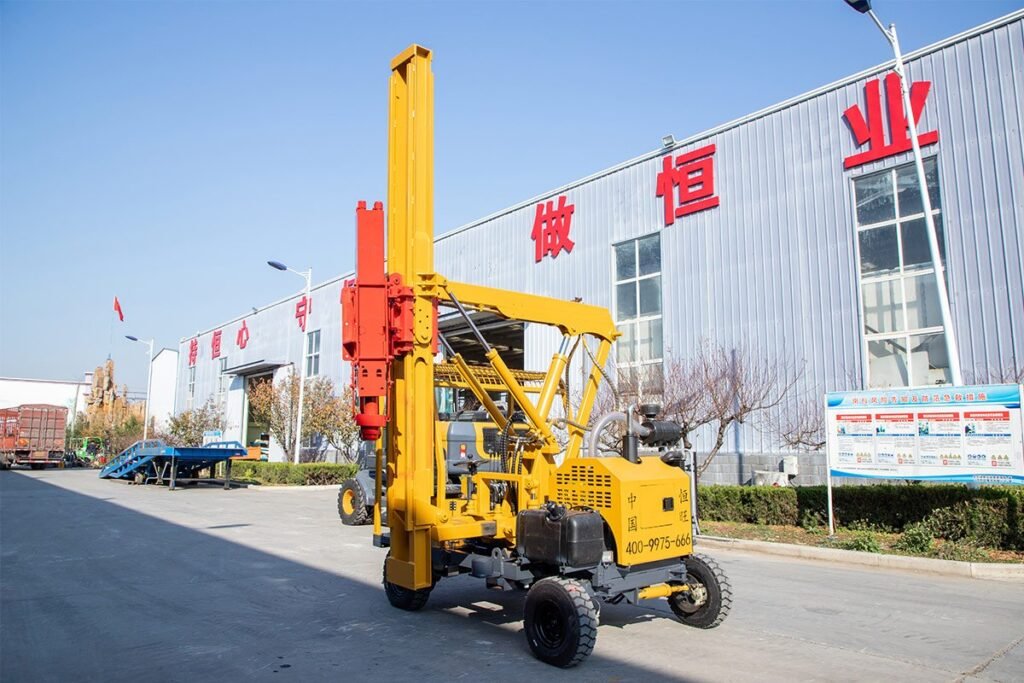
In road safety projects, the piling machine working process must be exceptionally mobile. Guardrail installers move every few meters to place a new post. The machine must be able to reset its mast and align the next pile in under a minute. This cycle efficiency determines the speed of highway construction.
The use of rubber or steel tracks allows these machines to traverse uneven shoulders. Stability is maintained through a low center of gravity and wide footprints. This allows the hydraulic hammer to operate at full capacity without tipping the rig. Most modern units also feature a side-shift function for precise positioning without moving the entire vehicle.
Consistency is the final goal of the installation workflow. Each post must stand at the exact same height and angle to support the guardrail beam. High-quality machines use depth gauges to ensure every pile stops at the correct elevation. This precision reduces the need for manual adjustments and saves significant labor costs.
How to Evaluate Equipment for Your Piling Needs
Choosing the right hardware is the most important part of the piling machine working process. You must first analyze the soil reports for your specific job site. If you are working with hard-packed clay or rock, a machine with a powerful rotary drill is necessary. For standard agricultural or highway work, a high-frequency hydraulic hammer is usually better.
You should also consider the power-to-weight ratio of the machine. A unit with a 37-45 kW engine, such as the HWH380D, offers enough power for 3-meter piles while remaining portable. Larger engines consume more fuel and may require more expensive transport solutions. Always match the machine’s mast height to the longest pile you intend to drive.
Look for equipment that offers multi-functionality through different attachments. A machine that can switch between a hammer and a drill provides the best return on investment. This flexibility allows you to handle various ground conditions without renting additional gear. Reliability in the hydraulic cooling system is also vital for projects in hot climates.
Summary
The piling machine working process is a highly efficient way to establish foundations using hydraulic force. By following a sequence of alignment, driving, and monitoring, operators ensure structural integrity. Understanding the balance between engine power and impact frequency helps in selecting the best equipment for specific soil types.
FAQ
Q:What is the core function of the piling machine working process?
The core function is to drive structural posts into the earth to provide a stable foundation. It uses high-pressure hydraulics to deliver consistent force to the pile.
Q:Can one machine perform both drilling and driving?
Yes, many modern machines are multi-functional. They can switch between a hydraulic impact hammer and a rotary auger depending on the soil.
Q:What engine power is typical for a guardrail pile driver?
Standard guardrail pile drivers usually feature engines between 37 kW and 45 kW. This provides an optimal balance of driving force and fuel economy.
Q:How does the machine stay stable during the piling process?
Stability is achieved through a wide track base and a low center of gravity. This design prevents the machine from shifting during high-frequency impacts.
Q:Why is impact frequency important in the piling machine working process?
Higher impact frequencies allow the pile to penetrate the soil more smoothly. It reduces the risk of the pile getting stuck or bending during the installation.
Reference Sources
- Association of Equipment Manufacturers (AEM). Safety and Technical Standards. https://www.aem.org/
- Deep Foundations Institute (DFI). Piling Industry Manuals. https://www.dfi.org/
- American Society of Civil Engineers (ASCE). Foundation Engineering Standards. https://www.asce.org/
- International Society for Soil Mechanics and Geotechnical Engineering. Technical Reports. https://www.issmge.org/
- Occupational Safety and Health Administration (OSHA). Construction Equipment Safety Guidelines. https://www.osha.gov/