For professional buyers and heavy machinery dealers, the term Minimum Order Quantity (MOQ) is more than just a number. It represents the pivot point between shipping efficiency, unit cost, and inventory turnover. In the excavator industry, MOQ is dictated by manufacturing cycles, container dimensions, and hydraulic component sourcing. Understanding these variables ensures that your procurement strategy aligns with your local market demands and your bottom line.
Understanding Excavator MOQ: Why Numbers Vary for Dealers?
In heavy machinery manufacturing, MOQ is rarely a static figure. It is a calculated threshold designed to balance production efficiency with logistics. For a manufacturer like us at Hengwang, the MOQ is influenced by the scale of the machine and the complexity of the assembly line. While a single unit is technically purchasable, it is rarely the most “transactional” choice for a wholesaler due to the high overhead of international trade.
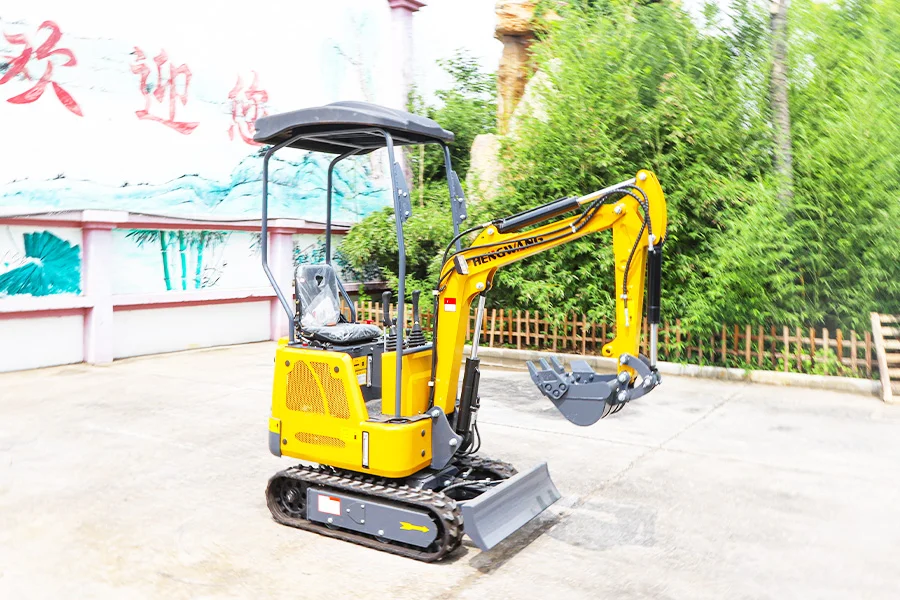
Small-scale mini excavators often carry different MOQ logic compared to 20-ton crawler units. For smaller units, we often see MOQs based on “container fits.” For example, a 40HQ container can accommodate multiple 0.8-ton to 2-ton units. If a buyer orders below the container’s capacity, the “hidden cost” of empty space effectively raises the per-unit MOQ from a financial perspective.
Large excavators involve different constraints. These machines require RORO (Roll-on/Roll-off) shipping or flat-rack containers. Here, the MOQ might literally be one unit because the logistics are handled individually. However, for wholesale dealers looking for better margins, the MOQ is usually tied to reaching a price break that justifies the inland drayage and customs clearance fees.
What is the Minimum Order Quantity for Different Excavator Types?
Different machine categories require different production setups. At Hengwang, we categorize our fleet into mini, medium, and specialized excavators to help buyers plan their inventory. Below is a breakdown of how MOQ typically correlates with machine size and wholesale value.
| Excavator Category | Typical Wholesale MOQ | Primary Driver | Best Shipping Method |
| Mini Excavators (0.8t – 2.5t) | 4 – 6 Units | Container Utilization | 20GP / 40HQ Container |
| Compact Excavators (3t – 6t) | 2 – 3 Units | Logistics Efficiency | 40HQ Container |
| Medium Crawler Excavators | 1 Unit | High Capital Value | RORO / Flat Rack |
| Wheeled Excavators | 1 – 2 Units | Chassis Sourcing | RORO / Container |
For smaller machines, the MOQ is often determined by the “set.” If we are running a production line for our 1.7-ton mini excavators, it is more efficient to process orders in batches. This allows us to maintain strict quality control over the hydraulic tolerances and engine calibrations across a unified production run.
How Customization and OEM Requirements Impact MOQ?
Transactional buyers often require customization, such as specific hydraulic thumb attachments, specialized buckets, or private labeling. These OEM (Original Equipment Manufacturer) requests significantly alter the MOQ landscape. When you request a custom paint color or a specific brand of hydraulic pump, such as Yanmar or Kubota, we must coordinate with sub-suppliers.
Sub-suppliers for specialized components often have their own MOQs. If a dealer wants a unique cabin configuration not found in our standard catalog, we may need to set a higher MOQ for that specific order to cover the tooling and engineering adjustments. Standard models generally have the lowest MOQ because the components are already in our rolling inventory.
Customization levels and their impact:
- Logo & Color: Low impact on MOQ; usually achievable with 2-3 units.
- Engine Swaps: Medium impact; depends on our current stock of Tier 4 or Euro V compliant engines.
- Hydraulic System Changes: High impact; often requires an MOQ of 5+ units due to specialized valve block sourcing.
- Structural Modifications: Highest impact; requires engineering sign-off and often a larger commitment to justify the new weld jigs.
Why Logistics and Container Loading Dictate Your Real MOQ?
For a global wholesaler, the “factory MOQ” and the “economic MOQ” are two different things. Shipping a single mini excavator in a sea container is rarely profitable. The freight cost, terminal handling charges, and documentation fees remain relatively fixed whether the container is 20% full or 100% full.
We advise our partners to look at the “Container MOQ.” For our smaller crawler models, we have engineered the dimensions to maximize space. Loading a 40HQ container with 6 or more units dramatically reduces the landed cost per machine. This allows you to price your machines more competitively in your local market compared to a dealer who only imports one unit at a time.
Furthermore, mixed MOQs are an excellent strategy for new dealers. We allow our clients to mix different types of equipment, such as combining mini excavators with road rollers or drilling rigs from our product lines. This helps you meet the shipping volume requirements while diversifying your showroom floor without overcommitting to a single model.
Procurement Workflow: Partnering with Hengwang for Wholesale Success
When you decide to scale your heavy machinery business, the procurement process must be transparent and efficient. At Hengwang, we have refined our workflow to support international buyers from the initial inquiry to the final delivery at the port. We focus on ensuring that every unit meets the required certifications, such as CE, ISO, or EPA standards, depending on your region.
Our process follows these critical steps:
- Technical Consultation: We discuss your local market requirements, soil types, and emission standards to recommend the right excavator models.
- MOQ & Pricing Negotiation: We provide tiered pricing based on your order volume, explaining how increasing your MOQ can lower your per-unit shipping costs.
- Proforma Invoice & Deposit: Once the specifications are locked, we move to the production phase upon receipt of the initial deposit.
- Quality Inspection: Each machine undergoes a rigorous testing phase, checking hydraulic pressure, track tension, and engine performance under load.
- Logistics Coordination: Our team handles the container loading to ensure maximum space utilization and safety during transit.
By choosing us as your manufacturing partner, you gain access to a robust supply chain and a team that understands the nuances of global heavy equipment trade. We don’t just sell machines; we help you build a sustainable dealership model through strategic inventory planning.
FAQ
Q: Can I order a single excavator as a sample before committing to a larger MOQ?
A: Yes, we support sample orders for first-time wholesale buyers. While the shipping cost per unit will be higher, we understand the need to test the machine’s build quality and performance in your specific environment before placing a bulk order.
Q: Does the MOQ change if I want different attachments like augers or breakers?
A: Generally, no. We keep a wide range of standard attachments in stock. If you are ordering a machine, adding 2-3 different attachments usually does not increase the MOQ, as they can be packed within the same shipping footprint as the excavator.
Q: How does the MOQ affect the lead time for production?
A: Standard MOQ orders (e.g., 4-6 mini excavators) typically have a lead time of 15-20 days. Larger orders or highly customized OEM projects may take 30-45 days depending on the component supply chain and our current production schedule.
Q: Are there discounts available for orders that significantly exceed the MOQ?
A: Absolutely. We offer tiered wholesale pricing. When you move from a “container MOQ” to multiple containers or annual volume contracts, we provide significant price breaks to support your market expansion.
Q: Can I mix different excavator sizes to meet the MOQ for a 40HQ container?
A: Yes, mixing models is a common strategy. You can combine our 0.8-ton, 1.5-ton, and 2.5-ton models to fill a container. This counts toward your total order volume and allows you to offer a full range of solutions to your customers.
Reference Sources
International Organization for Standardization (ISO) 9001:2015 Quality Management
https://www.iso.org/standard/62085.html
Association of Equipment Manufacturers (AEM) Industry Statistics
https://aem.org/market-share-statistics
European Commission Machinery Directive Safety Standards
https://single-market-economy.ec.europa.eu/sectors/mechanical-engineering/machinery_en
Kubota Engine Division Global Emission Regulatory Guide
https://engine.kubota.com/en/products/img/pdf_emission.pdf