Selecting the correct bulldozer blade is a fundamental engineering decision that directly impacts cycle times, fuel consumption, and machine longevity. The blade serves as the primary interface between the machine’s horsepower and the material being moved. Choosing an incorrect blade type leads to inefficient “rolling action” of the soil, increased track slippage, and unnecessary strain on the hydraulic system.
In the heavy equipment industry, bulldozer blade types are categorized by their shape, wing configuration, and degrees of freedom in movement. This guide breaks down the technical specifications of each type to help project managers and operators optimize their earthmoving operations.
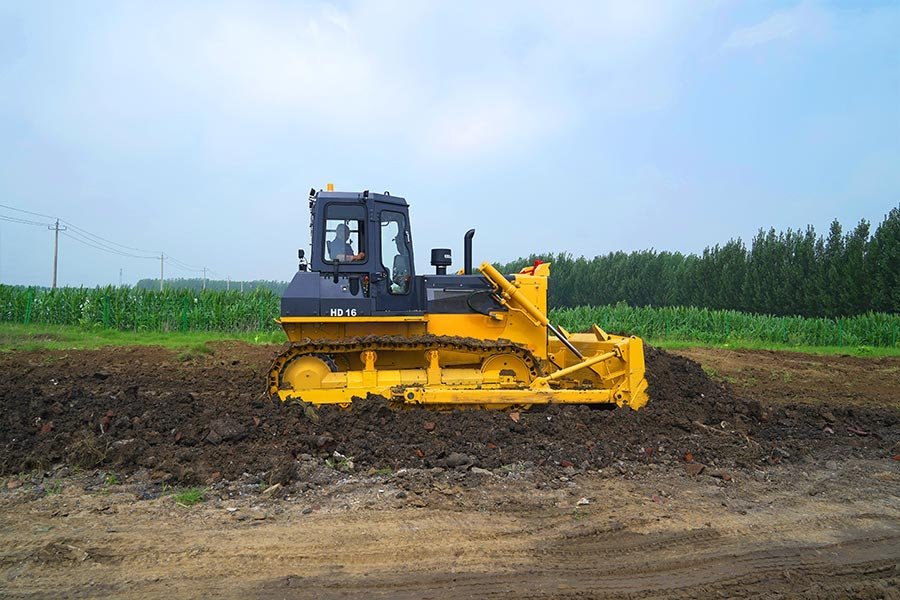
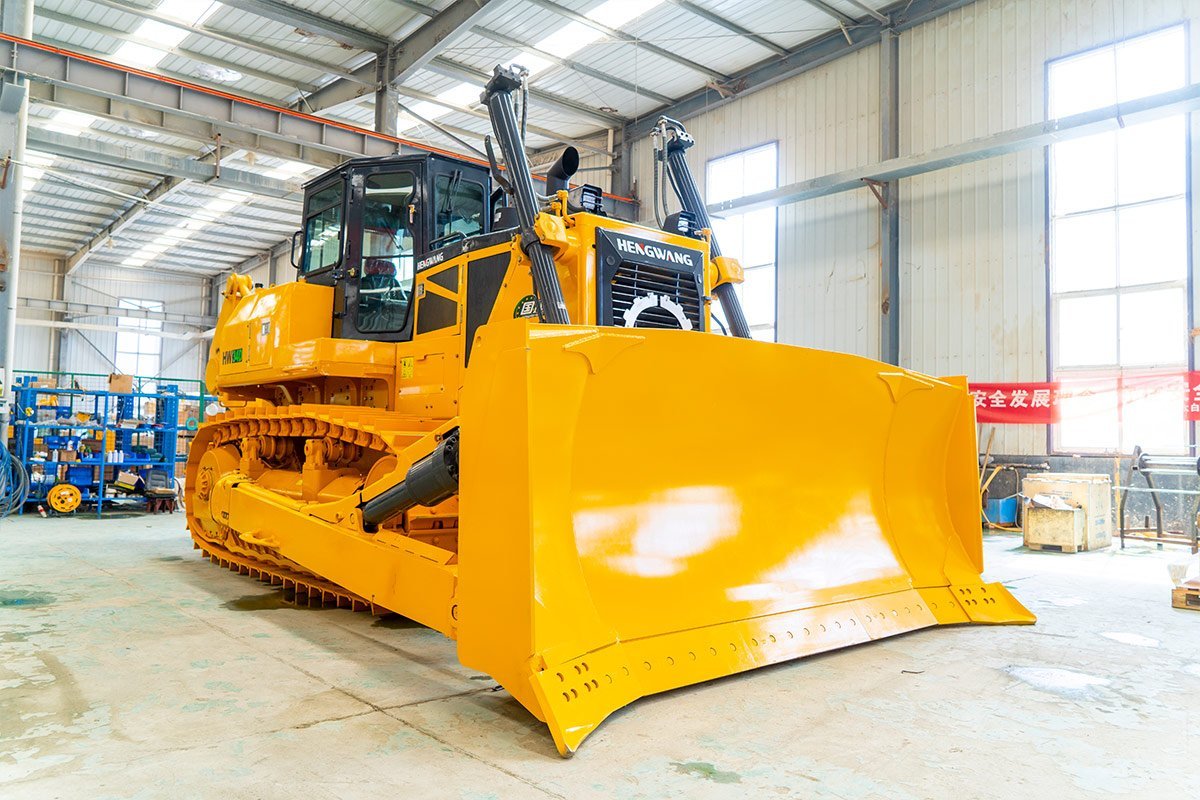
Understanding the Anatomy of a Dozer Blade
Before examining specific types, it is essential to understand the three primary factors that dictate blade performance:
- Capacity: The volume of material the blade can push, measured in cubic meters (m³).
- Penetration: The ability of the blade to cut through hard, compacted, or frozen ground.
- Load Retention: How well the blade keeps material from “spilling” over the sides during long-distance pushes.
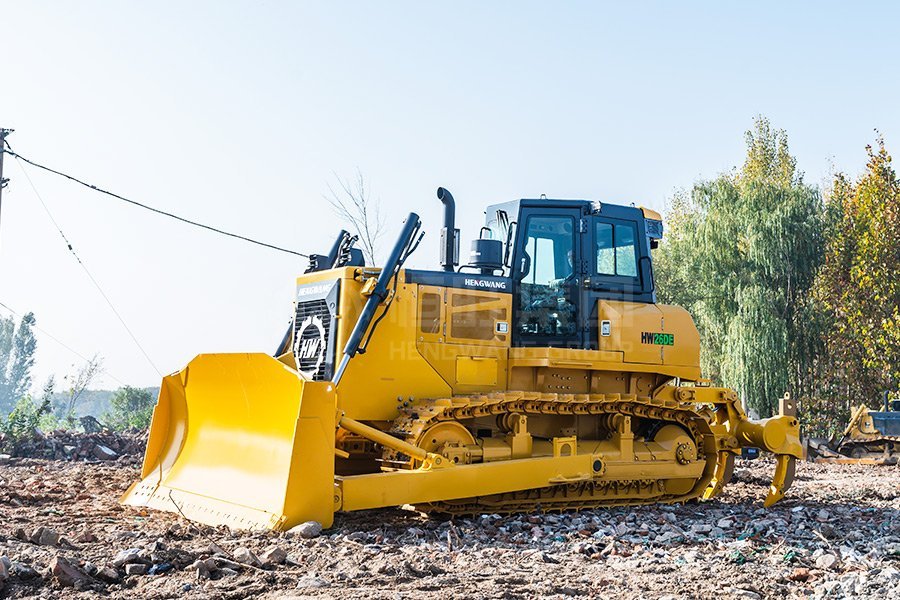
High-performance blades, such as those integrated with Hengwang’s earthmoving lineup, utilize high-strength alloy steel and reinforced moldboards to withstand the torsional stresses of heavy-duty excavation.
The 5 Primary Bulldozer Blade Types
1. S-Blade (Straight Blade)
The S-Blade is the shortest of all types and lacks lateral “wings” or side curves. Its design focuses on maximum penetration and maneuverability.
- Engineering Logic: Because it is flat and narrow, the hydraulic force is concentrated over a smaller surface area. This allows the blade to cut through high-density materials that would stop a larger blade.
- Best For: Stripping topsoil, grading, and moving heavy, high-density materials like compacted clay or rock.
- Limitation: It has poor load retention. Material easily spills off the sides, making it inefficient for long-distance transport.
2. U-Blade (Universal Blade)
The U-Blade features large side wings and a prominent “U” shape when viewed from above. It is engineered for maximum volume rather than penetration.
- Engineering Logic: The curved profile encourages a “rolling” action, which minimizes friction within the soil mass. The wings prevent material from spilling, allowing for significantly higher capacity pushes.
- Best For: Moving light to medium-density materials (coal, loose soil, sand) over long distances.
- Limitation: The large surface area reduces the machine’s ability to penetrate hard ground. It is also heavier, which can impact the balance of smaller dozers.
3. S-U Blade (Semi-U Blade)
The S-U Blade is the most popular choice in modern construction. It combines the straight profile of the S-blade with the smaller wings of the U-blade.
- Engineering Logic: It provides a compromise between penetration and capacity. The slight curve improves load retention compared to an S-blade, while the narrower width maintains high cutting force.
- Best For: General construction, backfilling, and stockpiling. It is a versatile tool for varied job sites.
- Application Note: This blade type is frequently paired with medium-sized crawler dozers to maximize multi-purpose utility.
4. Angle Blade
An Angle Blade can be manually or hydraulically adjusted to push material to the side rather than just forward.
- Engineering Logic: The blade is attached to a C-frame, allowing it to pivot left or right (usually up to 25 degrees). This is essential for side-casting material.
- Best For: Road construction, digging drainage ditches, and snow removal.
- Limitation: Because it is designed for side-loading, it is not built for the same high-impact “stumping” or heavy rock work as an S-blade.
5. PAT Blade (Power-Angle-Tilt)
The PAT blade is the most technologically advanced and maneuverable option. It can tilt, angle, and lift in six different directions via joystick control.
- Engineering Logic: By allowing the operator to adjust the blade angle and tilt on the fly, it enables high-precision grading and complex shaping of the terrain.
- Best For: Finish grading, landscaping, and site preparation where precision is more important than raw volume.
- Maintenance Tip: Due to the increased number of pivot points and hydraulic cylinders, PAT blades require more frequent lubrication and inspection than fixed blades.
Technical Comparison Table: Blade Performance Metrics
| Blade Type | Penetration Power | Load Retention | Maneuverability | Primary Material |
| S-Blade | Excellent | Low | High | Compacted Clay, Rock |
| U-Blade | Low | Excellent | Moderate | Coal, Soft Earth, Sand |
| S-U Blade | Good | Moderate | High | Mixed Soils, Gravel |
| Angle Blade | Moderate | Moderate | Moderate | Road Base, Snow |
| PAT Blade | Moderate | Moderate | Superior | Fine Sand, Loam (Grading) |
Matching Blade Types to Machine Specifications
When selecting a blade, one must consider the operating weight and horsepower of the tractor. A blade that is too large for the machine will cause the tracks to spin, leading to premature undercarriage wear. Conversely, a blade that is too small underutilizes the machine’s potential.
For example, high-horsepower units used in mining often utilize reinforced U-blades to move massive volumes of overburden. In contrast, swamp dozers—which feature wider tracks for low ground pressure—often use modified S-blades or wide straight blades to prevent the machine from becoming “nose-heavy” in soft terrain.
Hengwang’s bulldozer series provides various configurations where the blade geometry is specifically balanced against the engine’s torque curve to ensure that the “pushing” capacity matches the hydraulic flow rate.
Wear Considerations and Material Selection
In the manufacturing of these blades, material science plays a critical role. Most industrial-grade blades are constructed using:
- Moldboard: High-strength structural steel.
- Cutting Edges: Heat-treated boron steel or high-carbon steel for abrasion resistance.
- End Bits: Reinforced steel sections at the corners that bear the brunt of the impact during side-cutting.
Operators should monitor the “bolt-on” cutting edges. Once the wear reaches the moldboard, the repair costs escalate significantly. Reversible cutting edges are a standard industry feature, allowing the operator to flip the edge and double its service life before replacement is necessary.
Summary of Selection Criteria
To choose the right bulldozer blade, ask the following technical questions:
- What is the material density? High density requires an S-blade; low density allows for a U-blade.
- What is the transport distance? Short distances favor S-blades; long distances (over 30 meters) require the load retention of a U or S-U blade.
- Is precision required? If the goal is a 1% grade for a parking lot, a PAT blade is mandatory.
- Is side-casting necessary? For road building or trenching, the Angle blade is the only efficient choice.
FAQ
Q: Can I swap blade types on my existing bulldozer?
A: It depends on the mounting system. Blades mounted on a C-frame (like Angle blades) are not easily interchangeable with those using a standard push-arm setup (like S-U blades) without significant structural modification.
Q: Why does my bulldozer keep slipping tracks when pushing a full load?
A: This usually indicates a “blade-to-machine mismatch.” The blade may be too large for the soil density, or the operator may be trying to take too deep a cut. Ensure the material is “rolling” in front of the moldboard; if it is stagnant, the resistance is too high.
Q: What is the benefit of a “dual tilt” hydraulic system?
A: Dual tilt allows the operator to adjust the blade’s pitch (the angle of the cutting edge relative to the ground) while moving. Increasing the pitch forward improves penetration, while tilting it back improves load-carrying stability.
Q: Are there specialized blades for waste management or forestry?
A: Yes. Trash blades (for landfills) are often much taller with a screened top to protect the radiator. Forestry blades are narrower and heavy-duty to handle stumps and brush without catching on trees.
Reference Sources
- ISO 6165: Earth-moving machinery — Basic types — Identification and terms and definitions. ISO.org
- ASTM A514: Standard Specification for High-Yield-Strength, Quenched and Tempered Alloy Steel Plate (Suitable for Welding).
- Hengwang Group: Technical Product Specification Guide for Crawler Bulldozers. hengwangm.com