Bulldozer ground pressure determines how a tracked machine interacts with soft, loose, or unstable soil. Unlike wheeled loaders that rely on high-pressure pneumatic tires, crawler dozers distribute their massive machine weight over a large surface area using steel tracks. Understanding the mechanical differences between standard dozers and Low Ground Pressure (LGP) variants helps contractors match machine specifications to job-site soil bearing capacities.
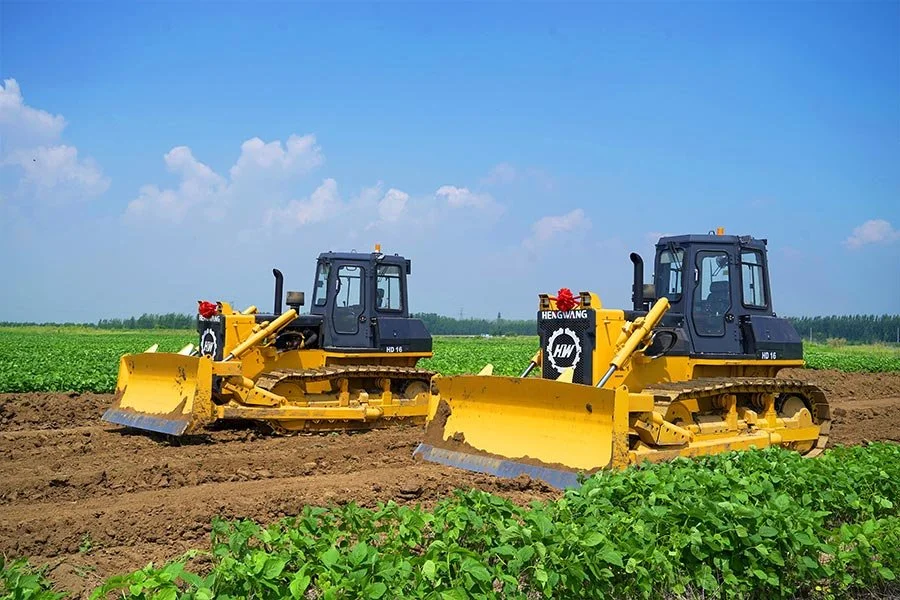
Understanding Bulldozer Ground Pressure and Soil Mechanics
Ground pressure measures the force exerted by a machine’s weight per unit of contact area against the terrain. When a heavy earthmoving machine travels across a job site, its ability to stay afloat depends on balancing total operating weight against track dimensions.
If ground pressure exceeds the shear strength of the soil, the machine will sink. Standard crawler dozers are engineered for high traction and hard-packed ground. In contrast, Low Ground Pressure (LGP) bulldozers feature modified undercarriages designed to maximize flotation in swampy, muddy, or sandy environments.
How Bulldozer Ground Pressure Is Calculated
Engineers calculate nominal ground pressure using a fundamental mechanical formula:
Ground Pressure (P)=Total Machine Weight (F)/Total Ground Contact Area (A)
- Total Machine Weight (
FF): Includes the base operating weight of the crawler tractor, fluid reservoirs, full fuel load, blade configuration, and any rear attachments like rippers or winches. - Total Ground Contact Area (
AA): Calculated by multiplying the total length of the track resting on the ground by the width of the track shoes on both sides.
Because ground contact area dictates the denominator in this equation, widening the track shoes decreases overall pressure without changing the total weight of the machine. For example, comparing a compact crawler configuration highlights this adjustment directly:
| Parameter | Standard / Extended Version (e.g., Hengwang DH08 XL) | LGP Version (e.g., Hengwang DH08 LGP) |
| Operating Weight | ~8,780 kg | ~9,092 kg (slightly heavier due to wider shoes) |
| Track Shoe Width | 460 mm | 610 mm |
| Ground Pressure | ~42.5 kPa | ~33.1 kPa |
By increasing shoe width by roughly 32%, the LGP variant reduces ground pressure by over 22%, preventing sinkage in saturated soils.
Standard Dozers vs. Low Ground Pressure (LGP) Dozers: Key Differences
Choosing between standard crawler dozers and LGP models requires evaluating specific design variations in the undercarriage, track geometry, and mobility profile.
1. Undercarriage and Track Geometry
Standard dozers utilize narrower track shoes fitted with aggressive single grousers to bite into hard, rocky terrain. LGP dozers feature wider track shoes and often extended track frames on the ground. This geometry increases the footprint, spreading machine weight across a larger surface area.
2. Pushing Performance and Traction
Standard machines concentrate weight over a smaller area, maximizing tractive effort and drawbar pull in dense or frozen soil. LGP dozers excel at surface grading, clearing debris, and pushing loose material across soft topsoil where standard machines would bog down.
3. Transport Dimensions and Maneuverability
Because LGP dozers utilize significantly wider tracks, their overall transport width increases. Contractors often require specialized wide-load permits to move LGP units between job sites. Standard dozers offer a narrower profile, simplifying legal transport on standard flatbed trailers.
Operational Trade-Offs: When to Choose an LGP Dozer
While low ground pressure bulldozers prevent catastrophic sinkage in wetlands or soft clay, they involve distinct mechanical trade-offs.
- Stability on Slopes: Wide tracks on LGP dozers increase lateral footprint, but working across steep side-slopes in soft mud can introduce track-slippage or roll-off risks if grousers fail to bite laterally.
- Component Wear: In abrasive, rocky, or hard-packed dirt, wide LGP track shoes experience higher bending moments and leverage forces against track links and pins. This accelerates undercarriage wear compared to narrow standard shoes.
- Grading Precision: Standard tracks provide a stable platform for heavy ripping and hard excavation. LGP dozers are optimized for fine grading, finishing work on building pads, and spreading loose fill without creating deep ruts.
Undercarriage Wear and Maintenance Implications for LGP Tracks
The undercarriage accounts for approximately 50% of a bulldozer’s total lifetime maintenance expenses. Operating an LGP dozer incorrectly introduces unique wear patterns.
- Track Sag and Tension: Wider shoes create more leverage on pins and bushings. Maintaining proper track tension prevents premature internal pin wear and reduces the risk of track derailment on uneven terrain.
- Debris Packing: Soft mud packs tightly between track rollers, idlers, and links. If allowed to harden or freeze overnight, packed earth exerts immense pressure on internal seals, leading to oil leaks and bearing failure. Daily track cleaning is mandatory for LGP machines operating in wet clay.
For contractors evaluating equipment specifications for upcoming utility or infrastructure projects, reviewing manufacturer data sheets helps align machine weight and shoe width with local soil conditions. Detailed configurations for various site requirements can be examined directly through options such as Hengwang’s bulldozer product category.
FAQ
What is the main difference between a standard dozer and an LGP dozer?
A standard dozer uses narrower tracks for high traction on firm ground, while an LGP (Low Ground Pressure) dozer uses wider track shoes to distribute machine weight and prevent sinkage in soft, swampy, or sandy soils.
How does track width affect bulldozer ground pressure?
Ground pressure decreases as track width increases. Wider track shoes expand the total ground contact area, spreading the machine’s operating weight over a larger footprint and reducing soil compaction.
When should an LGP bulldozer be used?
LGP bulldozers are best suited for soft topsoil, marshy terrain, loose sand, and fine-grading applications on building pads where minimizing ground disturbance and avoiding sinkage are critical.
Do LGP bulldozers cost more to maintain?
Yes, undercarriage wear can be accelerated when LGP dozers operate outside soft soils. Wide track shoes create higher leverage forces on pins, bushings, and links, increasing long-term maintenance costs if used extensively on hard rock.
Reference Sources
- Association of Equipment Manufacturers (AEM): Safety and Earthmoving Machinery Technical Manuals
- Hengwang Group: DH08 Series Crawler Dozer Technical Specifications and Data
- SAE International: Ground Vehicle Standards for Earthmoving Machinery (J-Series Designations)