When evaluating a water well drilling rig manufacturer for international procurement, buyers should balance technical performance, commercial terms, quality control, and supply-chain reliability. A structured evaluation can reduce purchasing risk and help ensure the selected rig matches the project’s drilling conditions, production targets, and local requirements.
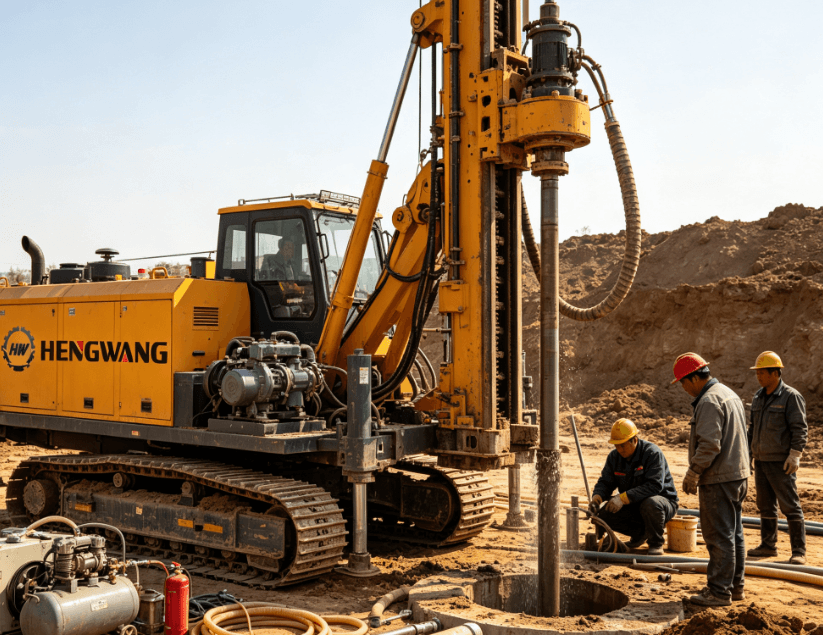
Why Source from a Dedicated Water Well Drilling Rig Manufacturer?
Working directly with a manufacturer can provide clearer information about production capability, customization, component availability, and lead times. For larger orders, direct sourcing may also create more opportunities to negotiate equipment configuration, spare parts packages, and commercial terms.
However, buyers should not select a manufacturer based on price alone. Production capacity, quality inspection, technical support, spare parts availability, export experience, and after-sales service should all be verified before placing an order.
Key Technical and Commercial Factors
Before requesting quotations, define the project requirements so that different manufacturers can be compared on the same basis.
Important factors include:
- Required drilling depth and drilling diameter
- Geological conditions, including rock, sand, clay, or mixed formations
- Power source and operating requirements
- Rig dimensions, mobility, and site access
- Compressor or auxiliary equipment requirements
- Spare parts availability and maintenance intervals
- Export packaging, documentation, and local compliance
- Expected purchase volume and delivery schedule
A detailed specification sheet makes supplier quotations easier to compare and reduces the risk of receiving technically different proposals.
Water Well Drilling Rig Manufacturer Evaluation Checklist
| Decision factor | Buyer question | What to verify |
|---|---|---|
| Manufacturing capacity | Can the manufacturer meet my quantity and delivery schedule? | Production lead time, capacity, recent orders, and factory information |
| Technical fit | Does the rig match my depth, diameter, and geological requirements? | Technical specifications, drilling method, power, and reference applications |
| Quality control | How is each rig inspected before shipment? | Inspection procedures, test records, and traceability |
| Customization | Can the rig be adapted to my project? | Available options, engineering process, cost, and lead-time impact |
| After-sales support | How are service and spare parts handled? | Parts lead times, manuals, training, and remote or onsite support |
| Export capability | Can the supplier support international delivery? | Export experience, packaging, documents, and shipping terms |
Safety should also be part of the technical evaluation. OSHA notes that drilling operations involve equipment, maintenance, site hazards, and task-specific risks that should be addressed through appropriate safety procedures and job hazard analysis.
Manufacturer vs. Distributor vs. Trading Company
International buyers may encounter factories, distributors, and trading companies offering similar drilling rigs. The right choice depends on order volume, technical requirements, and the level of support required.
| Sourcing option | When it fits | Key checks |
|---|---|---|
| Direct manufacturer | Larger orders or customization requirements | Factory capability, engineering support, production capacity |
| Authorized distributor | Local service and inventory are important | Brand authorization, parts availability, service network |
| Trading company | Multiple equipment categories or sourcing support are needed | Actual manufacturer, warranty responsibility, technical documentation |
For customized or repeat purchases, communicating directly with the manufacturer can make technical changes and production requirements easier to control.
Standard Rig or Customized Configuration?
A standard model is usually the simplest option when its drilling depth, diameter, power system, dimensions, and operating conditions already match the project.
Customization becomes more valuable when the site has specific access limitations, geological conditions, power constraints, or regulatory requirements. Before approving modifications, clarify:
- Engineering and modification costs
- Additional production time
- Change-control procedures
- Testing and acceptance criteria
- Warranty implications
- Spare-parts compatibility
The objective is not to maximize customization, but to ensure that the final configuration solves a genuine project requirement.
How to Verify Product Fit
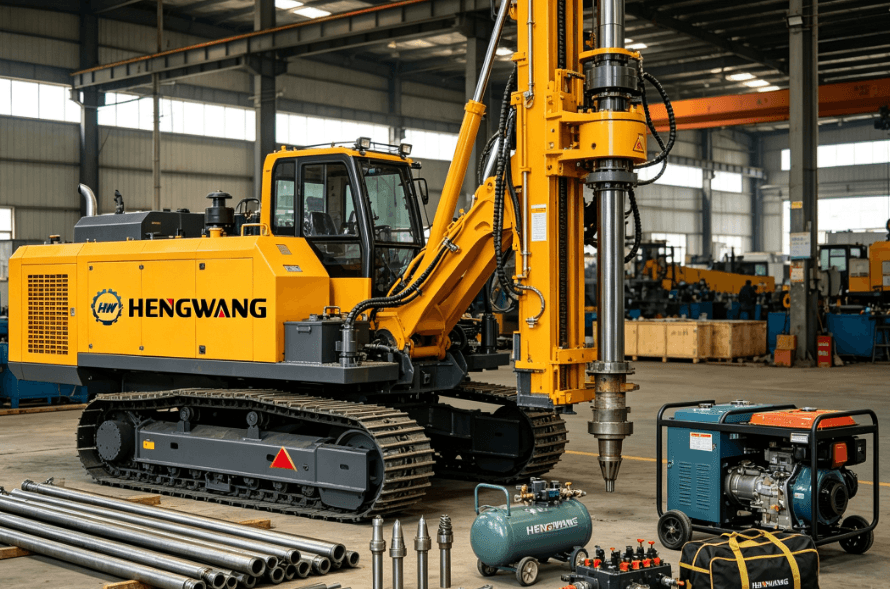
Review the manufacturer’s product range before requesting a quotation. HengWang’s drilling rigs category provides access to different rig configurations, including pneumatic drilling rigs and other drilling equipment. The HQZ-160L pneumatic drill rig can also be reviewed as an example of the type of technical specifications buyers should request.
For projects involving anchoring or related applications, buyers can also compare an anchor drilling rig to understand how different configurations are matched to specific operating requirements.
Do not rely only on brochures. Ask for operating videos, technical drawings, test records, reference projects, and recommended spare-parts lists where appropriate.
Safety and Water Well Considerations
Water well drilling involves specific occupational risks, including noise, electrical hazards, moving machinery, and changing site conditions. The U.S. National Institute for Occupational Safety and Health (NIOSH) has published dedicated safety information for the water well industry, including guidance related to hearing loss prevention, electrical safety, and worker training.
Buyers should therefore ask manufacturers about safety-related equipment, operator training, maintenance procedures, and documentation applicable to the intended market.
For broader information on well construction and continued well maintenance, buyers can also consult CDC well water safety guidance.
Sourcing and Negotiation Tips
Request quotations from several qualified suppliers using the same specification sheet. Ask each supplier to separate:
- Base machine price
- Optional equipment
- Spare parts
- Packaging
- Shipping
- Warranty
- Installation or training
- Other applicable costs
When comparing quotations, normalize the delivery terms such as EXW, FOB, or CIF and confirm exactly what is included or excluded.
The lowest initial price is not necessarily the lowest total procurement cost. Fuel consumption, wear parts, maintenance requirements, spare parts, downtime, and technical support can significantly affect the equipment’s long-term cost.
What Should an RFQ Include?
A professional RFQ should provide enough information for manufacturers to recommend an appropriate configuration. Include:
- Target drilling depth
- Required drilling diameter
- Geological or site conditions
- Preferred drilling method and power source
- Site access limitations
- Required quantity
- Destination country and preferred Incoterm
- Certification or documentation requirements
- Expected delivery schedule
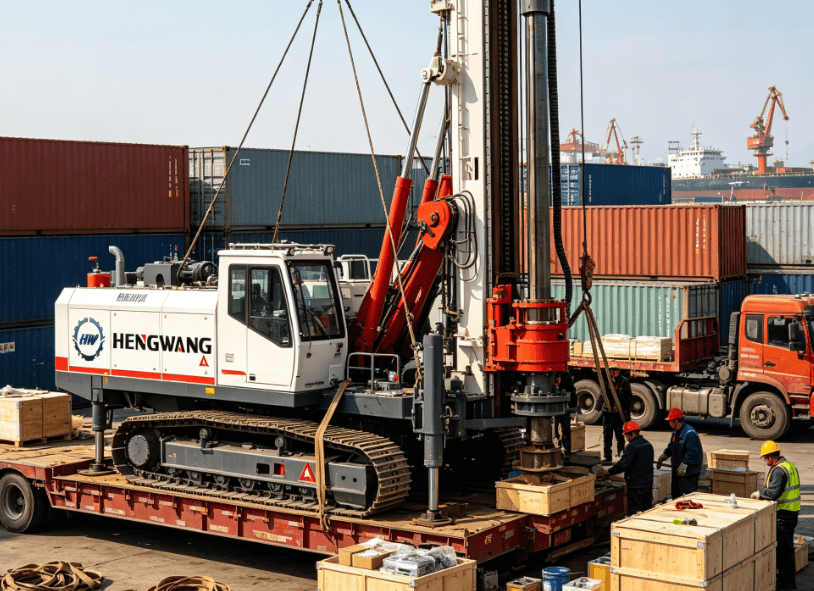
Ask shortlisted manufacturers to return comparable documentation, including technical specifications, quotation, packing information, warranty terms, spare-parts recommendations, and delivery time.
Frequently Asked Questions
What should I look for in a water well drilling rig manufacturer?
Focus on technical capability, manufacturing capacity, quality control, customization capability, spare-parts support, export experience, and after-sales service rather than comparing price alone.
How do I verify a drilling rig manufacturer’s reliability?
Request factory information, product specifications, inspection records, reference projects, operating videos, and customer references. For high-value orders, consider an independent inspection or factory audit.
When is customization worth the extra cost?
Customization is worthwhile when a standard rig cannot meet essential requirements such as drilling depth, access dimensions, geological conditions, power limitations, or local compliance requirements.
What documents should I request before purchasing?
At minimum, request the technical specification sheet, quotation, warranty terms, spare-parts list, maintenance information, packing details, and applicable inspection or test documentation.
Should I place a trial order first?
For a new supplier, a representative pilot purchase can reduce risk. Establish clear acceptance criteria and evaluate drilling performance, reliability, training, spare-parts requirements, and after-sales support before expanding the order.
Final Takeaway
Choosing a water well drilling rig manufacturer should be treated as a technical and supply-chain decision rather than a simple price comparison. Define the drilling requirements first, compare manufacturers using the same specification sheet, verify production and quality controls, and evaluate spare-parts and after-sales capabilities before placing an order.
For buyers ready to compare available models, the HengWang drilling rigs category provides a starting point for reviewing different drilling rig configurations and product options.