Dump trucks are essential for moving bulk materials across construction sites and mining operations. These powerful machines transport sand, gravel, and heavy ores efficiently. Choosing the right equipment requires a deep understanding of dump truck types and capacity.
The efficiency of a project often depends on matching the truck size to the material volume. Modern hauling equipment ranges from small utility units to massive mining haulers. Each type offers specific advantages for different terrains and load requirements.
Selecting the wrong vehicle can lead to increased costs or safety risks. Heavy-duty industries rely on specialized configurations to maximize productivity. This guide explores the technical specifications and functional differences of common hauling machinery.
What Are the Different Types of Dump Trucks?
The standard dump truck is the most common vehicle found in urban construction. It features a chassis with a hydraulic hoist that lifts the open-box bed. These trucks typically have one front axle and one or more rear axles to distribute weight.
Articulated dump trucks (ADTs) are designed for off-road environments and rough terrain. They feature a hinge between the cab and the trailer for better steering. This design allows the truck to maintain traction on muddy or uneven ground.
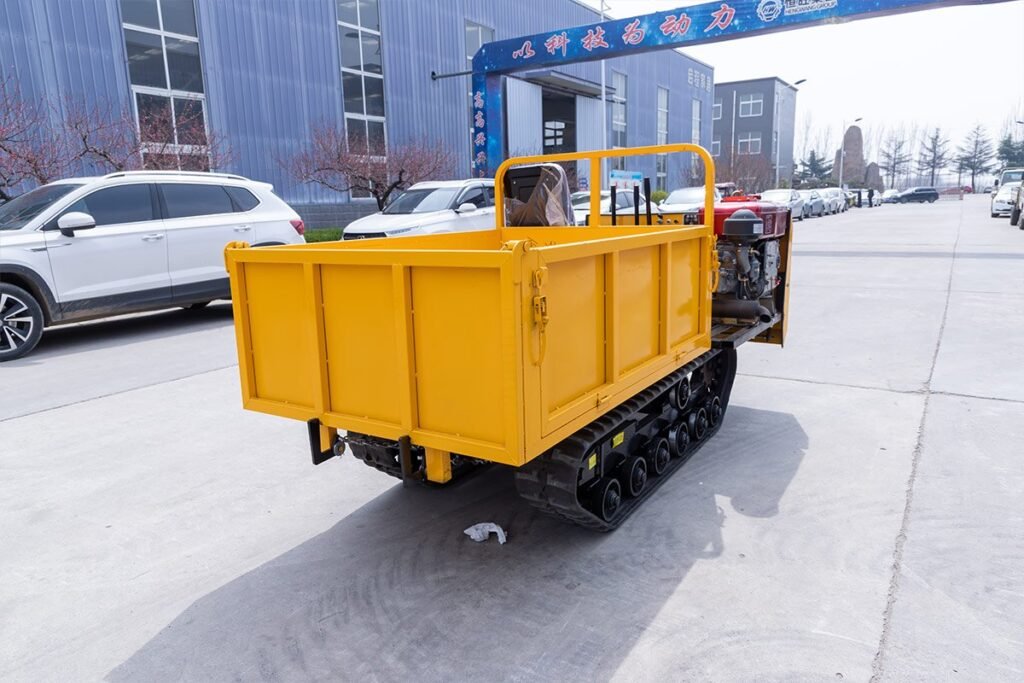
Crawler dump trucks utilize tracks instead of wheels to move across soft soil. They exert low ground pressure, which prevents them from sinking in marshy areas. These are ideal for specialized landscaping or utility work in sensitive environments.
Mining dump trucks, also known as rigid haul trucks, are built for massive scale. They handle the heaviest payloads in open-pit mines and large-scale quarries. These machines use rigid frames to support extreme weights over long duty cycles.
Understanding Dump Truck Capacity and Load Limits
Capacity is measured by both volume in cubic yards and weight in tons. Standard dump trucks typically carry between 10 and 16 tons of material per load. This range makes them suitable for residential building and road repair projects.
Articulated models offer higher capacities, often ranging from 25 to 60 tons. These machines are the workhorses of large infrastructure projects like dam construction. Their ability to move heavy loads over hills makes them indispensable for site preparation.
For the largest operations, rigid mining trucks can carry between 100 and 400 tons. These vehicles utilize high-horsepower engines and massive tires to move mountains of rock. The table below summarizes common capacity ranges for various truck types:
| Dump Truck Type | Typical Weight Capacity (Tons) | Common Use Case |
| Crawler Dumper | 1 – 10 Tons | Soft terrain, parks |
| Standard Dump Truck | 10 – 16 Tons | Construction, paving |
| Articulated Truck | 25 – 60 Tons | Quarrying, earthmoving |
| Rigid Mining Truck | 90 – 400 Tons | Large-scale mining |
Key Factors Influencing Hauling Performance
Engine power determines how effectively a truck can climb steep grades while fully loaded. Many heavy-duty trucks use specialized diesel engines with high torque ratings. A high-capacity mining truck may require over 2,000 horsepower to function at peak efficiency.
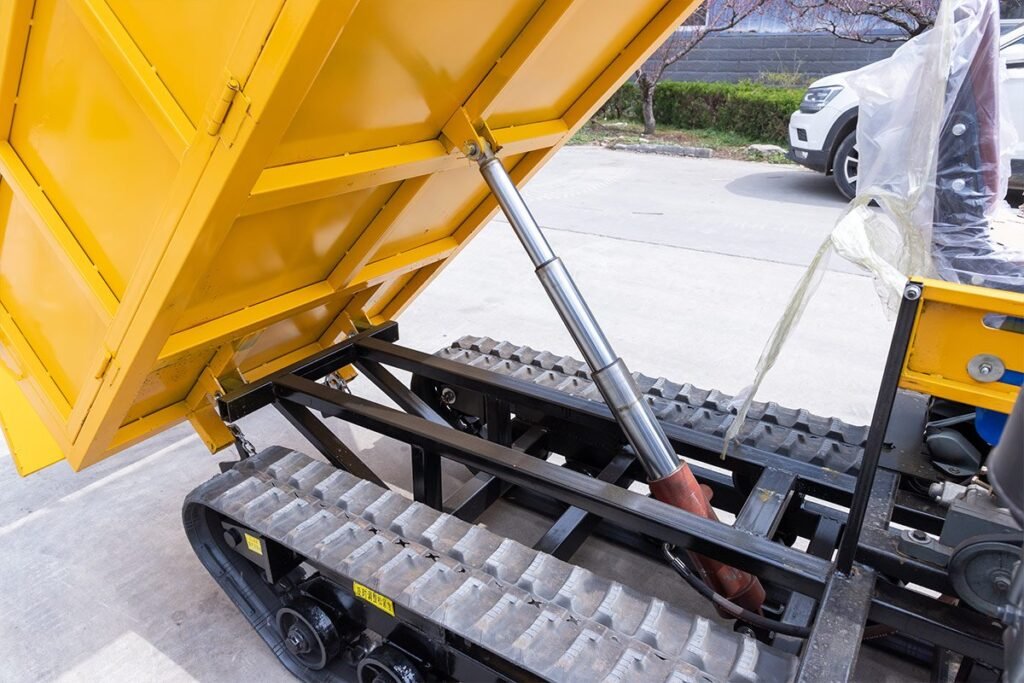
The hydraulic system is another critical component for operational speed. Faster cycle times for lifting and lowering the bed increase daily productivity. Advanced trucks use high-pressure hydraulic pumps to ensure smooth and stable material discharge.
Tire selection and axle configuration also impact the dump truck types and capacity suitability. Wider tires provide better flotation on soft surfaces but may increase fuel consumption. Multiple rear axles help the vehicle stay within legal weight limits on public highways.
Choosing the Right Dump Truck for Your Industry
Selecting the ideal hauling solution depends on the specific demands of your worksite. If you operate in confined spaces, a compact crawler dumper provides the necessary maneuverability. These units excel in urban utility projects where large trucks cannot fit.
For heavy mining and large-scale earthmoving, durability is the most important factor. You must evaluate the frame strength and the thickness of the dump body steel. Wide-body mining trucks offer superior stability for carrying heavy ores across unpaved haul roads.
Fuel efficiency and maintenance costs also play a major role in long-term profitability. Electric or hybrid dump trucks are emerging as viable options for reducing operational expenses. Always match the truck’s payload capacity to the bucket size of your loading equipment.
Conclusion
Understanding dump truck types and capacity is vital for optimizing hauling operations and reducing costs. From maneuverable crawlers to massive 400-ton mining haulers, each machine serves a specific environmental niche. By matching the truck configuration to your terrain and load requirements, you ensure maximum site productivity.
FAQ
Q:What is the average capacity of a standard dump truck?
A standard dump truck usually carries 10 to 16 tons. This capacity is ideal for most commercial construction and roadwork projects.
Q:When should I use an articulated dump truck instead of a rigid one?
You should use an articulated truck on soft, uneven, or steep terrain. Rigid trucks are better suited for flat, well-maintained haul roads in mining.
Q:How does payload affect dump truck safety?
Overloading a truck can cause hydraulic failure or loss of braking control. Always adhere to the manufacturer’s rated capacity to ensure operator safety.
Q:What is the benefit of a crawler dump truck?
Crawler dumpers provide excellent traction on soft or muddy ground. They prevent soil compaction and can operate in areas where wheeled trucks get stuck.
Reference Sources
Association of Equipment Manufacturers (AEM)
https://www.aem.org/
National Mining Association (NMA)
https://nma.org/
International Organization for Standardization (ISO – Earth-moving machinery)
https://www.iso.org/
Occupational Safety and Health Administration (OSHA – Heavy Equipment)
https://www.osha.gov/