As a manufacturer of heavy equipment, we know that a new bulldozer typically costs between $30,000 for compact models and over $1,000,000 for large mining machines. However, the initial purchase price represents only a small portion of the equipment’s Total Cost of Ownership (TCO). Operating costs—such as fuel consumption, undercarriage wear, insurance, and routine maintenance—often exceed the upfront investment over the machine’s lifespan. To accurately bid on earthmoving projects, contractors must calculate the full owning and operating costs per hour. This guide breaks down current price ranges, component wear economics, and the variables that dictate a bulldozer’s true operating cost based on our manufacturing experience.【What Is a Bulldozer?】
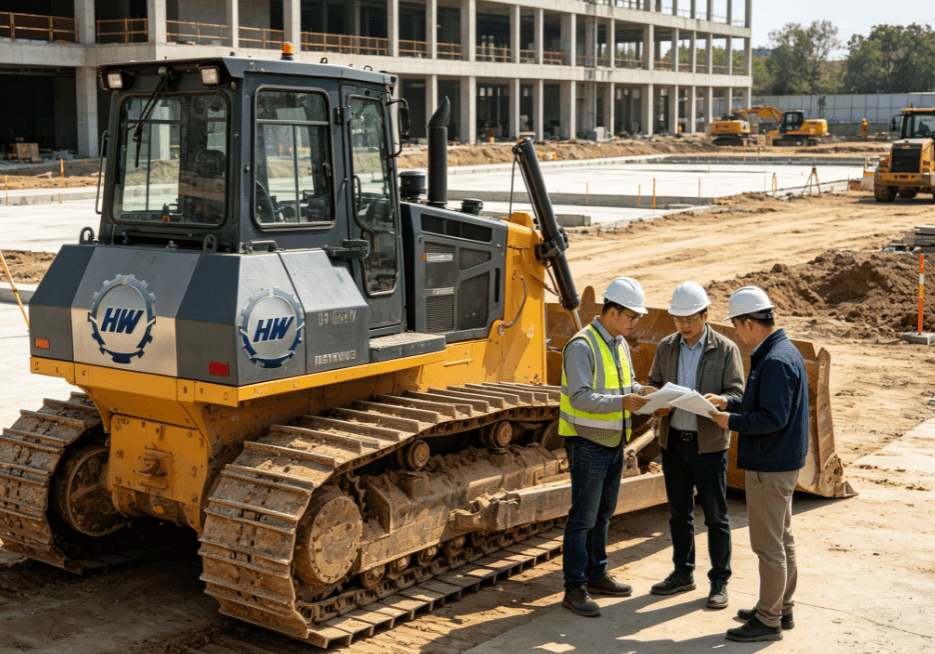
How Much Does a Bulldozer Cost Upfront?
The capital required to purchase a bulldozer depends primarily on its operating weight, engine horsepower, track configuration, and integrated technology. Based on our industry data, here are the general price points.
| Bulldozer Category | Operating Weight Range | Average New Purchase Price (USD) | Common Applications |
| Mini / Compact | Under 20,000 lbs | $30,000 – $100,000 | Residential grading, tight spaces |
| Medium | 20,000 – 60,000 lbs | $100,000 – $300,000 | Commercial construction, roadwork |
| Large | 60,000 – 100,000 lbs | $300,000 – $600,000 | Heavy highway, waste management |
| Heavy / Mining | Over 100,000 lbs | $600,000 – $1,500,000+ | Quarrying, bulk overburden removal |
Breakdown of Bulldozer Operating Costs Per Hour
Operating costs occur only when the machine is active. Depending on the machine size and application severity, hourly operating costs generally range from $50 to over $150, excluding the operator’s wage and benefits.
Fuel Consumption and Engine Load Factors
Fuel is typically the largest recurring operating expense in our equipment, frequently accounting for 25% to 30% of total ownership costs. A bulldozer’s fuel consumption is determined by the engine’s horsepower and the application’s load factor:
- Low Load Factor (30% – 50%): Finish grading, spreading loose topsoil, or long periods of idling.
- Medium Load Factor (50% – 80%): Standard production dozing, pushing moderate loads over short distances.
- High Load Factor (80% – 100%): Heavy ripping, pushing hard bank gravel, or operating on steep inclines.
The Impact of Undercarriage Wear on Maintenance
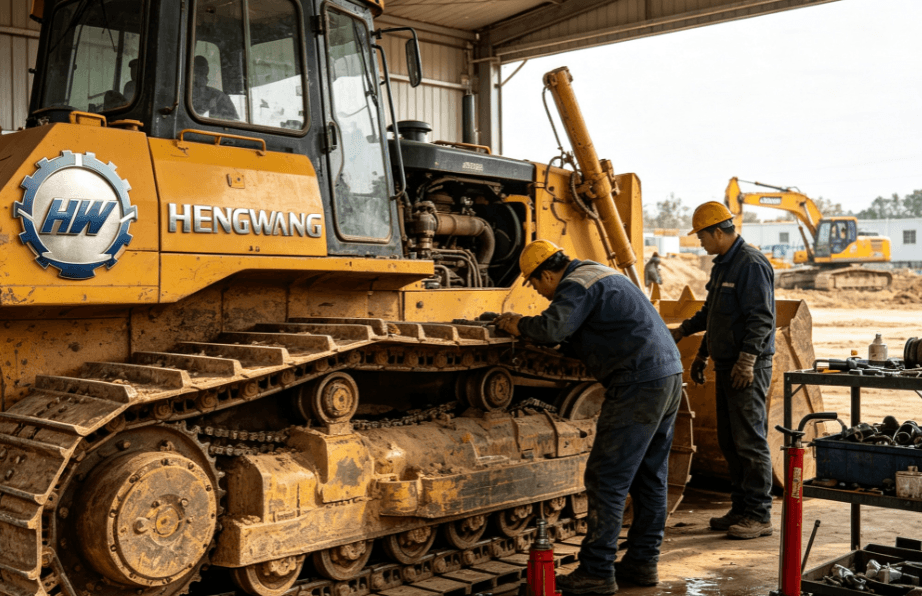
In our experience engineering crawler dozers, the undercarriage often represents up to 50% of the machine’s total lifetime repair and maintenance costs. Tracked machines rely on a high-friction system of links, pins, bushings, rollers, idlers, and sprockets.
To minimize hourly undercarriage costs:
- Avoid high-speed reverse travel, which drastically accelerates wear on track pins and bushings.
- Adjust track tension according to soil conditions. Packed mud increases tension artificially, stretching the track chain and overloading seals.
- Perform regular inspections to identify when a pin and bushing turn is necessary, extending the overall life of the track assembly.
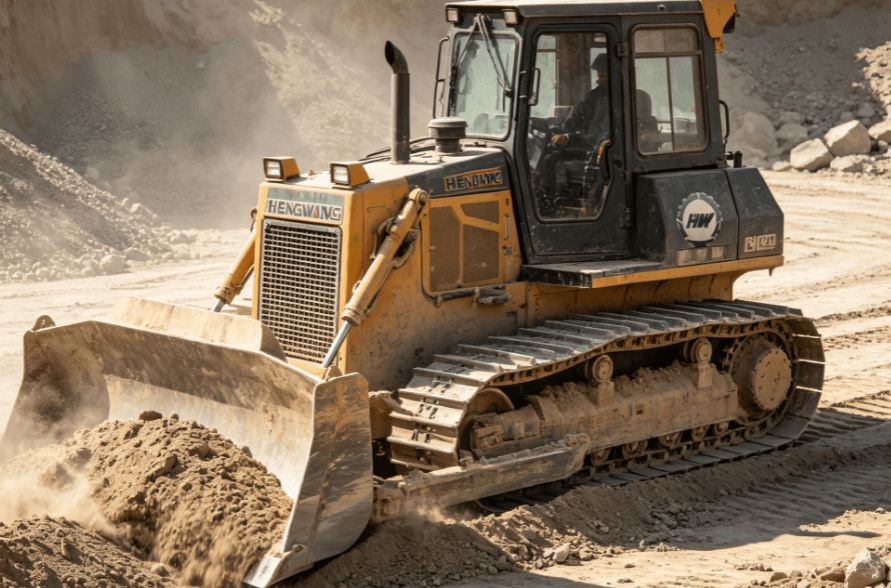
Ground Engaging Tools (GET) and Routine Service
Ground Engaging Tools—specifically the blade cutting edges, end bits, and ripper teeth—absorb the direct impact of earthmoving. In highly abrasive rock, a set of ripper teeth may require replacement after only a few days of operation, significantly driving up hourly costs. Routine maintenance includes engine oil, hydraulic fluid, final drive oil, filters, and grease.
Owning Costs: Depreciation, Insurance, and Financing
Owning costs are fixed expenses incurred regardless of whether the bulldozer is pushing dirt or parked in an equipment yard.
- Depreciation and Residual Value: Depreciation is the loss of the machine’s monetary value over time and usage. A five-year-old medium dozer typically retains 50% to 60% of its original value, depending on brand reputation and maintenance documentation. Hourly depreciation is calculated by subtracting the estimated residual resale value from the purchase price, then dividing by total expected operating hours.
- Financing and Insurance: Financing heavy equipment involves monthly interest payments, which elevate the hourly cost framework. Furthermore, heavy equipment insurance is mandatory to protect against theft, vandalism, and job-site incidents.
What Factors Drive Up Bulldozer Prices?
When evaluating quotes or reviewing our bulldozer models, you will find that several configuration choices heavily influence the final purchase price:
- Blade Configuration: A standard Straight blade (S-blade) is cost-effective and built for basic pushing. A Power Angle Tilt (PAT) blade offers six-way movement for precision grading but requires more complex hydraulic cylinders, increasing the initial cost. U-blades, designed to carry massive volumes of loose material, require heavier structural reinforcement.
- Ripper Attachments: Not all bulldozers include rear rippers. Adding a single-shank ripper for deep rock penetration or a multi-shank ripper for compacted soil requires a reinforced rear frame and dedicated hydraulic circuits.
- Technology and Automation: Factory-integrated 3D GPS grade control systems can add $30,000 to $50,000 to the initial price. While this raises the upfront capital requirement, it often lowers the TCO by reducing necessary passes, cutting fuel use, and eliminating the need for ground surveyors.
- Undercarriage Type: Low Ground Pressure (LGP) tracks feature wider shoes for swampy conditions, while Heavy-Duty (HD) tracks utilize thicker bushings for abrasive terrain. Specialized undercarriages are more expensive to purchase and replace than standard track configurations.
New vs. Used Bulldozers: Cost and Risk Comparison
As a manufacturer, we understand why buyers consider used equipment, as it lowers the initial capital expenditure but alters the total operating cost equation.
- Upfront Savings: A three-year-old bulldozer with 3,500 hours might cost 30% to 40% less than a brand-new equivalent, reducing both depreciation exposure and insurance premiums.
- Maintenance Risks: The trade-off for a lower purchase price is higher hourly maintenance. Critical components like hydraulic pumps, fuel injectors, and the undercarriage are closer to the end of their service lives. Without a factory warranty, the owner absorbs the full cost of sudden part failures.
- Downtime Impact: Older machines statistically suffer more downtime. If a broken-down dozer halts a dependent fleet of excavators and dump trucks, the true cost includes the idle time of the entire labor crew.
The Hidden Costs of Transport and Mobilization
Often overlooked in basic cost breakdowns is the expense of moving the bulldozer between job sites. Medium and large dozers require heavy-haul lowboy trailers. Wide LGP tracks or massive U-blades may exceed legal road widths. This necessitates expensive oversized load permits, escort vehicles, and restricted travel hours.
Should You Rent or Buy a Bulldozer?
For contractors and financial decision-makers, the choice between purchasing and renting relies on expected utilization rates and capital flexibility.
- When to Buy: If a bulldozer will be utilized for more than 60% to 70% of the working year, purchasing or leasing generally yields a lower hourly cost. Ownership allows for depreciation tax benefits and builds asset equity.
- When to Rent: If the equipment is needed for a specific short-term phase, or if annual utilization is projected below 40%, renting eliminates maintenance liabilities, storage costs, and the risk of the machine sitting idle. Rental rates for medium dozers typically run between $1,000 and $1,500 per day, depending on location and local market demand.
FAQ
Q: How much does a small bulldozer cost?
A: A small or compact bulldozer typically costs between $30,000 and $100,000. These machines usually weigh under 20,000 pounds and are primarily used for residential grading, tight-space clearing, and light earthmoving tasks.
Q: What is the most expensive part of bulldozer maintenance?
A: The undercarriage is the most expensive maintenance component on a crawler dozer, often accounting for up to 50% of the machine’s lifetime repair costs. Abrasive soil and high-speed reverse travel drastically accelerate the wear.
Q: How much fuel does a bulldozer use per hour?
A: Fuel consumption depends heavily on the engine size and load factor. A medium dozer might burn 4 to 8 gallons per hour. Heavy ripping applications will consume significantly more fuel than finish grading.
Q: Is it cheaper to rent or buy a bulldozer?
A: It is generally cheaper to buy a bulldozer if you plan to use it for more than 60% of the working year. Renting is more cost-effective for short-term projects or if annual utilization falls below 40%.
Q: Does a GPS grade control system increase a bulldozer’s price?
A: Yes. Adding a factory-integrated 3D GPS grade control system can increase the upfront purchase price. However, it often reduces the Total Cost of Ownership by improving accuracy and reducing extra passes.
Reference Sources
Fuel consumption accounts for 25% to 30% of total ownership. https://www.komatsu.eu/en
Undercarriage wear is 50% of track-type tractor maintenance. https://www.caterpillar.com