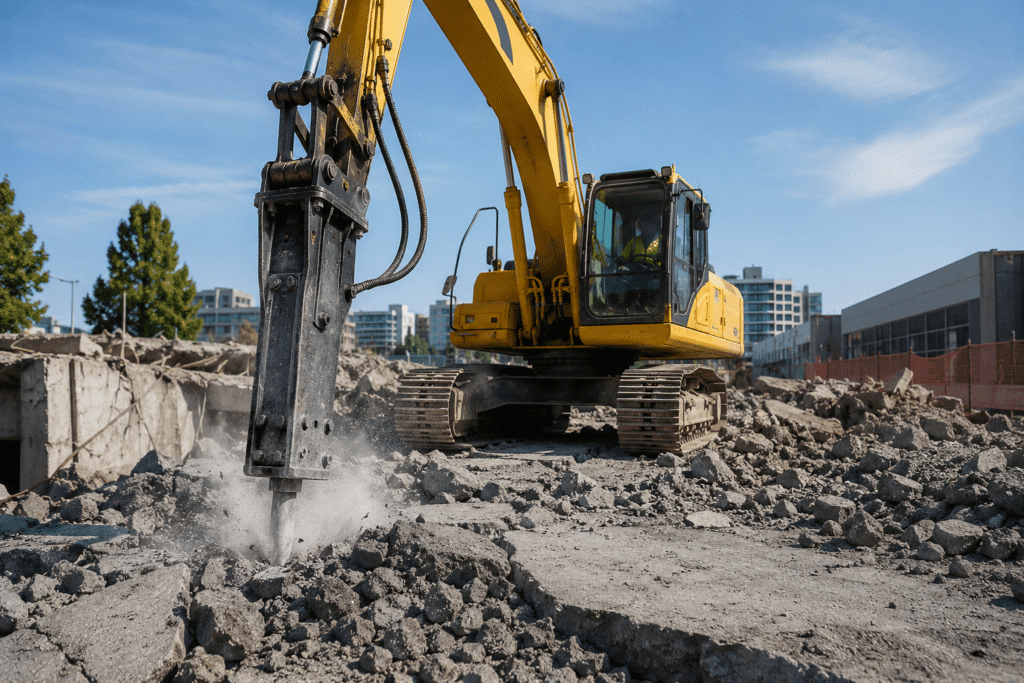
A hydraulic breaker is a powerful percussion attachment designed to demolish hard structures. It transforms the hydraulic energy of a carrier machine into mechanical impact energy. This tool is essential for tasks where manual labor is insufficient. You will commonly see them mounted on excavators, backhoes, or skid steers. In 2026, hydraulic breaker uses have expanded into more precise engineering fields.
These machines work by applying high pressure to a piston. The piston then strikes a tool bit at high frequencies. This action allows the breaker to crack concrete, rocks, and asphalt easily. Hydraulic breaker uses vary depending on the size of the carrier and the job site requirements. Understanding these applications helps project managers select the right equipment.
Operators must match the breaker’s power to the specific material density. Modern breakers offer variable speed settings to optimize performance. This flexibility ensures that energy is not wasted on softer materials. Efficiency remains the top priority for heavy equipment operators today.
The Role of Hydraulic Breakers in Modern Demolition
Demolition is perhaps the most visible of all hydraulic breaker uses. These tools are used to tear down reinforced concrete buildings and bridges. They provide a controlled way to break structures into manageable pieces. This process is much safer than using explosives in urban environments. Hydraulic breakers can reach high areas when attached to long-reach excavators.
In 2026, demolition projects require high precision to avoid damaging nearby structures. A medium-sized breaker can deliver between 1,000 and 5,000 foot-pounds of impact energy. This power is necessary for breaking thick foundations and support columns. Hydraulic breaker uses in demolition also include the recycling of construction waste. By breaking concrete on-site, companies can separate rebar from the debris more efficiently.
Safety is another critical factor in demolition tasks. Using a breaker allows the operator to stay at a safe distance inside a protected cab. This reduces the risk of injury from falling debris or flying fragments. The reliability of hydraulic systems ensures consistent performance during long work shifts.
| Excavator Class | Breaker Weight (kg) | Impact Frequency (BPM) | Primary Use |
| Mini (1-6 tons) | 100 – 450 | 500 – 1,200 | Trenching, Light Concrete |
| Medium (12-25 tons) | 800 – 1,800 | 400 – 800 | Demolition, Road Work |
| Large (30+ tons) | 2,000 – 7,000 | 200 – 600 | Mining, Large Foundations |
Major Hydraulic Breaker Uses in Road and Utility Projects
Road construction heavily relies on the efficiency of percussion tools. One of the primary hydraulic breaker uses is the removal of old asphalt layers. Unlike milling machines, breakers are better for targeted repairs in specific sections. They can quickly cut through frozen ground or compacted soil during winter utility repairs. This capability prevents project delays in harsh climates.
Trenching for water, gas, and electrical lines often encounters solid rock layers. In these scenarios, a hydraulic breaker is the only way to progress. It carves out precise channels without over-excavating the surrounding area. This precision saves costs on backfilling materials later in the project. Contractors often prefer breakers for their mobility on narrow city streets.
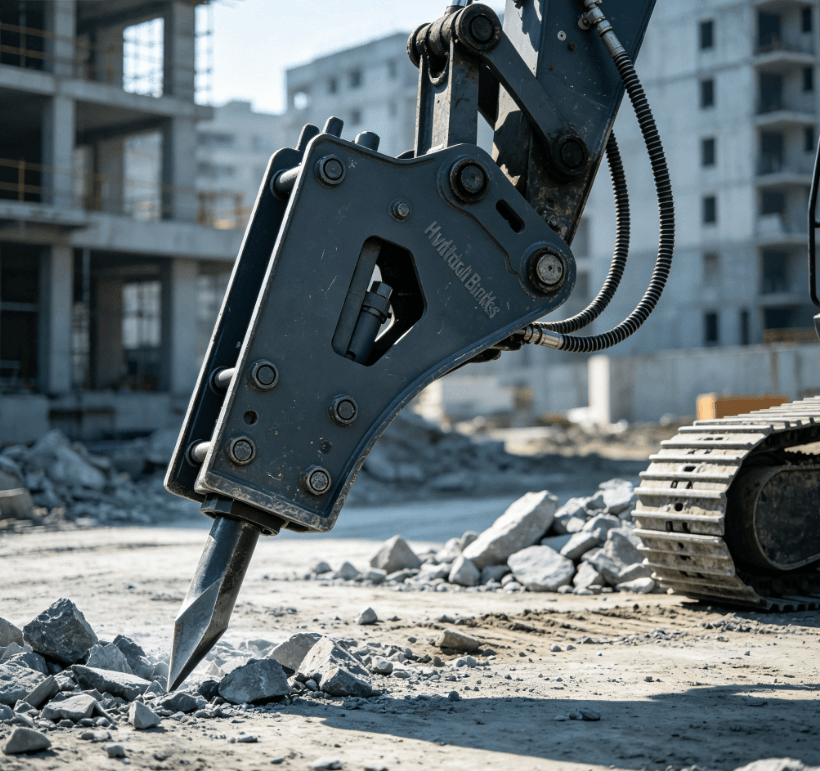
Utility companies also utilize small breakers for indoor renovation projects. These compact units can fit through standard doorways when attached to mini-excavators. They are perfect for breaking up basement floors or industrial concrete slabs. The versatility of hydraulic breaker uses makes them a staple in municipal maintenance fleets.
How Hydraulic Breakers Enhance Mining Productivity
In the mining industry, efficiency is measured by the ton. Hydraulic breaker uses in mining focus on secondary breaking and slag removal. Large boulders often survive the initial blasting process in open-pit mines. These “oversized” rocks cannot fit into the primary crusher. A high-capacity breaker reduces these rocks to a size the crusher can handle.
Using a breaker for secondary reduction is often cheaper than secondary blasting. It eliminates the need for extra explosives and specialized blasting crews. Hydraulic breakers also work continuously, whereas blasting requires clearing the entire site. This leads to a more consistent flow of material to the processing plant. In 2026, automated breaking systems are becoming more common in deep-well mining.
Slag removal in metallurgical plants is another specialized application. Breakers help clean out ladles and furnaces where molten metal has solidified. These environments are extremely hot and hazardous for human workers. Heavy-duty breakers with heat-resistant seals are required for these tasks. Hydraulic breaker uses in such extreme conditions demonstrate the tool’s durability.
Selecting the Best Equipment for Your Breaking Tasks
Choosing the right carrier machine is just as important as the breaker itself. You must ensure the excavator’s hydraulic flow matches the breaker’s requirements. If the flow is too high, the breaker components may wear out prematurely. If it is too low, the impact force will be insufficient for the job. Matching the weight of the carrier is also vital for stability and safety.
For mid-range demolition and utility work, the Hengwang HW-220 crawler excavator is an excellent choice. This 22-ton machine provides the stable platform needed for high-impact tools. It features a robust hydraulic system capable of sustaining the high-pressure demands of a breaker. Choosing a machine with advanced cooling systems helps prevent oil overheating during continuous use.
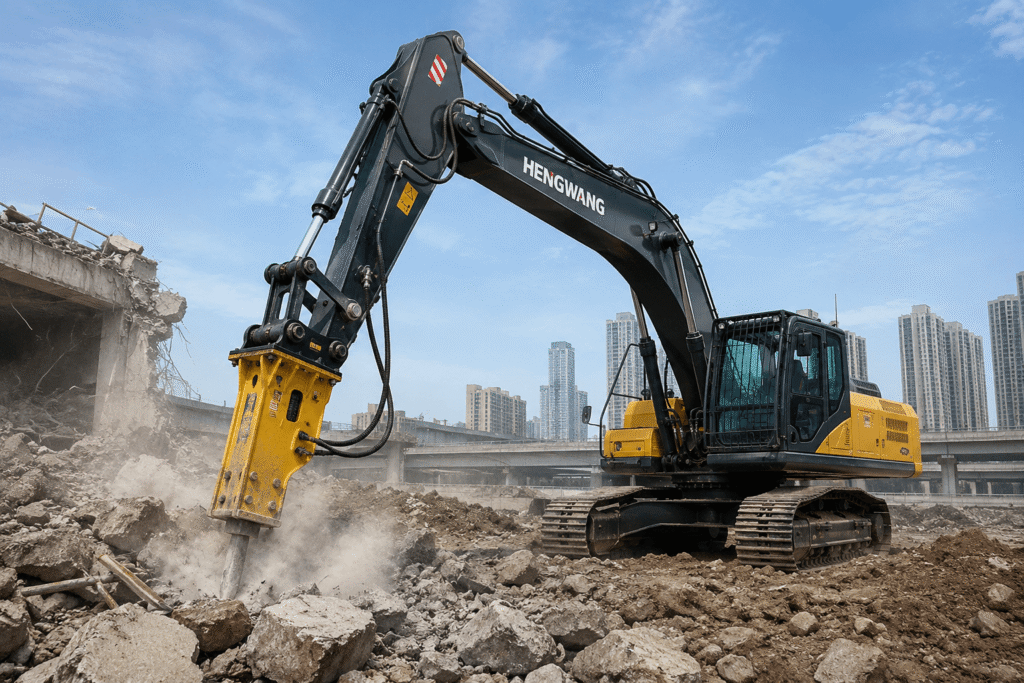
Prospective buyers should look for excavators that offer high visibility and reinforced cabs. When operating a breaker, the vibration can be intense for the operator. The HW-220 is designed to dampen these vibrations, increasing comfort during long shifts. Proper maintenance of both the carrier and the attachment will extend the lifespan of your investment. Ensure you check the bushings and grease the tool bit every few hours of operation.
Summary
Hydraulic breaker uses encompass everything from urban demolition and road repair to heavy-duty mining. These tools provide the necessary force to break hard materials where other methods fail. By selecting the right carrier and breaker combination, operators can maximize productivity while maintaining site safety.
FAQ
Can a hydraulic breaker work underwater?
Yes, but it requires a specialized underwater kit. Standard breakers will suffer internal damage if submerged without an air compressor system to prevent water entry.
How often should I grease my hydraulic breaker?
You should grease the breaker every two to three hours of actual striking time. This reduces friction between the tool bit and the bushings, preventing excessive wear.
What causes a hydraulic breaker to lose power?
Power loss is usually caused by low nitrogen pressure in the back head. Other factors include hydraulic fluid contamination or a worn-out piston seal.
Is it better to use a large breaker or a small one?
It depends entirely on the material and carrier size. Using a breaker that is too large can damage the excavator’s boom and arm structures.
Can I use a hydraulic breaker on a skid steer?
Yes, small hydraulic breakers are frequently used on skid steers for light demolition. Ensure the skid steer’s hydraulic flow rate is within the breaker’s operating range.
Reference Sources
Construction Equipment Magazine – Hydraulic Breaker Selection Guide:https://www.constructionequipment.com/
Association of Equipment Manufacturers – Safe Operation of Hydraulic Attachments:https://www.aem.org/
Mining Technology – Secondary Breaking Methods in Open Pit Mines:https://www.mining-technology.com/
Volvo Construction Equipment – Excavator Attachment Maintenance Best Practices:https://www.volvoce.com/