Choosing between a mini excavator and a standard excavator is not simply a question of which machine has more power. The better choice depends on the work, the space available, the required digging range, attachments, transport and the conditions at the jobsite.
A mini excavator is built around a more compact operating envelope. A standard excavator covers a much wider range of sizes and configurations. That distinction matters when a machine has to get through a gate, work beside an existing structure, reach a certain depth, carry a particular attachment or move a large amount of material in a limited time.
The useful way to make the comparison is to start with the job and then check the machine specifications. Operating weight, dimensions, reach, digging depth, lifting information and attachment compatibility should come from the current specification or operating manual for the exact model and configuration.
Mini Excavator vs Excavator: Quick Comparison
The table below is a starting point rather than a list of universal machine ratings. Excavators vary considerably by manufacturer, size class and configuration, so the actual machine data should be checked before a purchase, rental or project decision.
| Factor | Mini Excavator | Standard Excavator |
| Operating envelope | Compact; generally easier to maneuver in restricted areas | Larger working envelope; needs more room to position and swing |
| Typical jobsite fit | Utilities, landscaping, residential work and other space-limited jobs | Commercial construction, roadwork, deep excavation and higher-volume earthmoving |
| Work range | Usually more limited than larger machines | Typically greater on larger configurations |
| Transport | Often simpler for smaller configurations, subject to weight and local rules | May require heavier transport equipment and additional route planning |
| Attachments | Buckets, augers, breakers, thumbs and other tools on suitable configurations | Larger buckets, hammers, crushers and other high-capacity tools on suitable configurations |
| Main trade-off | Access and maneuverability | Production capacity and larger working range |
What Is a Mini Excavator?
Mini excavators, also called compact excavators, are useful when the work area is tight or the machine has to travel through a restricted access route. Their smaller size can make positioning easier around houses, fences, existing landscaping and utility corridors.
Some compact models use retractable undercarriages or zero- or reduced-tail-swing designs. These features can be valuable on confined sites, but the actual width, tail swing and operating limits need to be checked for the machine being considered.
Common applications
- Residential landscaping and site work
- Utility trenching and service installation
- Drainage and smaller excavation projects
- Light demolition where the machine and attachment are approved for the work
- Agricultural and property-maintenance work
What Is a Standard Excavator?
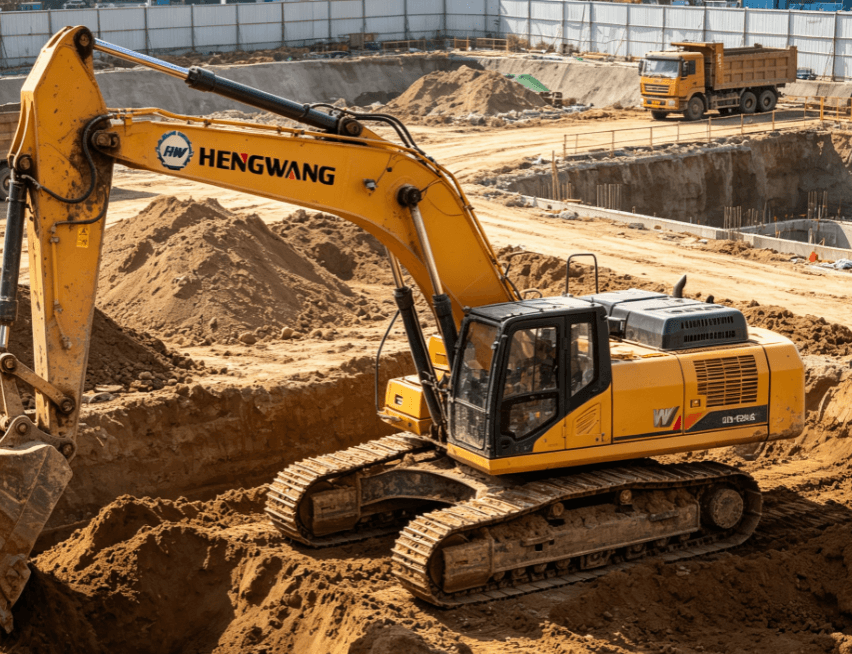
Standard excavators cover a broader and generally heavier range of machines. They are commonly used when the job calls for greater digging reach, higher production, larger attachments or more material movement.
Common applications
- Building foundations and commercial site development
- Road construction and large utility projects
- Deep trenching and mass excavation
- Heavy-duty demolition with suitable attachments
- Large-volume earthmoving where cycle time is important
.png)
Mini Excavator vs Excavator: Key Differences
1. Access and Maneuverability
Access is often the first practical difference. Measure the gate, corridor, overhead clearance and working area before choosing a machine. A machine that cannot enter the site—or cannot swing safely once it is inside—is not a useful choice regardless of its digging performance.
For finished lawns, paved areas or work close to existing structures, also consider ground impact, tail swing and the amount of room needed to reposition the machine.
2. Digging Depth, Reach and Working Envelope
A larger excavator may offer a longer reach or greater digging depth, but those figures should never be assumed from the machine category alone. Compare the manufacturer’s current digging depth, maximum reach, dump height and other work-range figures for the exact configuration.
If the job involves lifting rather than digging alone, use the applicable lift chart at the planned radius and height. Operating weight or bucket size is not a substitute for a rated lifting capacity.
3. Power, Productivity and Job Volume
For a small trench or a residential project, the extra capacity of a large excavator may not improve the job enough to justify the additional transport and operating requirements. On a high-volume excavation project, the opposite can be true: a compact machine may work well but take longer to move the required amount of material.
Think about the complete work cycle—digging, swinging, loading, repositioning and transport—rather than comparing horsepower by itself.
4. Attachments and Auxiliary Hydraulics
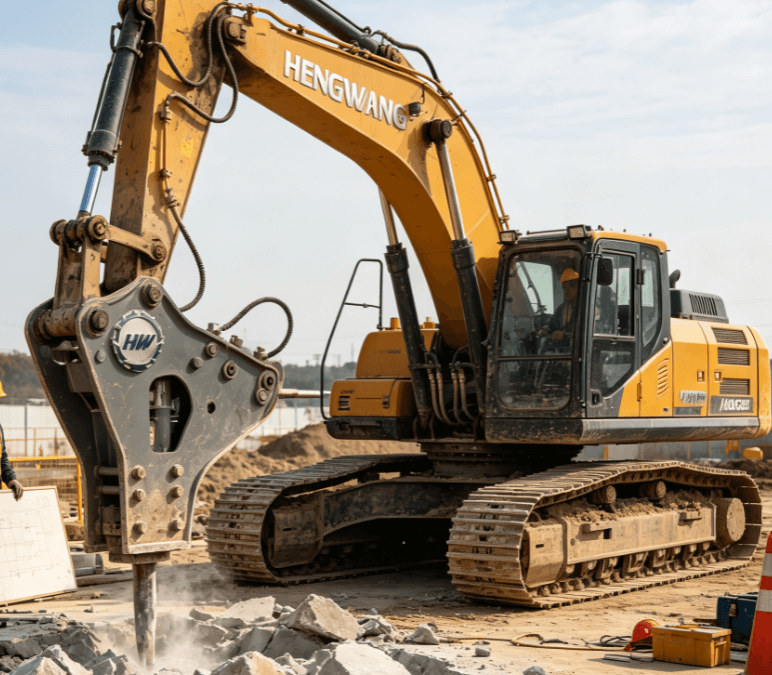
Both mini and standard excavators can use a wide range of attachments, but the available tools and their size depend on the machine configuration.
Before adding a breaker, auger, grapple, thumb, cutter or other hydraulic attachment, check the coupler or mounting interface, tool weight, auxiliary hydraulic flow and pressure, hose connections, controls and the manufacturer’s limits. A tool that physically fits does not automatically mean that it is suitable for the machine.
For buyers comparing machines, attachment availability can be just as important as the base excavator specification. If a particular tool is central to the project, include it in the machine-selection process from the beginning.
5. Transportation and Site Logistics
Transport is easy to overlook because it happens before the machine starts digging. Check the machine’s operating or transport weight, overall dimensions, loading arrangement, trailer or truck requirements and the planned route.
Smaller excavators can be easier to move, but the actual transport method depends on the machine’s weight and local requirements. Larger excavators may require lowboy or other heavy equipment transport, along with additional loading, unloading and route planning.
Do not assume that a machine can be transported legally or safely just because it is described as a mini excavator. Confirm the actual weight and applicable rules for the equipment and route.
6. Fuel, Maintenance and Total Operating Cost
Purchase price is only one part of the cost comparison. For ownership, consider fuel, routine maintenance, undercarriage wear, attachment costs, transport, operator time and downtime. For rental projects, compare the rental period with the expected production rate and delivery charges.
A smaller machine may have lower fuel and transport costs, but a larger machine can sometimes complete a high-volume job faster. The better financial choice depends on the work cycle and how the machine will actually be used.
Which Excavator Fits Your Project?
Use the questions below as a quick screening tool. They are not a substitute for checking the specifications of the machine you plan to use.
| Project condition | What to consider first |
| Restricted entrance or narrow working area | Start with a mini excavator or another compact configuration; verify actual width and tail swing. |
| Deep excavation or long reach | Compare current digging-depth and reach data across suitable machine classes. |
| Large amount of material to move | Compare production requirements, bucket configuration and cycle time. |
| Heavy hydraulic attachment | Check auxiliary flow, pressure, tool weight and attachment approval. |
| Sensitive or finished ground | Consider machine weight, track configuration, ground conditions and site protection measures. |
| Limited transport options | Compare actual transport weight and dimensions before choosing the machine. |
| Mixed project work | Consider whether one machine can handle the main tasks or whether different machines will be more efficient. |
How to Choose the Right Excavator Size
Start with the job, not the model
Write down what the machine actually needs to do: material type, excavation depth, required reach, loading height, daily work volume, access route and the tools you expect to use. This gives you something measurable to compare against the machine specifications.
Check the exact configuration
Once you have a machine in mind, check the configuration behind the published numbers. Operating weight can change with the bucket, counterweight, undercarriage, boom and other equipment. Work range and lift capacity can change as well.
Plan around the real site
A machine that works well on an open construction site may be awkward on a residential property. Check gates, slopes, overhead lines, underground services, traffic, pedestrian separation, ground conditions and space for trucks or material stockpiles.
Confirm what is still unknown
If the machine, attachment, transport arrangement or site condition is not confirmed, mark it as an open item instead of filling the gap with a general specification. This makes the final equipment decision easier to review.
Operating and Maintenance Considerations
Operation should follow the manufacturer’s current manual, the site’s method statement and applicable local requirements. OSHA construction requirements address equipment and excavation safety in applicable situations, but the rules that apply depend on the work, location and task.
Hydraulic systems also need routine inspection. Leaks, damaged hoses, abnormal heat, unusual movement or attachment problems should be dealt with through the approved maintenance process rather than ignored because the machine is otherwise operating normally.
For cost planning, use measured job data where possible. Fuel use varies with machine size, work cycle, idle time, maintenance and operator practice, so a single hourly consumption figure should not be treated as universal.
FAQ: Mini Excavator vs Excavator
What is the main difference between a mini excavator and a standard excavator?
The main differences are operating size, working envelope, production capacity and access. Mini excavators are generally easier to maneuver in restricted spaces, while larger excavators are usually better suited to deeper excavation, larger attachments and high-volume earthmoving.
Is a mini excavator better for tight spaces?
Often, yes. Compact dimensions and, on some models, reduced or zero tail swing can make a mini excavator easier to use around buildings and other obstacles. Always check the actual machine dimensions and swing characteristics.
Can a mini excavator use a hydraulic breaker?
Some can. The breaker must match the excavator’s coupler or mounting system and auxiliary hydraulic flow, pressure and tool weight limits. Check the manufacturer’s approved attachment information before use.
Which excavator is better for deep digging?
A larger excavator may provide a greater documented digging depth and reach, but the correct choice depends on the actual depth, soil, access, attachment and project requirements. Compare the manufacturer’s work-range data for the machines under consideration.
Is a mini excavator cheaper to operate?
It can be, particularly when lower transport, fuel or maintenance requirements fit the job. But a larger machine may complete a high-volume project faster. Compare the full work cycle and total job cost rather than fuel consumption alone.
Should I rent or buy an excavator?
For occasional or uncertain work, renting can reduce the risk of choosing the wrong size. For frequent use, compare purchase cost, utilization, maintenance, transport, financing and expected downtime.
Choosing a Machine for Your Next Project
There is no single excavator size that is best for every job. A mini excavator makes sense when access, maneuverability and a smaller working footprint are important. A larger excavator becomes more attractive when the job depends on greater reach, deeper digging, heavier attachments or higher production.
For buyers comparing machines, the safest starting point is the actual job: measure the site, define the work, list the attachments and check the current specifications for the machines that fit those requirements.
If you are comparing a specific model, request the current specification sheet and attachment information before making a final purchase or rental decision.
References
ReadyDig — Excavator vs. Mini Excavator: Which Machine Fits Your Project? https://readydig.com/excavator-vs-mini-excavator-selection-guide/
Volvo CE — Understanding Excavator Hydraulic Systems https://www.volvoce.com/united-states/en-us/resources/blog/2025/understanding-excavator-hydraulics-part-1/
U.S. OSHA — 29 CFR 1926.602, Material Handling Equipment https://www.osha.gov/laws-regs/regulations/standardnumber/1926/1926.602
Milton Rents — Excavator Rental Guide https://www.miltonrents.com/blog/excavator-rental-guide-5-specs-that-matter-for-your-job/
Caterpillar — Finding Your Excavator Lift Capacity https://www.cat.com/en_US/articles/for-owners/finding-your-excavator-lift-capacity.html
Stucchi USA — Excavator Attachments and Auxiliary Hydraulics https://www.stucchiusa.com/blog/excavator-attachments-and-auxiliary-hydraulics/
Carolina Cat — Construction Equipment Fuel Management Guide https://carolinacat.com/construction/construction-equipment-fuel-management-guide/