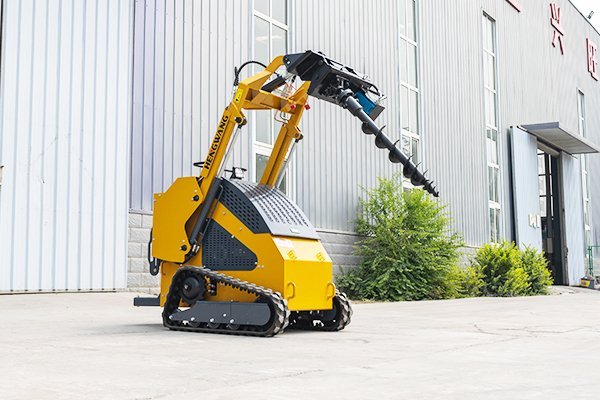
Choosing a skid steer loader manufacturer is not simply a matter of comparing engine power or looking for the lowest quotation. Dealers, contractors and rental companies also need to match rated operating capacity, hydraulic flow, attachments, machine dimensions and parts support to the work their customers actually perform.
HengWang currently offers several skid steer loader families, including the B Series, C Series and multiple HW-JC models. Buyers looking across the complete product range can start with the HengWang loader category.
This guide focuses specifically on those product lines and the information a commercial buyer should compare before requesting a quotation. For a broader comparison between skid steers, wheel loaders and other loader types, see the guide to loader types used in construction.
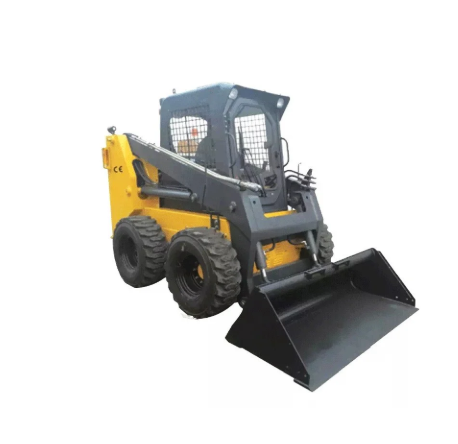
What Should You Compare When Choosing a Skid Steer Loader Manufacturer?
For fleet purchasing, rated operating capacity is usually more useful than engine power alone. Hydraulic flow also becomes important when the machine will run powered attachments.
The exact priorities vary by application, but a practical shortlist usually includes:
- rated operating capacity
- bucket capacity
- engine power
- standard and optional hydraulic flow
- machine width and operating weight
- lift and dumping dimensions
- attachment interface
- engine and hydraulic component configuration
- spare-parts availability
- maintenance access
- documentation and after-sales support
This specification-first approach is particularly useful for dealers. Instead of purchasing several machines with overlapping capabilities, you can build a range around identifiable capacity classes and customer applications.
HengWang B Series Skid Steer Loaders
The B Series skid steer loader currently provides one of the broader capacity ranges in HengWang’s skid steer lineup.
The product range includes:
| Model | Operating Load | Rated Power | Listed High Flow |
|---|---|---|---|
| HW65B | 950 kg | 55 kW | — |
| HW75B | 1,050 kg | 55 kW | 120 L/min |
| HW100B | 1,200 kg | 74 kW | 140 L/min |
| HW120B | 1,500 kg | 103 kW | 140 L/min |
The current B Series product page lists a bucket capacity range of approximately 0.5–0.55 m³.
For a dealer carrying several capacity classes, this wider model range can be useful because the same series extends from a 950 kg operating-load machine to a 1,500 kg model.
Do not select solely by rated power, however. If customers expect to use hydraulic breakers, trenchers, sweepers or other powered attachments, request the hydraulic specification for the exact configuration being quoted.
When Does the C Series Make Sense?
The C Series skid steer loader currently consists of the HW75C and HW100C.
| Model | Operating Load | Bucket Capacity | Rated Power | High Flow |
|---|---|---|---|---|
| HW75C | 1,050 kg | 0.5 m³ | 55 kW | 120 L/min |
| HW100C | 1,200 kg | 0.55 m³ | 74 kW | 140 L/min |
These capacities overlap with part of the B Series, so a buyer should not assume that a C Series machine is automatically the correct choice simply because it belongs to a different product family.
Instead, compare the actual configuration.
HengWang’s current C Series specifications highlight the reinforced chassis, high-flow hydraulic options and an ultra-low-temperature starting system. Buyers working in demanding climates or using hydraulic attachments should request the current configuration sheet and confirm which features apply to the machine being quoted.
This is also an important point for distributors: two machines with similar operating capacities can differ in hydraulic packages, dimensions and options, which may affect both selling price and the applications you can support.
Where Do the HW-JC Models Fit?
The HW-JC range gives buyers additional choices below and around the 1-ton operating-capacity range.
Representative models currently listed by HengWang include:
| Model | Rated Operating Capacity | Bucket Capacity | Operating Weight |
|---|---|---|---|
| HW-JC45 | 700 kg | 0.4–0.5 m³ | 3,000 kg |
| HW-JC60G | 850 kg | 0.45–0.5 m³ | 3,300 kg |
| HW-JC75 | 1,050 kg | 0.55–0.6 m³ | 3,500 kg |
The smaller HW-JC45 skid steer loader may be worth evaluating where a 700 kg rated operating capacity is sufficient and buyers do not require the capacity of the larger B or C Series models.
At the other end, the HW-JC75 skid steer loader is currently listed with a rated operating capacity of 1,050 kg, a 0.55–0.6 m³ bucket and hydraulic pump flow of 75/125 L/min.
That places it in a capacity class that overlaps with the HW75B and HW75C. For commercial buyers, this makes a specification comparison more useful than choosing by model name alone.
Ask the supplier to compare the three configurations side by side if your target operating capacity is around 1,050 kg.
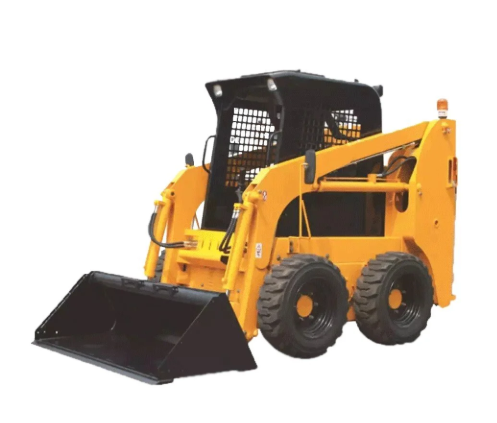
B Series vs C Series vs HW-JC: Which One Should You Shortlist?
A simple way to narrow the range is to start with workload rather than series name.
| Purchasing Requirement | Models Worth Reviewing |
|---|---|
| Around 700 kg operating capacity | HW-JC45 |
| Around 850 kg operating capacity | HW-JC60G |
| Around 950 kg operating capacity | HW65B |
| Around 1,050 kg operating capacity | HW75B, HW75C, HW-JC75 |
| Around 1,200 kg operating capacity | HW100B, HW100C |
| Up to 1,500 kg operating capacity | HW120B |
This table should be treated as an initial shortlist rather than a final selection.
For example, a contractor who mainly uses a bucket may prioritize operating capacity, dumping dimensions and maneuverability. A rental fleet supporting several hydraulic attachments will need to pay more attention to auxiliary hydraulic flow and attachment compatibility.
Transport weight and machine dimensions also matter when equipment frequently moves between jobsites.
Hydraulic Flow and Attachments Can Change the Buying Decision
One common mistake when comparing skid steers is focusing on horsepower while leaving attachment requirements until later.
For powered attachments, the hydraulic system may determine whether the attachment can operate as intended. Some HengWang B and C Series configurations list high-flow outputs of 120 or 140 L/min, while the HW-JC75 product page lists hydraulic pump flow of 75/125 L/min.
Before ordering, send the manufacturer a list of the attachments you expect to use and request confirmation of:
- required hydraulic flow and pressure
- coupler/interface compatibility
- auxiliary hydraulic connections
- electrical requirements where applicable
- attachment weight limits
- recommended loader configuration
This is especially important for rental companies because attachment incompatibility can leave both the loader and attachment unavailable for hire.
What Affects Skid Steer Loader Price?
A useful quotation should show more than one machine price.
The final skid steer loader cost can change according to:
- model and rated operating capacity
- engine configuration
- standard-flow or high-flow hydraulics
- open or enclosed operator station
- optional attachments
- tire configuration
- spare-parts package
- destination market requirements
- shipping terms and destination
- dealer or fleet order quantity
For this reason, buyers comparing several skid steer loader suppliers should request quotations based on the same specification.
If one quotation includes a bucket, high-flow hydraulics and spare filters while another covers only the base machine, the headline prices are not directly comparable.
For dealers, it is also worth requesting separate prices for commonly ordered attachments and wear parts. This makes it easier to calculate landed cost and plan aftermarket inventory.
Manufacturer Checks Before Placing an Order
A product specification is only part of supplier evaluation.
Before confirming an order, ask the manufacturer for the documents relevant to your market and intended configuration.
A useful RFQ package should normally specify:
- Required model or operating-capacity range.
- Main jobs the loader will perform.
- Attachments required.
- Hydraulic-flow requirements.
- Engine or emissions requirements for the destination market.
- Cab and operator options.
- Quantity.
- Spare-parts requirements.
- Destination port or delivery location.
You can then ask for a model-specific specification sheet, quotation, lead time, warranty terms, parts information and available technical support.
For distributors and rental fleets, also clarify how wear parts and service items are identified and ordered. A slightly lower initial machine price may offer limited value if routine parts are difficult to source later.
Safety Should Be Part of the Purchase Review
Safety information should be reviewed alongside technical specifications, particularly when machines will enter a rental fleet or be operated by multiple employees.
The U.S. Occupational Safety and Health Administration’s material handling equipment requirements cover loaders and other earthmoving equipment in construction.
The U.S. National Institute for Occupational Safety and Health also provides a recent Skid Steer Loader Safety Toolbox Talk covering hazards associated with operating or working near skid steer loaders.
Local regulations differ, so dealers and end users should confirm the safety, operator-protection and compliance requirements that apply in the destination country.
When requesting a quotation, ask which operator manuals, safety instructions and machine documentation are supplied with the specific configuration.
How to Request the Right Skid Steer Loader Quote
For most B2B buyers, a better inquiry produces a better quotation.
Instead of sending:
“Please send skid steer loader price.”
Provide the supplier with information such as:
- target rated operating capacity
- materials normally handled
- bucket or attachment requirements
- required hydraulic flow
- operating environment
- preferred engine configuration
- expected annual utilization
- quantity
- destination country and port
HengWang’s current loader range includes B Series, C Series, HW-JC models and additional skid steer configurations. Buyers can review the full loader product range before preparing an RFQ.
If several models fall within your required capacity, request a side-by-side specification and quotation rather than selecting solely on rated power or model number.
FAQ
Is HengWang a skid steer loader manufacturer or supplier?
HengWang lists multiple skid steer loader families within its construction machinery range, including B Series, C Series and HW-JC models. Commercial buyers should confirm the exact manufacturing, configuration, warranty and supply terms relevant to their order directly during the RFQ process.
Which HengWang skid steer models are around 1,000 kg capacity?
Current product specifications place the HW75B, HW75C and HW-JC75 around the 1,050 kg operating-capacity level. Their hydraulic configurations and other specifications differ, so buyers should compare the current datasheets rather than treating the three models as interchangeable.
What specifications should I send to a skid steer loader manufacturer?
Start with required operating capacity, attachment types, hydraulic flow, operating conditions, engine or emissions requirements, quantity and delivery destination. Providing these details makes it easier for a supplier to recommend an appropriate configuration.
Does a skid steer loader quotation normally include attachments?
It depends on the quotation. Ask the supplier to separate the base machine, standard bucket, optional attachments, spare-parts package and shipping costs. This makes quotations from different suppliers easier to compare.
What should rental companies check before buying skid steer loaders?
Rental buyers should pay particular attention to attachment compatibility, hydraulic flow, common wear parts, technician access, operator documentation and the availability of frequently replaced service parts. Standardizing some configurations across the fleet can also simplify parts stocking and operator familiarization.
Conclusion
Selecting a skid steer loader manufacturer becomes easier once the comparison moves from general claims to specific operating requirements.
HengWang’s B Series currently offers the broadest operating-load range among the three groups discussed here, while the C Series and HW-JC models provide additional configurations across several overlapping capacity classes. The best shortlist should therefore start with required operating capacity, hydraulic demand, attachments, machine dimensions and after-sales requirements.
For dealers, contractors or rental companies preparing a purchase, review the current HengWang loader range and send the required workload, attachment, quantity and destination information with your inquiry. That gives the supplier enough detail to prepare a more relevant model recommendation and quotation.