Choosing between a crawler dozer and a wheel dozer is a decision that impacts project efficiency, fuel consumption, and long-term maintenance costs. While both machines are designed to push material, their mobility systems—tracks versus tires—dictate their performance in specific environments.
The primary difference between a crawler dozer and a wheel dozer is their interaction with the ground. A crawler dozer uses steel or rubber tracks to provide maximum traction and low ground pressure, making it ideal for soft terrain and heavy earthmoving. A wheel dozer uses four large tires, offering higher speeds and better maneuverability on firm surfaces without damaging the ground.
Fundamental Mechanics: Tracked vs. Wheeled Bulldozers
To understand which machine fits your fleet, you must first look at the engineering behind the undercarriage and the drive system.
What is a Crawler Dozer?
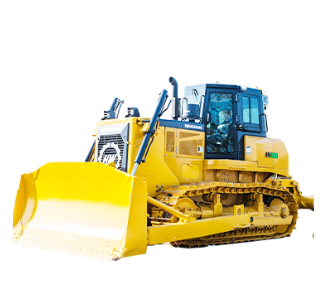
A crawler dozer (or tracked bulldozer) features a continuous track system that distributes the machine’s weight over a large surface area. This configuration provides the high tractive effort (drawbar pull) required to push heavy loads through deep mud, sand, or rocky inclines. Because of their stability, they are often used for pioneering work and rough grading.
What is a Wheel Dozer?
A wheel dozer is built on a four-wheel-drive chassis, usually with articulated steering. It operates much like a large wheel loader but is fitted with a dozer blade instead of a bucket. The tires allow the machine to travel at speeds up to three times faster than a crawler, making it a “utility” dozer capable of moving between different areas of a large job site quickly.
Technical Comparison: Performance Metrics
When evaluating tracked vs wheeled bulldozers, contractors must analyze three technical variables: traction, mobility, and ground pressure.
1. Traction and Drawbar Pull
Traction is where the crawler dozer excels. The contact patch of a track is significantly larger than that of four tires.
- Crawler Dozers: Can convert more engine power into pushing force because they rarely suffer from “wheel spin.” They are the gold standard for heavy heavy-duty pushing and ground ripping.
- Wheel Dozers: Rely on the weight of the machine and the friction of the tires. On wet or slick surfaces, wheel dozers lose traction efficiency, though they perform well on dry, compacted soil.
2. Speed and Mobility
If your project requires “load and carry” or frequent relocation, the wheel dozer is the superior choice.
- Wheel Dozers: Can reach speeds of 15–25 mph (24–40 km/h). They can self-transport between sections of a mine or a road project without the need for a lowboy trailer.
- Crawler Dozers: Top out at 5–7 mph (8–11 km/h). Moving a large crawler across a job site is slow and causes significant wear on the undercarriage components.
3. Ground Pressure (PSI)
Ground pressure determines whether a machine will float on top of the soil or sink into it.
- Crawler (Track) Dozer: Typically exerts 4 to 9 PSI (depending on track shoe width). This allows it to work in swamps or on soft stockpiles where a wheel dozer would get stuck.
- Wheel Dozer: Exerts much higher ground pressure because the entire weight is concentrated on four points. This makes them excellent for soil compaction but poor for “flotation” in soft mud.
| Feature | Crawler Dozer (Tracked) | Wheel Dozer (Wheeled) |
| Primary Advantage | Traction & Stability | Speed & Maneuverability |
| Ground Pressure | Low (4–9 PSI) | High |
| Max Speed | 6–8 mph | 15–25 mph |
| Best Terrain | Mud, Sand, Steep Slopes | Hard Ground, Asphalt, Flat Sites |
| Steering | Skid/Differential Steering | Articulated Steering |
| Transport | Requires Trailer | Self-Transportable (short distances) |
Maintenance and Total Cost of Ownership (TCO)
The debate of track dozer vs tire dozer often comes down to the “running gear” costs.
Undercarriage Wear (Crawler)
The undercarriage—including tracks, rollers, idlers, and sprockets—can account for up to 50% of the lifetime maintenance cost of a crawler dozer. In abrasive conditions (like sand or granite), the metal-on-metal wear is constant. Operators must regularly monitor track tension to prevent premature failure.
Tire Maintenance (Wheel)
Wheel dozers avoid undercarriage costs but face tire expenses. Large OTR (Off-The-Road) tires are expensive. While they don’t wear out as fast as tracks on hard surfaces, they are susceptible to sidewall cuts and punctures in sharp-rock environments. However, on soft or non-abrasive soil, tires generally have a lower “cost-per-hour” than tracks.
Best Uses: Industry-Specific Applications
Crawler Bulldozer Advantages in Construction and Mining
- Pioneering: Clearing land where the ground is uneven, wooded, or saturated.
- Slope Work: The low center of gravity and wide footprint make tracked dozers safer on inclines.
- Ripping: Using a rear ripper to break up rock or frozen ground requires the immense traction only tracks can provide.
- Fine Grading: LGP (Low Ground Pressure) crawler dozers are used for precision finishing on building pads.
Wheel Dozer Applications in Mining and Landfills
- Surface Mining: Used for cleaning up around electric shovels and maintaining haul roads where speed is essential to stay out of the way of haul trucks.
- Landfills: Wheel dozers provide excellent compaction for waste layers and can move quickly across different cells.
- Stockpiling: Ideal for pushing coal or wood chips on flat, stable pads where the machine needs to move back and forth rapidly.
- Road Maintenance: Cleaning debris from paved or hard-packed gravel roads without damaging the surface.
Decision Matrix: How to Choose the Right Dozer
To select the correct machine for your fleet, ask the following questions:
- What is the ground condition?
- Soft/Muddy/Steep → Crawler Dozer
- Hard/Compact/Flat → Wheel Dozer
- How far do you need to push the material?
- Short distances (<100 feet) → Crawler Dozer
- Long distances or multiple locations → Wheel Dozer
- Is surface protection important?
- Working on or near asphalt/concrete → Wheel Dozer (Steel tracks will destroy pavement).
- Is compaction required?
- Yes (Landfills/Road bases) → Wheel Dozer
- No (Spreading topsoil) → Crawler Dozer
Conclusion
A crawler dozer is a “power” machine, designed for the toughest, most unstable environments where traction is the limiting factor. A wheel dozer is a “mobility” machine, designed for high-production environments where the ability to move quickly across firm ground translates to more cycles per hour. For most general contractors, a crawler dozer is the versatile first choice. However, for large-scale mining, landfill operations, and road maintenance, the wheel dozer offers a speed and cost advantage that tracks cannot match.
FAQ
Q: Can a wheel dozer work on a slope?
A: Wheel dozers can handle mild inclines, but they lack the lateral stability and traction of a crawler. For steep slopes (greater than 15–20 degrees), a crawler dozer is significantly safer and more effective.
Q: Are crawler dozers more expensive than wheel dozers?
A: Generally, the initial purchase price for similarly powered machines is comparable. However, the operating cost of a crawler is often higher due to undercarriage wear, especially in abrasive soils.
Q: Why use a wheel dozer instead of a wheel loader?
A: While they look similar, a wheel dozer is engineered specifically for pushing. It has a heavier frame and a dozer-specific transmission designed to handle the continuous horizontal load of a blade, whereas a loader is optimized for vertical lifting.
Q: Are there rubber-tracked dozers?
A: Yes, some smaller or compact dozers use rubber tracks. These provide a middle ground—better traction than tires and less surface damage than steel tracks—but they lack the durability of steel in heavy rock applications.
Reference Sources
- Caterpillar Performance Handbook (Edition 49): Used for Speed and Drawbar Pull comparisons.
- ISO 6165:2012: Earth-moving machinery — Basic types — Identification and terms and definitions.
- Association of Equipment Manufacturers (AEM): Safety and maintenance guidelines for tracked vs. wheeled undercarriages.
- SAE J1040: Performance Criteria for Rollover Protective Structures (ROPS) for Earthmoving Machinery.