Choosing a reliable drilling rig supplier in China involves more than comparing the lowest quotation. International buyers need to evaluate machine specifications, manufacturing capability, quality control, export experience, spare-parts support, and total landed cost before placing an order.
This guide explains what construction companies, drilling contractors, distributors, and procurement teams should check when selecting and verifying a Chinese drilling rig supplier.
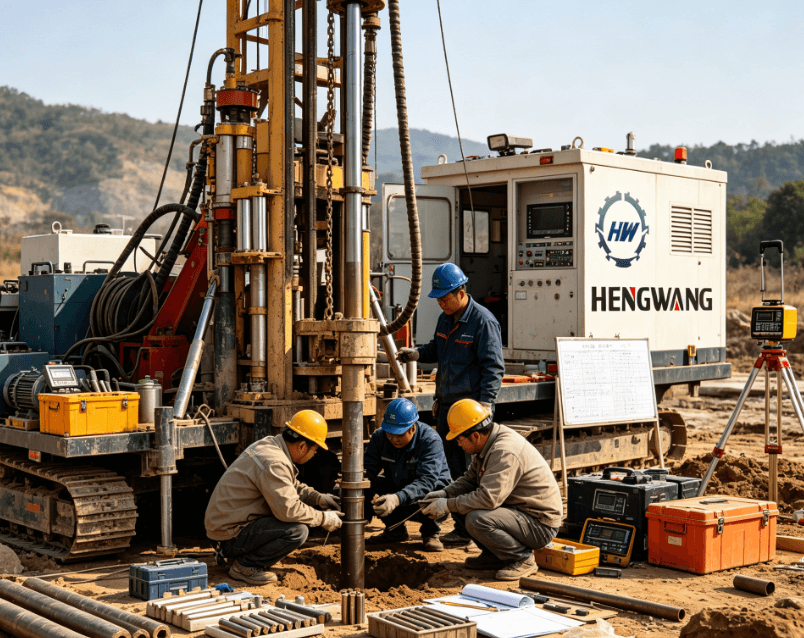
Why Source Drilling Rigs from China?
China has a large manufacturing base for construction and drilling equipment, offering a wide range of machines for geological exploration, water-well drilling, construction, mining, and other applications.
For international buyers, sourcing from China can provide:
- Competitive equipment pricing
- A broad selection of drilling-rig configurations
- Customization and accessory options
- Established manufacturing and component supply chains
- International export and logistics experience
However, the lowest factory price does not necessarily result in the lowest overall procurement cost. Machine suitability, spare parts, maintenance, shipping, downtime, and technical support can significantly affect the total cost of ownership.
The goal should therefore be to find a China drilling rig supplier that can provide the right equipment for your application and support it throughout its service life.
Manufacturer, Supplier, or Trading Company?
Before comparing quotations, determine who is actually responsible for manufacturing the drilling rig.
Direct Manufacturer
A direct manufacturer normally has greater control over production, engineering, assembly, and testing. This can make it easier to discuss customization, technical specifications, factory inspections, and spare-parts requirements.
Supplier or Distributor
A supplier may maintain inventory or represent several manufacturers. This can be useful when you need different equipment or faster delivery, but you should still confirm the actual production source.
Trading Company
A trading company can simplify communication and export coordination, particularly for multi-product purchases. However, clarify which factory produces the rig and who is responsible for quality, warranty, and technical support.
For high-value equipment, request company information, factory details, technical documentation, and evidence of previous export experience before moving to final negotiations.
6 Factors to Evaluate a China Drilling Rig Supplier
1. Match the Rig to the Application
Start with the drilling job, not the supplier’s most powerful model.
Define:
- Required drilling depth and diameter
- Soil and rock conditions
- Drilling method
- Site access and terrain
- Required mobility
- Expected operating hours
- Accessories and tooling
- Local safety or compliance requirements
Different applications may require very different equipment. Geological exploration, DTH drilling, water-well drilling, anchoring, and horizontal directional drilling should not be evaluated using the same criteria.
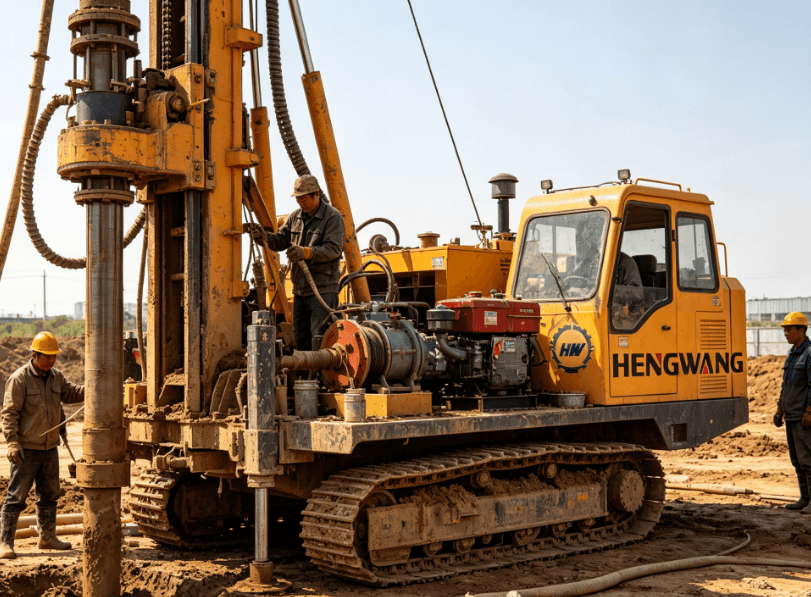
A supplier with multiple product categories can make the selection process easier. You can review HengWang’s drilling rigs to compare different machine types and configurations before preparing an RFQ.
2. Compare Complete Technical Specifications
A reliable supplier should provide a detailed datasheet rather than relying only on marketing descriptions.
Depending on the rig type, compare:
- Maximum drilling depth
- Drilling diameter
- Rotation speed and torque
- Feed or lifting capacity
- Engine power
- Hydraulic system
- Drill-pipe specifications
- Machine weight and dimensions
- Mobility and gradeability
- Optional equipment
Do not judge a machine by one specification alone. A rig with a greater maximum drilling depth may not be suitable if its configuration does not match your geology, drilling method, or duty cycle.
For example, HengWang’s HW-160L hydraulic drilling rig is listed with a 160 m drilling depth, 75–325 mm drilling diameter range, 13.2 kW rated power, and 3,200 kg machine weight. This illustrates why buyers should compare the complete machine configuration rather than focusing on a single headline specification.
3. Verify Manufacturing and Quality Control
A supplier’s website is only the starting point for due diligence.
Ask for evidence covering:
- Factory location and production facilities
- Manufacturing and assembly processes
- Quality-control procedures
- Structural and welding inspection
- Hydraulic and electrical testing
- Final machine testing
- Previous export experience
For larger purchases, consider a factory audit or independent inspection.
Instead of simply asking, “Do you have quality control?”, ask what is inspected, when inspections take place, and what records will be provided.
Inspection reports, testing videos, serial-number records, and a Factory Acceptance Test (FAT) plan can provide useful evidence before shipment.
4. Check Components and Spare Parts
Long-term drilling-rig operating costs depend heavily on component reliability and parts availability.
Ask about the brands and specifications of key components, including:
- Engine
- Hydraulic pumps and valves
- Hydraulic motors
- Bearings
- Control components
- Drill pipes
- Drilling tools
Then confirm how replacement parts are supplied.
Before ordering, request a recommended spare-parts list and clarify pricing, delivery times, warranty replacement procedures, and technical support channels.
For remote projects, dependable spare-parts support can be more important than saving a small amount on the initial machine price.
.png)
5. Evaluate Export and Logistics Capability
International drilling-rig procurement involves more than arranging ocean freight.
Confirm:
- Export documentation
- Customs classification
- Packing method
- Machine dimensions and shipping weight
- Port of departure
- Incoterm
- Cargo insurance
- Destination-country import requirements
When requesting quotations, give every supplier the same technical specification. Ask them to clearly identify the machine configuration, accessories, delivery terms, and major additional costs.
This allows you to compare total landed cost instead of factory price alone.
6. Review Warranty and After-Sales Support
After-sales support should be evaluated before the purchase order, particularly when the machine will operate far from the supplier’s factory.
Clarify:
- Warranty period and coverage
- Components covered by warranty
- Warranty claim procedure
- Spare-parts availability
- Remote technical support
- Operator training
- Commissioning assistance
- Maintenance documentation
A supplier that provides clear answers before the sale is generally easier to work with after delivery.
How to Shortlist a Drilling Rig Supplier in China
A practical procurement process can be completed in five stages.
1. Prepare a technical brief
Define the application, drilling depth, diameter, geological conditions, drilling method, site conditions, accessories, destination country, and target delivery date.
2. Shortlist several suppliers
Compare manufacturers and suppliers based on product suitability, manufacturing capability, export experience, quality procedures, and after-sales support.
3. Send a consistent RFQ
Ask each supplier to quote against the same requirements. This prevents a low quotation from appearing attractive simply because it excludes accessories or important equipment configurations.
4. Verify before payment
Review company information, technical documents, factory evidence, references, and inspection arrangements. For significant purchases, consider an independent factory or pre-shipment inspection.
5. Put the final specification into the contract
The contract should clearly identify the machine model, configuration, accessories, technical requirements, delivery milestones, payment terms, warranty, inspection requirements, and spare-parts arrangements.
Drilling Rig Supplier Evaluation Checklist
| Evaluation Area | What to Confirm |
|---|---|
| Application | Depth, diameter, geology, drilling method |
| Machine | Complete specifications and configuration |
| Factory | Manufacturing location and production capability |
| Quality | Inspection and testing procedures |
| Components | Engine, hydraulic system, and key parts |
| Export | Documentation and shipping experience |
| Spare Parts | Availability, pricing, and delivery time |
| Warranty | Coverage and claims procedure |
| Logistics | Incoterm, packing, freight, and import requirements |
| Commercial Terms | Payment schedule and contract conditions |
Where to Compare Drilling Rigs
Once your technical requirements are defined, review actual equipment categories before requesting quotations.
HengWang’s drilling rigs product category provides a starting point for comparing available drilling-rig configurations. The range covers different applications and equipment types, including hydraulic drilling rigs, pneumatic drilling rigs, geological exploration drilling rigs, and horizontal directional drilling equipment.
When contacting a supplier, provide your application, required drilling depth, drilling diameter, geological conditions, destination country, required accessories, target delivery date, and inspection requirements. A detailed RFQ will generally produce a more useful quotation than a simple request for price.
Frequently Asked Questions
How do I verify a Chinese drilling rig supplier?
Verify the actual manufacturer, factory location, technical documentation, quality-control process, export experience, and after-sales support. For high-value purchases, consider a factory audit or independent inspection before shipment.
What specifications should I compare?
Compare drilling depth, drilling diameter, drilling method, rotation speed and torque, feed or lifting capacity, engine power, hydraulic configuration, machine dimensions, weight, and accessories. Always compare machines configured for the same application.
Is buying directly from a manufacturer better?
Not always. A direct manufacturer can provide closer access to engineering, customization, and production information, while a reputable supplier or trading company may simplify multi-product procurement. The important point is to verify the actual manufacturing source and contractual responsibilities.
What should a drilling rig quotation include?
A quotation should identify the machine model and configuration, accessories, technical specifications, price, lead time, Incoterm, packaging, payment terms, warranty, spare-parts arrangements, and inspection requirements.
Should I order one machine before a larger purchase?
For a new supplier or unfamiliar application, a pilot order can reduce procurement risk. It allows the buyer to evaluate machine performance, build quality, documentation, spare-parts support, and supplier responsiveness before expanding the purchase.
Final Takeaway
Choosing a drilling rig supplier in China should be based on more than the initial quotation.
Define your application first, compare complete machine specifications, verify the actual manufacturer, examine quality-control procedures, check spare-parts and warranty support, and calculate the total landed cost.
The strongest supplier is not necessarily the cheapest one. Look for a partner that can demonstrate technical capability, transparent production processes, reliable documentation, and responsive after-sales support.
If you are ready to compare equipment, start with the HengWang drilling rigs product category and use your project requirements to identify the appropriate machine configuration before requesting a quotation.