Choosing a drilling rig manufacturer for an international project involves more than comparing machine prices. Procurement teams also need to consider production capacity, delivery schedules, spare parts, technical support, customization, compliance, and long-term operating costs.
A manufacturer that offers the right equipment on paper may still create problems if parts are difficult to obtain or technical support is slow after delivery. For contractors, distributors, and equipment buyers, the goal is to find a supplier that can support the project from initial specification through delivery and after-sales service.
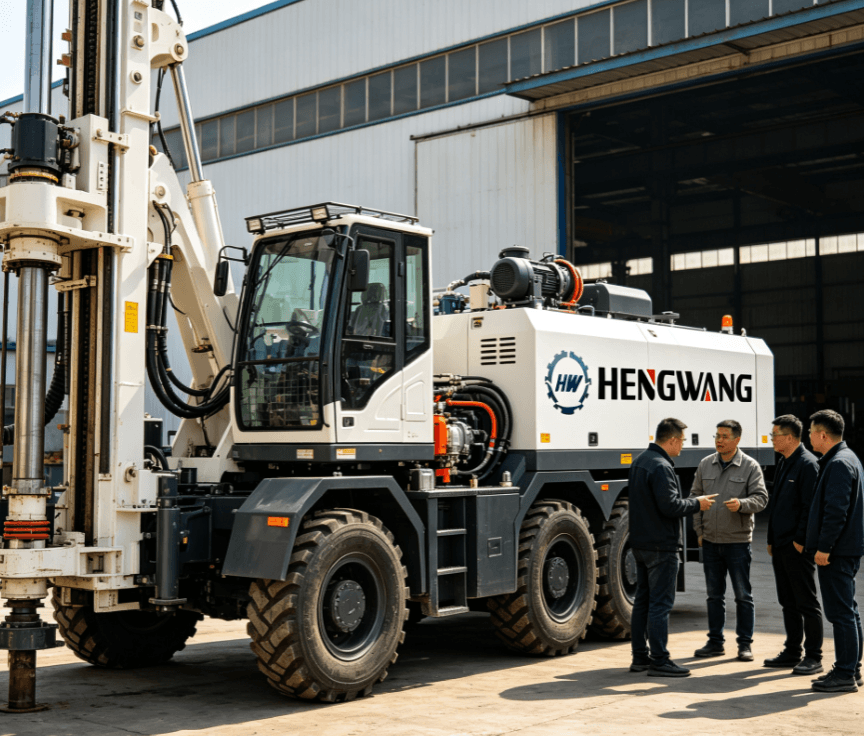
Why Choosing the Right Drilling Rig Manufacturer Matters
The manufacturer you choose can directly affect project scheduling, equipment uptime, maintenance costs, and overall return on investment.
For international buyers, several issues deserve particular attention:
- Production capacity: Can the manufacturer meet your required quantity and delivery schedule?
- Product suitability: Does the manufacturer offer rigs for your drilling depth, diameter, terrain, and application?
- Spare parts: Can critical components be supplied quickly when maintenance is required?
- Technical support: Is training, troubleshooting, and documentation available after delivery?
- Export experience: Is the supplier familiar with international shipping and export documentation?
- Total cost of ownership: Will the equipment remain economical to operate and maintain over its service life?
A lower purchase price does not always mean a lower overall cost. Downtime, delayed parts, difficult maintenance, and expensive modifications can quickly increase the real cost of ownership.
Key Factors When Evaluating a Drilling Rig Manufacturer
1. Manufacturing Capacity and Lead Time
Start by confirming whether the manufacturer can consistently produce the required equipment.
Ask about:
- Standard production lead time
- Current production capacity
- Shipment schedules
- Minimum order quantities
- Availability of standard models
- Options for customized equipment
If the rig is needed for a specific construction or mining project, confirm the production schedule before making assumptions based on the supplier’s standard lead time.
2. Product Range and Technical Capability
A reliable manufacturer should have a product range that matches your application rather than forcing a standard machine into an unsuitable project.
Compare specifications such as:
- Maximum drilling depth
- Drilling diameter
- Engine or motor power
- Rotary torque
- Travel speed
- Machine dimensions
- Operating weight
- Mobility and transport requirements
- Compatible drilling tools and accessories
It is also worth asking whether the manufacturer can provide different configurations for changing ground conditions or project requirements.
3. Spare Parts and After-Sales Support
For equipment used on international projects, after-sales support can be as important as the machine itself.
Before placing an order, ask:
- Which spare parts are normally kept in stock?
- How quickly can critical components be shipped?
- Are service manuals and parts catalogs provided?
- Is remote technical support available?
- Can operators or maintenance staff receive training?
- Does the manufacturer work with local distributors or service partners?
A clear spare-parts process can reduce downtime when hydraulic, electrical, engine, or drilling components require replacement.
4. Customization Options
Different drilling environments may require different configurations. Soil conditions, drilling depth, hole diameter, transportation restrictions, and auxiliary equipment can all affect machine selection.
Ask the manufacturer which parts of the rig can be customized, such as:
- Power configuration
- Mast or drilling system
- Hydraulic components
- Chassis or mobility system
- Drilling tools
- Control systems
- Auxiliary equipment
Before approving a customized specification, make sure the final configuration is clearly documented in the quotation and purchase contract.
5. Compliance and Export Documentation
International buyers should confirm documentation requirements early, particularly when equipment will be imported into a market with specific safety or technical regulations.
Depending on the destination and application, buyers may need documents such as:
- Product datasheets
- Commercial invoices
- Packing lists
- Certificates of origin
- Test or inspection documents
- Compliance declarations
- Operation and maintenance manuals
Do not assume that a certificate required in one market will automatically satisfy another country’s import or operating requirements. Confirm the applicable requirements for the destination market before ordering.
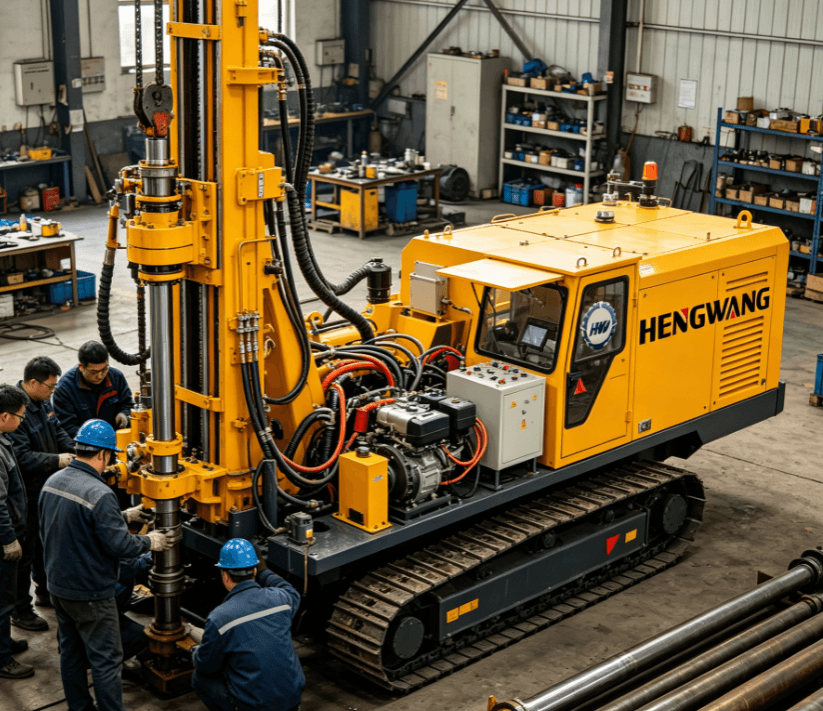
Drilling Rig Manufacturer Evaluation Checklist
| Decision Factor | Why It Matters | Questions to Ask |
|---|---|---|
| Production capacity | Affects project scheduling | What is the typical production lead time? |
| Product range | Determines whether the rig fits the application | Which models match the required depth and diameter? |
| Spare parts | Helps reduce downtime | How quickly can critical parts be supplied? |
| After-sales support | Supports long-term operation | Do you provide training, manuals, and technical assistance? |
| Customization | Allows the machine to match site conditions | Which components or configurations can be customized? |
| Export experience | Helps simplify international procurement | Which export documents can you provide? |
| Warranty | Reduces post-delivery risk | What does the warranty cover and for how long? |
| Total cost of ownership | Shows the real cost beyond purchase price | What are typical maintenance and operating requirements? |
How to Verify a Drilling Rig Manufacturer
A manufacturer’s website is a useful starting point, but it should not be the only source of information.
Before placing an order, try to verify:
- Factory and production capability — Check whether the manufacturer provides clear information about its production facilities and equipment.
- Product specifications — Compare technical datasheets rather than relying only on marketing descriptions.
- Export experience — Ask whether the supplier has experience shipping similar equipment to your target market.
- Customer references — Request project references or case studies where appropriate.
- Parts and service process — Confirm who handles technical support after delivery.
- Commercial documentation — Request a formal quotation with a clearly defined scope of supply.
For larger purchases, a factory visit or third-party inspection can provide additional confidence before shipment.
What to Ask Before Requesting a Quote
Prepare a basic technical brief before contacting manufacturers. At minimum, include:
- Required drilling depth
- Hole diameter
- Ground or soil conditions
- Expected operating environment
- Required production capacity
- Preferred power source
- Mobility requirements
- Destination country
- Quantity required
- Desired delivery date
Providing this information helps manufacturers recommend a suitable configuration and makes quotations easier to compare.
Avoid comparing suppliers based only on the headline machine price. Check what is included in the quoted scope, including drilling tools, spare parts, accessories, documentation, packaging, and other optional equipment.
Negotiation and Contract Tips
Once you have shortlisted suitable manufacturers, make the final agreement as specific as possible.
The contract should clearly define:
- Machine model and configuration
- Scope of supply
- Included spare parts and accessories
- Production and delivery schedule
- Inspection and acceptance procedures
- Payment milestones
- Warranty terms
- Responsibility for defects
- Spare-parts support
- Technical support arrangements
- Shipping and delivery terms
For high-value equipment, milestone-based payments can help align payment with production and delivery progress.
It is also useful to agree on acceptance criteria before production begins. This reduces the risk of disagreements when the machine is ready for shipment or arrives at the project site.
Frequently Asked Questions
How do I compare different drilling rig manufacturers?
Start with technical suitability, then compare production capacity, lead time, spare-parts support, warranty, export experience, and total cost of ownership. A manufacturer offering the lowest initial price may not provide the lowest long-term cost.
What should I ask a drilling rig manufacturer before placing an order?
Ask about machine specifications, production lead time, customization, warranty coverage, spare-parts availability, technical support, export documentation, and inspection procedures. Request a detailed quotation rather than comparing only basic machine prices.
How can I verify a drilling rig manufacturer’s factory?
Request company and factory information, production photos or videos, relevant project references, and product documentation. For major orders, consider arranging a factory visit or independent pre-shipment inspection.
What affects the cost of a drilling rig?
Price depends on factors such as drilling depth, hole diameter, power, machine configuration, mobility, drilling tools, automation, customization, and optional equipment. Shipping and import-related costs should also be included when calculating the total procurement budget.
Is after-sales service important when buying a drilling rig internationally?
Yes. Access to spare parts, technical documentation, operator training, and troubleshooting support can have a major effect on equipment uptime. This is especially important when the machine is operating far from the manufacturer’s factory.
Start Your Drilling Rig Supplier Evaluation
A successful international equipment purchase starts with a clear technical specification and a realistic evaluation of the supplier behind the machine.
Compare manufacturers on technical capability, production capacity, delivery reliability, spare-parts availability, after-sales support, compliance, and total cost of ownership rather than purchase price alone.
If you are currently comparing drilling rig manufacturers, you can review HengWang’s drilling rig product range to identify suitable models and then contact the manufacturer for detailed specifications, configurations, and commercial information.
For company information and direct contact options, visit the HengWang homepage.