Choosing the right concrete pump is not simply about selecting the machine with the highest output. For contractors, project managers and procurement teams, the better choice depends on how well the equipment matches the actual construction requirements.
Factors such as concrete volume, pumping distance, site access, working environment and maintenance support can all affect whether a pump performs efficiently after installation.
A pump suitable for a large infrastructure project may not be the best option for a smaller construction site with limited access. Therefore, buyers should evaluate the complete working condition instead of comparing only one specification.
This concrete pump selection guide explains the main factors to consider, including output, reach and jobsite fit, helping buyers prepare before comparing models and suppliers.
For buyers reviewing different concrete equipment options, Hengwang’s Concrete Machinery range provides an overview of available equipment categories.
Start With Your Concrete Pump Application Requirements
Before comparing concrete pump models, define the requirements of the project first.
Important questions include:
- How much concrete needs to be placed?
- How long will each pouring operation take?
- What pumping distance is required?
- Is the site easy to access?
- Will the equipment be used for one project or multiple locations?
For example, a residential construction project may focus more on compact size and flexible movement, while a commercial building project may require longer pumping distance and more continuous operation.
Understanding the application helps avoid choosing equipment based only on maximum specifications.
Evaluate Concrete Pump Output
Concrete pump output directly affects construction efficiency because it determines how much concrete can be delivered within a certain period.
However, the listed output value should not be considered the only deciding factor.
Actual working output can be influenced by:
- Concrete mix characteristics
- Aggregate size
- Pipeline length
- Pumping distance
- Site organization
- Cleaning and setup time
When comparing different concrete pump models, buyers should ask suppliers:
- Under what conditions was the output measured?
- Is the output suitable for the planned concrete mix?
- What working conditions were considered during testing?
A simple calculation method is:
Required output = Total concrete volume ÷ Planned pouring time
After calculating the basic requirement, allow additional capacity for possible delays caused by setup, pipeline adjustment or site changes.
This approach helps buyers select a pump that matches the project instead of simply choosing the largest available model.
Consider Concrete Pump Reach and Placement Distance
Concrete pump reach is another important factor during equipment selection.
The required reach depends on:
- Horizontal pumping distance
- Vertical pumping height
- Pipeline arrangement
- Number of bends
- Placement location
A pump may have sufficient theoretical reach, but the actual working condition can change depending on the jobsite layout.
Before purchasing, confirm:
- Maximum required pumping distance
- Required pipe configuration
- Site obstacles
- Equipment positioning requirements
For projects involving complex layouts, reach should be evaluated together with the complete pumping process rather than viewed as a single specification.
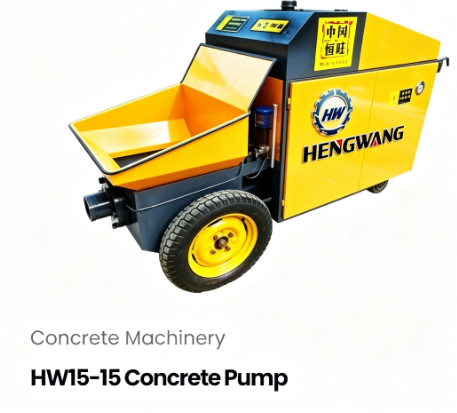
Match the Concrete Pump With Jobsite Conditions
Jobsite conditions often determine whether a concrete pump can work effectively.
Access and transportation
Check:
- Entrance width and height
- Road conditions
- Equipment transport limitations
A machine with suitable technical specifications may still create problems if it cannot reach the working area easily.
Setup space
Consider:
- Available operating area
- Ground conditions
- Equipment positioning requirements
Mobility
If the pump will serve multiple projects, transportation efficiency and setup time become important factors.
For smaller construction projects, a concrete mixer pump may sometimes be considered when contractors need a more compact solution combining mixing and pumping functions. You can also review Hengwang’s guide on concrete mixer pump selection for small construction projects for additional application considerations.
Maintenance, Safety and Supplier Support
Equipment selection should include long-term operation factors, not only initial purchase cost.
Before placing an order, buyers should review:
- Maintenance requirements
- Spare parts availability
- Technical support
- Operator training
- Documentation provided by the supplier
Construction equipment operation should follow applicable safety requirements. For reference, buyers can review construction equipment safety guidance from Occupational Safety and Health Administration (OSHA) when planning equipment operation and site procedures.
For international buyers, supplier support is also important because technical communication, spare parts and after-sales assistance can affect long-term equipment usage.
Concrete Pump Selection Checklist
Before requesting quotations, prepare the following information:
| Factor | What to Check | Buyer Questions |
|---|---|---|
| Output | Required pumping capacity and working conditions | Does the output match our project schedule? |
| Reach | Horizontal and vertical placement requirements | Can the pump reach the required pouring area? |
| Jobsite Access | Transport and installation conditions | Can the equipment fit the working environment? |
| Mobility | Relocation requirements | How easily can the pump move between projects? |
| Maintenance | Service and support options | Are spare parts and technical assistance available? |
This checklist helps procurement teams compare different concrete pump options more effectively.
How to Compare Concrete Pump Models
After confirming project requirements, buyers can compare suitable models based on:
- Required output
- Pumping distance
- Jobsite conditions
- Maintenance requirements
- Supplier support
The goal is not to select the most powerful machine, but to select the equipment that fits the actual application.
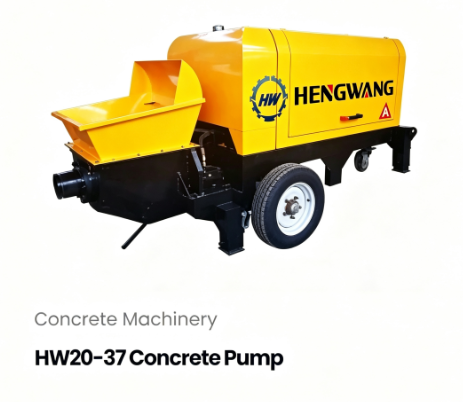
The HW20-37 Concrete Pump can be reviewed as one available model when comparing concrete pumping solutions.
For buyers evaluating manufacturers and suppliers, Hengwang’s Concrete Machinery Manufacturer Guide also provides additional purchasing considerations, including specifications, documentation and supplier evaluation factors.
Request a Concrete Pump Solution Based on Your Project
A useful quotation depends on clear project information.
Before contacting a supplier, prepare:
- Project type
- Required concrete volume
- Pumping distance
- Site conditions
- Destination country
- Required configuration
Providing this information allows suppliers to recommend a more suitable equipment option instead of offering a general quotation.
FAQ
How do I choose the right concrete pump?
The right concrete pump depends on project volume, pumping distance, jobsite access and operating conditions. Buyers should evaluate these factors together rather than focusing only on output.
Is a higher output concrete pump always better?
Not always. A higher output model may not be suitable if the jobsite cannot support the equipment requirements. The best choice is the pump that matches the actual project needs.
What affects concrete pump reach?
Reach is affected by horizontal distance, vertical height, pipeline layout, bends and site conditions.
What information should I provide when requesting a concrete pump quotation?
Provide project type, required output, pumping distance, site conditions, destination and any available concrete mix information.