Excerpt: Compare concrete mixer truck manufacturers and concrete pump suppliers in China. Learn which specifications, documentation and supplier details to check before requesting a quote.
If you are looking for a concrete mixer truck manufacturer in China, the lowest quoted price is only one part of the comparison. For overseas buyers, machine configuration, specifications, spare parts, documentation, inspection and shipping arrangements can all affect the purchase decision.
The same applies when choosing a concrete pump supplier. A clear project requirement makes it easier to identify a suitable machine and obtain quotations that can be compared on a similar basis.
What to Check in a Concrete Mixer Truck Manufacturer
Before contacting a concrete mixer truck manufacturer, check whether the supplier can provide the equipment configuration and support required for your market.
Key points include:
- Available machine models and configurations
- Technical specifications and component information
- Production and delivery capability
- Spare parts availability
- Export and shipping experience
- Inspection or pre-shipment testing options
- Operation and maintenance documentation
- After-sales and technical support
For buyers comparing different types of equipment, the Concrete Machinery product range is a useful place to review available mixer trucks and concrete pumps.
Evaluating a Concrete Mixer Truck Manufacturer
For a concrete mixer truck, start with the operating requirements rather than choosing a model based only on its advertised capacity.
Chassis and power
Check the chassis configuration, engine model, rated power, dimensions, weight and other specifications relevant to your destination market.
If the machine will be used on public roads, confirm the road-legal requirements that apply in the destination country separately from the specifications of the mixer itself.
Mixing capacity and configuration
Ask the manufacturer to clarify:
- Rated or nominal mixing capacity
- Actual working capacity where applicable
- Drum configuration
- Mixing and discharge system
- Overall dimensions
- Standard and optional equipment
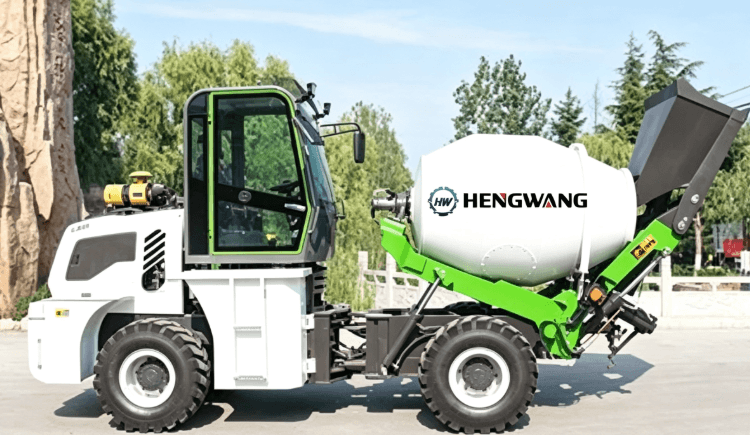
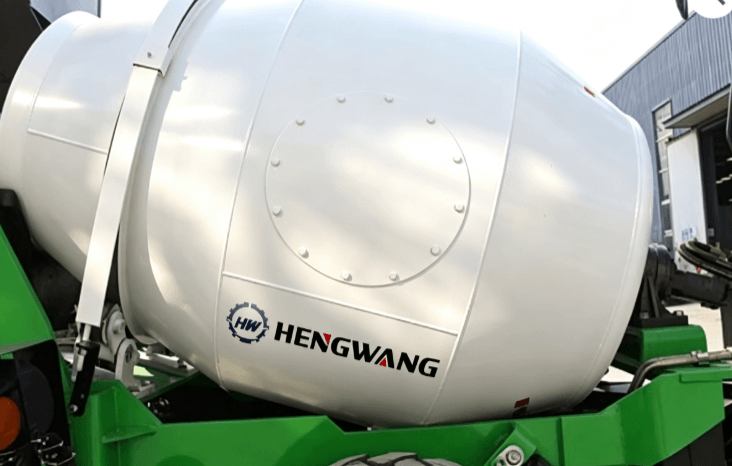
For example, the HWJB120 Concrete Mixer Truck listed by HengWang has a 1.2 m³ stated mixing capacity, 58 kW rated power and 4,580 kg machine weight. Its product page also lists an actual capacity of 1.0 m³, so buyers should review the complete specification rather than relying on one headline figure.
You can view the HWJB120 Concrete Mixer Truck to review its current specifications and request a quotation.
Parts and maintenance
For overseas purchases, ask which components are standard, which are optional and how replacement parts are supplied.
A useful quotation should make it clear whether the price includes the equipment only or also includes specified accessories, spare parts, packing and other items.
For technical reference, ISO 19711-1:2018 covers terminology and commercial specifications for truck mixers. ISO 19711-2:2023 covers safety requirements for truck mixers, while carrier vehicles and national road regulations are outside its scope.
Evaluating a Concrete Pump Supplier
Concrete pump selection should be based on the actual application and delivery requirements.
Before requesting a quotation, consider:
- Required concrete output
- Vertical and horizontal delivery distance
- Maximum aggregate size
- Pipe diameter
- Power requirements
- Jobsite conditions
- Destination country
- Required accessories and spare parts
For example, HengWang’s Concrete Pump range includes several models for different output requirements. The HW40-55 Concrete Pump, for example, is listed with 40 m³/h output, 50 kW rated power and a maximum aggregate size of 40 mm. Its product page also specifies 100 m vertical and 200 m horizontal delivery distances.
These figures should be treated as product specifications for comparison, not as a guarantee that one model will suit every jobsite.
For buyers preparing a technical comparison, ISO 21573-1:2024 provides commercial specification requirements for concrete pumps used for concrete-mix delivery on building sites.
Factory-Direct Concrete Equipment: What Should Buyers Verify?
Buying directly from a manufacturer can simplify communication about configuration and equipment requirements. However, overseas buyers should still verify the supplier before placing an order.
| Check | What to confirm |
|---|---|
| Manufacturer | Company identity, production capability and product range |
| Configuration | Standard equipment, options and technical specifications |
| Inspection | Factory visit, virtual inspection or third-party inspection |
| Documentation | Manuals, parts lists, specifications and applicable certificates |
| Spare parts | Availability, part numbers and estimated lead times |
| Export | Packing, shipping documents and destination requirements |
| Payment | Payment terms and milestones |
| After-sales | Technical support, warranty terms and spare-parts process |
This information can also help you compare a factory-direct supplier with a local distributor or trading company.
What Information Should You Include in an RFQ?
A detailed request usually makes it easier for a manufacturer to recommend a suitable model and prepare a comparable quotation.
Include:
- Machine type and intended application
- Required capacity or output
- Quantity
- Destination country and port, if known
- Required configuration
- Accessories or spare parts
- Expected delivery schedule
- Inspection requirements
- Required export documentation
- Preferred shipping terms, if already known
For example:
We are looking for [machine type] for [application] in [country].
Quantity: [quantity].
Required capacity/output: [requirement].
Destination: [country/port].
Please provide the recommended model, technical specifications, standard configuration, optional equipment, spare-parts list, lead time and quotation.
Providing this information upfront can reduce unnecessary back-and-forth during the quotation process.
Safety and Compliance for Overseas Buyers
Safety and compliance requirements depend on the machine and destination market. Buyers should therefore avoid assuming that one certification or standard automatically satisfies every local requirement.
For truck mixers, ISO 19711-2:2023 provides safety requirements for the truck mixer itself. It does not cover carrier vehicles or national road regulations, so buyers should also check the requirements applicable in the destination country.
For concrete pumps, ISO 21573-1:2024 provides a reference for commercial specifications. Other local requirements may apply depending on the machine configuration and intended use.
Before shipment, buyers can ask the supplier for relevant documents such as:
- Product specification sheet
- Operation and maintenance manual
- Parts list
- Electrical or hydraulic documentation, where applicable
- Packing list
- Inspection or test records
- Applicable conformity or certification documents
The exact documentation should be confirmed according to the destination market and purchasing requirements.
How to Compare Concrete Machinery Quotes
When comparing quotations from different suppliers, avoid looking only at the equipment price.
Check whether each quotation covers the same:
- Machine configuration
- Capacity or output
- Accessories
- Spare parts
- Packaging
- Inspection
- Delivery terms
- Documentation
- Warranty or after-sales arrangements
A lower initial price may not represent a lower total procurement cost if important accessories, spare parts or services are excluded.
Request a Quote From a Concrete Mixer Truck Manufacturer
If you are comparing suppliers for a concrete mixer truck, concrete pump or other equipment, start by reviewing HengWang’s Concrete Machinery product range.
If you are specifically evaluating a compact mixer truck, you can also review the HWJB120 Concrete Mixer Truck and compare its specifications with your project requirements.
For buyers who already know the machine type and basic requirements, contact HengWang for a quotation with your quantity, destination, required specifications and expected delivery schedule.
This gives the sales team the information needed to discuss the appropriate configuration, documentation and pricing for your project. HengWang’s contact page currently provides an inquiry form covering details such as name, email, company and country.
.png)
Frequently Asked Questions
How do I choose a concrete mixer truck manufacturer?
Compare the manufacturer’s available models, technical specifications, production capability, spare-parts support, documentation and export experience. The right choice will depend on your application and destination market.
What should I ask a concrete pump supplier?
Provide the required output, delivery distance, aggregate size, power requirements, destination and accessories you need. Then ask the supplier to recommend a suitable configuration and provide a complete quotation.
Can I arrange a factory inspection before buying?
You can ask the manufacturer whether a factory visit, virtual inspection or third-party pre-shipment inspection is available. If inspection is important to your purchasing process, define the inspection scope before ordering.
What documents should I request from a concrete machinery manufacturer?
Depending on the machine and destination, you may request specifications, manuals, parts lists, inspection records, packing documents and applicable conformity or certification documents.
How can I get a more accurate concrete machinery quote?
Provide the machine type, quantity, destination, required capacity or output, configuration, accessories and delivery requirements. The more specific the RFQ, the easier it is for suppliers to prepare a comparable quotation.
Ready to compare concrete machinery?
Browse Concrete Machinery · View HWJB120 Concrete Mixer Truck · Request a Quote