Bulldozers are the primary workhorses of the construction and mining industries. These massive machines perform heavy-duty tasks like land clearing and earthmoving. Understanding the bulldozer working principle is essential for operators and project managers alike. It helps in selecting the right equipment for specific environmental conditions.
The core of a bulldozer’s power lies in its ability to convert engine energy into high-torque traction. Unlike wheeled vehicles, bulldozers use tracks to distribute weight over a larger surface area. This design prevents the machine from sinking into soft or sandy terrain. High-performance models like the HW16DS demonstrate how mechanical efficiency translates into superior pushing power.
How the Bulldozer Working Principle Drives Performance
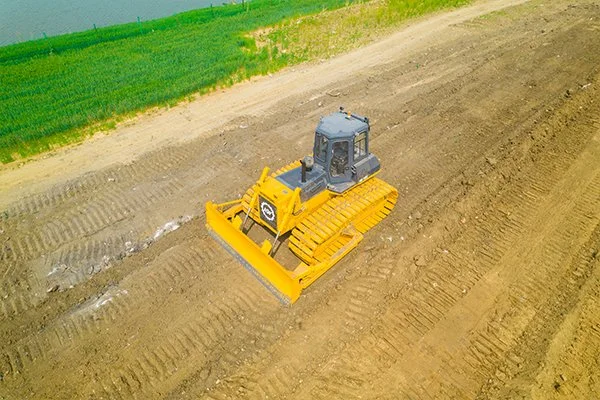
The bulldozer working principle starts with a high-torque diesel engine. This engine generates the rotational force needed to move thousands of kilograms of soil. The power flows through a transmission system to the final drives and tracks. Modern machines often use planetary power shift transmissions for smoother gear changes under heavy loads.
Traction is the most critical element of the bulldozer working principle. The tracks consist of heavy steel plates called grouser shoes. These shoes bite into the ground to provide maximum grip. Without this grip, the machine would simply spin its tracks without moving the material in front of the blade.
| Feature | HW16DS Specification | Impact on Performance |
| Engine Power | 131 kW @ 1850 rpm | High torque for heavy pushing |
| Operating Weight | 17,550 kg | Increases ground friction and stability |
| Blade Capacity | 4.5 m³ | Moves large volumes of earth per pass |
| Ground Pressure | 0.067 MPa | Prevents sinking in soft soil |
The Role of Hydraulics in Blade Control
Hydraulic systems are central to the bulldozer working principle regarding material handling. High-pressure pumps move hydraulic fluid into massive cylinders. These cylinders control the lifting, tilting, and pitching of the front blade. Precision hydraulic control allows operators to grade surfaces with extreme accuracy.
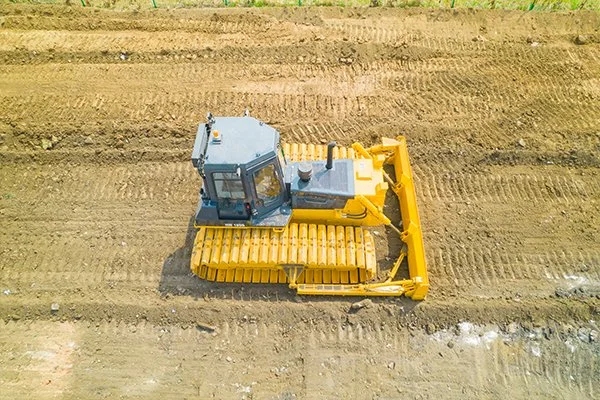
The blade is not just a flat plate for pushing. Its curvature is scientifically designed to roll the soil forward. This rolling action reduces the friction between the dirt and the blade. Consequently, the machine uses less fuel while moving more material. Efficient soil rolling is a hallmark of a well-designed bulldozer blade.
Rippers are often attached to the rear of the machine. These claw-like devices break up hard ground or rock before the blade starts pushing. The bulldozer working principle relies on the machine’s weight to force the ripper into the earth. Once the surface is loosened, the front blade can move the debris easily.
Soil Mechanics and Traction Efficiency
Success in earthmoving depends on understanding the physics of soil resistance. When a bulldozer pushes a load, it faces passive earth pressure. The bulldozer working principle overcomes this resistance through sheer mass and mechanical advantage. A heavier machine provides more downward force, which increases the available traction.
The relationship between weight and power is carefully balanced in modern engineering. For example, a machine weighing 17,550 kg can generate significant drawbar pull. Maximum traction is achieved when the track shoes penetrate the soil effectively. If the soil is too hard, the machine may require a ripper to create an entry point.
| Metric | Technical Value | Importance |
| Max Drawbar Pull | ~150-160 kN | Determines the maximum load capacity |
| Transmission Type | Planetary Power Shift | Ensures seamless power delivery |
| Track Gauge | 1880 mm | Provides lateral stability on slopes |
Selecting Machinery Based on Operational Dynamics
Choosing the right equipment requires more than looking at engine horsepower. You must evaluate how the bulldozer working principle applies to your specific job site. Ground pressure is a vital metric for projects involving swampy or soft terrain. Machines with wider tracks exert less pressure on the ground per square inch.
Blade type also dictates the machine’s effectiveness for different tasks. A semi-U blade is excellent for heavy pushing and moving large heaps. A straight blade works better for fine grading and leveling operations. The interaction between the blade geometry and the soil type determines overall productivity.
Consider the maintenance requirements of the undercarriage components. Tracks and rollers endure the most significant wear during operation. High-quality steel and heat-treated components extend the lifespan of these parts. Reliable undercarriage design is fundamental to the long-term bulldozer working principle.
Summary
The bulldozer working principle focuses on converting high engine torque into ground-gripping traction. By using crawler tracks and hydraulic blades, these machines move massive amounts of earth efficiently. Understanding the balance between weight, power, and ground pressure is key to successful heavy-duty construction and mining projects.
FAQ
Q:What is the main purpose of the bulldozer working principle?
The main purpose is to transform engine power into linear pushing force through traction and hydraulics. This allows the machine to move heavy loads of soil, rock, or debris.
Q:How do tracks improve the bulldozer working principle?
Tracks increase the contact area with the ground, which reduces ground pressure. This prevents the heavy machine from sinking and provides superior grip compared to wheels.
Q:Why is hydraulic pressure important for bulldozers?
Hydraulic pressure enables the precise movement of the blade and ripper. It provides the force necessary to lift tons of soil and penetrate hard ground surfaces.
Q:What determines the pushing capacity of a bulldozer?
Pushing capacity is determined by the engine torque, the machine’s total weight, and the blade size. A heavier machine generally offers more traction for pushing larger loads.
Reference Sources
Association of Equipment Manufacturers (AEM): Safety and Tech Manuals
https://www.aem.org/
Hengwang Group: HW16DS Product Specifications and Data
https://hengwangm.com/
SAE International: Ground Vehicle Standards for Earthmoving Machinery
https://www.sae.org/